Denshattack Game Plot: How to Defeat the Sinister Miraido Corporation
Some games hook you with realistic graphics. Others rely on huge open worlds or endless collectibles. Denshattack grabbed my attention for a completely different reason—it made me want to keep riding the rails just to see what insane idea would appear around the next corner.
At first glance, it’s easy to think this is simply another arcade-style sports game inspired by classics like Tony Hawk’s Pro Skater or Jet Set Radio. After a few hours, though, it becomes obvious that Denshattack has much bigger ambitions. The combination of futuristic trains, Japanese railway culture, over-the-top boss battles, and an unexpectedly emotional story creates something that feels genuinely fresh.
What surprised me most wasn’t even the gameplay. It was how the developers managed to build a dystopian world that actually gives you a reason to care about every race, every trick combo, and every victory against the massive corporate machines.
If you’re wondering what the story is really about and why defeating the Miraido Corporation becomes such a rewarding journey, here’s my personal breakdown after spending plenty of time on the rails.
A World That Feels Strange… Yet Believable
The first thing Denshattack does right is its setting.
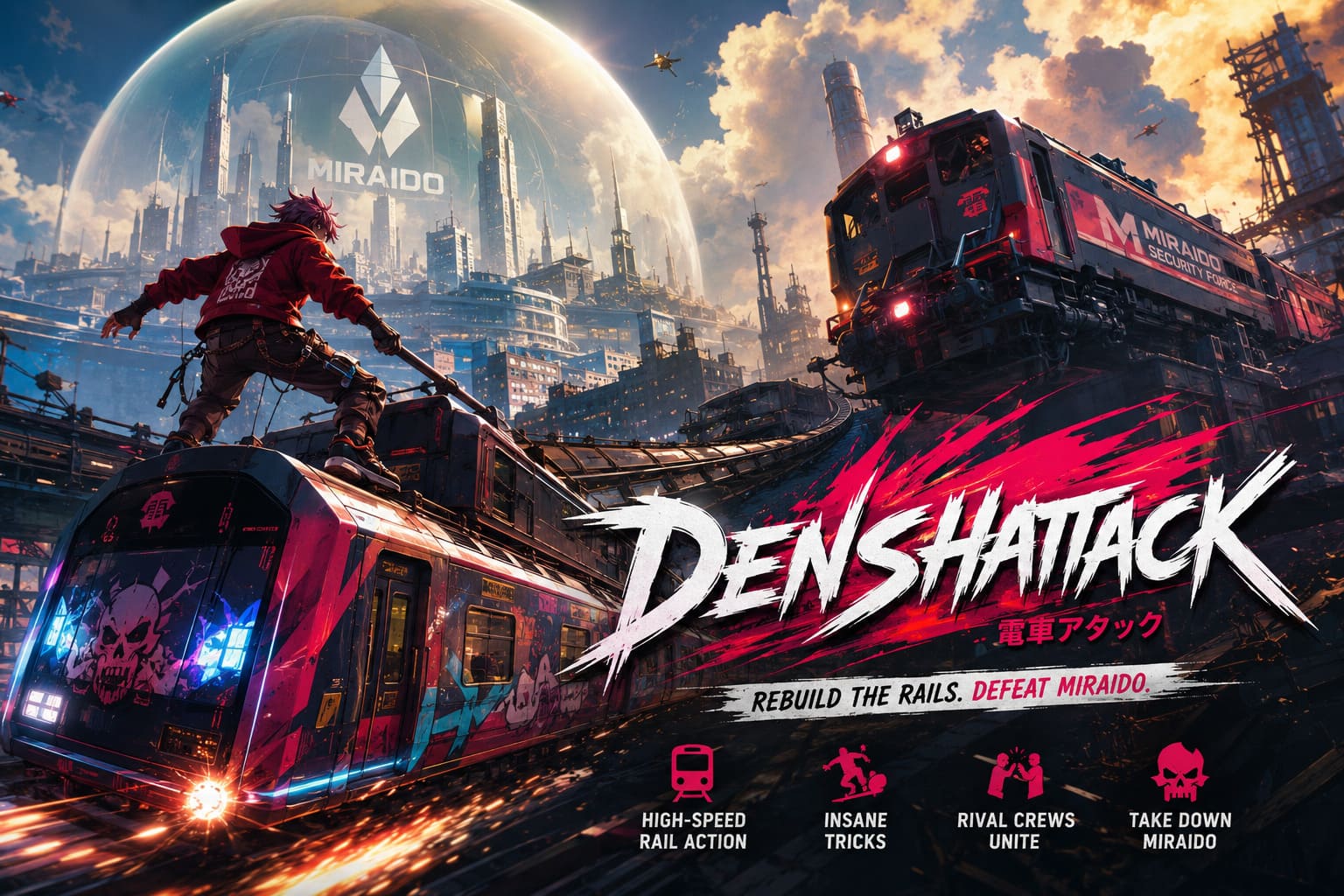
Instead of presenting another post-apocalyptic wasteland filled with zombies or mutants, the game imagines a future Japan devastated by environmental collapse. Toxic air, violent weather, and polluted landscapes have made ordinary life almost impossible.
The solution comes from one company.
Miraido Corporation builds enormous climate-controlled domes over major cities, creating safe places where clean air still exists. On paper, that sounds like humanity’s greatest achievement.
In reality, it becomes the perfect tool for control.
Only privileged citizens and loyal corporate supporters are allowed inside the protected cities. Everyone else is abandoned outside the domes, left to survive among abandoned stations, rusting railways, and forgotten towns.
I really liked this setup because it never feels overly complicated. The conflict is immediately clear: one side controls every important resource, while everyone else has to fight for basic survival.
The Railways Become the Real Battlefield
One detail that stood out to me is how trains aren’t just transportation.
They represent power.
Miraido doesn’t simply own the cities—it owns the railway network connecting every surviving region of Japan. Every supply shipment, security force, and communication route depends on those tracks.
That makes the rail system the perfect place for a rebellion.
Instead of attacking heavily protected cities directly, the resistance starts rebuilding abandoned railway lines that were forgotten after Miraido modernized the country’s infrastructure.
It’s a simple concept, but it gives every level a purpose beyond chasing a high score.
Joining the Denshattack Crew
You begin as an inexperienced conductor with little reputation.
Naturally, nobody expects much from you.
Over time, you meet a colorful group of rebels who refuse to accept Miraido’s rule. Characters like Emi, Madoka, and Yoshie each bring their own personalities, making the crew feel more like a group of close friends than a generic resistance movement.
Their solution to fighting back is brilliantly ridiculous.
Instead of sleek military vehicles, they rebuild discarded commuter trains and transform them into gravity-defying machines capable of:
- Wall riding
- Massive jumps
- Rail grinding
- Mid-air tricks
- High-speed drifting
It sounds absurd on paper.
Somehow, it completely works.
The game’s colorful presentation embraces the craziness instead of trying to explain every scientific detail, and I think that’s exactly the right approach.
Progress Actually Feels Earned
One thing I appreciated throughout the campaign is that your reputation grows naturally.
You don’t suddenly become a legendary hero after one mission.
Instead, every region introduces new challenges, stronger rivals, and increasingly dangerous corporate defenses.
The campaign gradually moves across Japan, including locations inspired by:
| Region | What Makes It Memorable |
|---|---|
| Kyushu | Open countryside and beginner-friendly tracks. |
| Osaka | Heavy corporate security and dense rail systems. |
| Tokyo | Fast-paced urban environments filled with hazards. |
| Northern Territories | Snow-covered railways with difficult platforming sections. |
| Miraido Headquarters | The ultimate test of every mechanic learned throughout the campaign. |
Each area feels like another step toward something bigger rather than isolated levels disconnected from the story.
Winning Rivals Over Instead of Simply Defeating Them
This was one of my favorite parts of the narrative.
Most games introduce enemy gangs simply so you can beat them.
Denshattack takes a more interesting route.
Across the wasteland, numerous independent rail crews control different territories. Initially they refuse to cooperate, forcing you into races, trick competitions, and style battles.
What makes these encounters enjoyable is that victory doesn’t eliminate them.
It earns their respect.
Eventually, former rivals become allies, expanding the resistance into something capable of challenging Miraido on a national scale.
It’s a refreshing change from the usual “defeat everyone forever” formula.
Style Matters Just as Much as Speed
If there’s one lesson Denshattack constantly teaches, it’s this:
Going fast isn’t enough.
The scoring system rewards creativity.
Players who simply rush toward the finish line will probably survive, but they’ll miss much of what makes the gameplay satisfying.
Building huge combo chains becomes essential.
Some techniques I found especially rewarding include:
- Linking multiple rail grinds without touching the ground.
- Using wall rides to extend trick multipliers.
- Drifting through consecutive corners while preserving combo momentum.
- Landing cleanly after long aerial sequences.
Messing up a landing hurts far more than losing a little speed because your entire combo disappears.
That constant risk keeps every run exciting.
Miraido’s Security Forces Never Stay Predictable
Corporate enforcement trains quickly become one of the game’s biggest challenges.
Unlike ordinary racers, they actively try to knock you off the rails.
Some chase aggressively.
Others block intersections.
Several deploy hazards directly onto the tracks.
Fortunately, the game gives you plenty of options.
Countering enemy trains usually involves careful timing rather than brute force.
- Ram vulnerable sections.
- Grind across their roofs.
- Dodge attacks with quick directional boosts.
- Force them into obstacles.
These encounters keep races from becoming repetitive.
Boss Battles Completely Steal the Show
I’ll admit it.
The bosses were what convinced me Denshattack wasn’t just another indie arcade game.
Every major encounter feels like the developers asked themselves:
“What’s the craziest thing we can build around railway combat?”
The answers are fantastic.
Giant Mechanical Worm
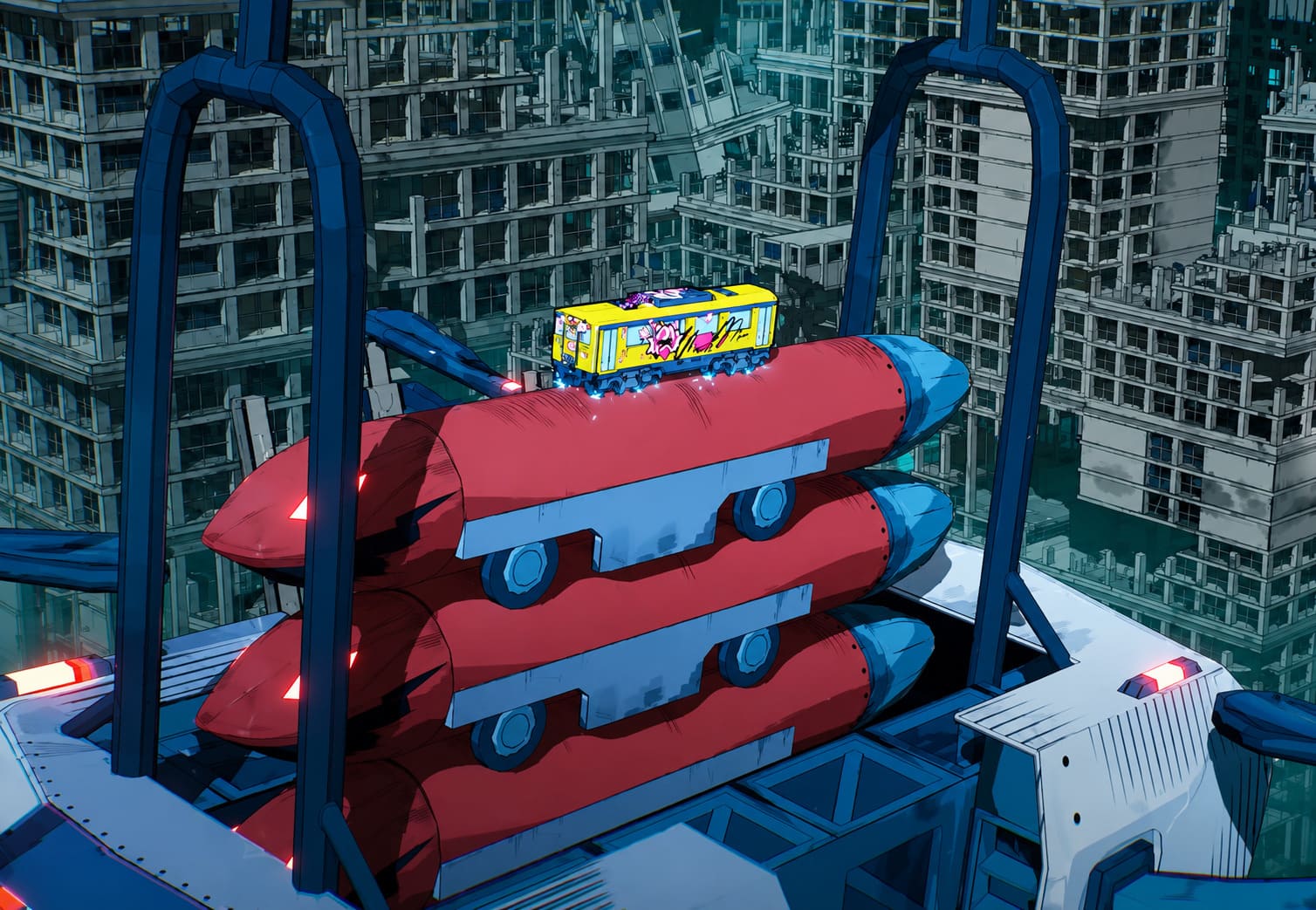
Imagine a massive armored machine literally eating railway tracks as it chases you. Instead of stopping to fight, you’re constantly escaping while looking for opportunities to strike weak points along its metallic body. It’s chaotic in the best possible way.
Mecha Idol Guardians
This boss perfectly embraces anime energy. Gigantic mechanical idols flood entire arenas with lasers, missiles, and colorful projectiles while forcing players to switch tracks almost constantly. It feels like a racing game and a bullet-hell shooter merged into one unforgettable battle.
The Moving Castles
These enormous rolling fortresses might be my favorite bosses. They’re slow but relentless, filling tracks with debris while launching drones from every direction. The only reliable strategy is maintaining enough speed to reach vulnerable engine sections before the castle overwhelms you.
Why the Final Battle Actually Works
Many action games struggle with endings.
After dozens of hours, the final boss often feels disconnected from everything you’ve learned.
Denshattack avoids that problem.
The last confrontation inside Miraido’s command network combines nearly every mechanic introduced throughout the campaign.
You’re expected to:
- Maintain long combo chains.
- Navigate hazardous rail networks.
- Defeat security trains.
- Avoid environmental traps.
- Make quick route decisions.
- Use upgraded train abilities effectively.
Nothing feels random.
Success depends on mastering the mechanics rather than relying on luck.
That made the ending far more satisfying than I expected.
Denshattack, Indie Games, Game Story, Action Platformer, Fireshine Games, Steam Games
What I Personally Enjoyed Most
After finishing the campaign, I realized the story isn’t trying to reinvent science fiction.
Instead, it succeeds because everything works together.
The music keeps your adrenaline high.
The colorful visuals make every location memorable.
The trick system constantly rewards experimentation.
Most importantly, the narrative always gives you a reason to keep moving forward.
Even during slower moments, the game never forgets that riding futuristic trains should feel exciting.
I also appreciate that the rebellion isn’t portrayed as invincible from the beginning. Watching scattered communities gradually unite into a genuine resistance gives the campaign emotional weight without slowing down the action.
Final Thoughts
Denshattack surprised me far more than I expected.
I came for the ridiculous concept of performing skateboard tricks with futuristic trains.
I stayed because the world, characters, and progression made every victory against the Miraido Corporation feel meaningful.
Sure, the game embraces over-the-top anime spectacle, impossible physics, and outrageous boss fights, but that’s exactly where its personality shines. It never apologizes for being weird, and I think that’s one of its greatest strengths.
If you’re looking for another realistic racing simulator, this probably isn’t your game.
But if you enjoy stylish arcade gameplay, creative level design, memorable boss encounters, and a dystopian story that keeps giving you reasons to push forward, Denshattack deserves a place on your wishlist—or in your library if you’ve already jumped aboard.
For me, it’s one of those rare indie releases that constantly made me smile while playing. Every new region introduced another creative surprise, every boss felt handcrafted rather than recycled, and by the time the final battle arrived, taking down the Miraido Corporation genuinely felt like something I had earned instead of simply reached.
That’s the kind of ending I always hope for in an action game, and Denshattack absolutely delivers.