Is Iron Nest Coming to VR? Release Date, Rumors, and Developer Updates
The conversation around virtual reality support for Iron Nest Heavy Turret Simulator has grown surprisingly intense for a title that is still months away from its full PC release. Scheduled for August 2026, this dieselpunk-heavy simulation game has already managed to carve out a distinct identity thanks to its deeply tactile gameplay systems and unusual emphasis on manual control inside a massive mechanized war machine. After the Steam Next Fest demo in June 2026, it became almost inevitable that players would start asking the same question across Reddit threads, Discord servers, and YouTube comment sections: will this eventually come to VR?
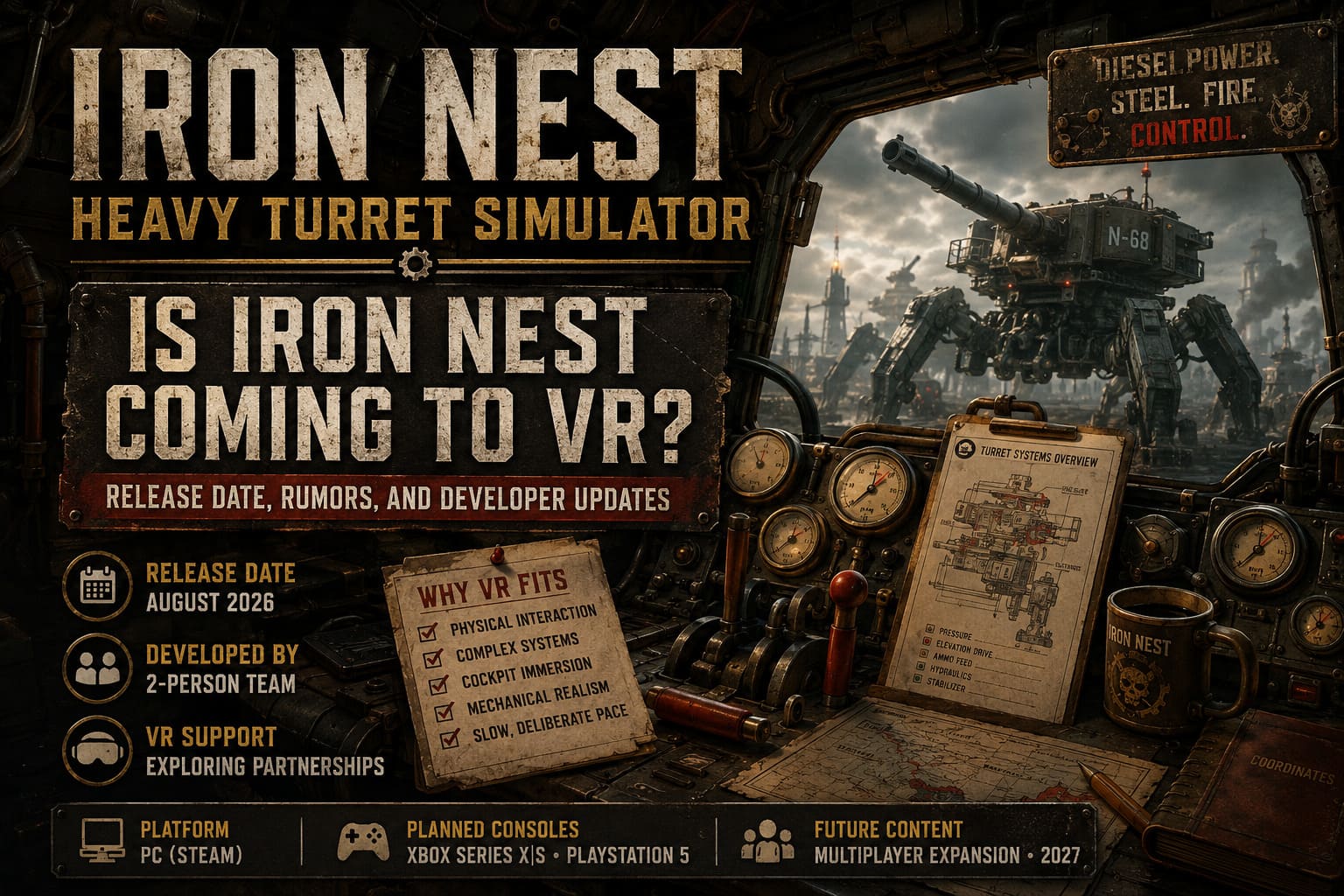
From a broader gaming perspective, it is easy to understand why this question keeps resurfacing. The game is built around physical interaction rather than abstract inputs. Instead of simple keyboard commands or quick-action hotkeys, players are expected to engage with switches, levers, mechanical readouts, and heavy artillery systems that feel intentionally grounded in industrial realism. That alone places it in a category of games that naturally invites virtual reality speculation, even when VR support has not been officially announced at launch.
Why Iron Nest Feels Like a Natural VR Candidate
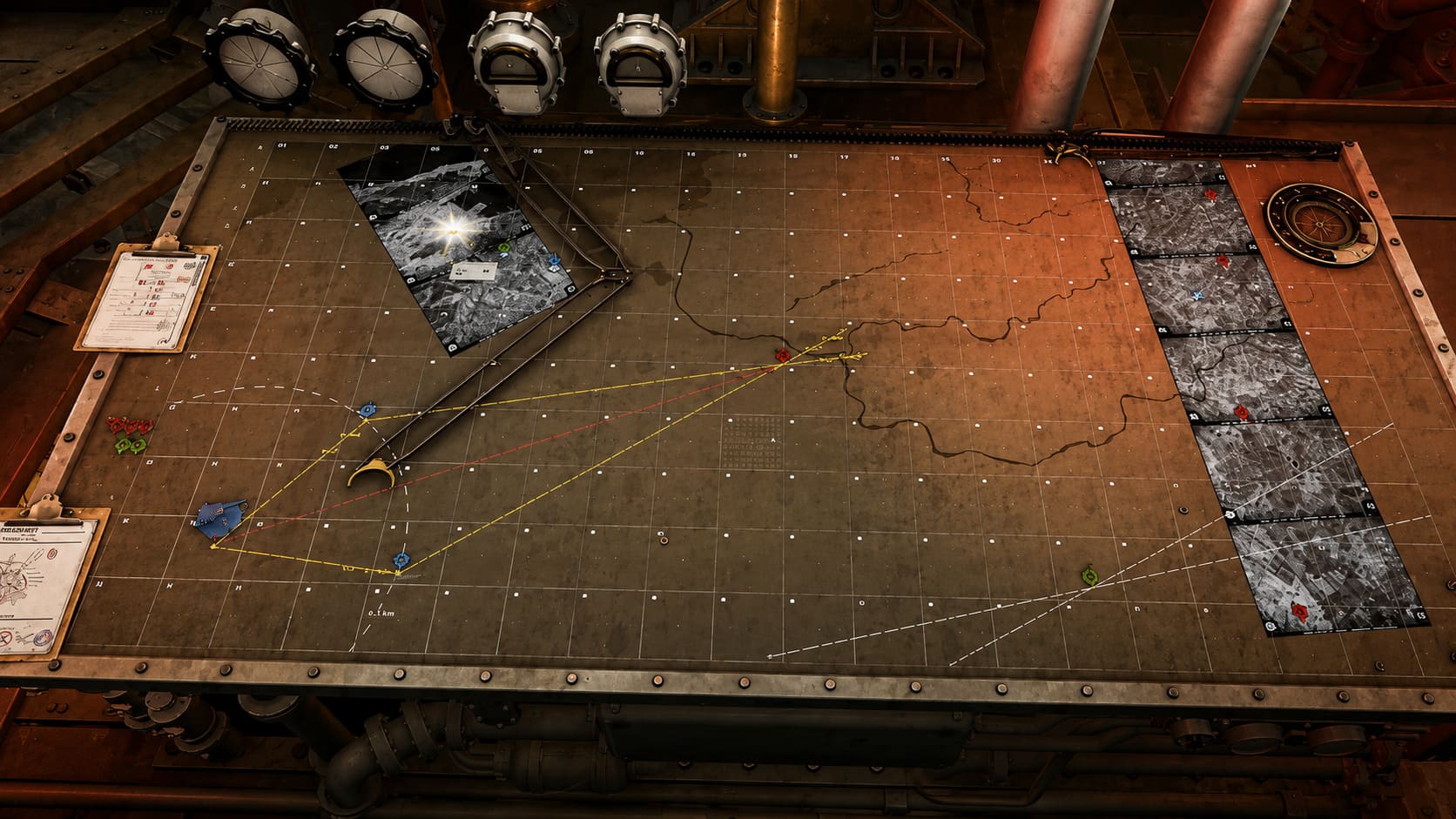
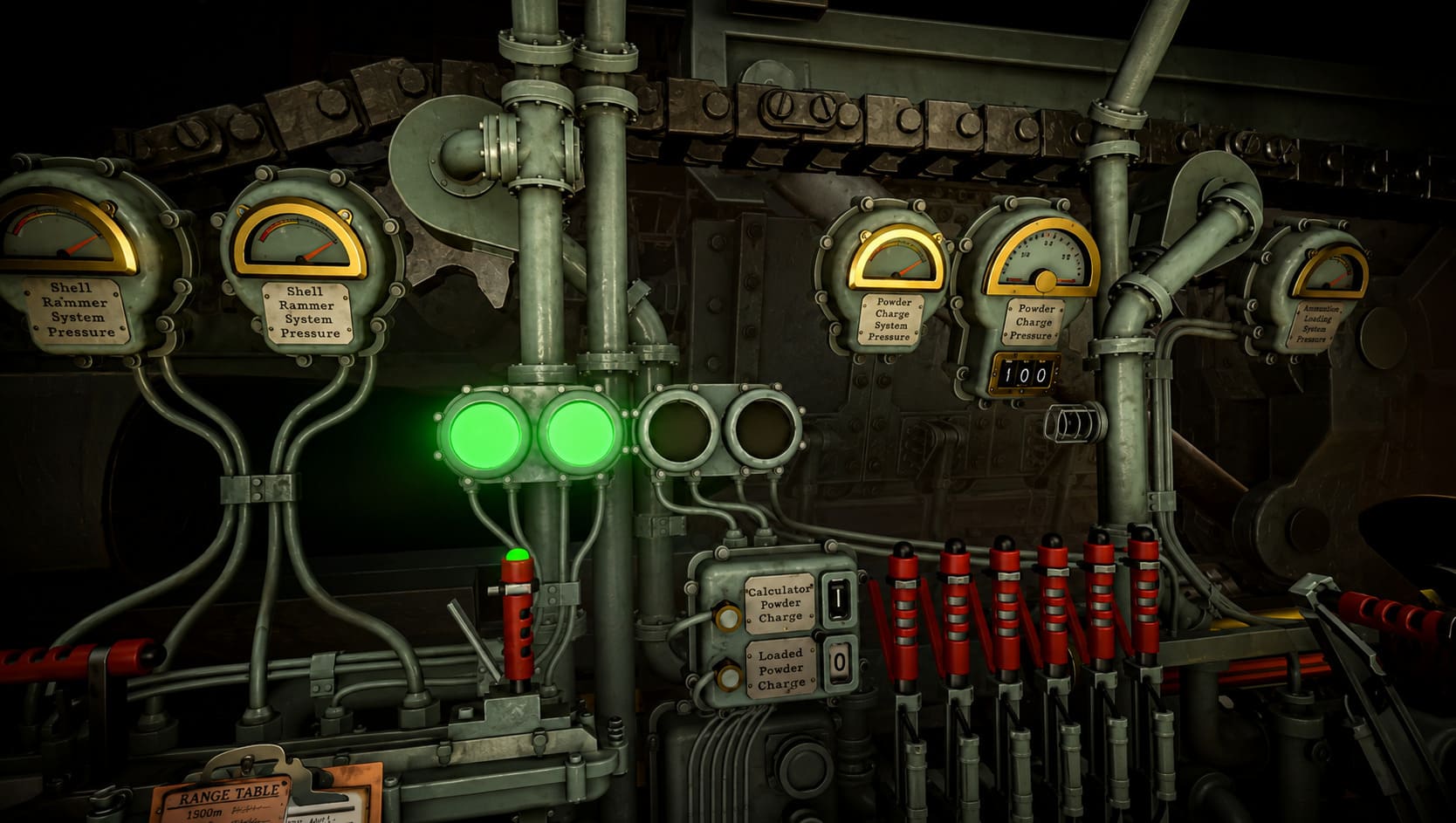
One of the most striking aspects of Iron Nest is how strongly it leans into embodied interaction. Players are not just controlling a turret; they are inhabiting a fully mechanical cockpit suspended inside a spider-like war machine. Every action is physical in design: pulling hydraulic levers, rotating heavy dials, loading oversized shells, and interpreting printed coordinate sheets that feel like they belong in a Cold War-era control room.
This level of interaction aligns closely with what VR players tend to value most: presence and physicality. The sense of being surrounded by metal, pressure systems, and rhythmic mechanical movement creates an environment that seems almost purpose-built for motion controllers. Many VR enthusiasts have pointed out that even the flat-screen demo already produces a feeling of immersion that borders on VR-like engagement, especially when the player is managing multiple systems under pressure.
These elements define why the game is often discussed in VR communities:
- Heavy reliance on physical gestures and manipulation
- Complex multi-step control systems instead of instant actions
- Strong emphasis on spatial awareness inside a confined cockpit
- Audio-visual feedback tied to mechanical movement and pressure systems
- Slow, deliberate pacing that rewards precision over speed
Developer Reality: Small Team, Big Ambition
The development team behind Iron Nest is notably small, consisting of just two core creators. This fact significantly shapes the project’s platform strategy. While the PC version is the primary focus for launch, and console versions for Xbox Series X/S and PlayStation 5 are already planned for later rollout, VR introduces a much more complex development challenge.
The developers have been transparent in community discussions about this limitation. VR is not treated as a simple port but as a fundamentally different experience requiring redesign, optimization, and careful calibration to avoid motion sickness and interaction inconsistencies. For a team of their size, attempting to launch a VR version simultaneously with the base game would risk compromising quality across the board.
Instead, their current position is cautious but optimistic. They have openly acknowledged community demand and confirmed that they are exploring partnerships with external VR studios. This approach allows them to maintain focus on finishing the core game while still keeping the door open for a properly built VR adaptation in the future.
Community Experimentation and the Early VR Prototype
During the Steam Next Fest period, an unexpected development added fuel to the VR discussion. A basic experimental VR mod surfaced online, created internally by the developer as a personal test. It was not intended as a public feature, but rather as a proof-of-concept to understand how the cockpit environment would behave in a headset.
Although extremely limited in functionality, the prototype revealed something important: scale matters. Inside VR, the cockpit felt significantly more claustrophobic and mechanically dense, amplifying the tension of operating a massive war machine. Even without polished motion controls, the atmosphere was widely described as immersive and slightly overwhelming in a positive sense.
This experiment did not represent an official roadmap, but it did confirm something the developers already suspected: Iron Nest translates unusually well into VR space. That realization has likely strengthened internal discussions about future support.
VR vs Standard Experience: What Changes
To better understand the potential difference between playing Iron Nest on PC versus VR, it helps to compare the core experience design.
| Aspect | Standard PC Version | Potential VR Version |
|---|---|---|
| Interaction Style | Keyboard/mouse or controller inputs | Motion-controlled physical manipulation |
| Immersion Level | High atmospheric immersion | Full spatial presence inside cockpit |
| Complexity Handling | Menu and keybind systems | Direct object interaction |
| Fatigue Factor | Moderate cognitive load | Higher physical engagement |
| Accessibility | Broad hardware support | Requires VR headset |
This comparison highlights both opportunity and challenge. VR could dramatically increase immersion, but it also introduces usability, comfort, and performance concerns that must be solved carefully.
The Road Ahead: Multiplayer and 2027 Possibilities
Looking beyond the initial release, the developers have also hinted at a larger multiplayer expansion set in the same universe, tentatively targeting 2027. This future project is expected to focus on cooperative gameplay, where multiple players operate different stations within a single massive artillery machine.
This concept naturally aligns with VR design principles. Cooperative cockpit simulation is one of the strongest use cases for virtual reality, as it allows players to physically occupy different roles within a shared mechanical environment. Many community analysts believe that if VR support is not introduced earlier, it could become a defining feature of this multiplayer evolution.
If the developers successfully secure a VR partnership, the 2027 timeline may represent the most realistic window for a fully native VR implementation.
Final Thoughts: Is VR Support Likely?
At the moment, the situation is fairly clear. There will be no native VR support at the August 2026 launch of Iron Nest Heavy Turret Simulator. However, the trajectory of development suggests that VR is not being dismissed, only postponed and carefully planned.
The combination of strong community demand, a VR-friendly design philosophy, and early experimental testing makes the possibility very real. It is not a guaranteed feature, but it is also far from speculative fantasy. The developers appear genuinely interested, just constrained by production reality.
For VR players, the most sensible expectation is patience. The base game will stand on its own as a detailed mechanical simulation, but the VR version—if it arrives—could become the definitive way to experience the game’s industrial intensity. In many ways, it feels less like a question of “if VR,” and more like “when VR becomes feasible without compromise.