Denshattack Game Combo Guide: How to Maintain a High Score Multiplier
The first few hours I spent with Denshattack were honestly misleading. At first glance it looks like a stylish arcade platformer where you simply launch your train, land a few flashy tricks, and enjoy the chaos. Then I watched players putting up scores three or four times higher than mine and realized I had been playing a completely different game.
The biggest lesson I learned is that Denshattack isn’t really about tricks—it is about keeping momentum alive. Tricks only feed the system. The real challenge is protecting your combo from the first second of the level until the moment you decide it’s safe to bank your points.
After spending way too much time replaying stages, experimenting with different train builds, and comparing routes shared across the community, I finally started reaching score numbers that once looked impossible. If you’re aiming for leaderboard runs rather than simply finishing levels, these are the strategies that made the biggest difference for me.
Stop Thinking About Points—Think About Momentum
One mistake almost every new player makes is chasing individual trick scores.

I did exactly the same thing.
Whenever I saw a huge jump, I immediately tried squeezing in the biggest possible trick combination. Sometimes it worked. Most of the time I landed awkwardly, clipped a rail, or completely lost the combo.
Eventually I realized something:
A smaller combo that never ends is worth far more than one spectacular trick followed by a crash.
Every action in Denshattack should have one purpose:
Keep the multiplier alive.
Once you adopt that mindset, the entire game starts making more sense.
Understanding What Actually Builds Big Scores
Your combo revolves around three connected systems.
| Element | Why It Matters | Priority |
|---|---|---|
| Base Score | Earned from tricks and interactions | Medium |
| Combo Multiplier | Multiplies every point earned | Extremely High |
| Combo Timer | Determines whether the combo survives | Critical |
Many players focus entirely on increasing the Base Score.
Experienced players focus on protecting the multiplier.
That difference alone separates average runs from leaderboard attempts.
Never Waste the Opening Seconds
The countdown before each run seems insignificant, but it isn’t.
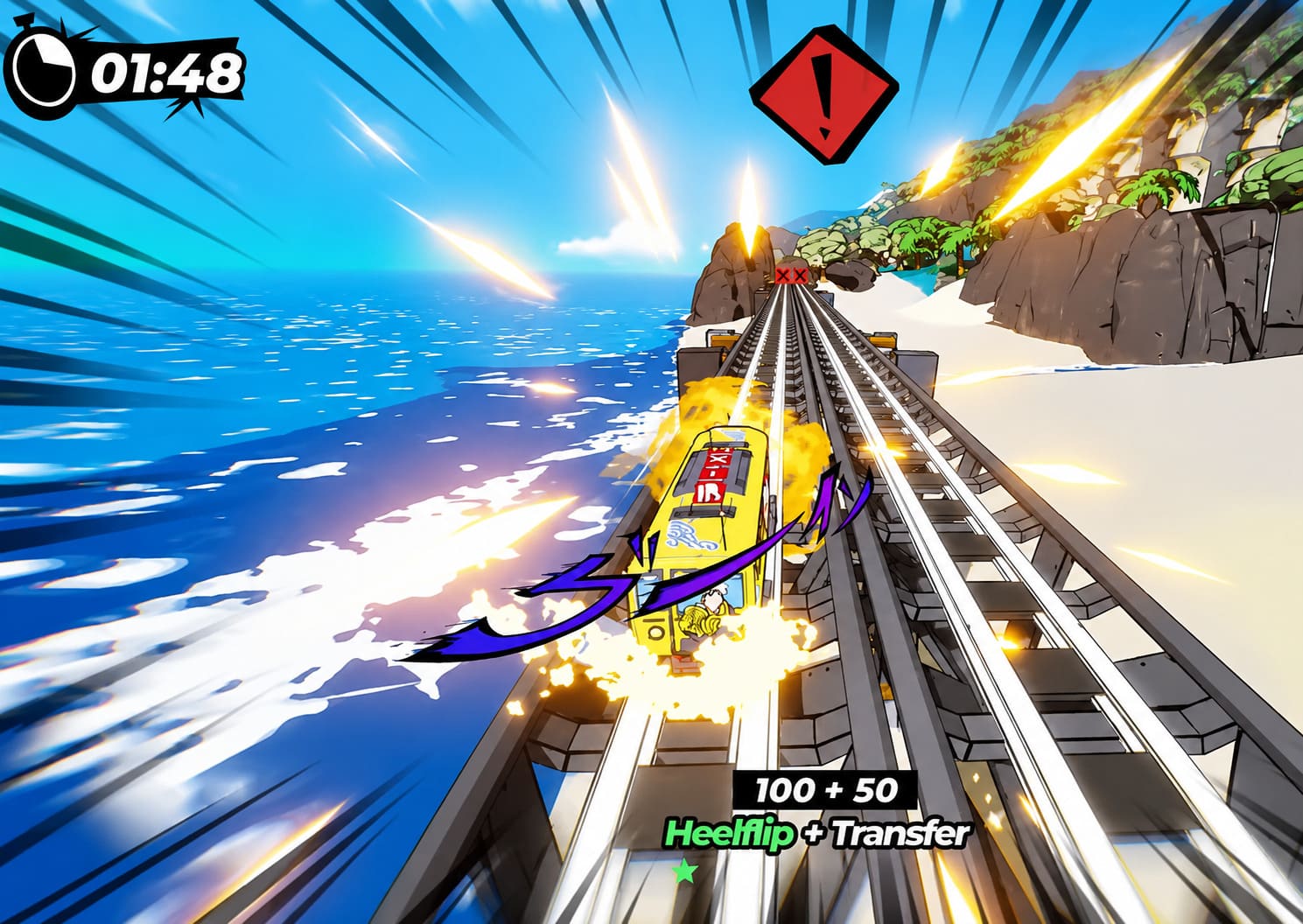
Getting the timing right on the opening launch gives you immediate speed, which creates better positioning for the first rail, first jump, and first trick sequence.
It sounds like a tiny optimization.
It isn’t.
That extra momentum often determines whether you enter the first section with a multiplier already building or whether you’re struggling to recover speed after an awkward start.
Whenever I’m restarting score attempts, I refuse to accept a sloppy beginning. A clean launch sets the rhythm for everything that follows.
Variety Is More Important Than Difficulty
This surprised me more than anything.
Naturally, I assumed the hardest tricks would always be worth doing.
Not exactly.
The game rewards variety far more than repeating one difficult input over and over.
Instead of forcing identical tricks repeatedly, try rotating through different categories:
- Quick flips
- Rotational tricks
- Directional variations
- Advanced aerial combinations
Repeating the same animation constantly causes diminishing returns, while mixing techniques keeps your multiplier growing naturally.
Think of your combo like a conversation.
Repeating one word over and over gets boring.
The game feels the same way.
Rails Are Your Best Friend
If I had to give one piece of advice to anyone struggling with high scores, it would be this:
Spend more time grinding rails.
At first I viewed rails simply as transportation.
Now I treat them as recovery tools.
Every successful grind buys you extra breathing room by refreshing your combo timer.
Even better, rail transfers create opportunities to increase your multiplier without relying entirely on huge jumps.
Some of my highest-scoring runs actually contain fewer massive aerial tricks than my earlier attempts.
The difference is that the combo never dies.
Learn to Connect Everything
One thing I absolutely love about Denshattack is how every movement mechanic links into another.
A strong combo usually looks something like this:
- Launch.
- Air trick.
- Rail grind.
- Small hop.
- Different trick.
- Another rail.
- Drift through a corner.
- Wall run.
- Return to another grind.
Notice something?
There are almost no empty moments.
Dead space is the enemy.
Whenever your train isn’t earning points, your combo timer is slowly counting down.
The best players don’t necessarily move faster.
They simply waste fewer seconds.
Drifting Is More Powerful Than It Looks
For a surprisingly long time I ignored drifting.
Big mistake.
Drifting isn’t just there to make corners look stylish.
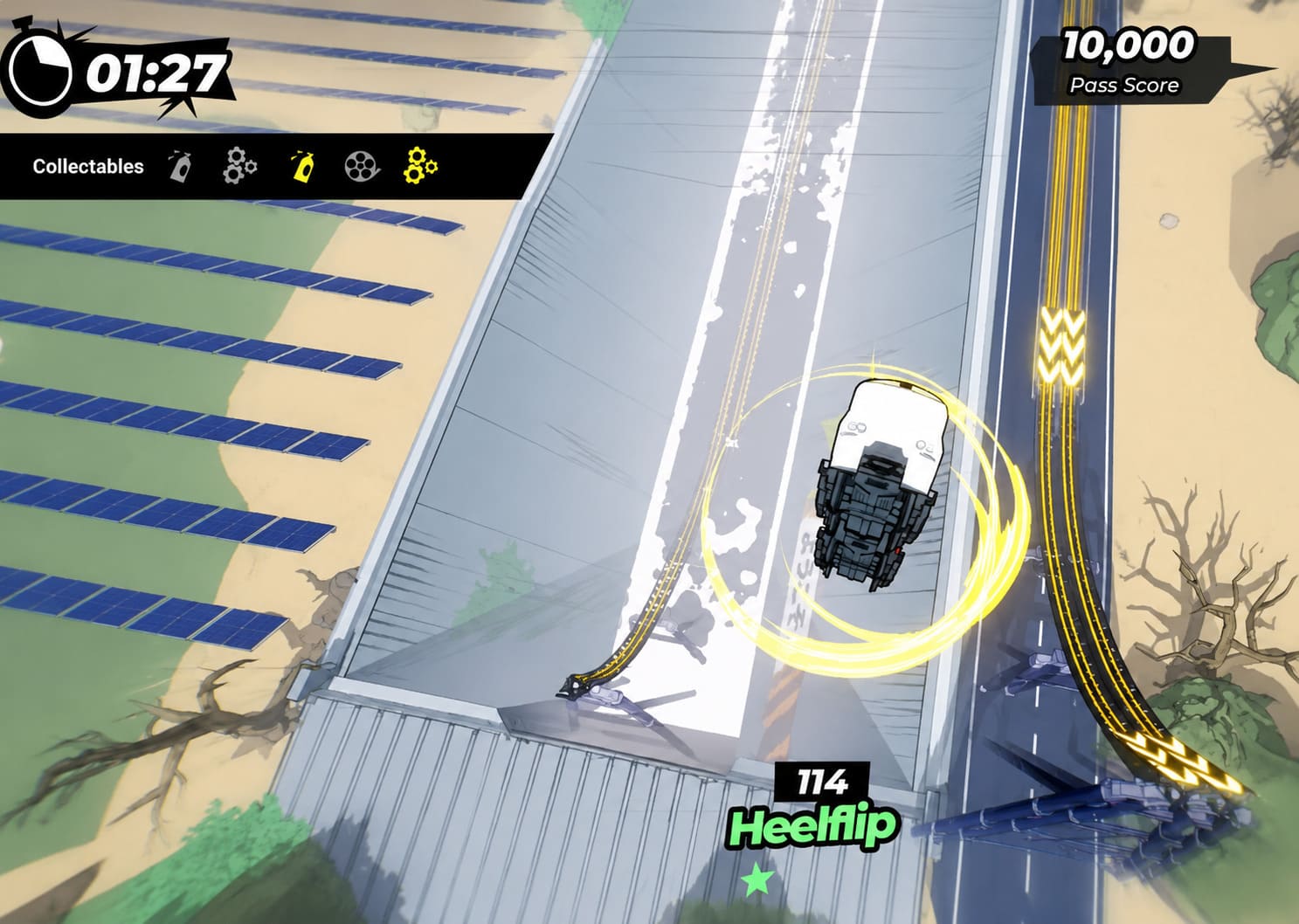
Long drifts keep your combo alive while repositioning you for the next scoring opportunity.
Whenever I enter a section without obvious jumps or rails, drifting has become my default solution.
It bridges the quiet parts of a level that would otherwise kill a combo.
The smoother your drift, the less pressure you’ll feel once the next trick opportunity appears.
Wall Runs Open Entirely New Routes
Some of the game’s highest-scoring paths aren’t immediately obvious.
They’re above you.
Or beside you.
Wall running isn’t simply another flashy mechanic—it connects sections of the map that many players never even visit.
Once I started experimenting with walls instead of staying on the main route, I discovered:
- Hidden rails
- Alternate shortcuts
- Safer landings
- Larger jumps
- Extra collectibles
Higher routes are usually riskier, but they’re also where the biggest scores live.
Don’t Rush Every Trick
One habit I had to break was trying to maximize every single jump.
Sometimes less really is more.
Landing safely keeps the multiplier alive.
Missing the landing destroys everything.
Whenever I’m carrying a huge combo, I intentionally simplify certain jumps.
Giving up a few thousand points now is much better than losing hundreds of thousands because I got greedy.
That mindset alone dramatically improved my consistency.
Customize Your Train Around Your Weaknesses
Many guides immediately recommend maximizing speed.
I don’t completely agree.
Raw speed is fantastic—but only if you can actually control it.
Personally, I performed much better after prioritizing handling.
Sharper control made balancing on rails easier, improved my drift accuracy, and reduced awkward landings.
Here’s a simple way to think about customization:
| Playstyle | Recommended Focus |
|---|---|
| New players | Balanced setup |
| Consistency | Handling and stability |
| Advanced routes | Maximum speed |
| Technical play | High grip and precision |
There’s no universally perfect build.
The best setup is the one that helps you keep combos alive.
Study the Level Before Chasing Records
One thing I noticed after watching experienced players is that they rarely improvise.
Every movement looks planned.
That’s because it usually is.
Instead of immediately chasing leaderboard scores, spend a few relaxed runs exploring.
Look for:
- Hidden rails
- Alternate paths
- Launcher locations
- Wall-run opportunities
- Safe landing zones
Treat each stage like solving a puzzle.
Once the route becomes muscle memory, your scores naturally climb.
Know When to Cash Out
This is probably the hardest skill to learn.
There comes a point where your combo is already enormous.
You see a dangerous section ahead.
Maybe it’s full of narrow rails.
Maybe the jumps are awkward.
Maybe you’ve already survived longer than expected.
Ask yourself one question:
Is this risk actually worth it?
Sometimes the smartest play is simply letting the combo end safely and securing your score.
I’ve thrown away incredible runs because I wanted “just one more trick.”
Usually, that one trick wasn’t worth it.
Denshattack Game Plot: How to Defeat the Sinister Miraido Corporation
Small Details That Help More Than You Expect
These little habits gradually improved my runs more than any single advanced mechanic:
- Listen to landing sounds instead of constantly staring at the UI.
- Stay relaxed during long combos instead of rushing inputs.
- Use different tricks whenever possible.
- Learn recovery routes after bad landings.
- Restart quickly after poor openings instead of forcing bad runs.
None of these tips are individually game-changing.
Together, they’re surprisingly effective.
Denshattack! Release Date, Switch 2 Gameplay, and Steam Store Price Explained
Final Thoughts
What keeps bringing me back to Denshattack is that improvement always feels earned.
The game never hands out massive scores by accident. Every long combo is built through dozens of small decisions—choosing the safer rail, varying tricks at the right moment, drifting instead of panicking, and knowing exactly when it’s smarter to bank points rather than gamble everything.
If I could give only one piece of advice, it would be this: stop chasing flashy tricks and start chasing flow.
Once your movements become smooth enough that one action naturally feeds into the next, the combo meter almost feels like it takes care of itself. That’s when Denshattack becomes incredibly satisfying. Suddenly those intimidating 300K leaderboard scores don’t seem impossible anymore—they become realistic goals that are only a few cleaner runs away.
In my experience, the players who consistently post the biggest numbers aren’t always the fastest or the flashiest. They’re simply the ones who make the fewest mistakes. Master your routing, keep your multiplier alive, and trust your rhythm. The points will come naturally.