Dungeon Lurker Instruction Manual Secrets: Complete Guide to the ARG and Hidden Codes
After spending years playing everything from classic dungeon crawlers to modern roguelikes, I have to admit that Dungeon Lurker immediately caught my attention for a reason beyond its retro visuals. At first glance, it looks like a love letter to the summer of 1996: a fictional Eclipse System 32 console, a 256-color palette, old-school menus, and fast-paced dungeon combat. But after digging deeper, it becomes clear that this is not just another nostalgic action roguelike. The real game is hidden inside the game itself.
Created by 13AM Games, Dungeon Lurker presents itself as a lost 1996 release with 30 handcrafted levels filled with monsters, secrets, and classic arcade-style challenges. However, the real mystery begins when players discover that the instruction manual is not simply a collection of gameplay tips. It is a carefully designed puzzle filled with hidden messages, strange symbols, corrupted text, and clues connected to a much darker story.
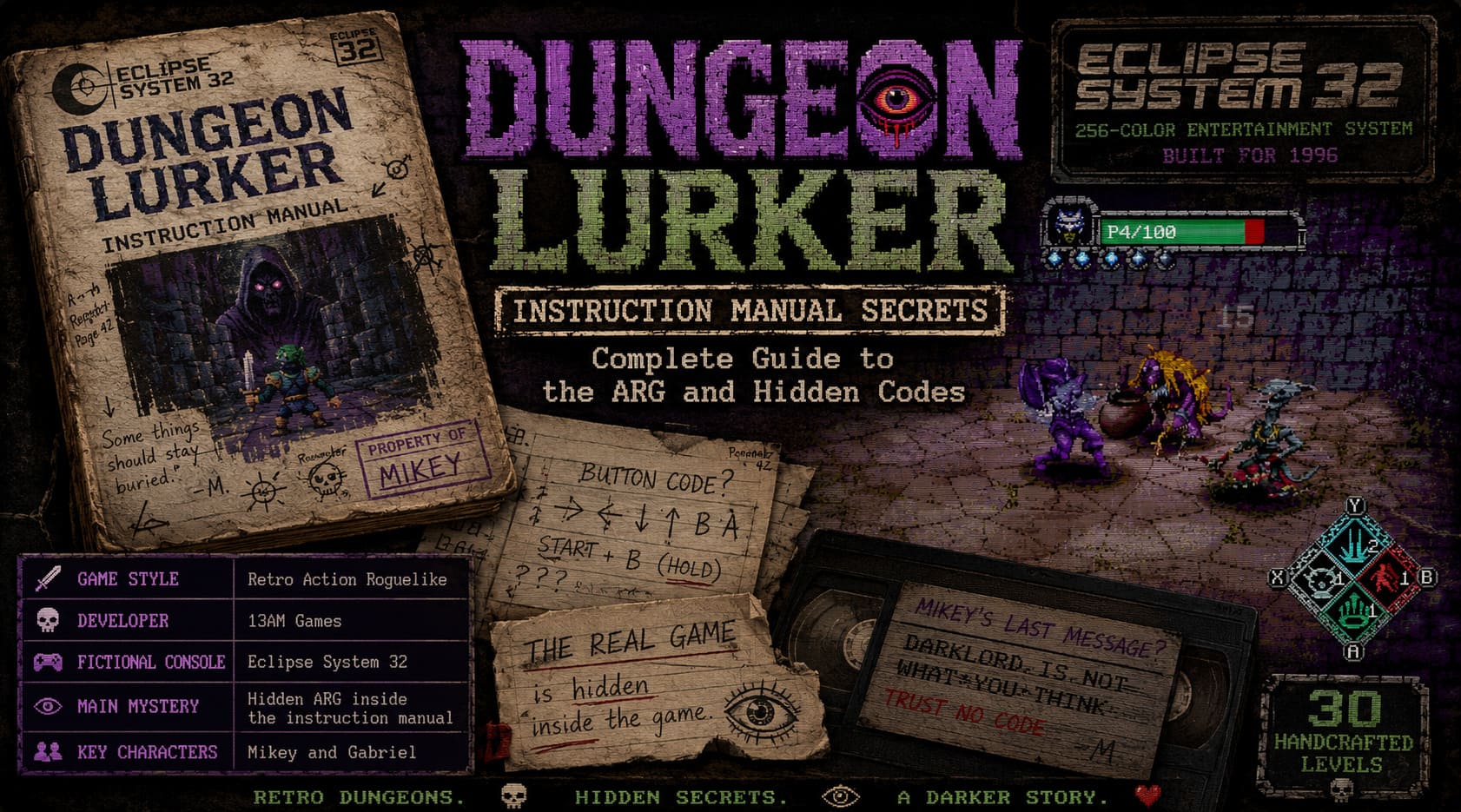
The game’s manual transforms Dungeon Lurker from a simple retro adventure into an ARG-style mystery (alternate reality game) where players become investigators. Instead of only defeating enemies and collecting upgrades, you are searching through documents, decoding messages, and piecing together the fate of two childhood friends: Mikey and Gabriel.
10 Best Games Like Dungeon Lurker: Top 90s Retro Dungeon Crawlers and Roguelikes
| Feature | Details |
| Game Style | Retro Action Roguelike |
| Developer | 13AM Games |
| Fictional Console | Eclipse System 32 |
| Main Mystery | Hidden ARG inside the instruction manual |
| Key Characters | Mikey and Gabriel |
The Story Behind Mikey and Gabriel
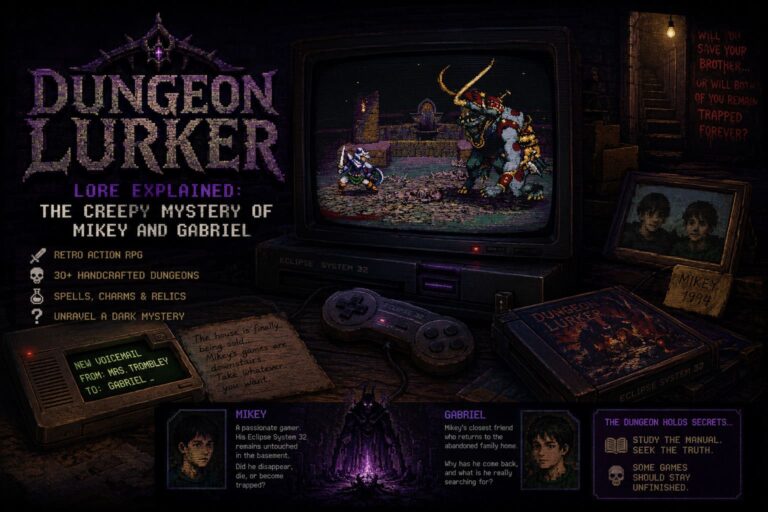
The biggest secret of Dungeon Lurker begins with a tragic story hidden beneath the surface. According to the game’s promotional material and internal lore, the events revolve around a missing child named Mikey. Years after his disappearance, Mikey’s family decides to sell their old house, and his childhood friend Gabriel is invited over to look through Mikey’s forgotten belongings.
When Gabriel enters the basement, he discovers something unusual. Mikey’s old gaming setup from the 1990s is still there, perfectly preserved. The Eclipse System 32 console still works, and inside it is a mysterious game that appears to have been waiting for someone to find it.
This is where the player enters the story. You are not simply controlling a random hero exploring dark dungeons. You are experiencing what Gabriel experiences: opening a forgotten piece of software connected to his missing friend. The manual becomes the first major piece of evidence because it appears that Mikey himself used it to leave behind warnings and hidden information.
The clever part is how authentic the manual feels. It looks like something you would find inside a real 90s game box, complete with developer notes, item descriptions, troubleshooting pages, and technical information. But mixed between normal instructions are strange handwritten notes, altered text, and hidden patterns that suggest Mikey was trying to communicate something before he disappeared.
Every Secret Hidden Inside the Dungeon Lurker Manual
The community has already started analyzing every page of the instruction booklet. Players from retro gaming forums, Steam discussions, and ARG communities have discovered several major categories of secrets.
1. Handwritten Notes and Strange Marginal Symbols
One of the first things players notice is that the manual contains small pencil marks, drawings, and unusual symbols scattered around the pages. At first, they look like normal notes written by a child while playing a difficult game.
However, these markings are much more important. Many of the handwritten symbols match locations inside the actual dungeon levels. By comparing the manual drawings with the in-game maps, players discovered connections between certain symbols and hidden areas.
These locations often contain:
- Rare upgrade charms
- Secret rooms
- Hidden spells
- Alternative paths through levels
This is one of the smartest design choices in Dungeon Lurker because it encourages players to interact with the manual like a real physical game guide from the 90s. You are not just reading instructions; you are using the manual as a treasure map.
2. Hidden Button Codes and Developer Secrets
Another major discovery comes from the manual’s password and notes sections. Classic games from the 90s often included blank spaces where players could write down passwords or important information. Dungeon Lurker uses this tradition to hide something much more interesting.
Inside these sections are incomplete button combinations and strange input patterns. Entering these sequences at specific points can activate hidden features.

Players have discovered codes that may unlock:
- Retro visual filters
- Secret developer options
- Special gameplay modes
- Alternative routes
Personally, this is the type of secret hunting that reminds me why older games felt so mysterious. Before everything was explained online, players had to experiment, share discoveries, and test theories. Dungeon Lurker recreates that feeling surprisingly well.
3. Corrupted Text and Hidden Messages
The strangest clues appear in sections where the manual seems to malfunction. Certain paragraphs describing the Darklord, the game’s main antagonist, contain broken characters, unusual fonts, and corrupted text.
At first, these sections look like simple technical errors. But after players analyzed the patterns, they discovered that the corrupted writing hides additional information.
Using substitution methods and basic cipher techniques, the community uncovered messages that appear to come directly from Mikey’s perspective.
The hidden narrative suggests that something inside the game is not just a fictional enemy. Instead, there may be an entity connected to the software itself, attempting to cross the boundary between the virtual world and reality.
This adds a psychological horror element that completely changes the way you view the dungeon. Every enemy encounter and every strange glitch feels intentional.
4. Manual Pages Used as Secret Coordinates
One of the most creative puzzles involves the manual’s page numbers. Certain pages are not simply references for gameplay instructions. They work as coordinates connected to locations inside the dungeon.
For example, an item description on a specific page may mention a strange symbol or hidden eye. Later, players discover that the same object appears inside a particular dungeon floor.
By combining:
- Page numbers
- Item descriptions
- Environmental clues
- Specific spells or actions
players can unlock hidden vaults and secret areas. This is exactly the kind of layered mystery that rewards exploration instead of rushing through the game.
How to Solve Dungeon Lurker Manual Secrets
If you want to investigate the ARG yourself, these steps will help you avoid missing important details.
Step 1: Use the Best Quality Version of the Manual
The tiny details matter. Low-resolution versions can hide important elements such as small font changes, pencil marks, missing letters, and strange symbols. Always use the highest-quality manual available.
Step 2: Compare Items With Manual Descriptions
Whenever you discover a unique artifact, charm, or spell, check the manual again. Pay attention to unusual wording, strange capitalization, and sentences that seem incomplete.
Small details often hide larger messages.
Step 3: Study Every Glitch
The corrupted text is not random. Look for repeated patterns, strange characters, and altered words. Even the phrase connected to defeating the Darklord appears to contain hidden information.
Players believe that counting letters, analyzing corrupted sections, and entering discovered codes into secret menus may reveal additional rewards.
The Future of the Dungeon Lurker ARG
The most exciting part about Dungeon Lurker’s mystery is that the investigation does not appear to end with the game itself. Many ARG fans believe the manual points toward additional secrets outside the main gameplay experience.
The developers created a fake early-internet-style website connected to the game’s world, recreating the feeling of discovering forgotten web pages from the late 90s. Some clues inside the manual seem to reference specific online locations, suggesting that the complete mystery may require players to investigate beyond the dungeon.
After playing countless games that advertise themselves as “full of secrets,” Dungeon Lurker stands out because its mysteries feel genuinely integrated into the experience. The manual is not a marketing gimmick; it is another gameplay layer.
The best advice for anyone exploring Dungeon Lurker is simple: do not ignore the instruction manual. Read every page, examine every strange symbol, and question every glitch. The smallest mistake in the text may be the biggest clue toward discovering what really happened to Mikey.
Dungeon Lurker is not just a retro-inspired roguelike. It is a puzzle box disguised as a forgotten 1996 game, and the deeper players dig, the more it feels like the real adventure begins after the screen turns on.