33 Immortals Review 2026 — A Massive Co-Op Roguelike That Surprised Even a Veteran Gamer
After years of playing everything from competitive shooters to long-form MMORPG raids and experimental indie roguelikes, I’ve learned to quickly spot when a game idea is either genius or just over-ambitious on paper. 33 Immortals falls into a strange but fascinating category where both of those things are true at the same time.
Going into the 2026 1.0 release, I honestly expected a chaotic mess that would collapse under the weight of its own design. A 33-player roguelike sounds like something that should not work in practice. But after multiple runs, what I found instead was a structured kind of chaos that slowly starts to make sense once you stop treating it like a traditional roguelike.
33 Immortals PC Crossplay Guide: Steam vs Epic Games Store Explained
First Impressions: Organized Chaos That Grows on You
The first few minutes in 33 Immortals are overwhelming. You spawn into massive arenas filled with dozens of players, constant combat effects, and enemies pouring in from every direction. It feels like noise at first—visual, mechanical, and even psychological.
But the game isn’t trying to be readable in a conventional sense. Instead, it teaches you to adapt to collective movement. You stop focusing on individual precision and start reacting to group behavior. That shift is what makes the experience click after a few sessions.
It’s less about “controlling your character perfectly” and more about “moving correctly as part of a larger system.”
Core Structure: Three Phases of Escalation
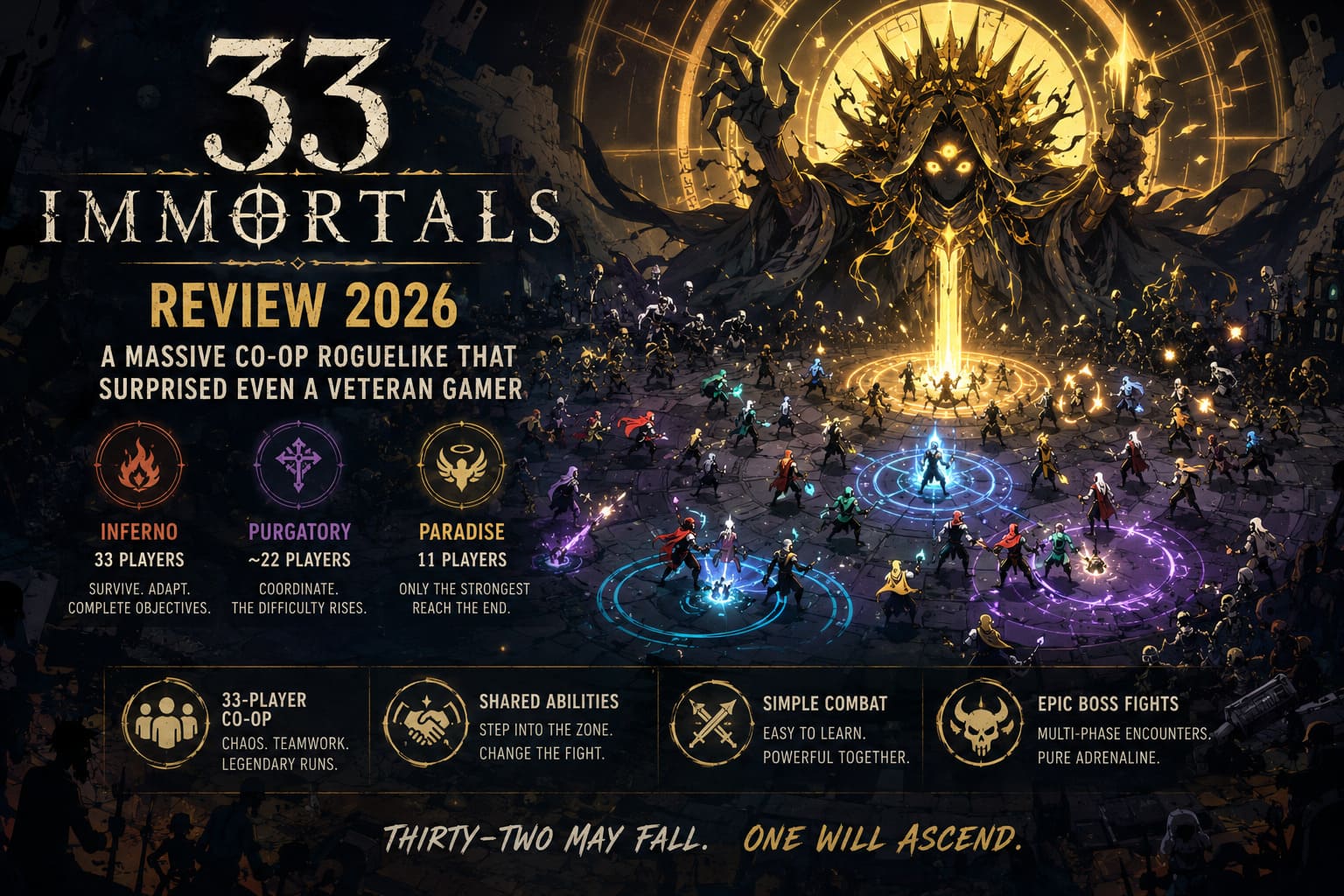
The entire game loop is built around a structured reduction of players and increasing intensity. Each run follows a clear three-stage progression:
- Inferno (33 players) – chaotic entry zone focused on survival and objectives
- Purgatory (around 22 players) – more coordinated combat with rising mechanical difficulty
- Paradise (11 players) – elite endgame encounters and high-pressure boss fights
33 Immortals Final Boss Guide: A Veteran’s Player Perspective on Beating Rogue Roguelike
This structure works surprisingly well because it naturally filters the group without feeling like a forced elimination mode. Instead, it feels like a descent where only the most coordinated players remain as difficulty rises.
Combat System: Simple Inputs, Complex Cooperation
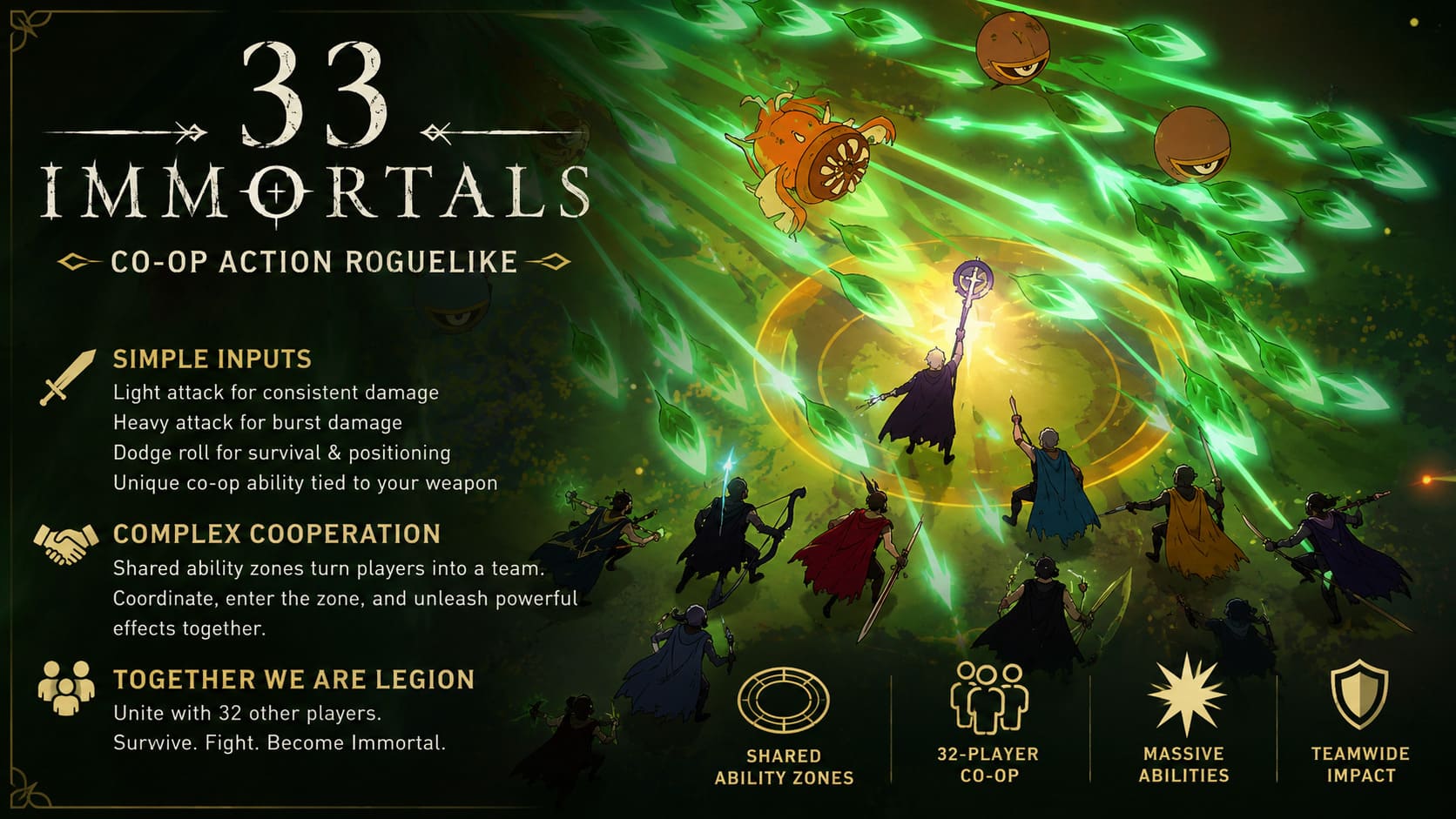
On an individual level, combat is intentionally simple. You’re not dealing with complex combos or technical execution-heavy mechanics. Instead, your toolkit usually includes basic but effective actions.
- Light attack for consistent damage output
- Heavy charged attack for burst damage
- Dodge roll for survival and positioning
- Unique co-op ability tied to your weapon
At first, this simplicity feels almost too minimal. But the real depth appears in how these abilities interact with other players in real time.
The Co-Op Mechanic That Defines the Game
The most interesting system in the game is the shared ability zones. When a player activates a co-op skill, a visible area appears on the ground that other players must physically enter to complete or amplify the effect.
These moments transform random groups into temporary squads without needing communication tools. When executed correctly, they can trigger powerful effects such as massive damage bursts, team-wide healing, or protective shields that can completely change the flow of a fight.
This system is the heart of the experience and the reason the game works as a large-scale co-op experiment.
Weapons and Playstyles: Identity Through Simplicity
The weapon system doesn’t aim for extreme complexity. Instead, it focuses on identity and group synergy. Each weapon feels designed to serve a role rather than define a solo playstyle.
Some examples include ranged builds that focus on marking enemies for team damage, balanced melee weapons that adapt to most situations, and heavy weapons that control space through area attacks.
What stands out is that no weapon feels irrelevant. Their value depends heavily on how they contribute to group dynamics rather than individual performance.
Boss Fights: The True Highlight of the Experience
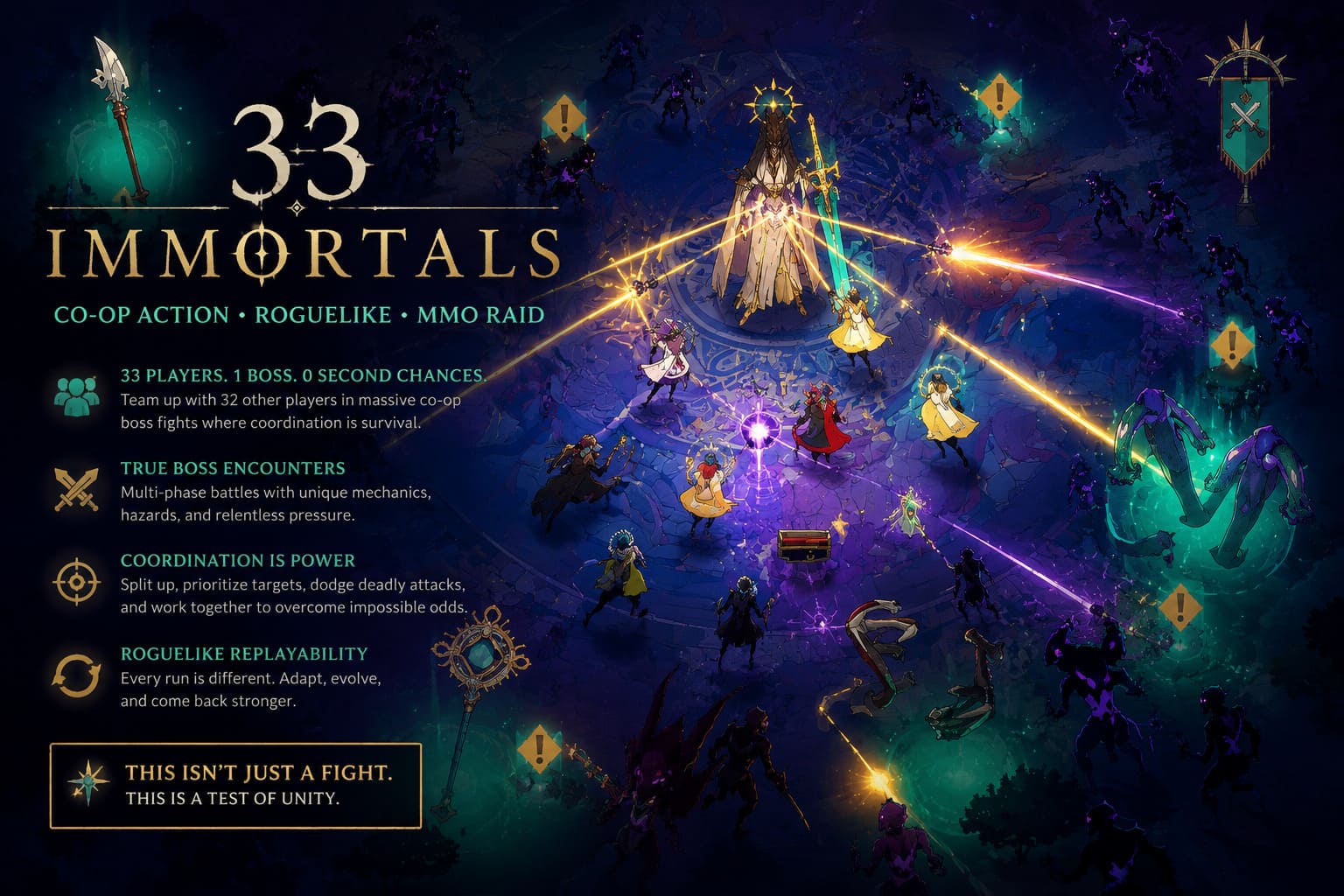
If there is one area where 33 Immortals truly shines, it is its boss encounters. These fights feel like condensed MMO raid battles redesigned for a fast-paced roguelike structure.
Instead of simple health bar encounters, bosses operate in multi-phase systems that require coordinated movement, split-group objectives, and constant awareness of environmental hazards.
Typical mechanics include arena-wide laser attacks, shield-breaking phases, bullet-hell style patterns, and coordinated target prioritization. The scale of these fights creates moments that feel genuinely cinematic.
Why These Battles Work So Well
The key strength of these encounters is how they force natural coordination. You don’t need voice chat or predefined roles. The system pushes players into instinctive teamwork, where survival depends on reading visual cues and reacting quickly.
When it works, it creates some of the most satisfying co-op moments in modern multiplayer gaming.
Visual Clarity and Performance Challenges
Despite its strengths, the game struggles with clarity during large-scale encounters. With 30+ players, dozens of enemies, and constant ability effects, the screen often becomes difficult to interpret.
At times, it becomes hard to track your own character amidst overlapping effects and environmental hazards. This doesn’t break the game, but it does add a layer of confusion that may not appeal to all players.
Performance can also dip during the most intense encounters, especially when effects stack heavily in crowded zones.
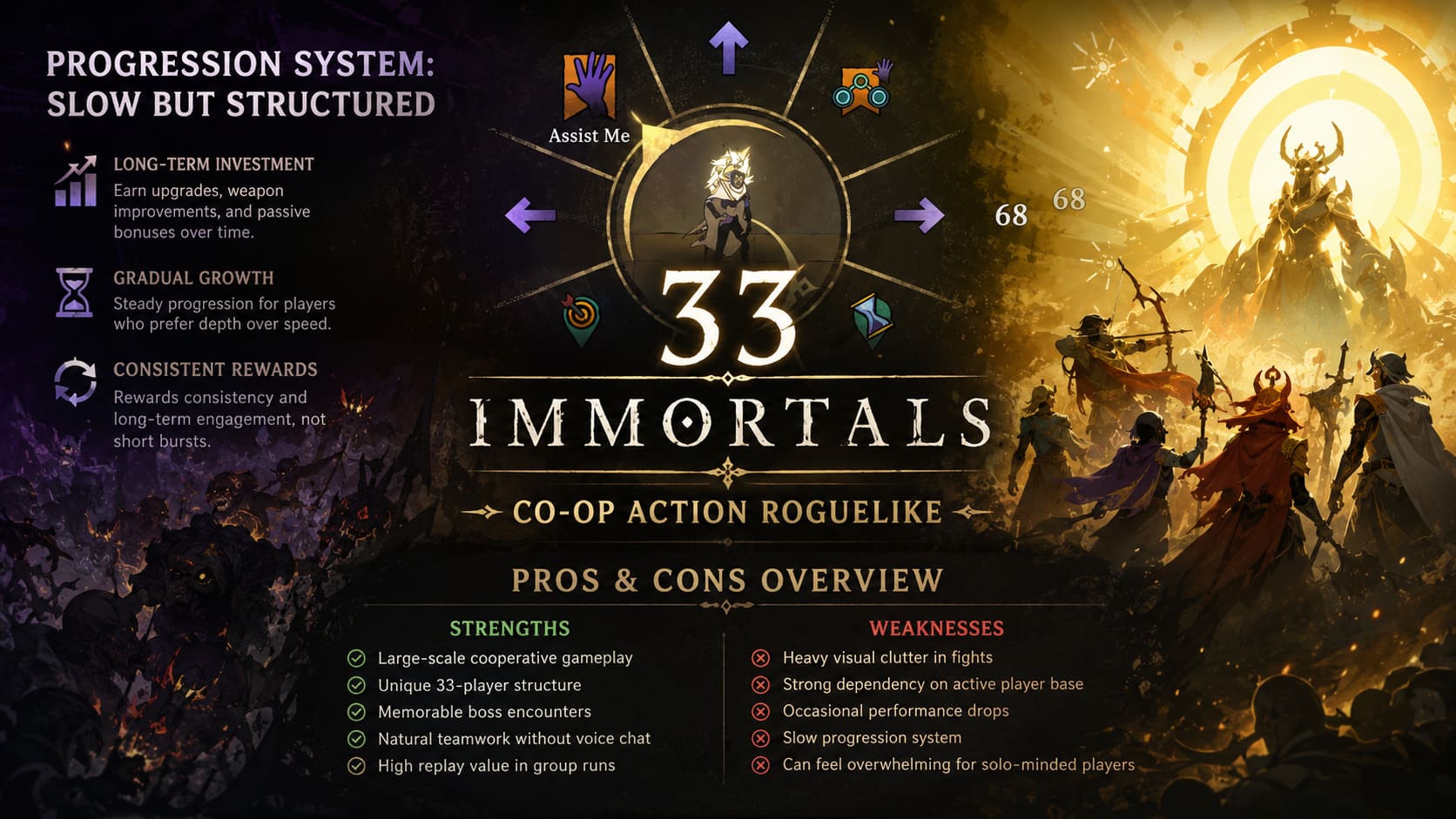
Progression System: Slow but Structured
The progression system is designed around long-term investment rather than fast rewards. Players earn upgrades, weapon improvements, and passive bonuses over time through repeated runs.
While this creates a sense of gradual growth, it can feel slow for players who prefer faster roguelike progression systems. Catching up to experienced players may require a significant time investment.
However, the system does reward consistency and long-term engagement rather than short bursts of play.
Pros and Cons Overview
| Strengths | Weaknesses |
|---|---|
| Large-scale cooperative gameplay | Heavy visual clutter in fights |
| Unique 33-player structure | Strong dependency on active player base |
| Memorable boss encounters | Occasional performance drops |
| Natural teamwork without voice chat | Slow progression system |
| High replay value in group runs | Can feel overwhelming for solo-minded players |
Final Thoughts: A Risk That Mostly Pays Off
33 Immortals is one of the most ambitious co-op roguelikes I’ve played in years. It doesn’t try to be clean, perfectly readable, or individually focused. Instead, it embraces chaos and builds systems that turn that chaos into structured teamwork.
It’s not a game for everyone. Players who prefer tight mechanical precision or solo-focused roguelikes may find it overwhelming. But for those who enjoy large-scale cooperative experiences where coordination emerges naturally, it offers something genuinely rare in modern gaming.
It is imperfect, sometimes messy, but consistently memorable—and in a crowded genre, that already puts it ahead of many competitors.