WARDOGS Loadout Building Optimization Guide: Economy Strategies to Dominate the Battlefield
If there is one thing that makes WARDOGS feel different from the usual tactical shooter, it is the money.
I have played plenty of shooters where dying is annoying but ultimately meaningless. You respawn, pick the same rifle again, and get back into the fight. WARDOGS takes that comfortable loop and throws it out of the window. Here, your gear has a price, your decisions have consequences, and a bad deployment can hurt your wallet almost as much as it hurts your K/D.
That persistent economy is what makes the WARDOGS loadout system so interesting. You are not simply asking, “What gun is strongest?” You are asking, “What can I afford to lose, what job am I doing, and how much value can I get from this life?”
And honestly, that is where the fun starts.
The smartest WARDOGS players will not necessarily be the ones running the most expensive weapons. They will be the players who understand loadout optimization, survival, team utility, and return on investment.
Why Your WARDOGS Loadout Matters So Much
WARDOGS gives every player a persistent bankroll and puts the responsibility for equipment directly in their hands. Weapons, armor, attachments, utilities, construction tools, and vehicles all compete for the same limited resources.
The scary part is what happens when you die.
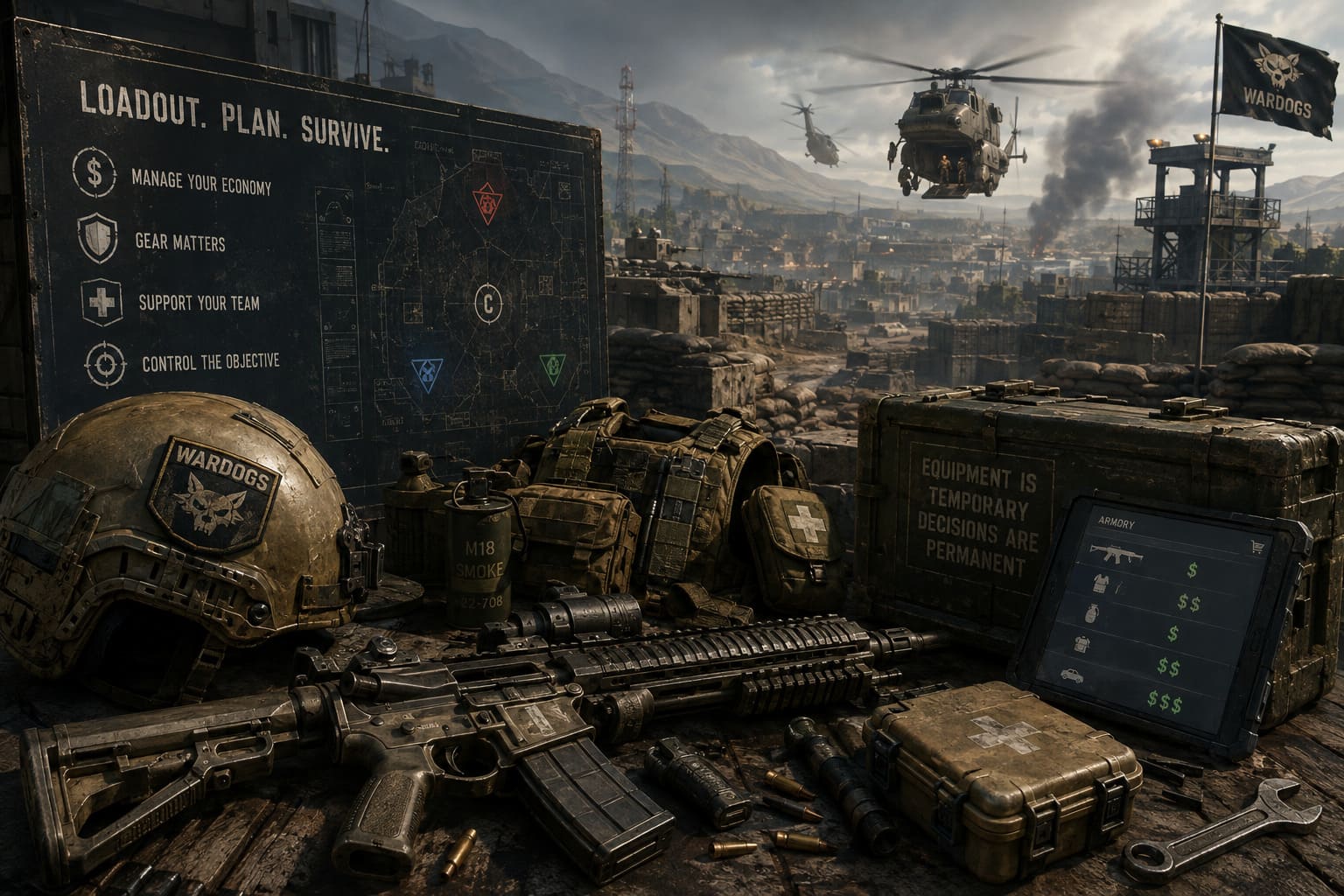
Your equipped gear is gone.
That changes the way I look at every deployment. A $10,000 kit isn’t automatically better than a $4,000 kit. If the expensive setup makes you reckless, while the cheaper setup lets you survive for twenty minutes and contribute to the objective, the cheaper kit is probably the better investment.
The basic philosophy is simple:
Build for the job, not for the price tag.
Before buying anything, ask yourself three questions:
- What role am I filling this life?
- How likely am I to survive?
- Can this loadout actually make money or create value for my team?
That mindset will save you a ridiculous amount of cash.
The Best WARDOGS Economy Strategy: Stop Buying Everything
One of the easiest mistakes for new players is spending their bankroll simply because they have the money available.
Don’t.
If you have a healthy balance, that does not mean you should immediately turn it into a monster loadout. Expensive rifles, premium attachments, heavy armor, and vehicles can disappear in seconds if you make one bad push.
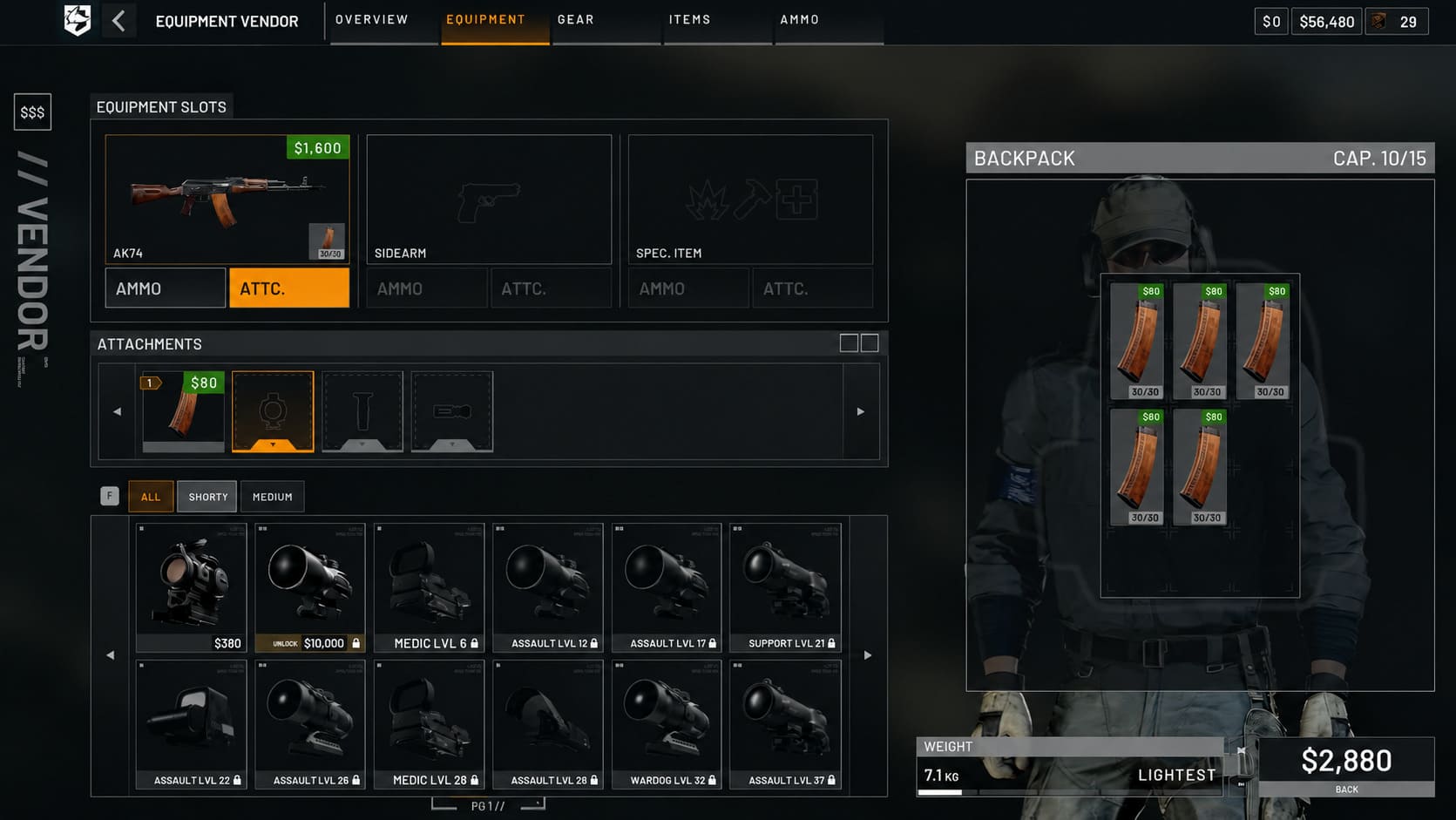
I prefer thinking about equipment in three categories:
| Loadout Type | Main Purpose | Spending Philosophy |
|---|---|---|
| Budget Kit | Recovering cash and early deployments | Spend as little as possible |
| Balanced Kit | Standard frontline fighting | Invest in survival and versatility |
| Premium Kit | Important pushes and experienced play | Spend aggressively, but with a clear purpose |
A budget kit is not a joke loadout. It is a financial recovery tool.
A balanced kit should probably be your default. It gives you enough firepower to compete without turning every death into a financial disaster.
Premium equipment should be reserved for moments when you genuinely understand why you are buying it.
Weapon Selection: Cheap Does Not Mean Bad
The weapon market can be tempting. You see a powerful assault rifle or specialized sniper platform and immediately start thinking about how much better your next match will be.
Then you get flanked ten seconds after leaving spawn.
There goes several thousand dollars.
For everyday fighting, I would prioritize reliability over raw damage. A weapon with manageable recoil, reasonable ammunition consumption, and inexpensive attachments can be far more useful than an expensive weapon that requires perfect positioning.
Your primary weapon should fit the environment you expect to fight in.
If you are spending most of your time around the central objective, you probably want something comfortable at close and medium range. If you are defending a distant approach, a weapon built around accuracy and range makes much more sense.
And don’t underestimate attachments.
A relatively inexpensive rifle can become dramatically easier to use after improving recoil control, handling, or aiming speed. In my opinion, this is one of the better places to spend money because attachments can improve your performance without forcing you into an absurdly expensive weapon platform.
My General Weapon Rule
Buy the cheapest weapon that performs the job properly, then spend selectively on the attachments that actually improve how you play.
There is no prize for dying with the most expensive rifle in the match.
Armor Is Insurance, Not Decoration
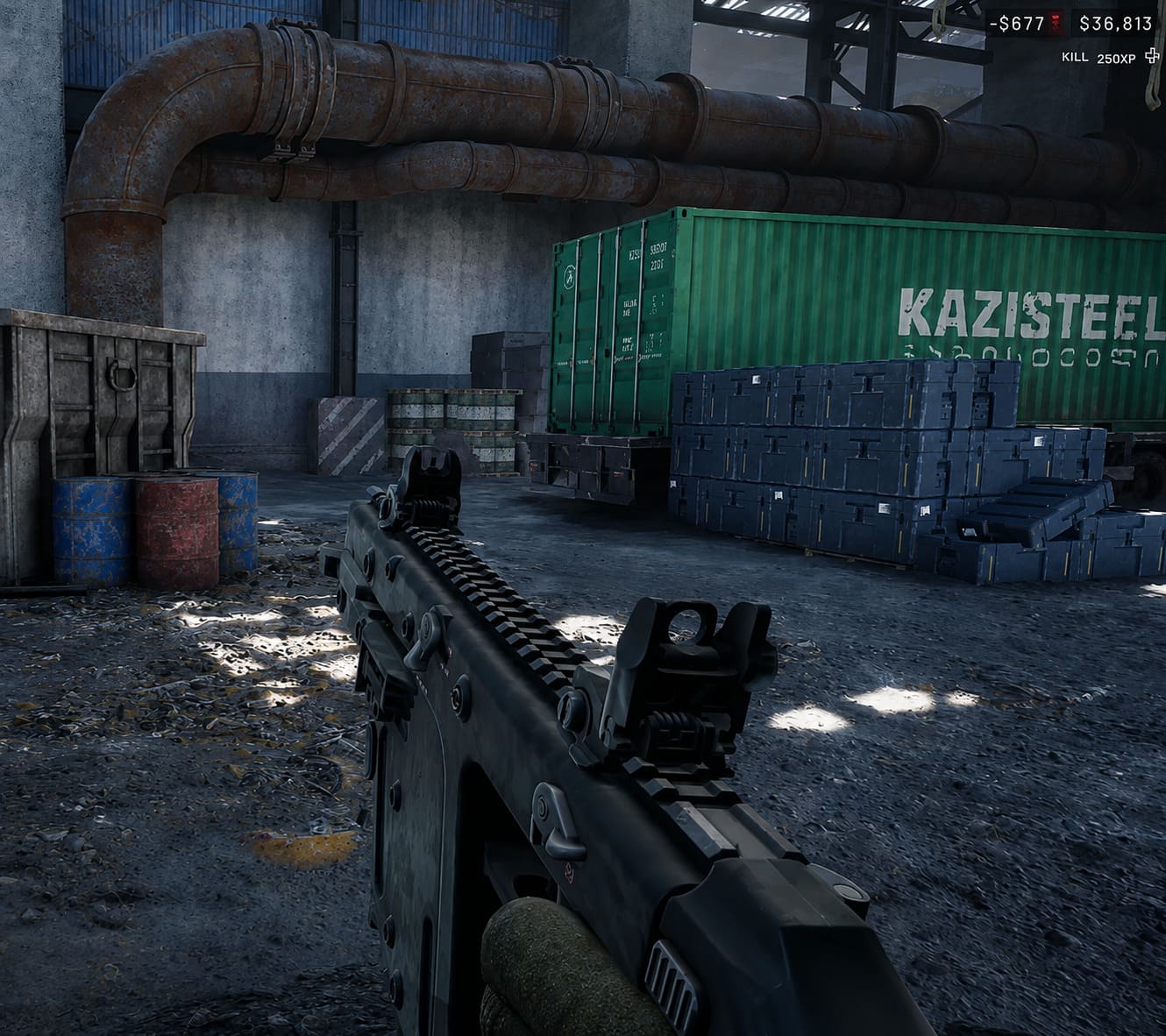
If weapons are your offensive investment, armor is your insurance policy.
WARDOGS’ emphasis on ballistics makes protection especially important. Going into a serious fight with minimal armor just to afford a fancy weapon can backfire immediately.
You might win one duel with that expensive rifle. But if the next enemy bullet ends your life before you can react, the economics of that decision suddenly look terrible.
I would rather use a slightly cheaper weapon with strong protection than spend my entire budget on firepower and become incredibly fragile.
However, there is a catch.
Weight matters.
Heavy armor combined with a heavy weapon can turn you into a slow-moving target. That might be acceptable when defending a fortified position, but it is a nightmare if your role requires constant movement.
Match Armor to Your Role
- Frontline defender: Heavy armor makes sense.
- Combat medic: Lighter protection can improve mobility.
- Scout/flanker: Prioritize movement and stamina.
- Vehicle operator: Lightweight equipment is usually more practical.
- Objective attacker: Balance protection with enough mobility to reach the target.
The perfect armor setup is not necessarily the heaviest one. It is the one that gives you enough survivability without destroying your ability to move.
Support Gear Can Be More Valuable Than Another Gun
This is where WARDOGS gets really interesting.
In many shooters, support equipment feels like something you carry when nobody else wants to. In WARDOGS, support actions can directly contribute to your economic recovery.
Medical equipment, ammunition supplies, repair tools, construction equipment, and transport vehicles can all create value beyond simply getting kills.
If your aim is terrible on a particular night, you can still be useful.
Build.
Repair.
Resupply.
Revive.
Transport.
Those actions keep your team functioning, and they can generate income while also helping your faction win.
That is a much healthier economy loop than repeatedly buying an expensive rifle and hoping your aim magically improves.
Building Fortifications the Smart Way
The construction system deserves special attention because it can completely change a fight around an objective.
A good fortification is not just something that looks impressive. It should make the enemy spend more time, ammunition, explosives, or manpower to reach you.
When constructing defensive assets, learn the critical building mechanic. Hitting the marked construction point correctly can dramatically speed up the process.
That becomes extremely important when building under pressure.
Instead of casually hammering away while enemies are approaching, experienced builders can get defensive structures operational much faster.
And this creates an underrated loadout combination:
Construction tool + repair equipment + ammunition support.
You are not simply building a wall. You are maintaining a defensive ecosystem.
Keep the fortifications repaired. Keep teammates supplied. Keep the position operational.
A player doing all three can be more valuable than another assault rifle carrier standing behind the same wall.
WARDOGS Vehicles: Huge Risk, Huge Reward
Vehicles are where the economy can get brutal.
A helicopter or armored vehicle can completely change a battle, but it can also become a very expensive explosion.
The biggest mistake is treating vehicles like disposable toys.
If you purchase a vehicle, you should already know what you intend to accomplish with it.
Transport helicopters are particularly interesting because their value isn’t necessarily measured by kills. Moving players quickly toward active objectives can generate continuous team value while accelerating your faction’s battlefield presence.
Logistics vehicles work similarly.
Think of them as mobile infrastructure, not just transportation.
And if you are operating a vehicle, your infantry loadout should reflect that role.
Why bring a huge sniper rifle and heavy armor when your main responsibility is driving, repairing, transporting, and surviving?
A lightweight weapon, mobile armor, repair equipment, and smoke can make much more sense.
The Three-Team Battle Changes Everything
WARDOGS’ three-faction structure adds another layer to loadout planning.
With three groups competing around a central objective, the battlefield can change incredibly quickly. One faction may dominate for several minutes before the other two suddenly realize that allowing the leader to continue is a terrible idea.
This means your loadout should evolve with the match.
Opening Stage
Early in the match, mobility is king.
Use relatively cheap equipment, scout routes, establish forward positions, and help your team reach the objective before the battlefield becomes locked down.
There is no reason to burn your entire bankroll during the opening minutes.
Defensive Stage
Once your faction controls the objective, the priorities change.
- Strong defensive positions
- Ammunition supplies
- Medical support
- Construction equipment
- Repair tools
- Heavier defensive weapons
This is where a squad should start thinking less like individual players and more like a small military unit.
Breakthrough Stage
If another faction has built a fortress around the objective, trying to win a straight gunfight against prepared defenders can be a waste of money.
This is the time for smoke, explosives, demolition tools, and coordinated pushes.
The objective isn’t necessarily to kill every defender.
It is to make their defensive investment collapse.
The WARDOGS Loadout Budget I Recommend
If you are still learning the economy, I would use a simple financial rule.
Never spend your entire bankroll on one deployment.
Keep enough money available to recover from a bad death streak.
For example, if your comfortable average kit costs around $4,000, having only $4,500 in the bank is dangerous. One unlucky death leaves you with almost nothing.
A healthier approach is to maintain a buffer of several basic deployments.
That way, a terrible match doesn’t force you into a miserable cycle of ultra-cheap gear.
The goal isn’t to become rich for the sake of seeing a large number in your account.
The goal is to always have enough money to field a competitive kit.
WARDOGS Voice Chat Not Working: How to Fix the 2026 Proximity Mic Bug
Five Rules I Would Never Ignore
If you only remember a handful of things from this WARDOGS loadout guide, make them these:
- Don’t spend your entire bankroll. Keep an emergency reserve.
- Buy equipment for your role. A perfect sniper setup is useless when you’re expected to clear an objective.
- Don’t sacrifice armor just to afford a flashy weapon.
- Use support equipment to create income and team value.
- Treat expensive vehicles and premium kits as investments, not disposable toys.
Ultimate WARDOGS Proximity Voice Chat Settings Guide: Boost Tactical Awareness and Immersion
Final Thoughts: Play WARDOGS Like a Tactical Shooter, Not a Shopping Simulator
What I like most about the WARDOGS economy system is that it forces you to think before you deploy.
Every loadout tells a story.
A cheap rifle with light armor might mean you’re rebuilding your bankroll. A heavily armored defensive kit says you’re preparing to hold a position. A repair torch and smoke grenades suggest you’re responsible for keeping a vehicle alive. A construction hammer tells everyone that you’re planning to turn the objective into a fortress.
And that is exactly why loadout optimization matters.
The best WARDOGS players won’t simply have the biggest weapons or the most expensive equipment. They’ll understand when to spend, when to save, when to fight, and when to support.
Personally, I think that is the real hook of the game. The persistent economy makes every death sting a little more, but it also makes every successful deployment feel much more rewarding.
So before your next match, don’t ask yourself, “What is the most expensive loadout I can buy?”
Ask the better question:
“What is the cheapest loadout that can accomplish exactly what my squad needs?”
That is where the real WARDOGS meta begins.