Gothic 1 Remake Lockpicking Guide: How to Pick Locks and Find Lockpicks Fast
For many longtime Gothic fans, opening a chest used to be one of the simplest activities in the entire game. You memorized a left-right sequence, hoped your lockpick survived, and collected your reward. The Gothic 1 Remake completely changes that philosophy.
The first time I encountered a locked chest in the remake, I honestly thought I was missing a tutorial. Instead of a quick mini-game, I found myself staring at a mechanical puzzle that looked like something pulled from a complex escape room. At first, it felt frustrating. After spending several hours with the system, however, I realized something important: this is one of the most immersive lockpicking mechanics I’ve seen in a modern RPG remake.
It is challenging, sometimes unforgiving, and definitely not designed for impatient players. But once you understand how it works, it becomes surprisingly satisfying.
The Biggest Change: Lockpicking Is Now a Real Puzzle
The remake abandons the old memory-based lock system entirely. Every lock now consists of multiple sliding metal plates connected to a network of internal mechanisms.
When you interact with a locked chest or door, you’re presented with several horizontal plates that can move left or right. Each plate contains multiple positions, while pins inside the lock must ultimately align in the center slot.
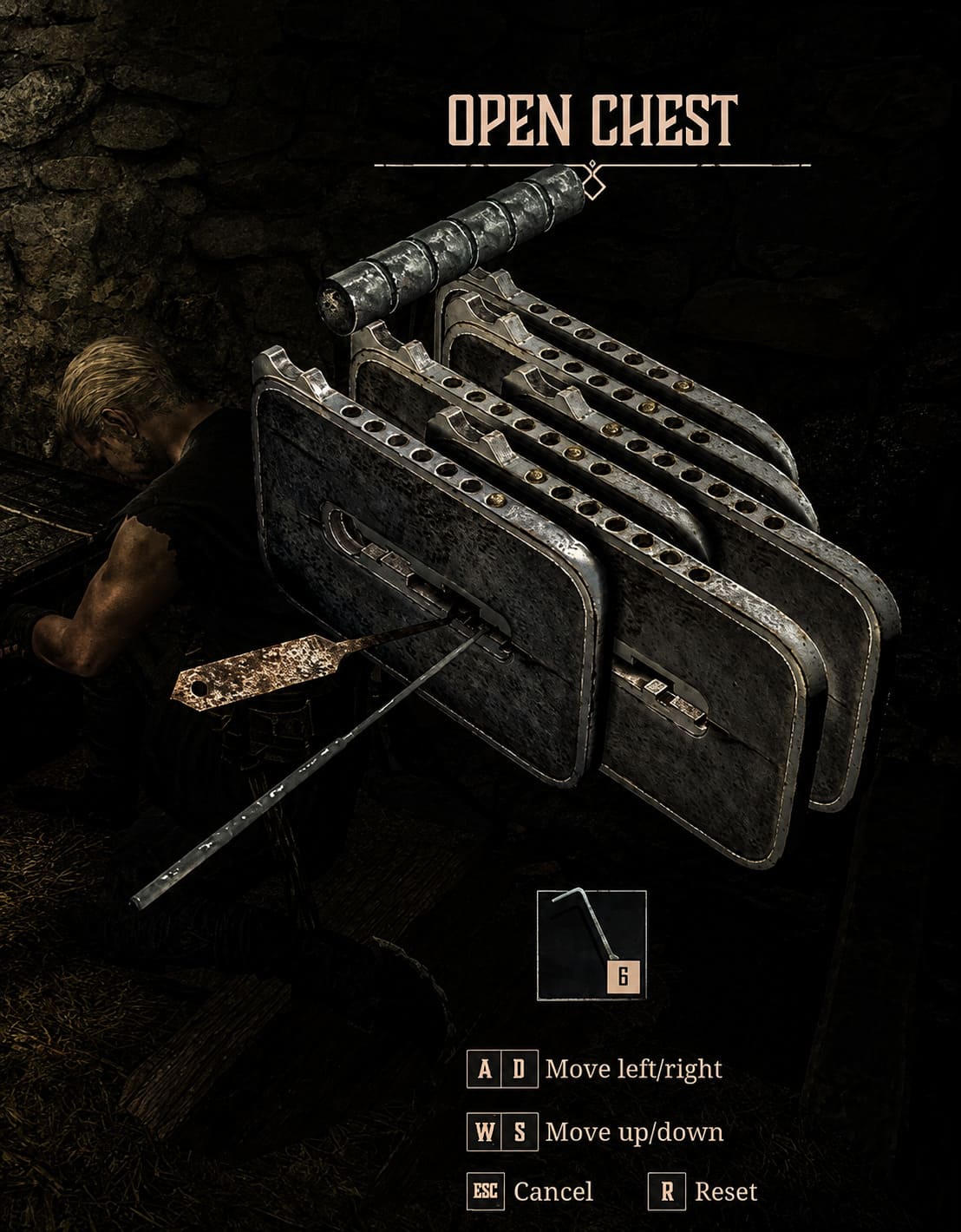
The objective sounds simple:
Move every plate until all pins lock into their correct central position.
The problem is that almost nothing inside the lock works independently.
One movement can affect multiple components at the same time, creating a chain reaction that quickly turns a simple lock into a brain-teasing challenge.
Why Beginners Break So Many Lockpicks
Most players don’t fail because the puzzle is impossible.
They fail because they don’t understand what actually damages lockpicks.
A lockpick isn’t damaged by experimenting. It breaks when excessive strain is applied to the mechanism.
This usually happens when:
- A plate is pushed completely against the left boundary.
- A plate is pushed completely against the right boundary.
- You continue forcing movement after reaching the limit.
- You leave the puzzle while strain remains active.
The game doesn’t always explain this clearly, which is why many players believe lockpick durability is random.
In reality, careful players can spend a long time testing a lock without losing a single tool.
Understanding Connected Plates
The true difficulty comes from plate connections.
Some plates move alone.
Others are mechanically linked.
I’ve noticed three common situations:
- Independent movement – only the selected plate moves.
- Parallel movement – another plate moves in the same direction.
- Opposite movement – another plate shifts in the opposite direction.
This means solving one row can accidentally ruin progress elsewhere.
At first, I approached locks by trying to align pins immediately. That was a mistake.
The smarter approach is understanding relationships between plates before attempting any serious solution.
Think of it less like lockpicking and more like solving a mechanical puzzle box.
My Personal Strategy for Difficult Locks
After opening dozens of containers throughout the Valley of Mines, I developed a routine that works surprisingly well.
1. Create a Save First
Old habits die hard.
Even though the remake improves many systems, lockpicks remain valuable early in the game. A quick save before attempting a difficult lock can save a lot of frustration.
2. Test Every Plate
Before trying to solve anything, move each plate slightly.
Watch carefully:
- Which plates react?
- Which rows stay independent?
- Which movements affect multiple sections?
Gathering information is often more important than making progress.
3. Keep Everything Away from the Edges
This is probably the most important rule in the entire mini-game.
Whenever a plate gets close to a wall, prioritize moving it back toward the center.
You gain room for experimentation and greatly reduce the chance of damaging your lockpick.
4. Solve Linked Components First
The interconnected plates create most of the complexity.
If you leave them for last, they’ll constantly disrupt rows you’ve already aligned.
I prefer solving connected sections first and dealing with simple rows afterward.
5. Finish with Independent Plates
Once the complicated mechanics are under control, the remaining rows usually become straightforward adjustments.
At that stage, opening the lock often takes only a few additional moves.
Where to Find Lockpicks Early
The remake doesn’t shower players with lockpicks.
If you’re serious about becoming a thief, exploration is essential.
Some of my favorite early sources include:
- Abandoned huts around camp areas.
- Containers hidden inside prisoner shacks.
- Dead NPCs found during exploration.
- Forgotten supplies in caves and remote pathways.
Players who thoroughly search every location rarely run out of tools.
Those who sprint through quests often find themselves broke and unable to open valuable chests.
Best Merchants for Buying Lockpicks
Eventually, buying lockpicks becomes the most reliable solution.
Several traders consistently provide them.
Mordrag
For many players, Mordrag becomes the first dependable supplier.
His inventory makes him extremely useful during Chapter 1, especially if you’re investing in thievery skills.
Dexter
Dexter is another excellent option when you need emergency supplies.
Since many players interact with him during quests anyway, checking his inventory becomes a natural habit.
Glen
Deep inside the Old Mine, Glen can provide essential equipment when you’re far from camp and don’t want to return empty-handed.
Why Learning Lockpicking Is Worth Every LP
One thing Gothic veterans understand better than newcomers is that progression matters.
The game is designed around the idea that certain challenges should feel impossible early on.
Lockpicking perfectly reflects that philosophy.
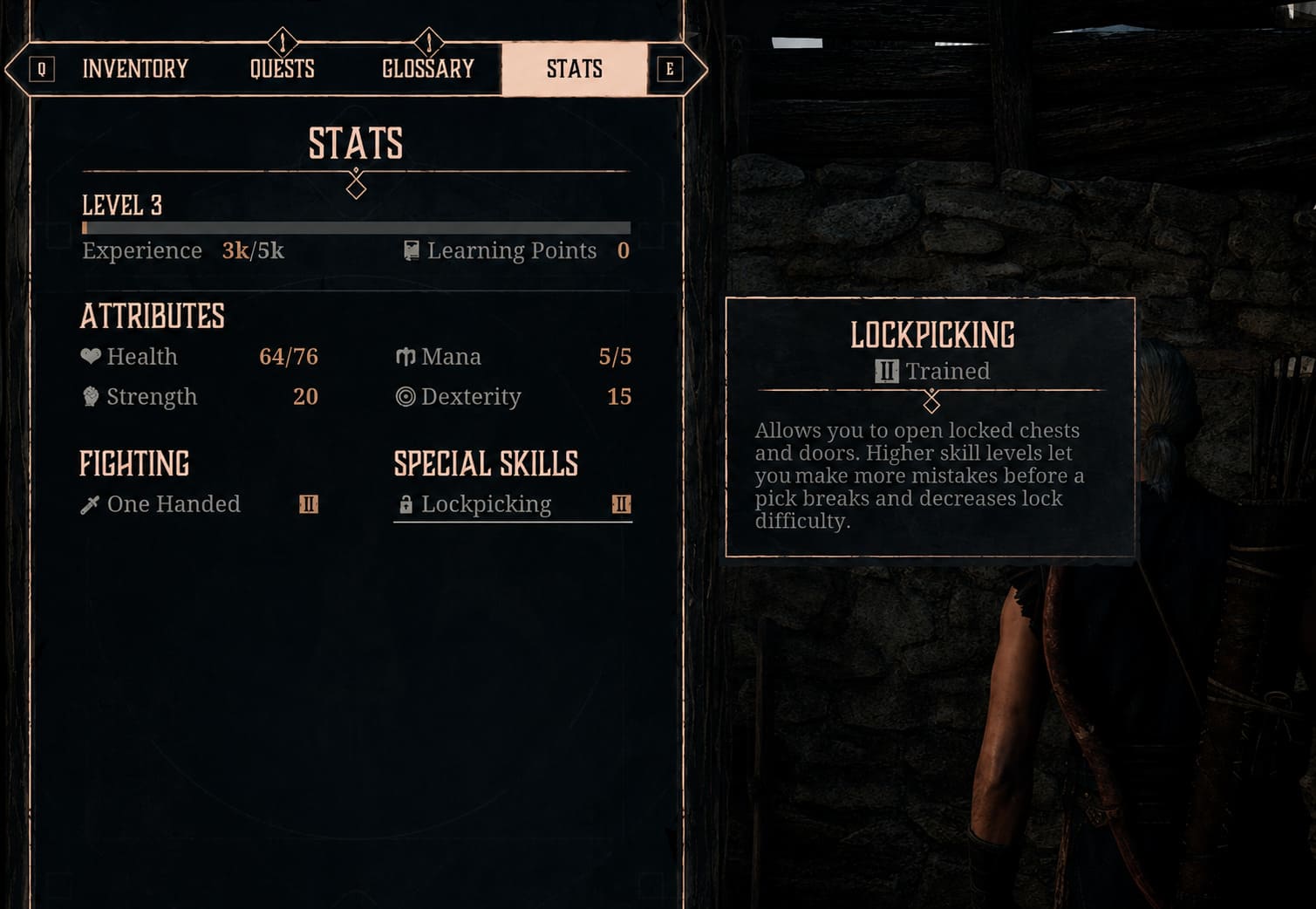
Investing Learning Points dramatically changes the experience.
Instead of simply increasing success rates, the remake actively reduces frustration and improves quality of life.
Lockpicking Progression Overview
| Skill Level | Lockpick Durability | Main Benefits |
|---|---|---|
| Untrained | 2 mistakes | Full puzzle complexity and limited room for error |
| Trained | 4 mistakes | Progress remains after lockpick breaks |
| Master | 6 mistakes | Broken picks simplify lock mechanisms over time |
The jump from Untrained to Trained feels enormous.
The jump from Trained to Master feels almost unfair—in a good way.
By the time you reach Master level, even intimidating locks become manageable.
Gothic 1 Remake The Cult’s Recipe Quest Guide: How to Steal Cor Kalom’s Recipe and Impress Dexter
A Design Choice That Fits Gothic Perfectly
I’ve seen some criticism online claiming the new lockpicking system is too difficult.
Personally, I disagree.
Gothic has always been a game about earning your power.
In most modern RPGs, you can loot everything almost immediately. Gothic never worked that way.
When you encounter a chest that seems impossible to open, the game is essentially telling you:
“Come back later when you’ve grown stronger.”
That’s classic Gothic design.
The remake preserves that identity while modernizing the mechanic itself.
Gothic 1 Remake Fire Mage Walkthrough: How to Join the Circle of Fire Early
Final Thoughts
The Gothic 1 Remake lockpicking system is one of the boldest changes Alkimia Interactive made to the original formula.
Yes, it can be frustrating.
Yes, you’ll probably break several lockpicks while learning.
And yes, some high-level locks can feel overwhelming during the first few hours.
But once the mechanics click, the system becomes surprisingly rewarding. Every opened chest feels earned rather than handed to you.
My advice is simple:
Don’t rush. Study the lock. Keep plates away from the edges. Invest in lockpicking training early.
Do that, and you’ll eventually discover that even the most intimidating lock in the Valley of Mines can be cracked.
And when that final pin clicks into place and a treasure-filled chest swings open, you’ll understand exactly why this remake’s lockpicking system has become one of its most talked-about features.