Stuntman Hollywood DeLorean Time Machine: Back to the Future Returns to Gaming
When I first saw the reveal of Stuntman: Hollywood, it immediately felt like one of those rare gaming announcements that actually tries to do something different instead of just chasing trends. This isn’t just a reboot of an old PS2 franchise.
It’s a full attempt to bring back a very specific kind of gameplay that mixes cinematic direction, precision driving, and controlled chaos.
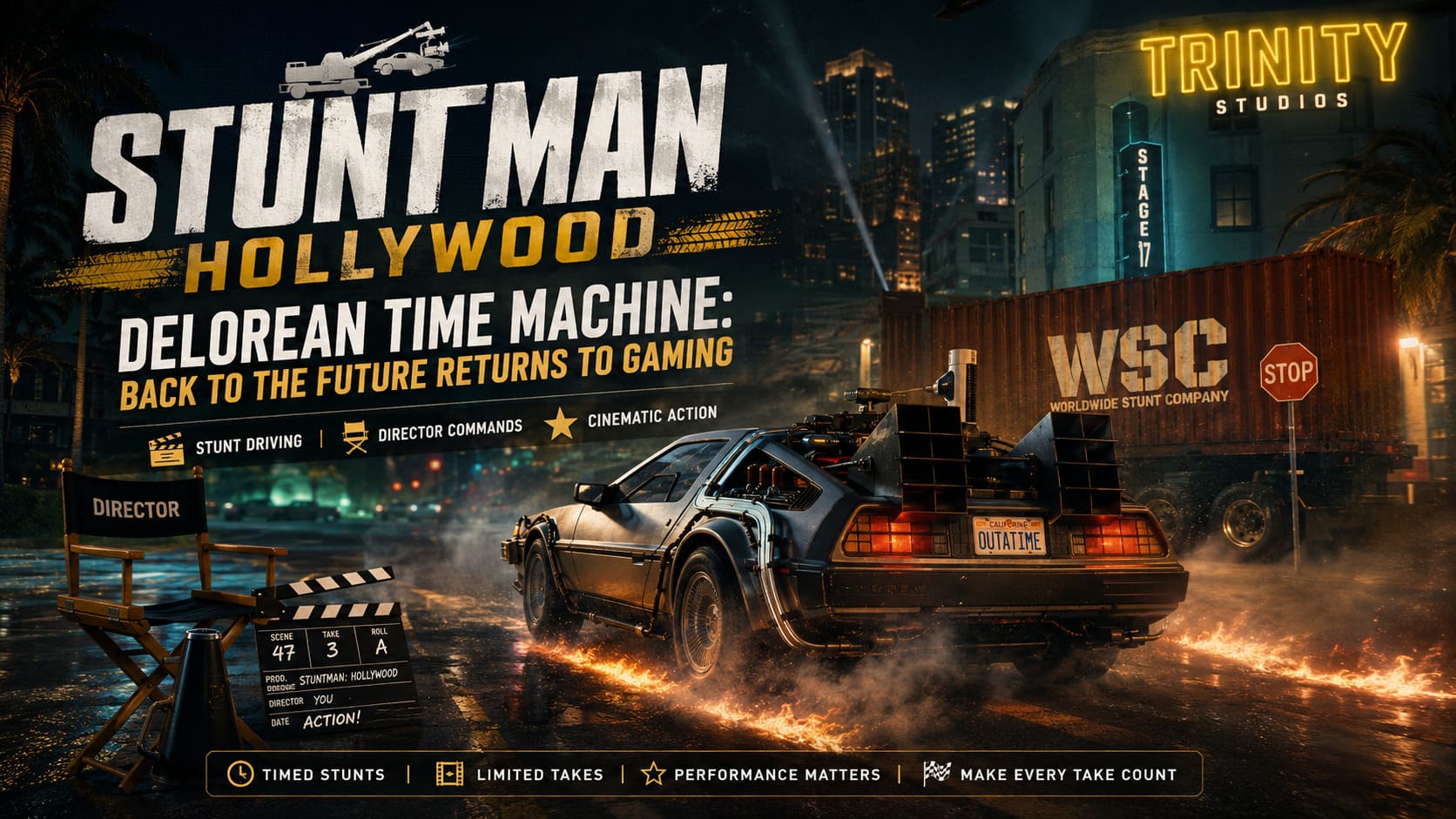
And then there’s the moment everyone keeps talking about: the inclusion of the DeLorean Time Machine from Back to the Future. That alone is enough to push this game into “must watch” territory for both movie fans and arcade racing players.
Stuntman Hollywood Xbox Series X – A Brutal Return of Cinematic Driving Chaos
A Different Kind of Driving Game
Unlike traditional racing games where the goal is simple—finish first—Stuntman has always been about performance under pressure. You are not a racer. You are a stunt driver working on a film set, following strict instructions and hitting precise marks.
The original series built its identity on a few core ideas:
- Driving based on timed director commands
- Strict limitations on retries per scene
- Performance judged like a movie production
- Focus on precision rather than speed alone
That structure made the original games both frustrating and addictive. You weren’t just playing—you were rehearsing a perfect take until everything lined up.
Stuntman: Hollywood on Steam – PC Revival Review
The DeLorean as a Gameplay Experience, Not Just a Cameo
The biggest surprise in Stuntman: Hollywood is not just that the DeLorean appears, but how it appears to be used. This isn’t a free-roam bonus car or a cosmetic unlock. It looks like a fully integrated part of scripted stunt sequences.
Instead of simply driving around, players will likely be tasked with:
- Reaching exact speed thresholds like 88 mph at specific moments
- Timing jumps and environmental triggers in cinematic sequences
- Recreating iconic Back to the Future-style set pieces
- Executing stunts in tightly choreographed “film shoots”
This approach changes the DeLorean from a nostalgic collectible into a functional storytelling tool inside the game.
Gameplay Structure: Pressure and Precision
The gameplay loop appears to be built around structured stunt sequences rather than open exploration. Each mission feels like a controlled production where everything depends on timing and accuracy.
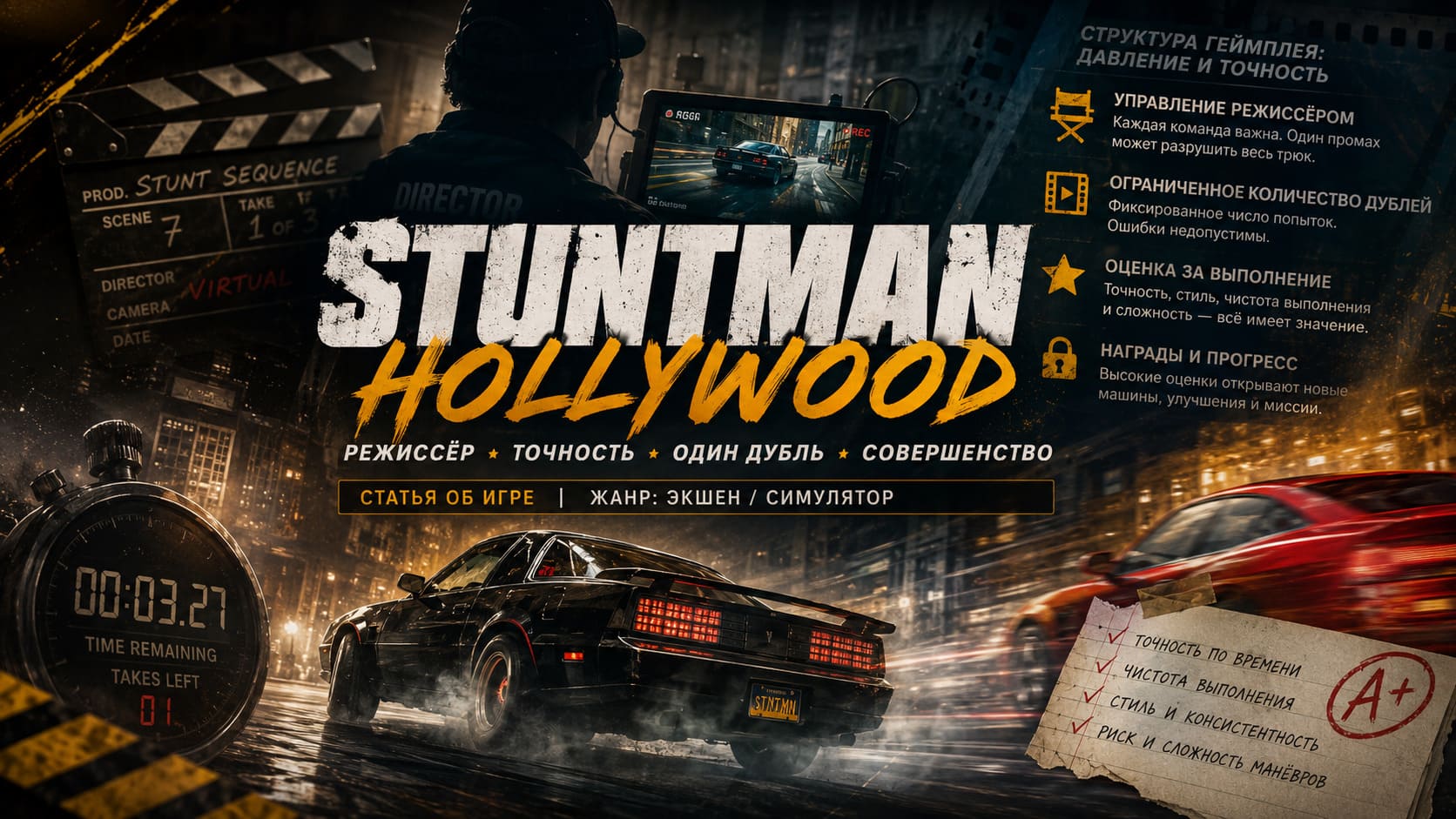
Director-Driven Gameplay
A virtual director constantly issues commands during gameplay. These instructions are not optional—they define how the entire sequence unfolds. Missing a cue can break the entire stunt chain.
Limited Takes System
Each scene gives you a fixed number of attempts. There is no endless retry system. Once you run out of takes, the production fails. This adds pressure to every single run.
Performance Ratings
At the end of each sequence, players are evaluated like a film crew would evaluate a stunt shoot. The grading system rewards:
- Timing accuracy
- Clean execution of stunts
- Style and consistency
- Risk and complexity of maneuvers
High ratings unlock new vehicles, customization items, and progression content tied to your stunt career.
Why This Feels Different in Today’s Gaming Landscape
Most modern racing games fall into two predictable categories: ultra-realistic simulators or open-world arcade sandboxes. Stuntman: Hollywood doesn’t fully belong to either.
Instead, it feels like a return to tightly designed, mission-based gameplay where structure is part of the experience. There’s no pretending this is a relaxed driving simulator. It’s closer to a rhythm game mixed with cinematic action direction.
In a time where many games rely heavily on live-service systems and endless content loops, this kind of focused single-player experience feels refreshing.
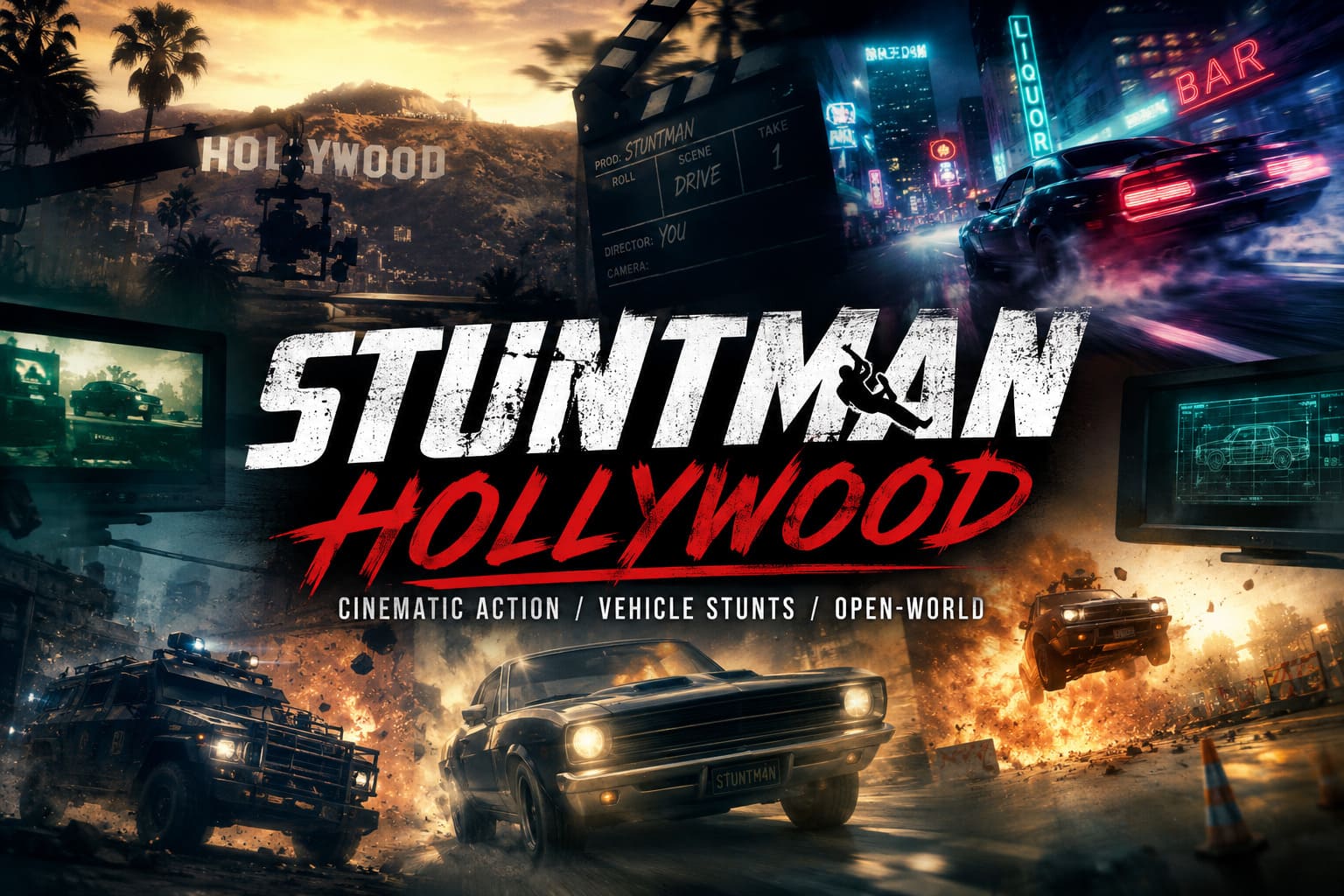
Cinematic Vehicle Roster and Variety
While the DeLorean is clearly the centerpiece of discussion, the broader vehicle lineup seems designed to cover multiple eras and genres of film and television.
From what has been shown, players can expect vehicles inspired by:
- Classic 80s television crime-fighting cars with AI systems
- Neon-heavy street racing machines from crime dramas
- High-performance tuner cars built for extreme highway stunts
- Armored vehicles designed for demolition-style action sequences
Each category seems built around a specific type of cinematic energy, ensuring that gameplay never stays in one style for too long.
Community Reaction and Expectations
The reaction from gaming communities has been a mix of excitement and caution. On one hand, there is clear enthusiasm for the return of a cult classic franchise. On the other hand, there are concerns about how modern audiences will respond to its difficulty.
The original Stuntman games were famously unforgiving. If this new entry preserves that challenge without adjustment, it could either become a deeply rewarding experience or a frustrating one for newer players.
A lot will depend on how well the developers balance accessibility with the series’ traditional difficulty curve.
Final Thoughts
Stuntman: Hollywood feels like one of those rare projects that takes a real creative risk. It is not trying to be everything at once. Instead, it is focusing on a very specific fantasy: being a stunt driver inside a Hollywood film production.
The addition of the DeLorean Time Machine only amplifies that concept, turning nostalgia into an interactive experience rather than a passive reference.
If Saber Interactive manages to balance precision gameplay, cinematic presentation, and modern accessibility, this could easily become one of the most memorable arcade-style releases in years.
For now, it remains one of the more intriguing upcoming titles—especially for players who miss structured, skill-based gameplay wrapped in a strong visual identity.