WARDOGS Enemy Spotting Guide: How to See, Tag, and Track Players
I’ll be honest: when I first started playing WARDOGS, I thought my biggest problem would be aim.
It wasn’t.
My biggest problem was actually seeing the guy who was about to kill me.
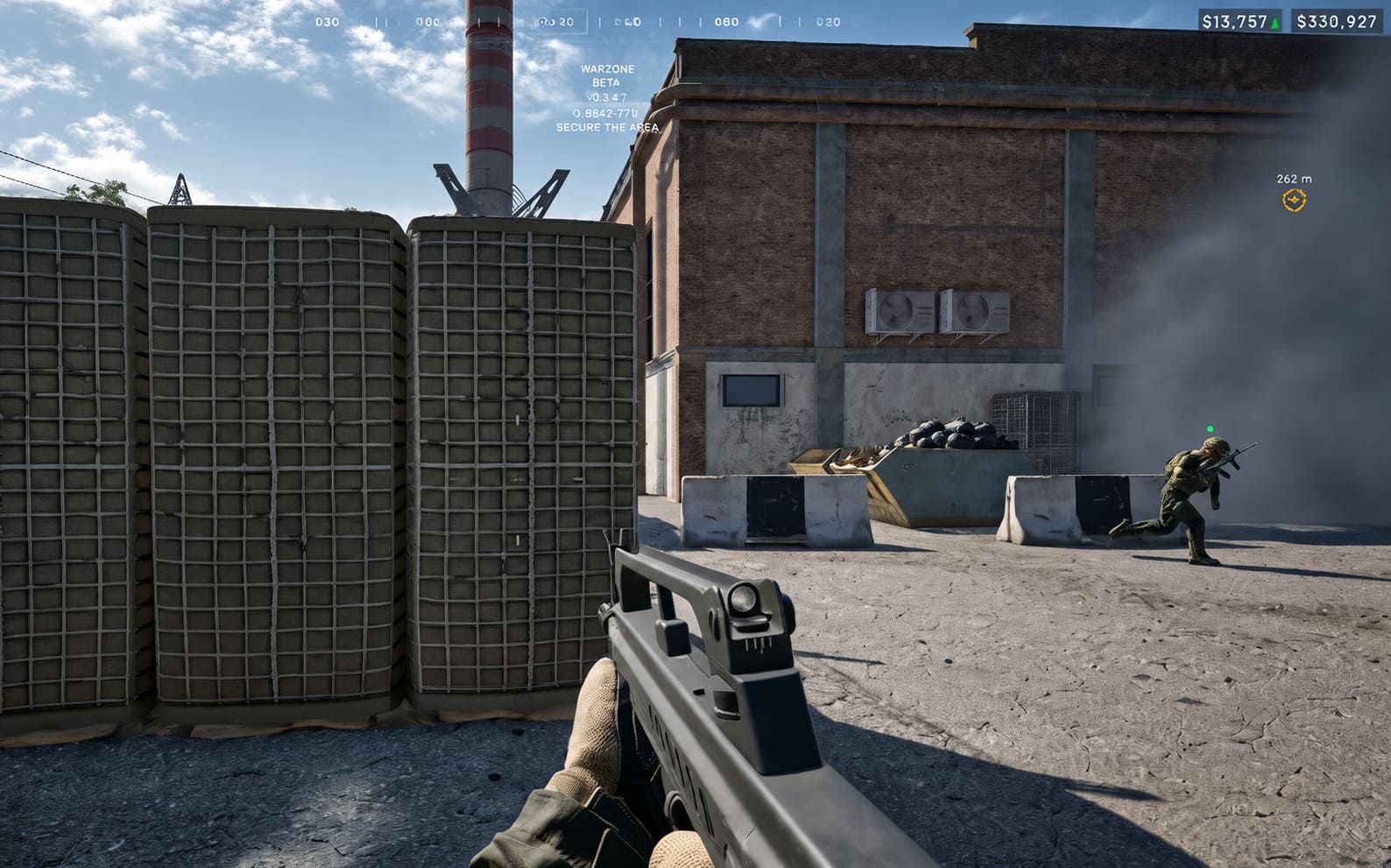
WARDOGS has that nasty habit of making you stare directly at an enemy position for several seconds without realizing that there’s a player sitting behind a window, inside some vegetation, or halfway up a ruined structure. Then you hear one shot, your screen goes dark, and you’re left wondering where the hell it came from.
That’s not necessarily bad design. In fact, I think it’s one of the things that makes WARDOGS so interesting.
This isn’t one of those shooters where the minimap constantly tells you exactly where everybody is. The huge battlefields, destruction, foliage, industrial structures, and three-faction battles mean that information is almost as important as gun skill.
Once I started treating spotting as an actual gameplay skill rather than something I occasionally did with a button press, my survival rate improved dramatically.
So if you’re constantly getting shot by enemies you never saw, here’s what finally worked for me.
Stop Confusing Pings With Actual Enemy Spots
This sounds incredibly basic, but it’s one of those things that can completely change how you communicate with your squad.
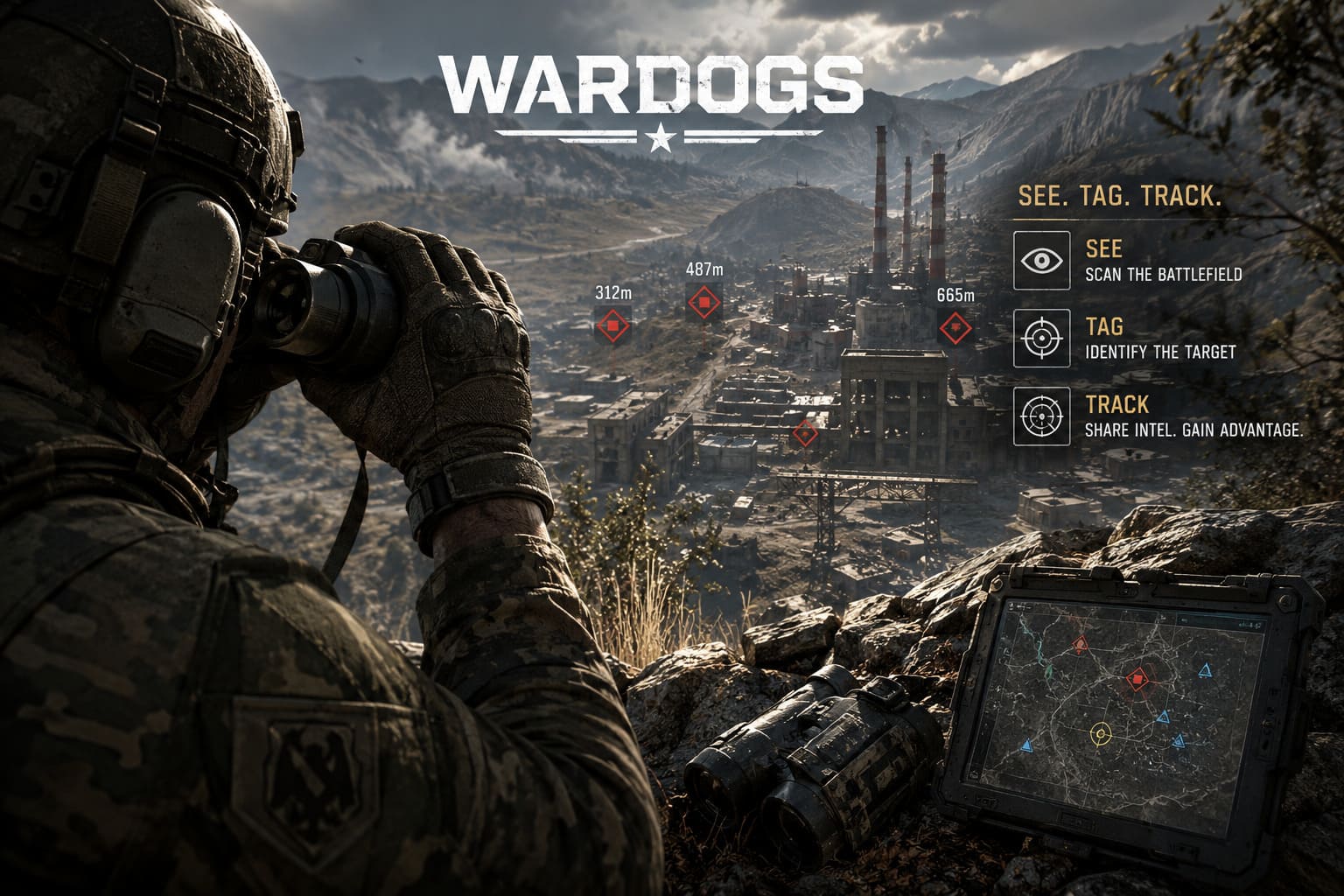
WARDOGS effectively has different levels of battlefield communication, and a normal tactical ping shouldn’t be treated as the same thing as a proper reconnaissance spot.
A regular ping is basically you saying:
“Look over there.”
It’s great for quickly pointing toward a building, suspicious window, vehicle route, or general enemy direction. It’s fast, useful, and doesn’t require you to pull out specialized equipment.
But don’t expect it to magically provide persistent enemy information.
A proper reconnaissance spot is much more valuable because it can turn an enemy’s position into actionable information for your wider faction.
That’s the difference I think new players underestimate.
You’re not just telling your squad where you think somebody is. You’re potentially giving your side information about where that enemy actually is and where they’re moving.
And in a massive battle, that’s huge.
The Recon Equipment Is Worth Carrying
One of my favorite discoveries was realizing that reconnaissance equipment isn’t just some niche loadout option for players who don’t like shooting people.
If anything, a good recon player can be one of the most influential people on the battlefield.
The main tools you’ll want to familiarize yourself with include Binoculars, Range Finders, and Recon Glasses.
| Tool | Best Use | My Take |
|---|---|---|
| Binoculars | General scouting | Best starting point for learning recon |
| Range Finder | Long-range observation | Fantastic when working with snipers or mortars |
| Recon Glasses | Faster target acquisition | Great for aggressive forward observation |
Binoculars
Binoculars are probably the easiest place to start.
They’re particularly useful when you’re sitting somewhere with a good view of a battlefield and don’t want to expose your rifle position just to inspect a distant ridge.
I’ll often use them to sweep:
- Mountain ridges
- Rooftops
- Windows
- Tree lines
- Roads and vehicle routes
The trick is not to wave them around randomly.
Slow, deliberate scanning works much better.
Range Finders
The Range Finder is where recon starts becoming genuinely useful to other players.
Knowing that an enemy is “somewhere over there” is nice.
Knowing that they’re roughly 300, 500, or 700 meters away is a completely different thing.
If you’re working alongside a sniper or indirect-fire player, this information can save a ridiculous amount of time.
Recon Glasses
Recon Glasses are more suited to players who want to stay mobile.
I wouldn’t necessarily use them exactly like heavy binoculars. Instead, think of them as something that helps you quickly acquire and maintain awareness of potential targets.
They’re particularly useful when you’re moving with your faction rather than sitting on one observation point for ten minutes.
How I Actually Spot Enemies
The spotting process sounds simple on paper, but the important part is discipline.
Here’s the routine I use.
1. Get Somewhere Safe
Don’t pull out binoculars while standing in the middle of a road.
Seriously.
Find a rock, wall, ruined building, ridge, or other piece of cover first. WARDOGS has enough long-range threats that being stationary while scouting can make you an extremely attractive target.
2. Start With the Most Likely Enemy Locations
Don’t scan the entire screen randomly.
Look where a player would logically want to be.
Check:
- Windows overlooking objectives
- Rooftops
- Ridge lines
- Foliage near roads
- Corners overlooking chokepoints
- Recently destroyed structures
This sounds obvious, but once you start thinking like the enemy, spotting becomes much easier.
3. Center the Target
When you find somebody, get the target properly centered in your optics.
Don’t immediately move your aim away because you think you’ve seen them.
Stay focused.
4. Maintain Your Line of Sight
This is where patience matters.
If the spotting system starts its identification or tracking process, don’t panic and start moving your view everywhere.
Keep the target in sight.
If they disappear behind cover, vegetation, smoke, rocks, or a destroyed structure, you may have to start again.
5. Confirm the Spot
Once the tracking sequence completes, you’ll get confirmation that your target has been successfully identified.
That’s when your observation actually starts paying off.
The enemy’s information can become useful to teammates and other players across the battlefield, depending on the game’s current spotting rules and state.
And that’s the moment where you should immediately start looking for the next target.
The Best Recon Players Aren’t Sitting Around Doing Nothing
This is probably my biggest piece of advice.
Don’t interpret “recon” as “stand in the back and stare through binoculars.”
A good spotter is constantly making decisions.
You’re watching enemy approaches.
You’re identifying defensive positions.
You’re watching where vehicles are moving.
You’re looking for reinforcements.
You’re helping snipers.
You’re feeding information to teammates attacking objectives.
You’re basically trying to turn a chaotic battlefield into something your team can understand.
And that’s incredibly satisfying when it works.
Why Spotting Can Be More Valuable Than Another Kill
This is where WARDOGS starts feeling different from more traditional shooters.
Imagine your team is attacking a Control Zone.
You could run into the objective and maybe get two kills before somebody deletes you.
Or you could sit on an elevated position, identify several enemies approaching from a flank, help your team prepare for the attack, and provide information that prevents an entire push from succeeding.
The second option might not look impressive on the scoreboard.
But strategically?
It’s massive.
If the game rewards successful spotting with cash, Recon XP, or assist-style rewards, you’re also building your own progression while helping your faction.
That’s the part I really enjoy about this system.
You don’t necessarily have to be the guy with the highest kill count to feel like you’re carrying a match.
Use Spotting to Feed Mortars and Snipers
This is where having a Range Finder becomes particularly interesting.
Let’s say you’ve got a mortar player somewhere behind the frontline.
They can’t see what you can see.
You, meanwhile, are sitting on a ridge with a clear view of an enemy position.
That’s basically a perfect relationship.
You identify the target.
You establish the range.
You communicate the location.
The mortar operator handles the rest.
The same idea applies to snipers.
A sniper shouldn’t necessarily have to spend half the match searching every hillside for tiny movements.
If you’re acting as their spotter, you can do the searching while they concentrate on making the shot.
That creates a surprisingly effective two-person team.
My PC Settings for Better Enemy Visibility
Here’s the part I wish more people talked about.
Your graphics settings can directly affect how easy it is to spot enemies.
You can have fantastic eyesight and still struggle if your game is producing excessive blur, aggressive shadows, or muddy distant imagery.
My general competitive approach is to prioritize clarity over cinematic visuals.
| Setting | Recommendation | Why |
|---|---|---|
| Resolution | Native | Keeps distant targets sharper |
| View Distance | High/Ultra | Helps with long-range observation |
| Shadows | Low/Medium | Reduces excessively dark areas |
| Global Illumination | Low/Off | Improves visual consistency |
| Motion Blur | Off | Keeps moving targets clearer |
| Film Grain | Off | Removes unnecessary visual noise |
| Chromatic Aberration | Off | Cleaner image |
| FOV | Moderate | Balances awareness and target size |
The biggest mistake is assuming that Ultra settings automatically mean better competitive visibility.
They don’t.
Sometimes prettier graphics actually make it harder to identify a player.
Don’t Go Crazy With FOV
I’m also not a fan of blindly maxing out FOV.
A wide FOV gives you more peripheral awareness, which is great when fighting at close range.
But there’s a tradeoff.
The wider your view becomes, the smaller distant objects appear.
And in a game where you’re already trying to identify a tiny human silhouette against mountains, buildings, and vegetation, making that silhouette even smaller isn’t necessarily helpful.
I’d rather use a sensible FOV and rely on optics when I need serious long-range observation.
The Scanning Technique That Changed My Game
Here’s a simple habit that made a surprisingly big difference for me:
Stop scanning randomly.
Divide the landscape into imaginary horizontal sections.
Start on the left.
Slowly move across the first section.
Then move to the next.
Instead of trying to process an entire battlefield at once, you’re essentially turning the environment into a checklist.
Look for movement.
Look for unnatural shapes.
Look for muzzle flashes.
Look for dust.
Look for broken windows.
Look for recently destroyed objects.
Look for anything that doesn’t belong.
Human brains are actually pretty good at recognizing movement and patterns. The problem is that we often sabotage ourselves by moving the camera too quickly.
Slow down.
You’ll see more.
Listen Before You Look
Visual spotting gets most of the attention, but sound is an enormous part of reconnaissance.
If you hear:
- Footsteps
- Bush movement
- Distant gunfire
- Vehicle engines
- Explosions
- Structural destruction
don’t immediately sprint toward the noise.
Stop.
Think about where it came from.
Then use your optics.
That’s a much more reliable process than running around hoping somebody eventually appears on your screen.
I’ve had plenty of situations where the audio cue gave me the approximate direction first, and binoculars simply confirmed what my ears had already told me.
WARDOGS XP Guide: How to Level Up Medic, Assault, and Recon Roles Fast
Watch the Battlefield, Not Just the Enemy
One of the most underrated spotting techniques is watching the environment.
In a heavily destructible battlefield, players leave traces.
A building suddenly collapses?
Something probably happened there.
Dust appears behind a structure?
There may be vehicle movement or combat.
Trees start falling?
Something big is moving through that area.
You don’t always need to see the actual soldier.
Sometimes the environment tells you where the soldier is.
That mindset is incredibly useful in WARDOGS because the battlefield itself becomes a source of information.
How to Fix WARDOGS Voice Chat Not Working: Proximity and Squad Mic Bug Solutions
Final Thoughts: Information Wins Fights
After spending more time with WARDOGS, I’ve stopped thinking about spotting as a secondary mechanic.
It’s part of the core game.
You can have perfect recoil control and still lose if you don’t know where the enemy is.
You can have mediocre aim and still contribute massively if you’re consistently feeding useful information to your faction.
The best recon players I’ve seen aren’t passive players hiding at the back of the map. They’re constantly thinking:
Where is the enemy? Where are they going? What are they trying to do? And how can I make sure my team knows before they get there?
That’s the real strength of WARDOGS’ spotting system.
So if you’re tired of dying to invisible snipers, getting surprised by flankers, or staring at a hill wondering where that bullet came from, stop treating reconnaissance as an optional gimmick.
Grab your binoculars.
Find some cover.
Scan methodically.
Listen carefully.
And, most importantly, learn to see the battlefield before you try to conquer it.
Because in WARDOGS, the player who knows where the enemy is usually gets the first real advantage.