Timberborn vs. Frostpunk 2 and Folktails vs. Iron Teeth
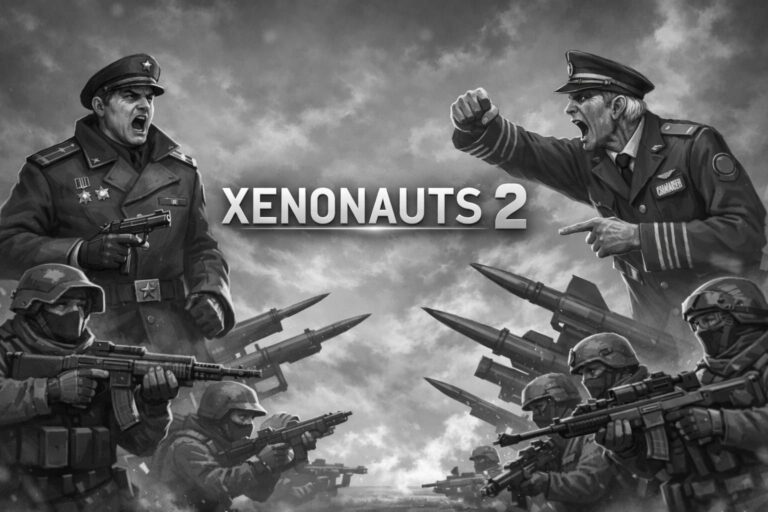
The survival city-builder genre has exploded over the last few years, but two games keep coming up in every conversation in 2026: Timberborn and Frostpunk 2.
I’ve sunk dozens of hours into both, and while they technically belong to the same genre, they feel completely different. One is about clever engineering and building the ultimate beaver civilization. The other is about politics, moral compromises, and the slow collapse of society.
So if you’re wondering which survival city builder is actually worth your time right now, here’s the perspective of someone who genuinely loves these games.
Quick Overview: Two Very Different Survival Experiences
| Feature | Timberborn | Frostpunk 2 |
|---|---|---|
| Core Threat | Droughts and toxic badwater | Extreme cold and social conflict |
| Core Gameplay | Water engineering and vertical construction | Politics, factions, and laws |
| Overall Mood | Relaxing but strategic | Dark, stressful, and dramatic |
| City Scale | Individual beavers and buildings | Massive districts and thousands of citizens |
| Replayability | Very high (sandbox + mods) | Medium–high (story + faction playthroughs) |
Both games are about survival after environmental collapse, but the way they approach it is night and day.
Timberborn: Engineering Paradise for Beavers
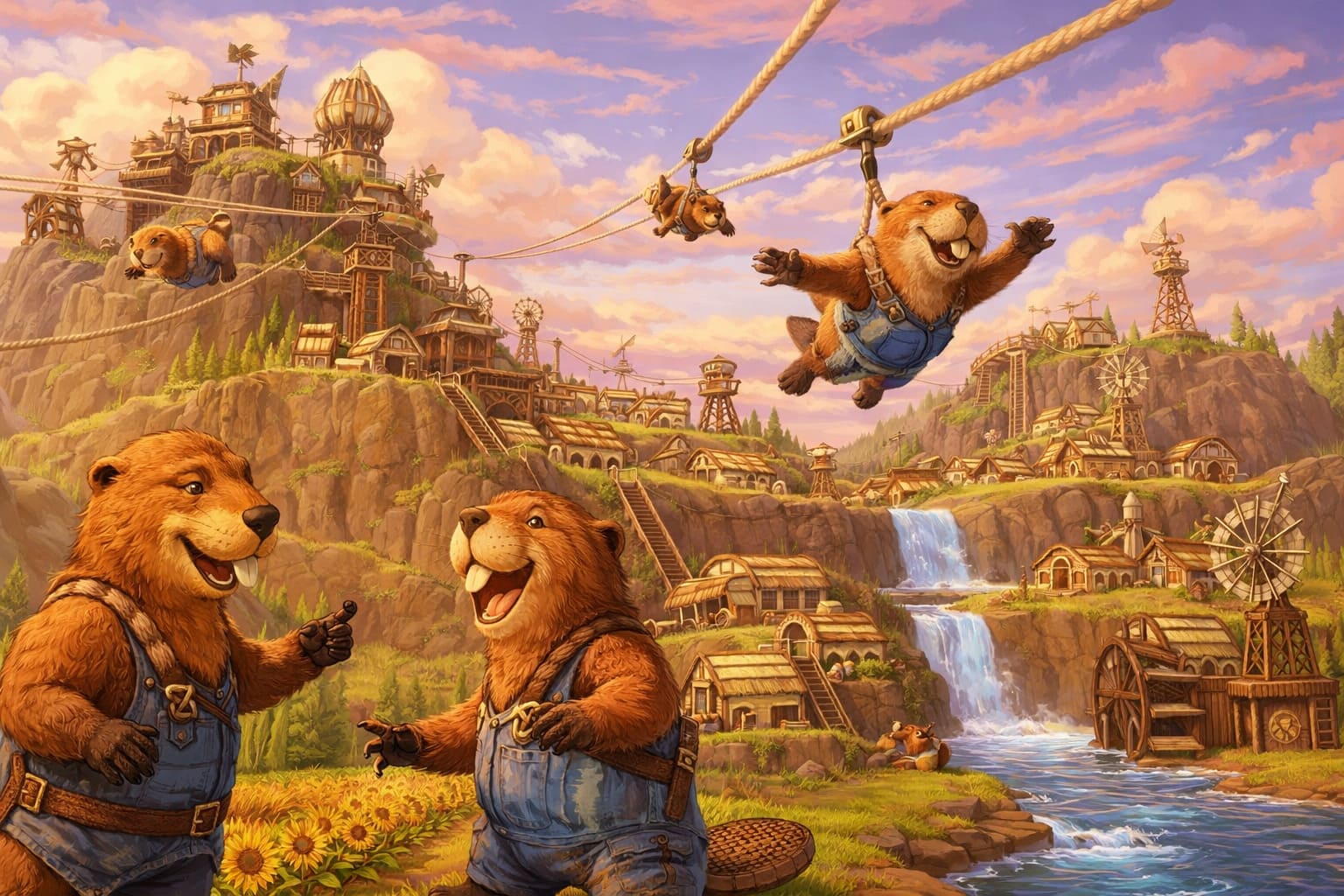
If you enjoy building complex systems and watching them run perfectly, Timberborn is incredibly satisfying.
The entire game revolves around water management. Rivers dry up regularly, and if you don’t prepare properly, your entire colony can collapse during drought season.
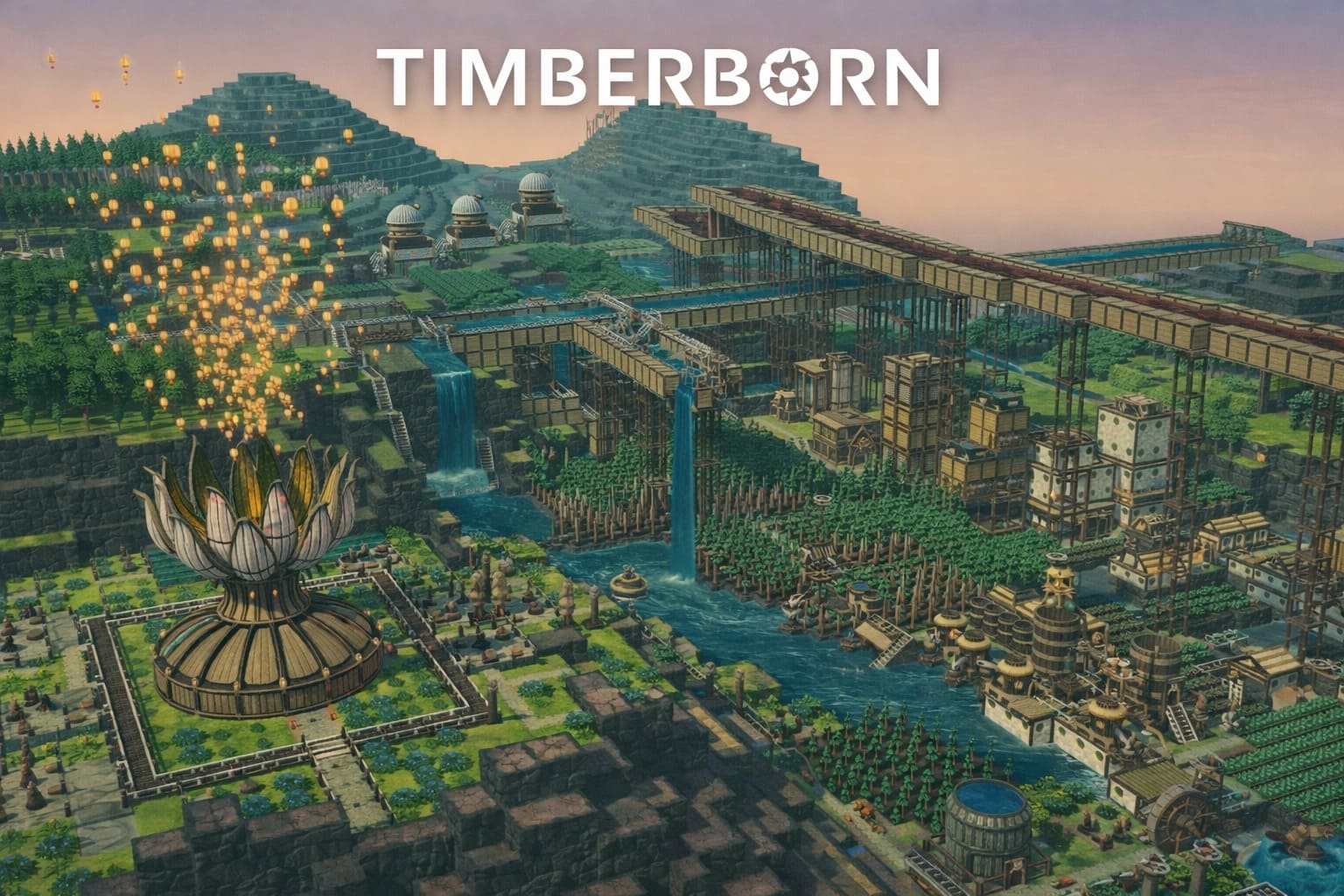
What makes the game special is how physical everything feels.
Timberborn Low FPS Fix 2026: Guide to Optimizing Water, Waterfalls, and High-Pop Colonies
Why Timberborn Is So Addictive
- Advanced water physics – Dams, levees, canals, and reservoirs actually change how water flows.
- Vertical city building – You can stack buildings and create towering industrial complexes.
- Two unique factions – Folktails (eco-friendly) and Iron Teeth (industrial efficiency).
- Creative sandbox gameplay – You’re constantly optimizing layouts and infrastructure.
Instead of reacting to disasters, you’re designing systems that prevent them.
And honestly, that’s where the fun is.
You start with a tiny riverside settlement and end up building gigantic hydro-engineering projects that would make real-world civil engineers proud.
Despite being a survival game, Timberborn often feels relaxing. You can pause, plan, redesign, and slowly perfect your colony.
Frostpunk 2: Leadership Under Impossible Pressure
Where Timberborn is about engineering, Frostpunk 2 is about power.
You aren’t just building a city—you’re trying to hold together a society that’s constantly on the edge of collapse.
The sequel dramatically expands the scale of the original game.
Instead of placing individual houses, you build entire districts on a hex grid, managing extraction zones, housing areas, and logistics networks across a frozen wasteland.
But the real challenge isn’t the cold.
It’s the people.
What Makes Frostpunk 2 Brutal
- Political factions constantly fight for control
- Laws can radically reshape society
- Decisions have long-term consequences
- One bad vote can destabilize your entire city
You’ll constantly face choices like:
- Do you give more power to technocrats?
- Do you allow radical labor policies?
- Do you suppress protests or compromise?
Every decision pleases one group and angers another.
And when tensions explode, the results can destroy everything you’ve built.
This makes Frostpunk 2 one of the most emotionally intense strategy games available.
Difficulty: Relaxing Builder vs Political Survival
Both games are challenging, but the type of stress they create is completely different.
Timberborn Difficulty
- Mostly logistical challenges
- Long droughts require planning
- Mistakes can be fixed with better infrastructure
- Encourages experimentation
Frostpunk 2 Difficulty
- Strategic and political pressure
- Mistakes can trigger irreversible collapse
- Social unrest spirals quickly
- Constant moral dilemmas
If Timberborn is a city engineering puzzle, Frostpunk 2 is a political survival simulator.
Replayability in 2026
Right now, Timberborn actually has stronger long-term replayability, mostly thanks to sandbox gameplay and community mods.
Many players return to it regularly just to:
- design more efficient cities
- experiment with new water systems
- build massive vertical settlements
Frostpunk 2 is incredibly memorable, but its experience is more narrative-driven.
Once you finish the campaign or several faction runs, the urgency fades a bit compared to Timberborn’s endless sandbox creativity.
So Which Game Should You Buy?
Choose Timberborn if you want:
- Creative city building
- Complex engineering systems
- A relaxing but strategic survival game
- Endless sandbox replayability
Choose Frostpunk 2 if you want:
- Intense storytelling
- Difficult moral decisions
- Political strategy and faction management
- A darker, high-stakes atmosphere
Timberborn 1.0 Factions in 2026: Why Your First Colony Choice Actually Matters
The full release of Timberborn 1.0 finally landed in March 2026, and honestly, it feels like the game has grown up. What used to be a charming early-access city builder about beavers and dams has turned into a surprisingly deep strategy sandbox.
If you’re starting a new colony now, one of the first real decisions you face is choosing between the Folktails and the Iron Teeth. On paper the differences seem simple, but once you get into mid-game drought cycles, power grids, and logistics networks, that choice can completely shape how your settlement evolves.
After spending way too many hours rebuilding dams and watching beavers carry logs across half the map, here’s my honest take on how the factions feel in Timberborn 1.0.
Folktails vs Iron Teeth – The Core Difference
At a glance, the factions represent two philosophies.
| System | Folktails | Iron Teeth |
|---|---|---|
| Population | Natural breeding | Breeding Pods |
| Power | Windmills + Gravity Batteries | Engines + Badwater Wheels |
| Transport | Ziplines | Tubeways |
| Economy | Farming efficiency | Industrial production |
| Difficulty | Easier early game | Strong late game scaling |
Neither faction is objectively “better,” but they encourage completely different playstyles.
Population Growth: Organic vs Controlled
The first major difference is how your colony grows.
Folktails – Natural Expansion
Folktails reproduce automatically as long as housing is available and basic needs are met. This is great for beginners because you don’t need to micromanage growth.
But there’s a catch.
A sudden baby boom can drain your food and water reserves faster than expected, especially before your farming infrastructure scales.
- Very simple colony management
- Faster time from birth to worker
- Strong early game workforce
- Harder to control population spikes
- Food shortages can spiral quickly
Iron Teeth – Industrial Breeding
Iron Teeth take a very different approach. Instead of natural births, they grow new beavers in Breeding Pods.
Each pod consumes water and berries, and new beavers take about 10 days to mature.
It’s slower, but it gives you complete population control.
Veteran players often cap their workforce precisely to avoid the infamous colony collapse that can happen when food production falls behind population growth.
Power Systems in Timberborn 1.0
Power management becomes critical once you reach automation and large industrial districts.
Folktails Energy Strategy
Folktails rely heavily on Windmills and Gravity Batteries.
Wind is free but inconsistent, which means serious colonies often build huge battery stacks on cliffs to store power during strong wind periods.
When drought hits and the wind stops, those batteries keep everything running.
It’s a surprisingly elegant system once you scale it.
Iron Teeth Power Grid
Iron Teeth power is much more industrial and reliable.
- Wood-burning engines
- Water wheels
- Badwater energy systems
One of the most interesting 1.0 mechanics is using Badwater flow to generate power during drought periods.
Instead of avoiding contaminated water, Iron Teeth can actually turn it into consistent torque for their factories.
It’s messy, loud, and extremely effective.
Transportation Systems: Ziplines vs Tubeways
Movement efficiency becomes a huge factor on large maps.
Folktails – Ziplines
Ziplines are one of my favorite additions in the full release.
- Cliffside colonies
- Remote logging camps
- Exploring ruins quickly
They’re also cheap, which makes early expansion much easier.
Iron Teeth – Tubeways
Tubeways are basically beaver subway tunnels.
They require a significant investment, but the payoff is massive. Beavers move much faster than on normal paths, making centralized mega-cities far more viable.
If you love optimizing logistics networks, Tubeways are incredibly satisfying to build.
Food and Water Economy
Food production is another major faction difference.
| System | Folktails | Iron Teeth |
|---|---|---|
| Crop Boosts | Beehives increase growth | No hive bonus |
| Farming Style | Wide farms | Compact industrial food |
| Water Access | Standard pumps | Deep 6-tile pumps |
Folktails gain a massive advantage with Beehives, which boost crop growth by around 50%.
Iron Teeth compensate by focusing on industrial food chains, including fermented and hydroponic production systems that work well in dense settlements.
They also have access to deep water pumps, allowing them to drain reservoirs other factions can’t reach.
My Personal Verdict After Playing 1.0
After a few colonies with both factions, here’s how it feels from a player perspective.
Pick Folktails if you want:
- Easier early game
- Strong farming economy
- Relaxed city-builder vibes
- Nature-integrated settlements
Pick Iron Teeth if you want:
- Full control over population
- Massive vertical cities
- Complex automation systems
- Industrial efficiency
Personally, I still lean toward Folktails for casual play. There’s something satisfying about building a green beaver utopia powered by wind and giant dams.
But if you enjoy engineering mega-projects, Iron Teeth can turn your colony into a true lumberpunk industrial empire.
Final Thoughts From a City-Builder Fan
Personally, I keep coming back to Timberborn when I want to relax and build something brilliant. There’s something incredibly satisfying about turning a dry valley into a perfectly irrigated beaver metropolis.
But when I want drama, tension, and meaningful decisions, Frostpunk 2 delivers an experience almost no other strategy game can match.
In short:
- Timberborn = creative survival engineering
- Frostpunk 2 = political survival drama
And honestly? If you love the genre, both deserve a place in your library.
The best part about Timberborn 1.0 is that both factions are finally balanced around different strategies instead of power levels.
Folktails feel like sustainable city planners, while Iron Teeth feel like mad beaver engineers pushing the limits of automation.
Whichever faction you choose, one thing is certain — you’ll eventually end up redesigning your dam system for the tenth time after a drought wipes out half your crops.
And honestly, that’s part of the fun.