The Blood of Dawnwalker Climbing Guide: How to Climb Walls and Find Every Secret Area
I’ll be honest: The Blood of Dawnwalker is at its best when you stop treating the map like a checklist. Vale Sangora has that rare sense of mystery where a locked door doesn’t always mean “come back later.” Sometimes the answer is above you. Sometimes it’s behind a ruined wall. And sometimes the game expects you to notice a pile of rubble, a wooden beam, or a suspiciously convenient roof.
That makes climbing and vertical exploration surprisingly important.
The Blood of Dawnwalker gives Coen very different movement options depending on whether you’re exploring during the day or at night. Human Coen has to rely on stamina, environmental objects, and good old-fashioned parkour. Nighttime Coen, meanwhile, becomes something much more dangerous and mobile.
And that’s where things get interesting.
In this The Blood of Dawnwalker climbing guide, I’ll go through the basics of scaling walls, explain how day and night affect exploration, and cover some of the most rewarding hidden locations described in the game world. If you’re tired of staring at a locked gate wondering whether you’ve missed a key, this guide should save you a lot of time.
How Climbing Works in The Blood of Dawnwalker
The first thing to understand is that you can’t climb every surface.
This isn’t one of those games where the protagonist can casually stick to every brick wall like a superhero. The environment matters. You need to pay attention to the physical structure around you.
During my exploration, the best routes were usually hidden in plain sight.
Look for:
- Wooden beams and scaffolding
- Broken stone walls
- Rocky surfaces with visible ledges
- Ivy-covered structures
- Roofs and balconies
- Barrels, carts, sheds, and other objects that provide extra height
The game generally avoids making every climbable surface painfully obvious. That’s great for immersion, although it can occasionally lead to a few minutes of running in circles while the solution is literally sitting above your head.
My advice? Stop looking directly at the locked entrance. Look around it.
In Vale Sangora, the alternative route is often the intended route.
Daytime Climbing: Human Coen Has to Work for It
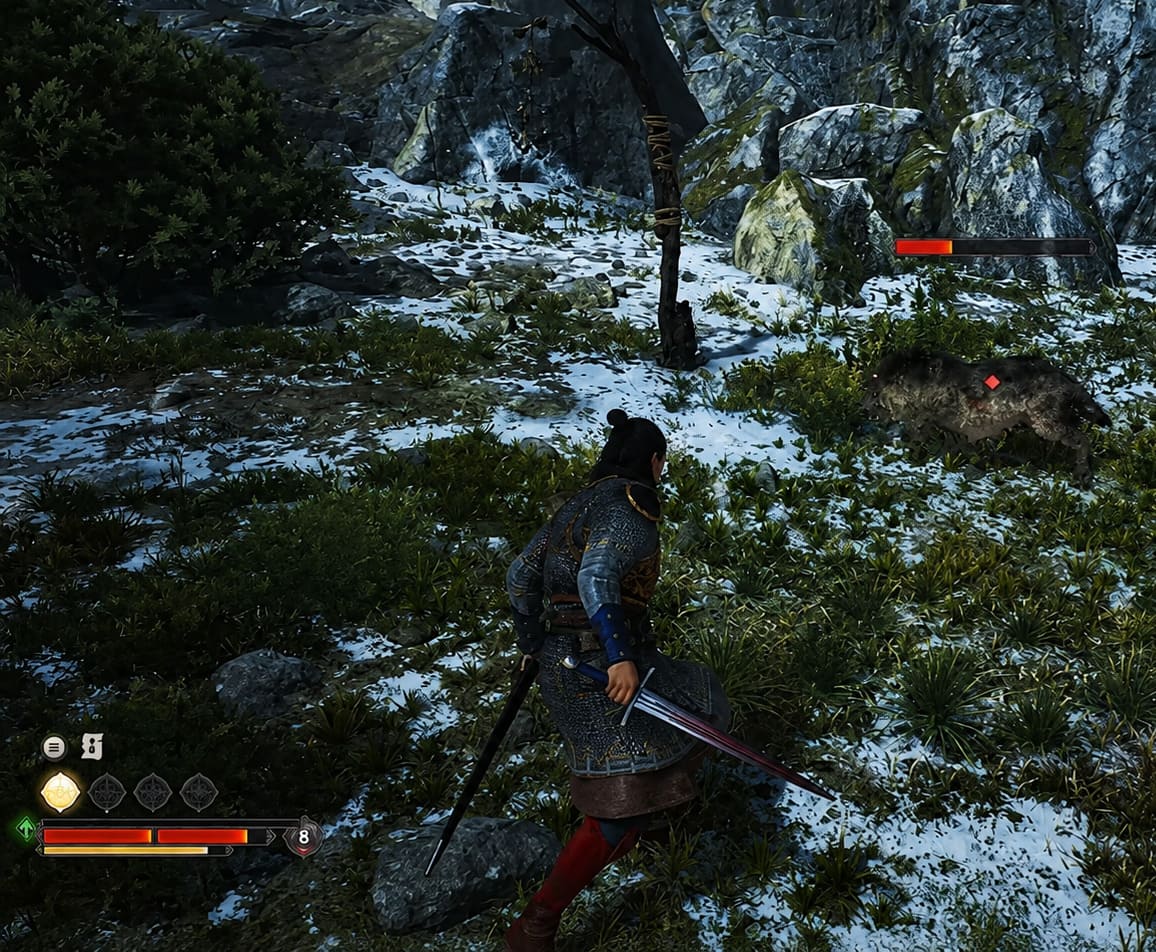
During the day, Coen doesn’t have the full advantage of his supernatural abilities. Movement becomes more grounded, and climbing requires better planning.
That means stamina matters.
Every difficult movement sequence can put pressure on your resources. Long climbs, jumps, and awkward traversals become risky when you’re several stories above the ground.
Watch Your Stamina
One of the easiest mistakes is becoming too focused on reaching the next ledge.
Don’t.
If you’re climbing a high structure, always think about where you’re going after reaching the next platform. A route might look possible at first, but running out of stamina halfway through a dangerous section can turn a successful exploration run into a painful fall.
Try to use stable platforms whenever possible.
Instead of making one desperate sequence of jumps, break the climb into smaller sections.
Slow climbing is often faster than dying and starting again.
Use the Environment Like a Puzzle
The best climbing routes frequently begin with something ordinary.
A small wooden shed can become your path to a roof. A stack of barrels can give you enough elevation to grab a wall. A nearby tree branch might allow you to bypass an entire locked entrance.
This is one of the things I genuinely enjoy about exploration in The Blood of Dawnwalker. You aren’t always searching for a glowing interaction marker. You’re reading the environment.
And when you find a route that clearly wasn’t visible from ground level, it feels satisfying.
Nighttime Exploration: Coen Becomes Far More Dangerous
Night changes everything.
Once Coen’s vampiric nature becomes available, vertical exploration becomes much more flexible. Areas that seem impossible during the day can suddenly become accessible.
But don’t assume nighttime abilities mean you can ignore environmental design.
You still need to plan.
Use Supernatural Movement Carefully
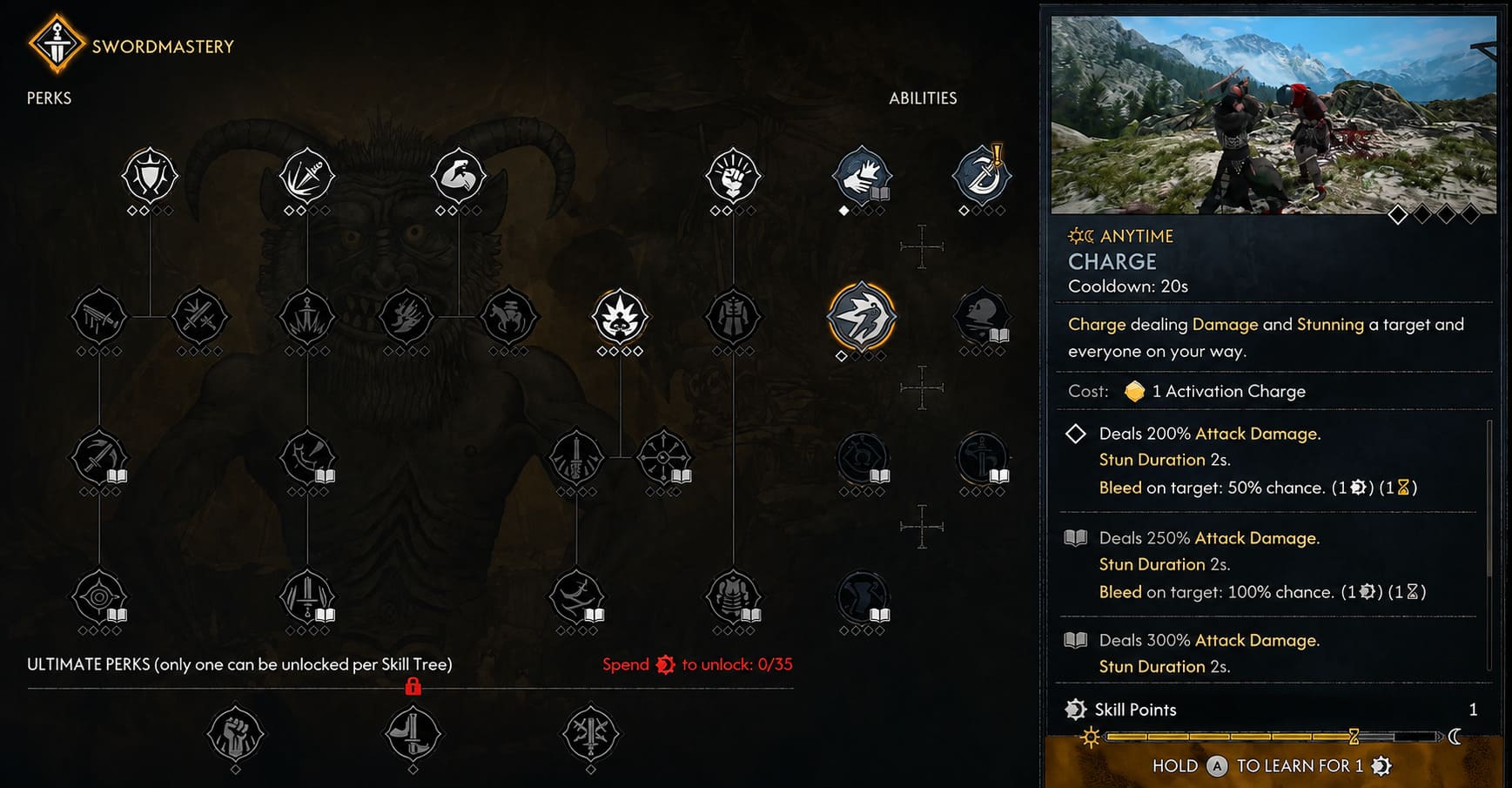
Abilities such as Shadowstep-style movement and vertical supernatural traversal can help Coen cross gaps and reach elevated structures.
The obvious temptation is to use these powers constantly.
Personally, I wouldn’t recommend that.
Mystical movement resources can disappear surprisingly quickly when you’re attempting a massive climb. The smartest approach is usually combining normal climbing with supernatural mobility.
Use physical movement for the easy parts.
Save your powerful abilities for:
- Smooth walls without handholds
- Large gaps between platforms
- High scaffolding
- Dangerous jumps
- Final sections of difficult towers
That combination makes exploration much more efficient.
Don’t Try to Force Your Way Up Every Tower
Some massive structures look like they should be conquered by simply running straight up the exterior.
Usually, that’s a trap.
If your supernatural resources are draining too quickly, there’s probably another route. Look for an interior entrance, broken masonry, platforms, beams, or a sequence designed specifically for teleportation.
The game rewards route-finding more than brute-force climbing.
The Locked House in Laslea Glen
One of the earliest examples of vertical exploration can be found in Laslea Glen.
You’ll encounter an isolated house surrounded by graves, with the main entrance sealed from the inside. Naturally, the first reaction is to search for a key.
You probably don’t need one.
How to Get Inside
Look around the nearby area for a small wooden structure.
The general route is:
- Climb onto the smaller building.
- Reach its roof.
- Jump toward the roof of the locked house.
- Search for an opening, damaged section, or accessible window.
- Drop inside.
It’s a simple route once you see it, but that’s the point. The game wants you to think vertically.
What You Can Find
Once inside, Focus Mode becomes extremely useful.
Search the interior carefully rather than grabbing the first obvious item and leaving. Hidden valuables and a corpse can contain useful loot, while the main chest offers more significant rewards.
The Mending Ointment recipe is the kind of discovery that makes these little detours worthwhile.
Oghasti and Rockfalls Scouting Tower
This is where climbing becomes much more interesting.
The large scouting tower near the ruined Oghasti region can look intimidating, especially if you’re trying to reach the summit from outside.
My biggest recommendation here is simple:
Don’t waste all your resources trying to climb the smooth exterior.
The Better Route
Find a way into the hollow interior.
Once inside, look upward.
You’ll notice a series of damaged boards, beams, and platforms. This isn’t a standard climbing route where you simply hold forward and wait.
You need to build your path.
Climb to the first stable position and then use your nighttime mobility strategically to move between elevated structures.
| Area | Best Approach | Main Reward |
|---|---|---|
| Tower Exterior | Avoid forcing a direct climb | Saves stamina/resources |
| Tower Interior | Follow beams and platforms | Access to upper levels |
| Summit | Activate the scouting mechanism | Reveals nearby locations |
| Hidden Upper Area | Search carefully | Valuable combat progression loot |
Reaching the top is worth the effort.
Besides opening up the surrounding region on your map, the upper sections can contain rare rewards, including the Blasphemous Echo Manual.
That’s exactly why I recommend climbing every major tower you encounter.
St. Tyna’s Grove Secret Overlook
St. Tyna’s Grove has one of those locations that practically screams, “There has to be something up there.”
The problem is that the lower access route has been destroyed.
The obvious staircase is useless.
So, naturally, you need to approach the problem from somewhere else.
Best Way to Reach the Tower
Nighttime is your friend here.
Start by climbing the rocky formations around the western side of the grove. Once you’ve gained enough height, look toward the middle section of the tower.
Watch for:
- Wooden scaffolding
- Protruding stone architecture
- Elevated structures
- Possible supernatural targeting points
The goal is to combine a physical jump with your enhanced nighttime movement.
This is one of those moments where The Blood of Dawnwalker feels particularly good. You aren’t simply pressing a button to “enter secret area.” You’re looking at the architecture and figuring out a route.
At the top, players can discover valuable equipment upgrades and a useful permanent improvement related to Coen’s nighttime resources.
Definitely worth the climb.
How to Enter the Tantari Fortress Ruins
The Tantari Fortress is another location where the front door is basically irrelevant.
The main entrance is sealed.
And, honestly, considering the kind of enemies supposedly waiting inside, maybe that’s for the best.
Still, there is a way in.
The Eastern Wall Route
Walk along the eastern side of the fortress and search for collapsed stonework.
A pile of rubble provides the initial elevation needed to reach the outer defensive wall.
From there, the route becomes more dangerous.
Look for hanging ropes and wooden structures along the exterior. You’ll need to move carefully and avoid wasting stamina.
Eventually, you can reach a position near the rear of the keep and use advanced vertical movement to access an open window.
That gives you entry into the fortress interior.
Why You Should Explore Tantari
The area contains an Ancient Circle challenge, along with dangerous enemies and valuable progression rewards.
These locations are worth clearing because they often provide combat-related benefits rather than just random currency or crafting materials.
If you’re trying to improve Coen before taking on more difficult encounters, don’t ignore these hidden challenge zones.
The Ultimate Exploration Shortcut: Reaching the Citadel Early
Now for the fun part.
The vertical mechanics can potentially allow confident players to approach areas earlier than they might expect.
Instead of following the most obvious route toward Brencis and his heavily defended territory, you can search the mountainous terrain surrounding the fortress.
The main paths are guarded.
The cliffs, however, tell a different story.
Climbing Around the Defenses
By following steep rocky sections around the side of the fortified area, you may be able to bypass portions of the standard approach.
This is not an easy shortcut.
You’ll need to:
- Find stable climbing surfaces
- Manage stamina
- Avoid dangerous falls
- Use vertical abilities intelligently
- Prepare for extremely difficult combat
Eventually, a successful climb can bring you closer to the interior of the fortified area without walking directly through the main gate.
But here’s my warning.
Just because you can reach an area early doesn’t mean you’re ready for it.
The enemies inside can be brutal, and advanced players looking for a challenge may find themselves facing opponents far stronger than expected.
Still, for anyone who enjoys sequence-breaking and experimenting with exploration systems, it’s one of the most interesting possibilities in the game.
Best Exploration Tips for Finding Secret Areas
Before you leave this guide, here are the habits I recommend developing early.
1. Always Look Up
Seriously.
A surprising number of exploration routes begin above eye level.
Before assuming a location is inaccessible, inspect rooftops, cliffs, balconies, beams, and damaged walls.
2. Use Focus Mode Frequently
Whenever you enter an unfamiliar location, activate Focus Mode.
Use it inside:
- Ruins
- Houses
- Caves
- Monasteries
- Towers
- Fortresses
Hidden objects and environmental details can be easy to miss.
3. Don’t Let the 30-Day System Rush You
One of the biggest mistakes new players can make is assuming they need to speed through everything.
Major story progression is what matters most when considering the game’s larger time pressure.
That means exploration can often be handled at a more relaxed pace.
Take time to climb towers.
Investigate suspicious ruins.
Search for hidden routes.
Vale Sangora is much more rewarding when you’re willing to wander.
4. Mark Interesting Locations
If you spot a structure that looks impossible to access, don’t forget it.
Place a map marker and return later.
Some locations become significantly easier when Coen has access to better movement options.
5. Combine Human and Vampiric Movement
This is probably the most important tip in the entire guide.
Don’t treat daytime climbing and nighttime mobility as completely separate systems.
Learn how both work.
Physical climbing preserves supernatural resources. Supernatural movement solves problems that physical climbing cannot.
The best players will use both.
The Blood of Dawnwalker Vampirism Guide: How to Drink Blood and Recharge Powers
Final Thoughts
The Blood of Dawnwalker has the potential to make exploration feel far more personal than the typical open-world routine.
You aren’t simply following a line on the minimap.
Sometimes you’ll find a locked house and realize the answer is the roof. Sometimes a scouting tower requires you to ignore the obvious wall and search for an interior route. And sometimes a distant cliff leads somewhere you probably weren’t expected to reach yet.
That’s the fun of it.
My personal approach is simple: if something looks suspiciously inaccessible, I spend at least a few minutes trying to break the problem apart.
Look for height.
Look for nearby objects.
Wait for night if necessary.
And always remember that the front door is often the least interesting way into a place.
If you master Coen’s climbing mechanics, manage your stamina, and learn when to use supernatural movement, Vale Sangora becomes much easier to explore—and considerably more rewarding.