The Adventures of Elliot The Millennium Tales Nintendo Switch 2 Review: Square Enix’s Ultimate HD-2D Zelda Clone?
After spending time with The Adventures of Elliot: The Millennium Tales on Nintendo Switch 2, I came away with mixed but mostly positive impressions. As someone who has played countless top-down action RPGs over the years—from classic Zelda entries to modern indie interpretations—this game sits in an interesting middle ground.
It doesn’t fully reinvent the formula, but it does push the HD-2D style into real-time combat territory in a way that feels genuinely ambitious.
This is not a flawless experience, but it is one of those games that constantly tries new ideas, and sometimes that effort pays off in surprisingly memorable ways.
Does The Adventures of Elliot Demo Progress Carry Over? Full Save Transfer Guide
A Familiar World Built on Time Travel
The game takes place in Philabieldia, a fantasy continent filled with magic, political tension, and ancient ruins. On paper, it sounds like standard JRPG material, but the structure of the story gives it more personality than expected. You play as Elliot, an adventurer caught up in a time-travel conflict triggered by a mysterious artifact known as the Doorway of Time.
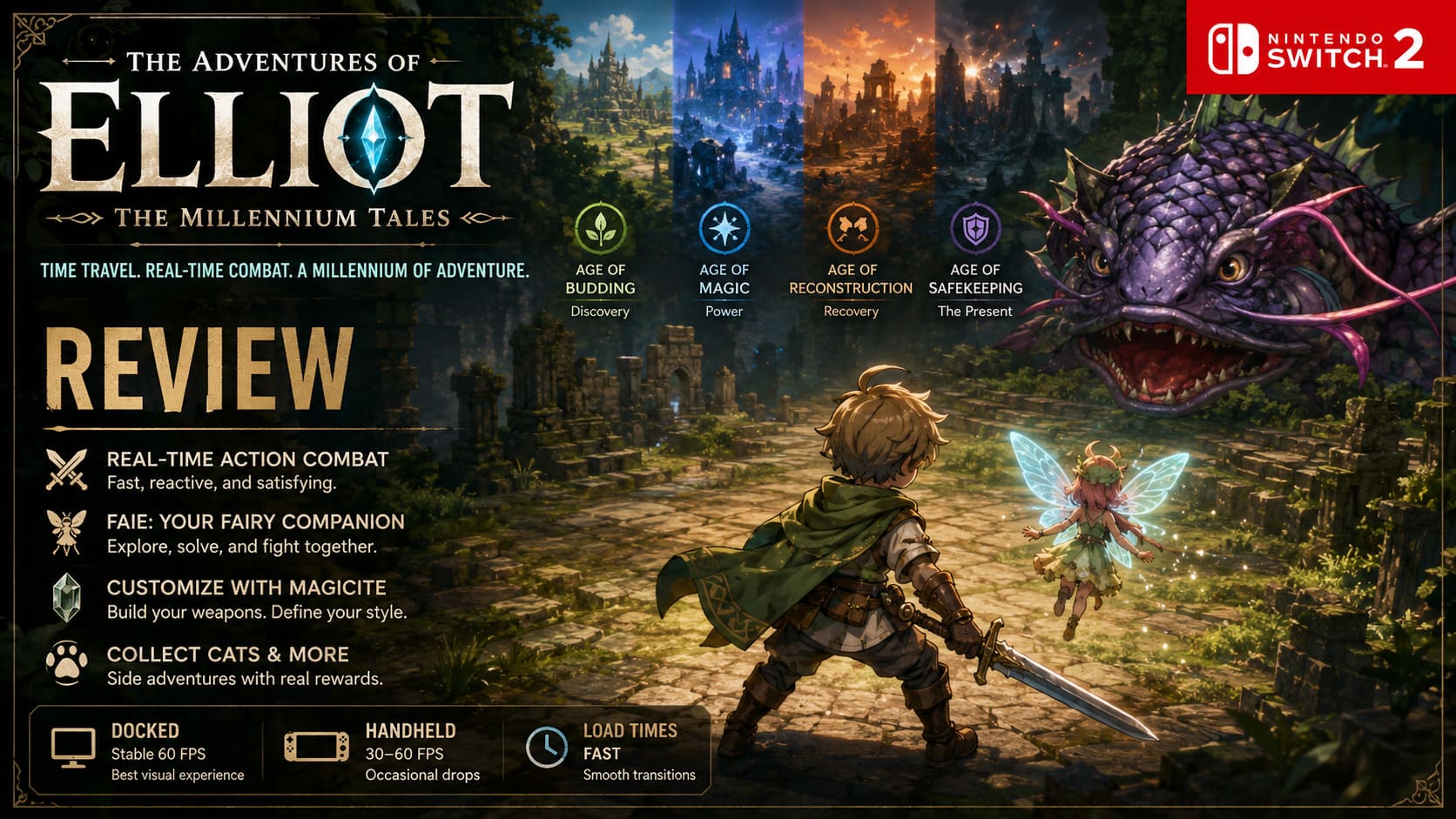
What stands out most is how the game moves across four historical eras, each representing a different stage of civilization. Instead of just telling you history changed, the game actually reflects it in environments and quest structure, even if some areas feel a bit too familiar across timelines.
The Four Eras of the Millennium
- Age of Budding — early civilization and discovery
- Age of Magic — peak magical expansion and political power
- Age of Reconstruction — a fractured world struggling to recover
- Age of Safekeeping — Elliot’s present timeline under threat
This structure works best when changes between eras feel meaningful, though in practice some regions can feel reused in a way that reduces the sense of scale.
Real-Time Combat That Actually Defines the Game
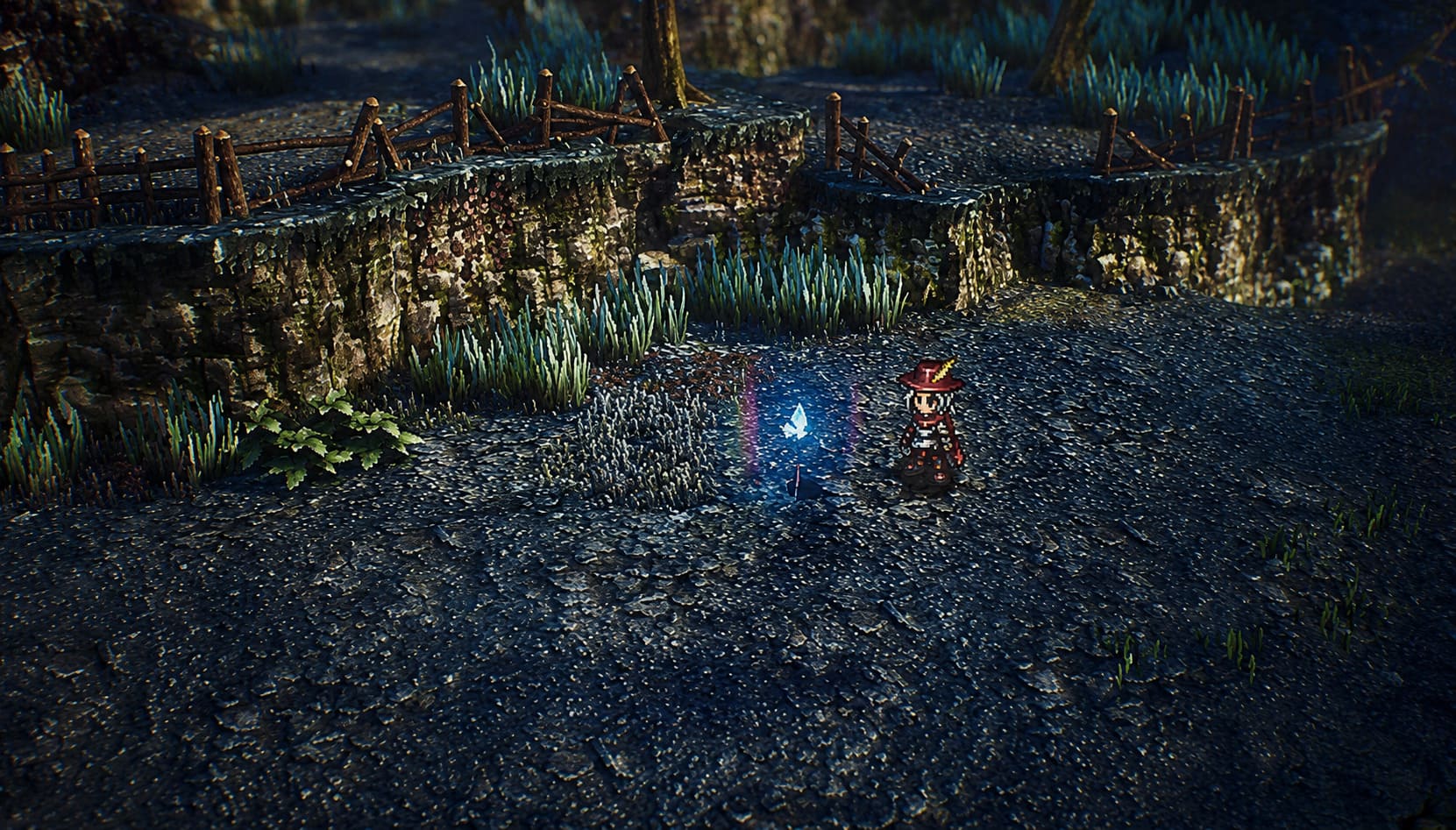
Where the game really separates itself from traditional HD-2D RPGs is combat. Instead of turn-based battles, everything happens in real time, and the game leans heavily into action-oriented design.
Combat is fast, reactive, and built around movement. You are constantly dodging, switching weapons, and looking for openings rather than waiting for turns or menus. It’s not overly complex, but it is satisfying in motion.
Key Combat Elements
- Seven weapon types with on-the-fly switching
- Dodging and timing-based attacks
- Light parry and counter mechanics
- Build customization through Magicite upgrades
The ability to equip two weapons at once adds flexibility and prevents combat from becoming repetitive too quickly. It’s not revolutionary design, but it’s smooth and responsive enough to stay engaging throughout most encounters.
Faie: More Than a Typical Companion
Elliot is joined by Faie, a fairy companion who is actually more useful than most “support characters” in similar games. Instead of just existing for dialogue or story exposition, she plays an active role in both exploration and combat.
Faie helps reveal hidden paths, interacts with environmental puzzles, and provides crowd control abilities during fights. It’s a simple system, but it adds a layer of interaction that keeps exploration from feeling too static.
Magicite System: Deep at First, Less So Later
The Magicite system is one of the game’s biggest customization tools. You collect and slot magical enhancements into weapons, modifying stats and abilities in meaningful ways.
What You Can Do With Magicite
- Increase elemental damage output
- Boost critical hit chance
- Add defensive buffs
- Alter weapon behavior and effects
Early on, this system feels excellent. Experimenting with builds is fun and encourages different playstyles. However, in the late game, it becomes easier to settle into one overpowered setup, which reduces experimentation.
Exploration and Side Content
Exploration follows a familiar structure: dungeons, hidden routes, environmental puzzles, and optional content spread across each era. While it’s enjoyable, it doesn’t always feel as expansive as the time-travel concept suggests.
One of the more unusual but surprisingly addictive side activities is cat collecting. It feels completely detached from the main narrative, but it adds a lighthearted break from combat-heavy progression and rewards players with cosmetic and functional bonuses.
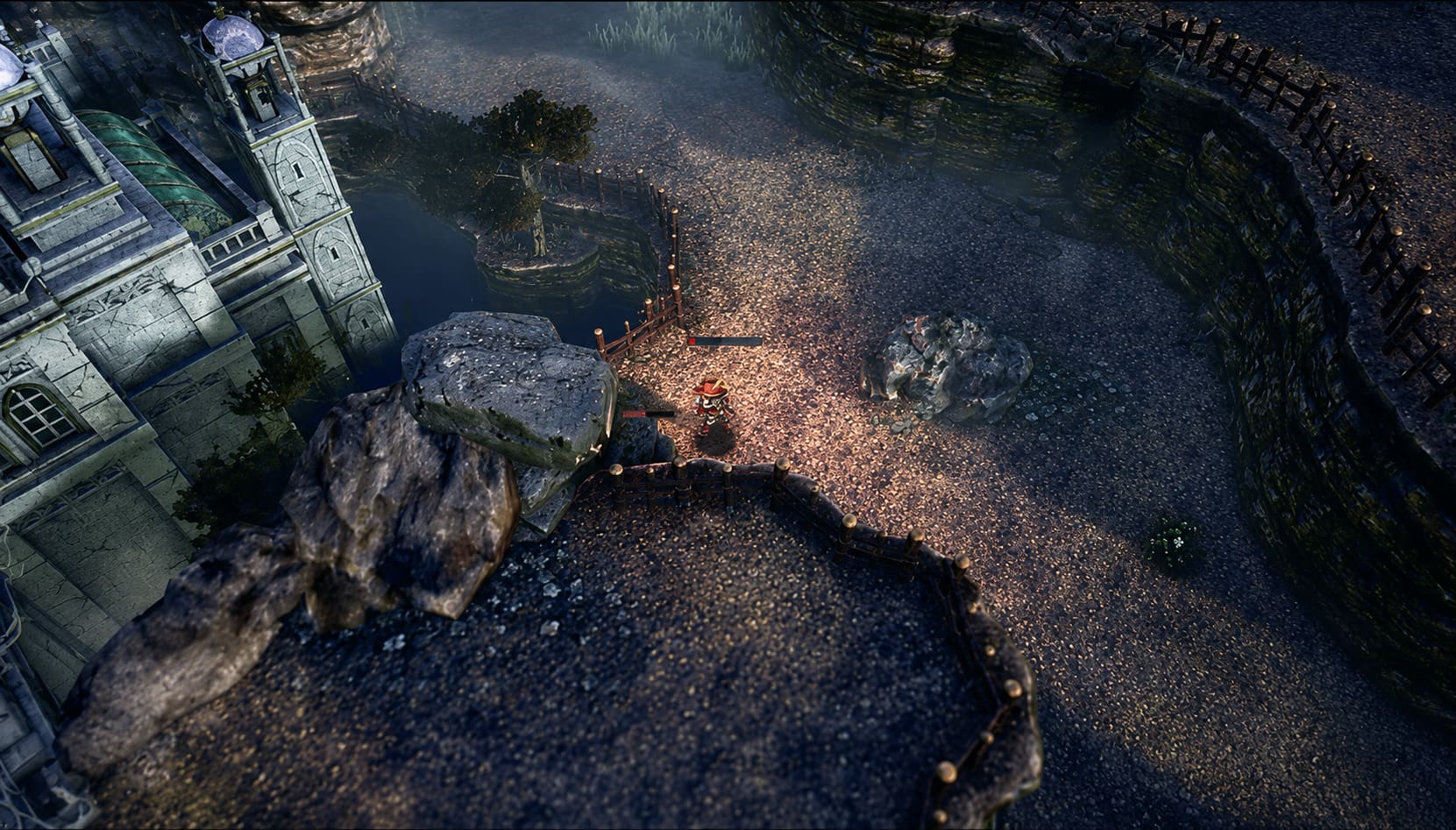
Nintendo Switch 2 Performance
Performance is generally solid, especially in docked mode, but there are some inconsistencies in handheld play.
| Mode | Performance | Notes |
|---|---|---|
| Docked | Stable 60 FPS | Best visual experience with strong HD-2D lighting and effects |
| Handheld | 30–60 FPS fluctuating | Occasional drops during heavy combat and particle effects |
| Load Times | Fast | Transitions feel smooth overall |
Docked mode is where the game truly shines, showcasing the HD-2D art style with depth, lighting, and environmental layering. Handheld mode is still very playable, but it’s less consistent during intense combat scenarios.
Where the Game Falls Short
Despite its strengths, the game has a few noticeable weaknesses that prevent it from reaching top-tier status.
- Reused overworld layouts across different eras reduce variety
- Late-game builds can become overpowered and reduce challenge
- Visual clutter during heavy combat encounters
- Minor bugs and occasional soft-lock reports in handheld mode
The biggest issue is probably environmental repetition. While time travel is a strong narrative hook, seeing the same spaces reused too often can make the world feel smaller than intended.
Final Thoughts
The Adventures of Elliot: The Millennium Tales is an ambitious attempt to evolve the HD-2D formula beyond turn-based RPG roots. It succeeds more often than it fails, especially in combat and presentation, even if it struggles with repetition and balance in later stages.
It’s not a genre-defining masterpiece, but it is a refreshing take on a familiar formula—one that blends nostalgia with real-time action in a way that feels genuinely worth experiencing for fans of classic top-down adventures.