The Adventures of Elliot: The Millennium Tales Couch Co-Op Guide – Player 2 Fairy Mechanics, Spells, and Strategy
When I first heard that The Adventures of Elliot: The Millennium Tales would include local co-op, I honestly expected the usual formula. You know the type: Player 1 gets the hero, Player 2 gets a weaker sidekick who mostly exists to keep younger siblings entertained.
After spending several hours exploring Philabieldia with a friend on the couch, I can confidently say that isn’t what happens here.
In fact, I would argue that the second player may have the most influential role in the entire game.
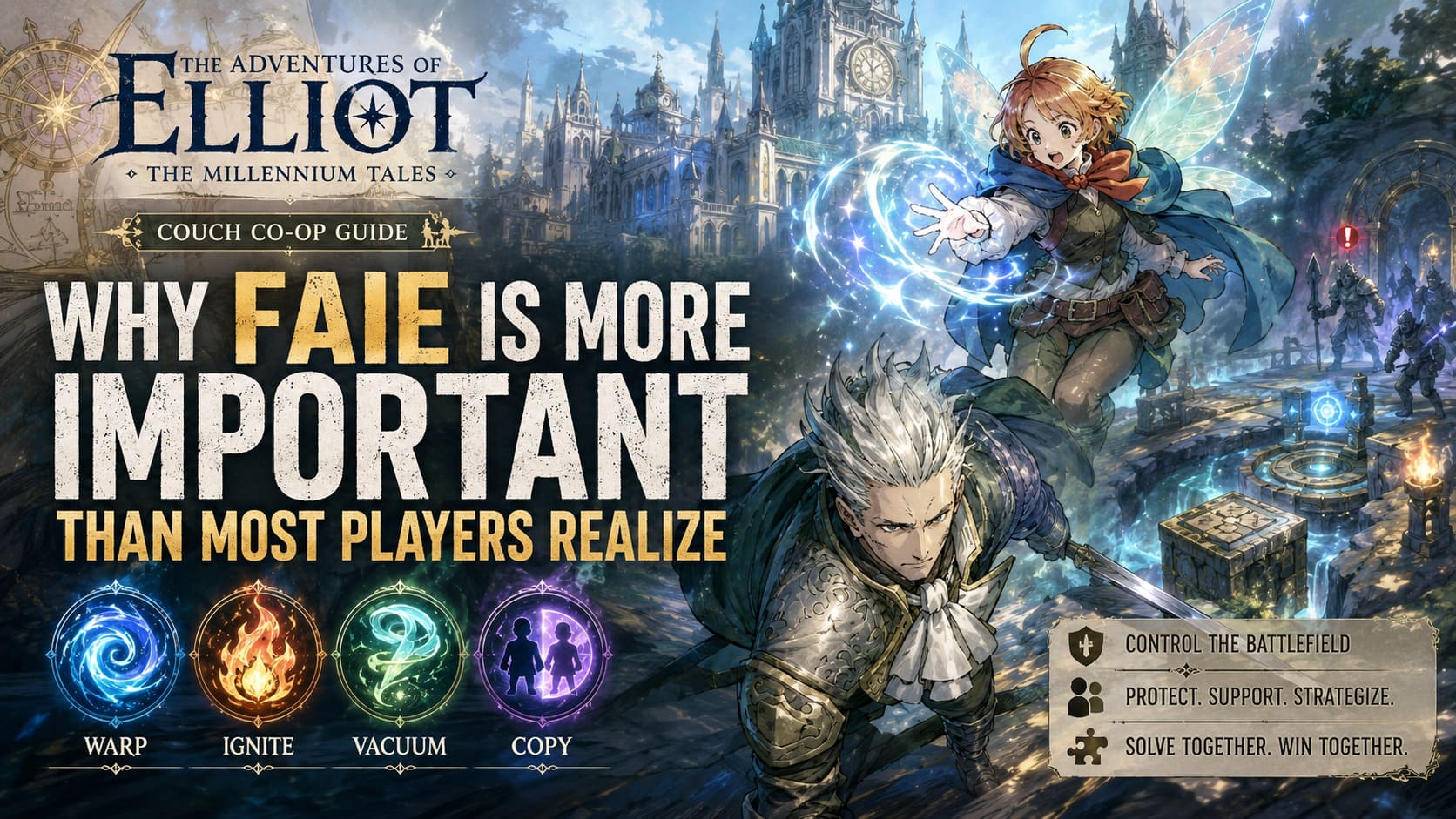
While Elliot is busy swinging swords, dodging attacks, and surviving brutal encounters, Player 2 controls Faie — a magical fairy companion whose abilities can completely alter combat, exploration, puzzle solving, and even boss fights.
At first glance Faie looks like a support character. After enough playtime, though, it becomes obvious that she is more like a battlefield commander operating from above.
If you’re planning to jump into local co-op, here’s everything I’ve learned about mastering Faie and becoming the teammate every Elliot player desperately wants beside them.
Why Faie Is More Important Than Most Players Realize
The biggest misconception new co-op players have is assuming that Faie exists only to assist.
Technically that’s true.
In practice, however, nearly every major encounter becomes easier or harder depending on how well Player 2 performs.
One of the first things you’ll notice is that Faie cannot be damaged by enemies. She freely moves around the battlefield without worrying about health bars, status effects, traps, or environmental hazards.
That freedom creates an interesting dynamic.
Elliot is constantly reacting to danger.
Faie is constantly controlling it.
This means Player 2 often has a better view of incoming threats than the actual hero does.
During several boss encounters I found myself warning Player 1 about attack patterns before they even noticed them.
The role feels less like playing a sidekick and more like acting as mission control.
The Ability That Changes Everything: Warp
If I had to choose one mechanic that defines co-op gameplay, it would be Warp.
This single skill transforms the entire experience.
Warp allows Faie to instantly relocate Elliot directly to her current position. The potential uses are incredible.

Defensive Uses
When enemies surround Elliot, Warp can immediately pull him out of danger.
If a boss covers half the arena with an attack pattern, Warp can reposition Elliot before disaster strikes.
In difficult encounters, a perfectly timed Warp often feels stronger than any healing item.
Offensive Uses
Warp isn’t just a defensive tool.
One strategy my co-op partner and I used repeatedly involved moving Faie behind heavily armored enemies.
A quick Warp instantly placed Elliot behind the target, letting him unleash uninterrupted attacks before the enemy could react.
Some encounters felt almost unfair once we mastered this technique.
The Funny Side of Warp
Of course, Warp also creates some of the funniest moments in the game.
Because Faie can fly over pits, cliffs, and dangerous terrain, activating Warp at the wrong moment can launch Elliot directly into disaster.
Nothing creates couch-gaming laughter faster than accidentally teleporting your friend into a bottomless pit.
Trust me.
It happens.
Learning to Control Elliot’s Mobility
Another surprising mechanic is Faie’s influence over movement.
Many players assume Elliot handles all of his own positioning.
Not entirely.
Certain mobility actions become deeply tied to Faie’s support role, which means Player 2 must constantly pay attention to battlefield spacing.
Good Faie players don’t simply fly around collecting items or exploring corners of the map.
They’re actively monitoring:
- Enemy positioning
- Escape routes
- Environmental hazards
- Boss attack zones
- Elliot’s current location
The best support players are always planning several seconds ahead.
Faie’s Magical Toolkit
As the story progresses through different historical eras, Faie gains access to additional magical abilities.
Each spell opens new possibilities for both combat and exploration.
Here’s a quick breakdown of the abilities I found most valuable.
| Ability | Best Use | My Opinion |
|---|---|---|
| Warp | Emergency repositioning | Essential in every situation |
| Ignite | Environmental interaction and explosions | Surprisingly useful in combat |
| Vacuum | Crowd control and item collection | One of the strongest support skills |
| Copy | Puzzle solving and distraction tactics | Excellent during boss encounters |
Why Vacuum Became My Favorite Spell
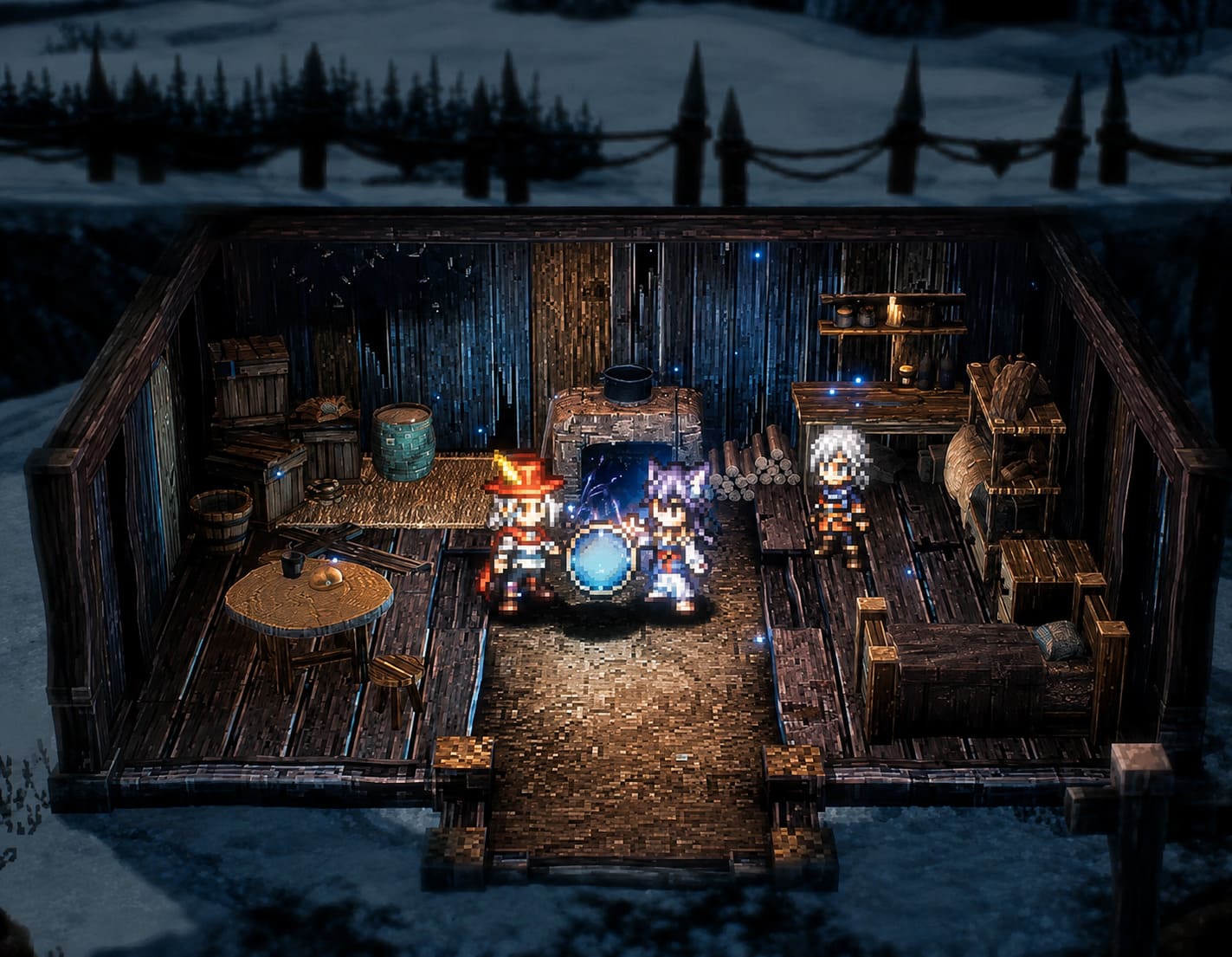
Out of every ability available to Faie, Vacuum ended up being the one I used most.
At first it sounds simple.
Pull nearby objects toward you.
That’s useful for gathering resources, but the real value appears during combat.
When enemies are scattered across the battlefield, Elliot often has to chase them individually.
Vacuum changes that.
By clustering enemies together, Faie creates the perfect opportunity for heavy weapons to shine.
Large hammers, sweeping chains, and wide-area attacks suddenly become devastating.
Some enemy groups that would normally require thirty seconds to eliminate can disappear in a single combo.
Once we discovered this synergy, our combat efficiency improved dramatically.
Ignite Is Better Than It Looks
I initially underestimated Ignite.
Lighting torches didn’t exactly sound exciting.
Then the game started introducing environmental interactions.
Suddenly Ignite became useful everywhere.
You can activate ancient mechanisms, clear blocked pathways, trigger explosive traps, and manipulate environmental hazards.
Combat also benefits.
Enemy explosives become liabilities.
Objects that seem decorative often hide tactical opportunities.
By the late game, I found myself constantly searching rooms for ways to use Ignite creatively.
It’s one of those abilities that gets stronger the more you experiment.
Copy Opens Up Unexpected Strategies
Copy might be the most creative spell in Faie’s arsenal.
Creating a duplicate of Elliot sounds straightforward, but the game uses this mechanic in surprisingly clever ways.
Puzzle designers clearly had fun with it.
Pressure plates, timed mechanisms, and multi-step challenges frequently rely on proper clone placement.
Combat applications are equally impressive.
Several bosses become easier when a duplicate distracts them long enough for Elliot to attack safely.
The clone won’t solve every problem, but experienced players can squeeze enormous value from it.
The Best Combat Combinations for Co-Op Teams
After multiple sessions, a few strategies consistently delivered great results.
Crowd-Control Setup
- Faie casts Vacuum.
- Enemies gather into a tight cluster.
- Elliot switches to a heavy weapon.
- Massive area damage wipes the group.
Simple but extremely effective.
Backstab Ambush
- Faie moves behind an elite enemy.
- Warp relocates Elliot.
- Elliot attacks from the rear.
- Enemy defenses become irrelevant.
Perfect against shield-bearing opponents.
Decoy Assault
- Faie creates a Copy.
- Boss targets the clone.
- Elliot attacks uninterrupted.
- Team gains a huge damage window.
One of the safest ways to handle difficult encounters.
Puzzle Solving Feels Like a True Team Effort
One aspect I didn’t expect was how cooperative the dungeon design would feel.
Many action RPGs claim to support co-op but simply place two players in the same environment.
The Adventures of Elliot goes further.
Numerous puzzles encourage communication and coordination.
While Elliot interacts with mechanisms and pathways, Faie scouts ahead, activates distant objectives, and identifies hidden opportunities.
Some puzzle rooms genuinely feel designed around two people thinking together.
Those moments ended up becoming some of my favorite memories from the game.
How to Transfer Prologue Demo Save Data in The Adventures of Elliot: The Millennium Tales
Tips for Being a Great Player 2
If you’re taking control of Faie, remember these principles:
- Communicate before using Warp.
- Watch Elliot more than yourself.
- Think ahead.
- Use spells aggressively.
- Learn boss patterns.
Unexpected teleports can completely disrupt combat rhythm.
You’re invulnerable. He isn’t.
A good support player solves problems before they happen.
Many players save abilities for emergencies when they should be creating opportunities.
Since you have freedom to observe the battlefield, you’re often the first person to recognize dangerous attacks.
The Adventures of Elliot: The Millennium Tales Time Travel Eras Explained
Final Thoughts
After dozens of co-op encounters, I genuinely believe Faie is one of the most interesting support characters I’ve seen in a modern action RPG.
She avoids the classic “Player 2 problem” where secondary players feel less important than the main hero. Instead, Faie influences nearly every aspect of gameplay, from combat positioning and exploration to puzzle solving and boss strategy.
Playing Elliot may feel heroic, but playing Faie feels powerful.
The best co-op sessions happen when both players fully understand their roles and work together as a single unit. Once that coordination clicks, The Adventures of Elliot: The Millennium Tales delivers some of the most enjoyable couch co-op action I’ve experienced in years.
If you’re planning to start a multiplayer adventure with a friend, don’t underestimate the fairy.
She might secretly be the strongest character in the entire game.