Path of Exile 2: Runes of Aldur Farming Guide – How to Farm Ezomyte Remnants Fast (PoE 2 0.5 Update)
The arrival of the Return of the Ancients update completely changed how I approach endgame progression in Path of Exile 2. Every major league mechanic so far has offered some form of character progression, but the new Runes of Aldur system feels different. Instead of simply chasing currency or boss drops, you’re constantly making decisions that directly influence both the difficulty of encounters and the rewards you receive.
After spending dozens of hours experimenting with various remnant combinations, testing map strategies, and watching how other players optimize their routes, I’ve come to one conclusion: if your goal is to get rich, craft stronger gear, and accelerate your progression, learning how to farm Ezomyte Remnants efficiently is one of the most valuable skills in the current version of the game.
This guide focuses on practical farming strategies rather than theorycrafting. These are the methods that consistently produced the best results during my own endgame grind.
Why Ezomyte Remnants Matter So Much
At first glance, Ezomyte Remnants may seem like another seasonal activity scattered throughout maps. In reality, they are the backbone of the entire Runes of Aldur ecosystem.
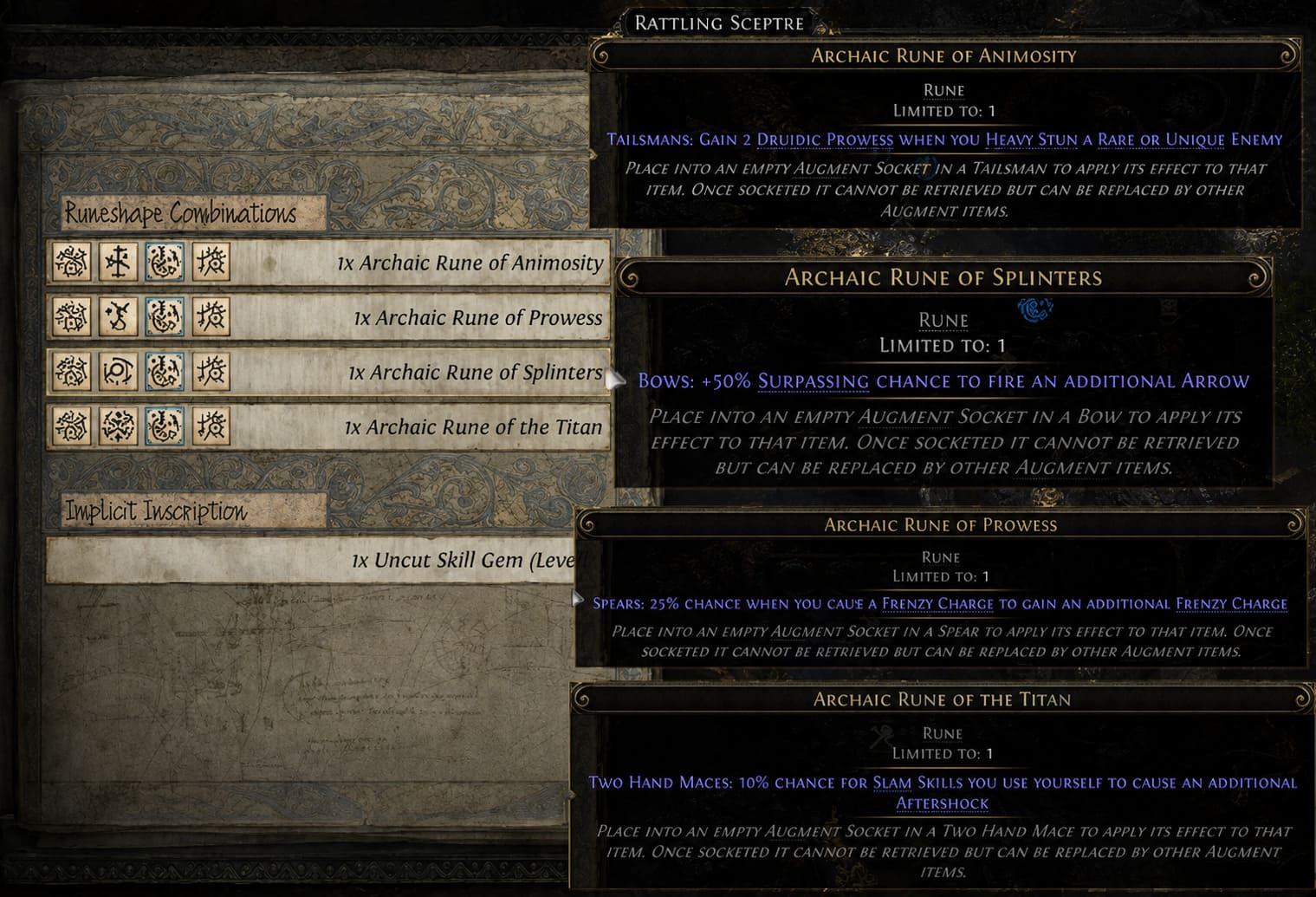
Every remnant allows you to insert combinations of runic symbols that determine:
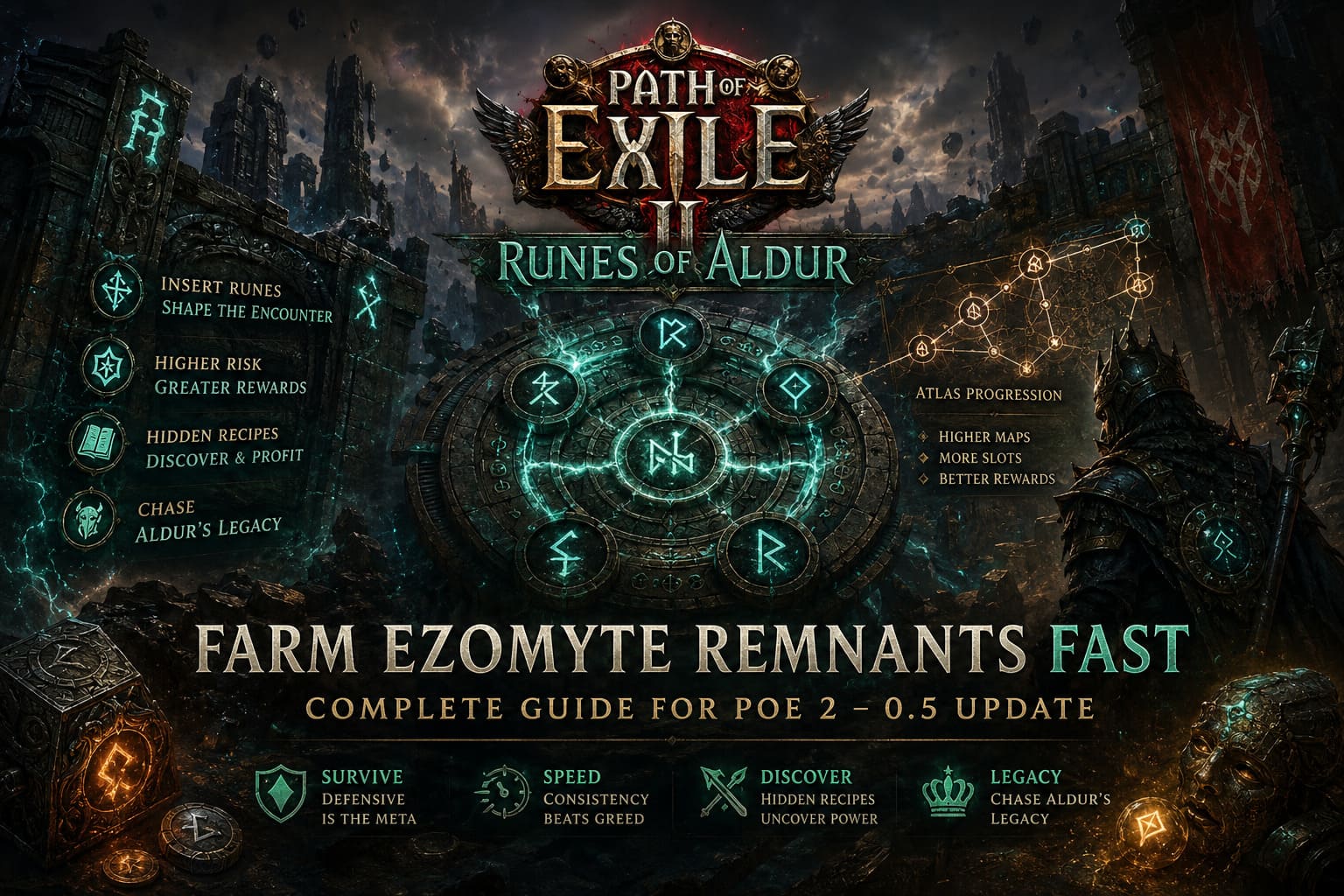
- Enemy difficulty
- Reward quality
- Available crafting outcomes
- Hidden recipe opportunities
- Chances of obtaining premium runes
The system creates a constant risk-versus-reward decision. You can choose safer combinations for reliable returns, or push your luck with larger rune chains that create extremely dangerous encounters but potentially reward some of the most valuable crafting materials in the game.
What makes the mechanic especially addictive is that every encounter feels customizable. No two remnants play exactly the same.
The Biggest Mistake New Players Make
One pattern I noticed repeatedly among newer players is trying to maximize every remnant they encounter during the campaign.
Honestly, I don’t think that’s worth it.
During leveling, your objective should be reaching maps as quickly and efficiently as possible. Spending ten minutes fighting a difficult remnant encounter for mediocre rewards often slows down overall progression.
Instead, I recommend treating campaign remnants as simple bonuses.
Focus on:
- Small rune combinations
- Useful resistance rewards
- Flat damage upgrades
- Basic crafting currency
The real money and power begin once Atlas progression starts.
Rush Maps Before You Start Serious Farming
If you’re interested in efficient farming, the campaign is merely preparation.
The strongest remnant encounters appear inside higher-tier maps where remnants can generate additional rune slots. More slots mean more combinations, stronger rewards, and access to some of the league’s most desirable crafting materials.
My progression path looked roughly like this:
| Stage | Priority |
|---|---|
| Campaign | Fast completion |
| Early Maps | Atlas progression |
| Mid-Tier Maps | Remnant specialization |
| High-Tier Maps | Rune farming |
| Endgame Atlas | Legacy hunting |
The sooner you reach the final stages of Atlas progression, the sooner you begin seeing the truly valuable rewards that drive the current economy.
Map Speed Is More Important Than Maximum Difficulty
This may sound controversial, but I found that farming efficiency often drops when players over-invest into difficult remnants.
Many players become obsessed with creating the largest possible rune combinations every single time.
The problem?
If a seven-slot encounter takes three times longer to complete and carries a real chance of failure, the profit advantage often disappears.
In my experience, the sweet spot is running content you can clear comfortably and consistently.
A fast farming session should look like this:
- Enter map.
- Locate remnant.
- Complete encounter efficiently.
- Collect rewards.
- Move immediately to the next map.
Consistency beats occasional jackpot rewards over long farming sessions.
Defensive Layers Are the Real Meta
One lesson I learned very quickly is that remnant encounters punish fragile builds.
The monsters spawned by advanced rune combinations can hit surprisingly hard. Elemental bursts, crowd-control effects, and large monster packs create situations where pure damage builds suddenly feel very vulnerable.
For dedicated remnant farming, I prioritize survivability much more than I would for standard mapping.
Important defensive goals include:
Elemental Resistance Overcap
Many encounters apply debuffs that reduce resistances. Simply reaching the cap isn’t always enough.
Reliable Recovery
Life recovery, regeneration, leech, and defensive triggers become extremely valuable during multi-wave encounters.
Crowd Control Protection
Freeze, stun, and other disabling effects can quickly turn a manageable fight into a death screen.
Area Denial Skills
Abilities that slow, freeze, or reposition enemies dramatically increase survivability during large rune encounters.
The smoother your defenses feel, the faster your farming becomes.
Hidden Recipes Are Worth Chasing
One of my favorite aspects of the league is the discovery element.
Not every powerful crafting outcome is immediately obvious. Some of the most profitable combinations come from experimenting with rune pairings and observing the results.
The community is constantly uncovering new interactions, and that creates a unique feeling rarely seen in modern ARPGs.
Whenever I find a combination that produces something interesting, I write it down.
Keeping your own notes can be surprisingly profitable because valuable crafting information often spreads more slowly than people expect.
Aldur’s Legacy Is the Ultimate Goal
Eventually, every serious farmer starts looking for one thing.
Aldur’s Legacy.
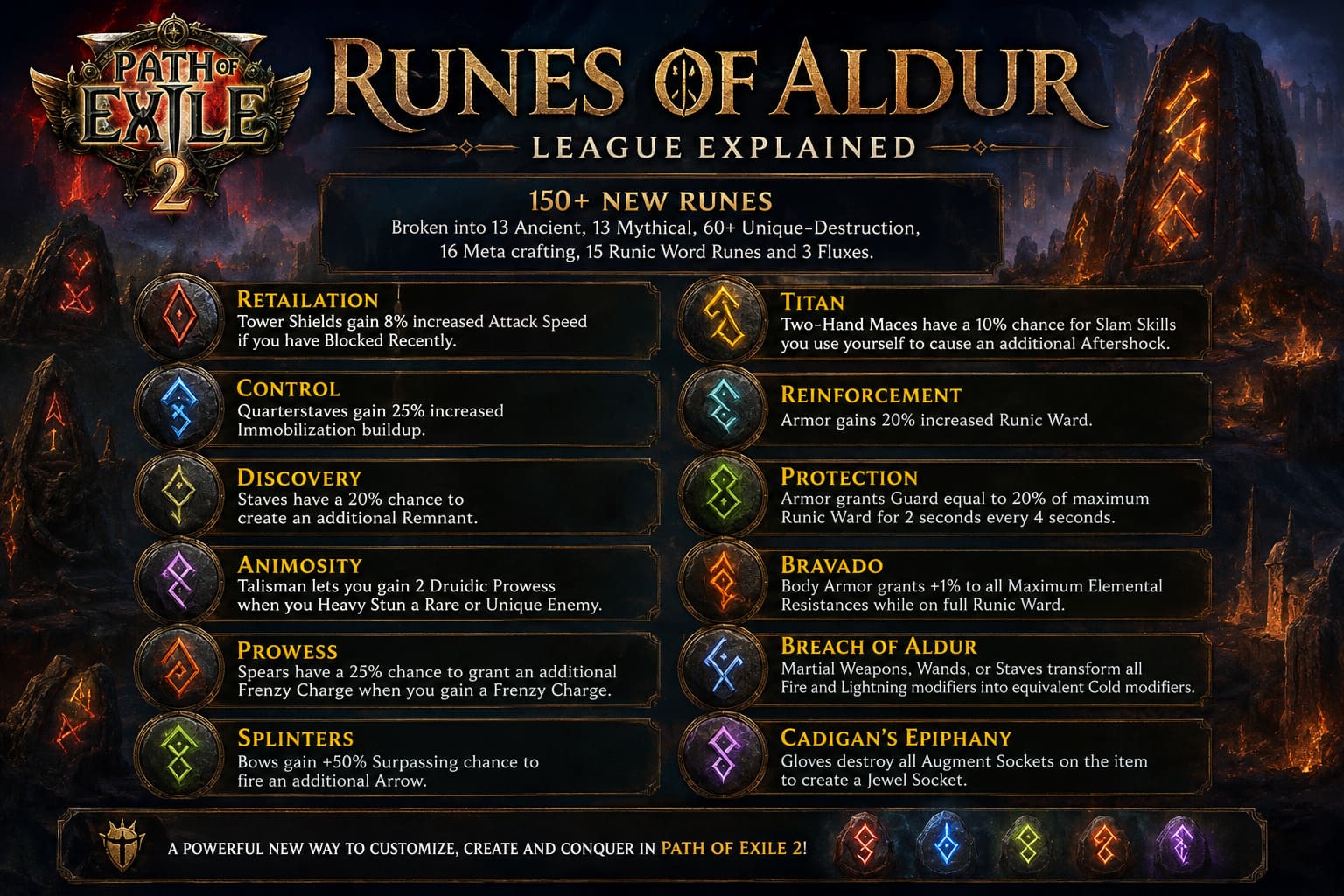
This rune has become one of the most talked-about items in the current endgame because of its interaction with unique items.
The basic concept is simple:
Destroy a unique item and transfer part of its identity into a rune that can be used elsewhere.
The result is a crafting system that feels incredibly powerful and surprisingly creative.
Instead of being locked into a specific unique item, players can inherit desirable effects while maintaining the superior stats of rare gear.
This opens up an enormous number of build possibilities.
For many players, Aldur’s Legacy farming eventually becomes the primary reason to run difficult remnant encounters.
Best Farming Strategy for Rare Rune Drops
After extensive testing, this became my preferred approach:
Early Session
- Run fast maps
- Focus on completion speed
- Gather baseline runes
- Build currency reserves
Mid Session
- Target higher slot remnants
- Prioritize rune rewards
- Ignore low-value options
Late Session
- Fully invest into difficult remnants
- Chase premium rune combinations
- Hunt for legacy-related rewards
This gradual progression feels safer and often produces more stable profits over several hours of gameplay.
Build Types That Excel in Remnant Farming
Certain archetypes naturally perform well inside remnant encounters.
The strongest characteristics are:
- Strong area damage
- Reliable boss damage
- Excellent mobility
- Defensive utility
- Consistent resource sustain
Lightning-focused builds have become particularly popular because they combine fast map clear with strong single-target damage.
Chain effects and area coverage allow players to eliminate large remnant waves before they become overwhelming.
However, almost any build can succeed if properly optimized for defense and encounter control.
PoE 2 Meta Build Rankings 2026: Blood Mage vs Oracle Showdown (Patch 0.5)
Selling Runes Is Often Better Than Using Them
One of the easiest mistakes to make is hoarding every valuable rune you find.
Unless a rune directly improves your build, selling it can often be the smarter decision.
The market places enormous value on rare crafting components because dedicated crafters are constantly searching for perfect combinations.
I frequently funded entire gear upgrades by selling a few premium rune drops instead of trying to force them into my own crafting projects.
Understanding market demand is almost as important as understanding the farming mechanic itself.
Path of Exile 2 Vulkan vs DirectX 12: Best Performance Settings Guide (2026)
Final Thoughts
The Runes of Aldur system is easily one of the most engaging progression mechanics I’ve experienced in Path of Exile 2 so far. It combines combat, crafting, economic strategy, and experimentation in a way that constantly rewards player knowledge.
If you’re looking to maximize your efficiency, focus on reaching Atlas progression quickly, prioritize survivable builds, farm maps at a comfortable pace, and gradually work your way toward high-slot Ezomyte Remnants. Once you begin targeting premium runes and endgame crafting materials, the entire mechanic starts revealing its true depth.
For me, the most enjoyable part isn’t even the loot. It’s the feeling that every remnant presents a meaningful choice. Sometimes you play it safe. Sometimes you gamble on a dangerous rune chain and hit the jackpot.
And honestly, that’s exactly the kind of risk-versus-reward gameplay that keeps me coming back to Path of Exile 2 night after night.