Podracer Builds That Actually Win: Competitive Galactic Racer Guide
If you’ve spent any time in Star Wars: Galactic Racer multiplayer, you already know one thing: raw speed alone won’t save you.
This isn’t the old-school arcade fantasy anymore—it’s closer to a mechanical chess match at 600 mph, where positioning, durability, and build synergy matter just as much as your reflexes.
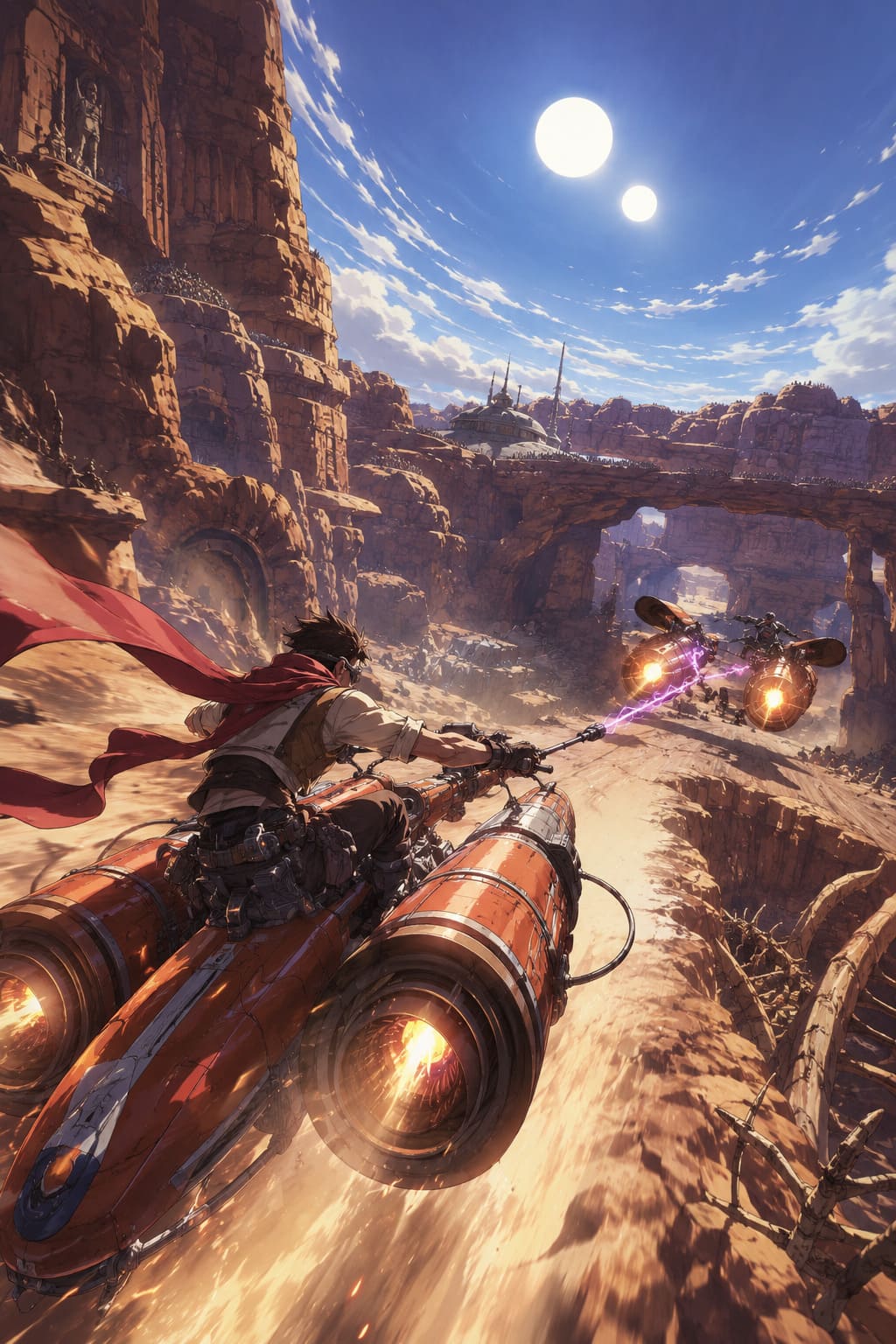
After digging through dev updates and watching early competitive showcases (and yes, theorycrafting way too much), it becomes pretty obvious that success isn’t just about driving skill. It’s about how intelligently you build your podracer and how well you adapt it to different tracks and lobbies.
Dead as Disco Boss Guide: Tactics and Strategies to Beat Every Idol
Let’s break it down like someone who actually wants to win, not just hit top speed once and explode.
Why Builds Matter More Than Driving
In most racing games, skill is everything. Here, skill is only half the equation. The introduction of modular customization through Heei’s workshop changes the entire foundation of gameplay. You are not simply selecting a vehicle—you are engineering one.
The same track can feel completely different depending on your setup. A build that dominates on wide desert circuits may completely fail in tight canyon brawls. And in multiplayer, that difference is often the gap between a podium finish and a DNF.
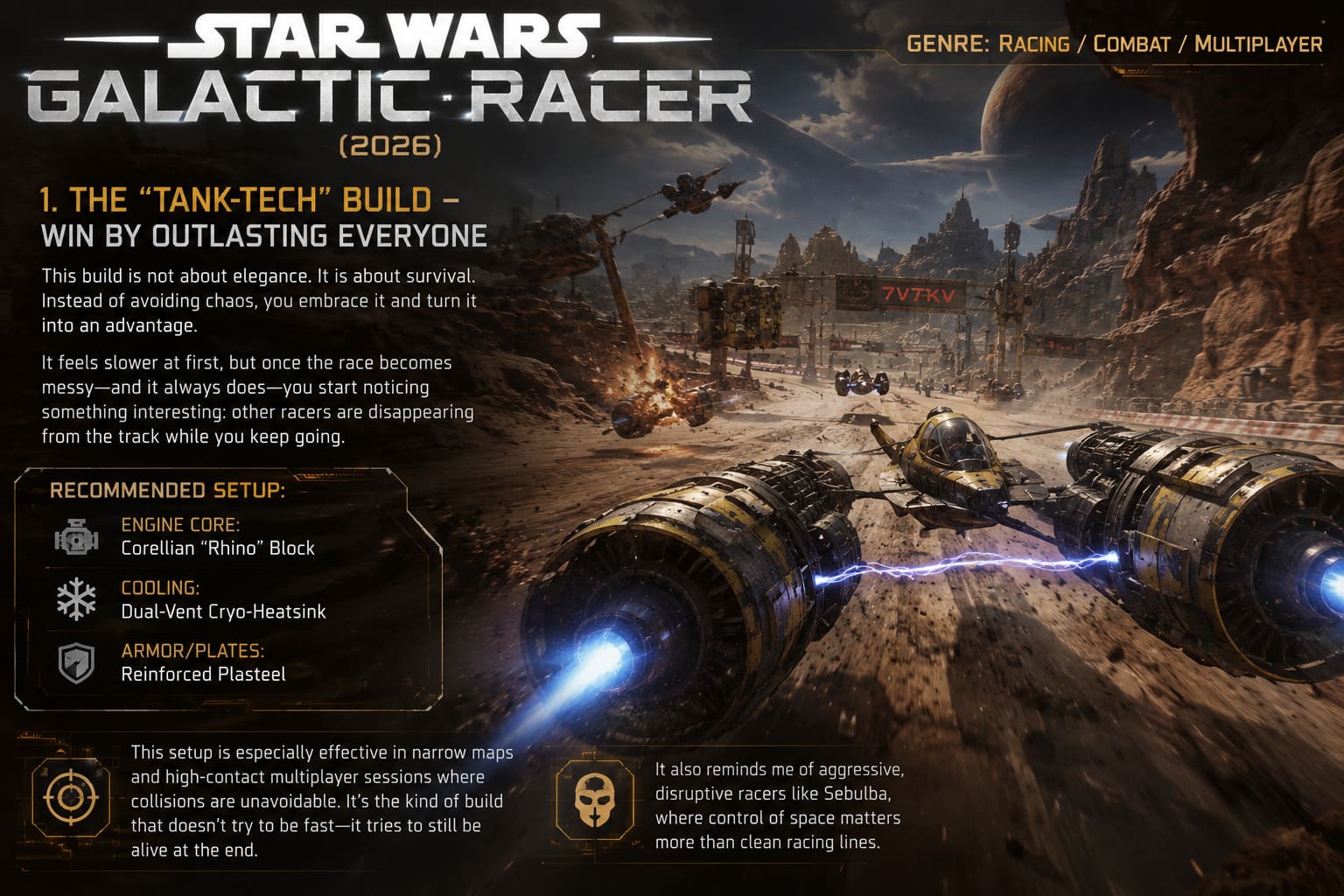
1. The “Tank-Tech” Build — Win by Outlasting Everyone
This build is not about elegance. It is about survival. Instead of avoiding chaos, you embrace it and turn it into an advantage.
It feels slower at first, but once the race becomes messy—and it always does—you start noticing something interesting: other racers are disappearing from the track while you keep going.
Recommended Setup:
Engine Core: Corellian “Rhino” Block
Cooling: Dual-Vent Cryo-Heatsink
Armor/Plates: Reinforced Plasteel
This setup is especially effective in narrow maps and high-contact multiplayer sessions where collisions are unavoidable. It’s the kind of build that doesn’t try to be fast—it tries to still be alive at the end.
It also reminds me of aggressive, disruptive racers like Sebulba, where control of space matters more than clean racing lines.
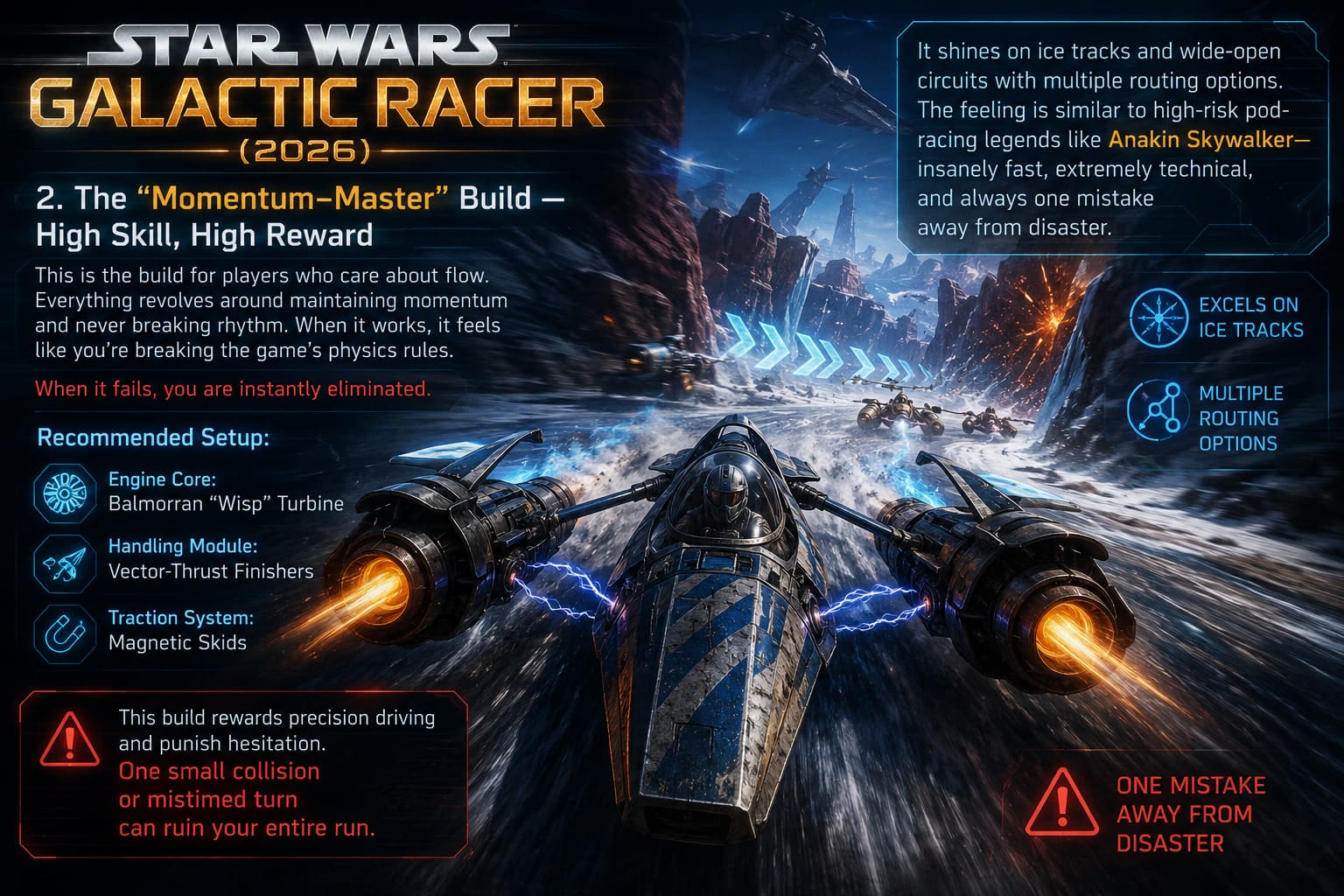
2. The “Momentum-Master” Build — High Skill, High Reward
This is the build for players who care about flow. Everything revolves around maintaining momentum and never breaking rhythm. When it works, it feels like you’re breaking the game’s physics rules.
When it fails, you are instantly eliminated.
Recommended Setup:
Engine Core: Balmorran “Wisp” Turbine
Handling Module: Vector-Thrust Finisters
Traction System: Magnetic Skids
This build rewards precision driving and punish hesitation. One small collision or mistimed turn can ruin your entire run.
It shines on ice tracks and wide-open circuits with multiple routing options. The feeling is similar to high-risk podracing legends like Anakin Skywalker—insanely fast, extremely technical, and always one mistake away from disaster.
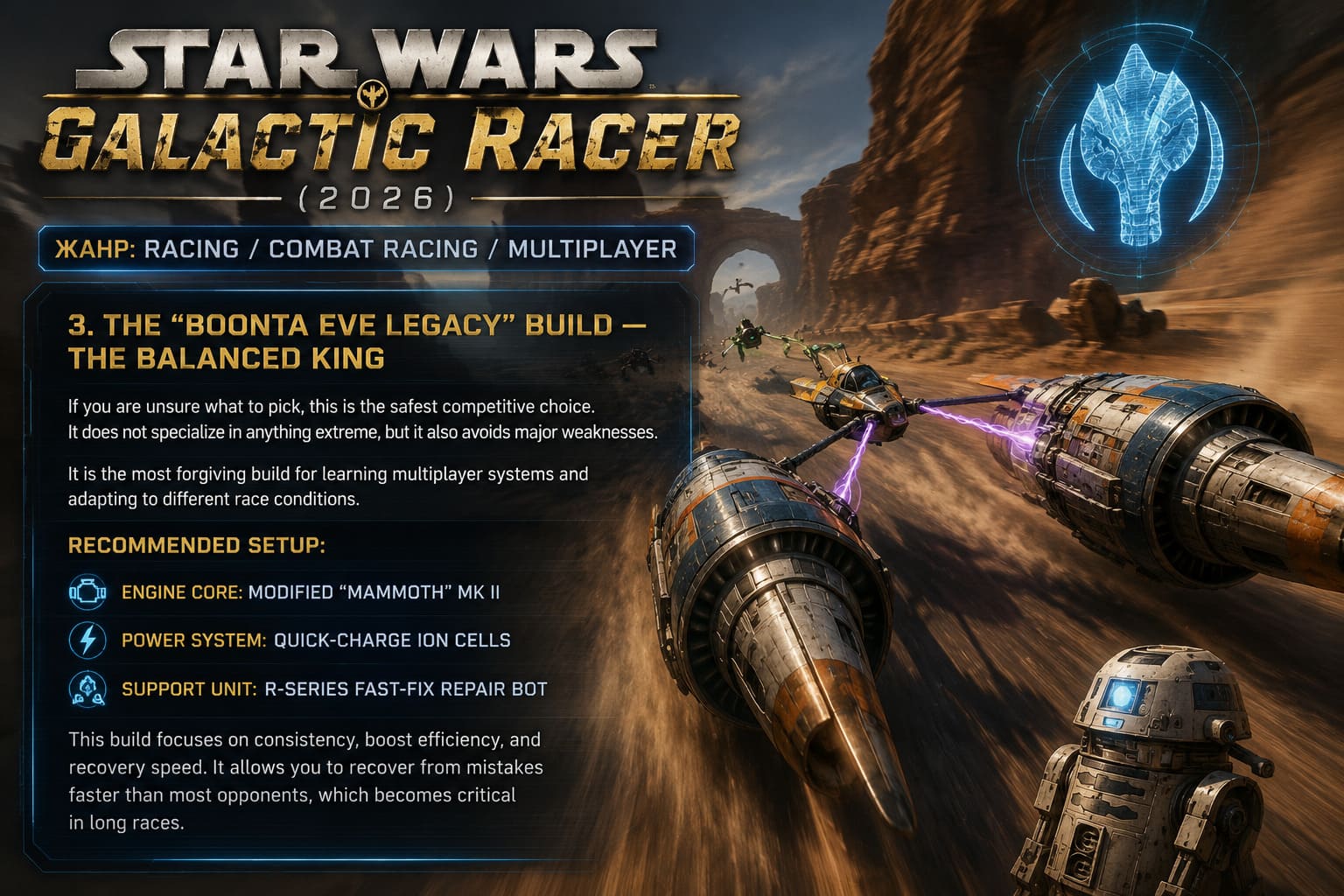
3. The “Boonta Eve Legacy” Build — The Balanced King
If you are unsure what to pick, this is the safest competitive choice. It does not specialize in anything extreme, but it also avoids major weaknesses.
It is the most forgiving build for learning multiplayer systems and adapting to different race conditions.
Recommended Setup:
Engine Core: Modified “Mammoth” Mk II
Power System: Quick-Charge Ion Cells
Support Unit: R-Series Fast-Fix Repair Bot
This build focuses on consistency, boost efficiency, and recovery speed. It allows you to recover from mistakes faster than most opponents, which becomes critical in long races.
Quick Comparison of Builds
| Build Type | Speed | Durability | Difficulty | Best Use Case |
|---|---|---|---|---|
| Tank-Tech | Low | Very High | Easy | Chaotic multiplayer races |
| Momentum-Master | Very High | Very Low | Hard | Time trials and clean execution |
| Boonta Eve Legacy | Balanced | Medium | Medium | Ranked consistency |
Multiplayer Strategy: Reputation Changes Everything
One of the most overlooked systems is Reputation. It directly influences your rewards, progression, and long-term efficiency in multiplayer.
High-risk builds can generate more credits when they succeed, but failure carries a real cost. On the other hand, balanced builds provide steady progression without extreme swings in performance.
The important mindset shift is this: finishing consistently often matters more than occasional dominance.
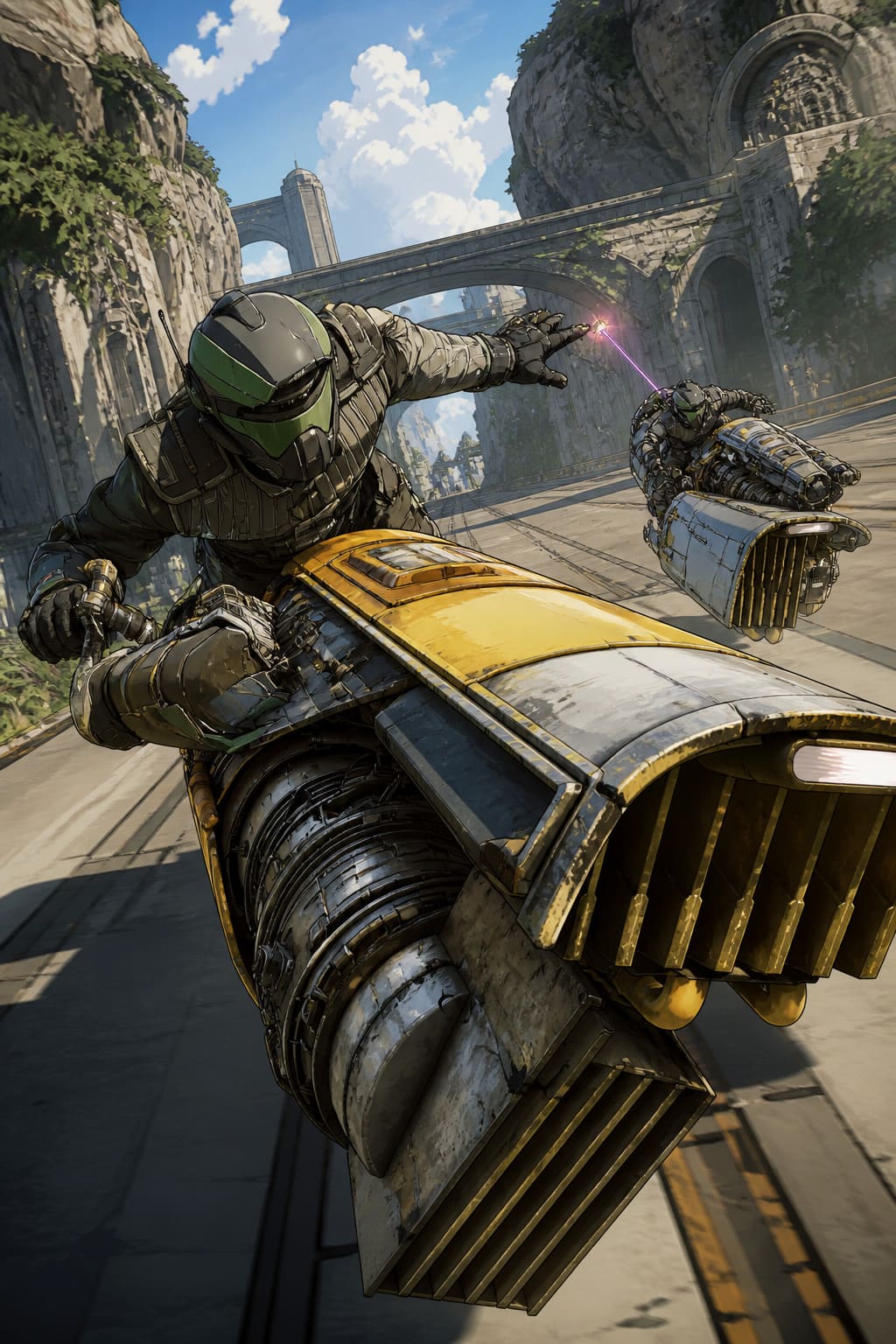
Track Adaptation Is the Real Meta
Many players make the mistake of sticking to one build for every situation. That approach works poorly in Galactic Racer.
Different environments demand different approaches:
Narrow canyon tracks favor tank-style builds where collisions are unavoidable. Ice or low-friction surfaces reward precision and momentum-based setups. Vertical or branching circuits often benefit lightweight builds with flexible handling.
The strongest players are not tied to one build—they switch depending on the track and lobby behavior.
Final Thoughts
There is no single “best” podracer build in Star Wars: Galactic Racer. The real advantage comes from understanding when to use each approach and how to adapt under pressure.
Tank-Tech dominates chaos-heavy races. Momentum-Master excels in clean, high-skill runs. Boonta Eve Legacy provides stability and consistent ranking progression.
But the true meta is flexibility. The players who experiment, adapt, and understand track dynamics will consistently outperform those who rely on one fixed setup.
If you approach the game like a builder rather than just a driver, you will quickly notice the difference in results.
That is where the real competition begins.