Aliens Fireteam Elite 2: How to Unlock and Build the Specialist Class
If there is one feature in Aliens Fireteam Elite 2 that completely changes how I look at the endgame, it is the Specialist class.
At first glance, it might sound like just another class added to the roster. It really isn’t. The five original classes each have a clear identity and a job to do, while Specialist feels more like the game finally handing you the keys and saying, “Okay, build the Marine you actually want.”
That is what makes Specialist one of the most interesting classes in Aliens Fireteam Elite 2. Instead of being locked into a predefined collection of abilities, you can mix tools, perks, modifiers, and skill replacers earned from other classes. The result is a class that can become almost anything: a damage monster, a defensive support, a crowd-control machine, or a weird hybrid that simply works because the numbers and abilities happen to click.
But there is a catch: you don’t get access to the Specialist’s full potential immediately.
If you’re starting the game and wondering how to unlock Specialist, what you need to level first, and whether it is worth grinding all five core classes, here’s how I would approach it.
What Makes the Specialist Different?
The standard classes in Aliens Fireteam Elite 2 are designed around specific battlefield roles:
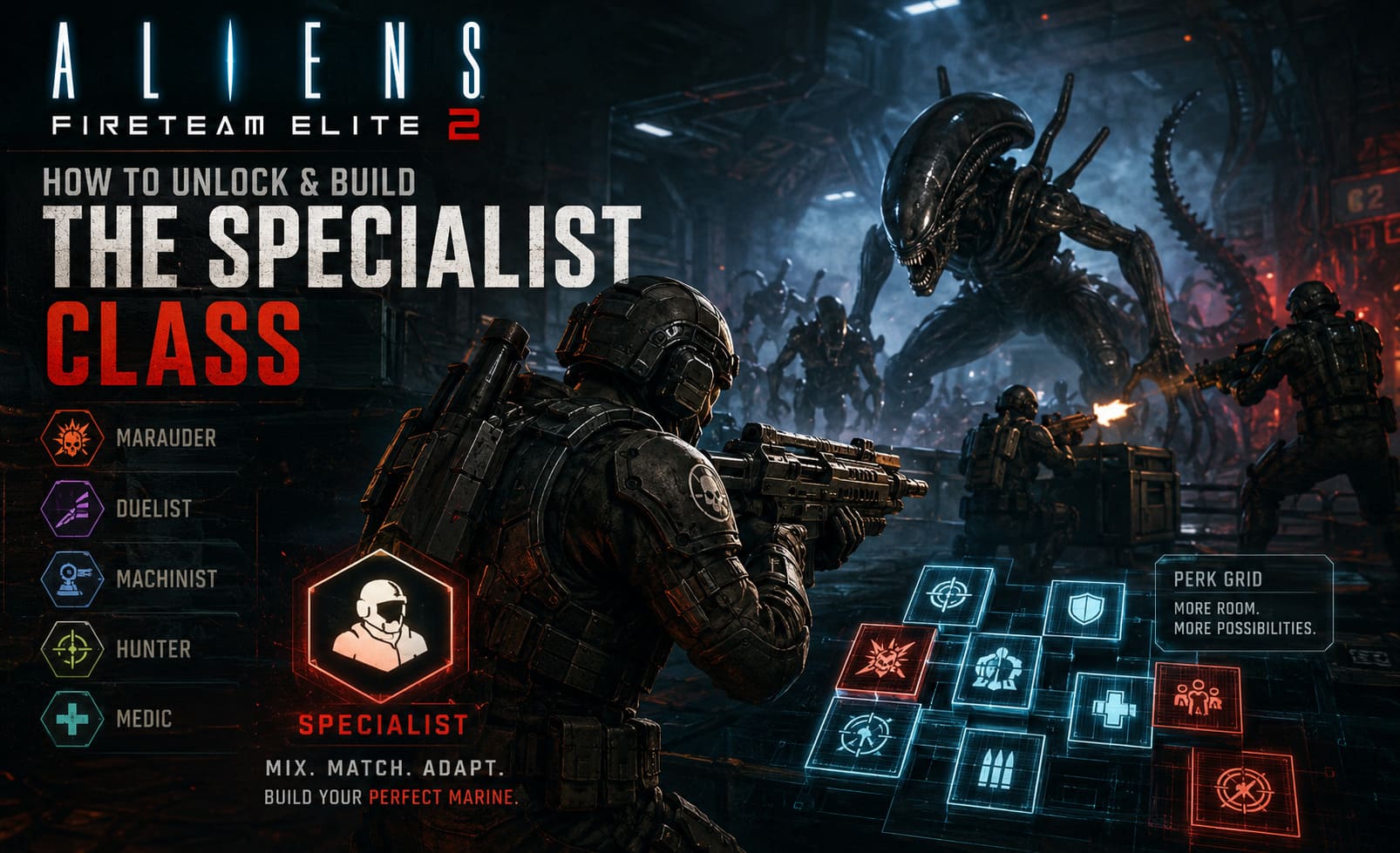
| Class | Main Role | Best For |
|---|---|---|
| Marauder | Explosives & Crowd Control | Clearing groups of Xenomorphs |
| Duelist | Mobility & Aggression | Fast-paced close and mid-range combat |
| Machinist | Defense & Turrets | Holding positions and controlling lanes |
| Hunter | Single-Target Damage | Dangerous elites and high-value targets |
| Medic | Support & Recovery | Keeping the squad alive |
| Specialist | Hybrid Customization | Endgame builds and experimentation |
The Specialist basically throws the normal class boundaries out of the airlock.
A Specialist can take elements from the Machinist and combine them with Hunter tools, then add defensive options from Medic. You aren’t simply choosing a second class. You’re constructing your own kit from pieces you’ve already earned.
That’s the part I personally find most exciting.
In a normal mission, I might want the defensive utility of a Machinist but still miss the raw single-target pressure of a Hunter. With Specialist, that doesn’t necessarily mean choosing one and accepting the other. You can work toward a build that combines both.
That flexibility is especially valuable once missions start punishing mistakes.
How to Unlock the Specialist Class
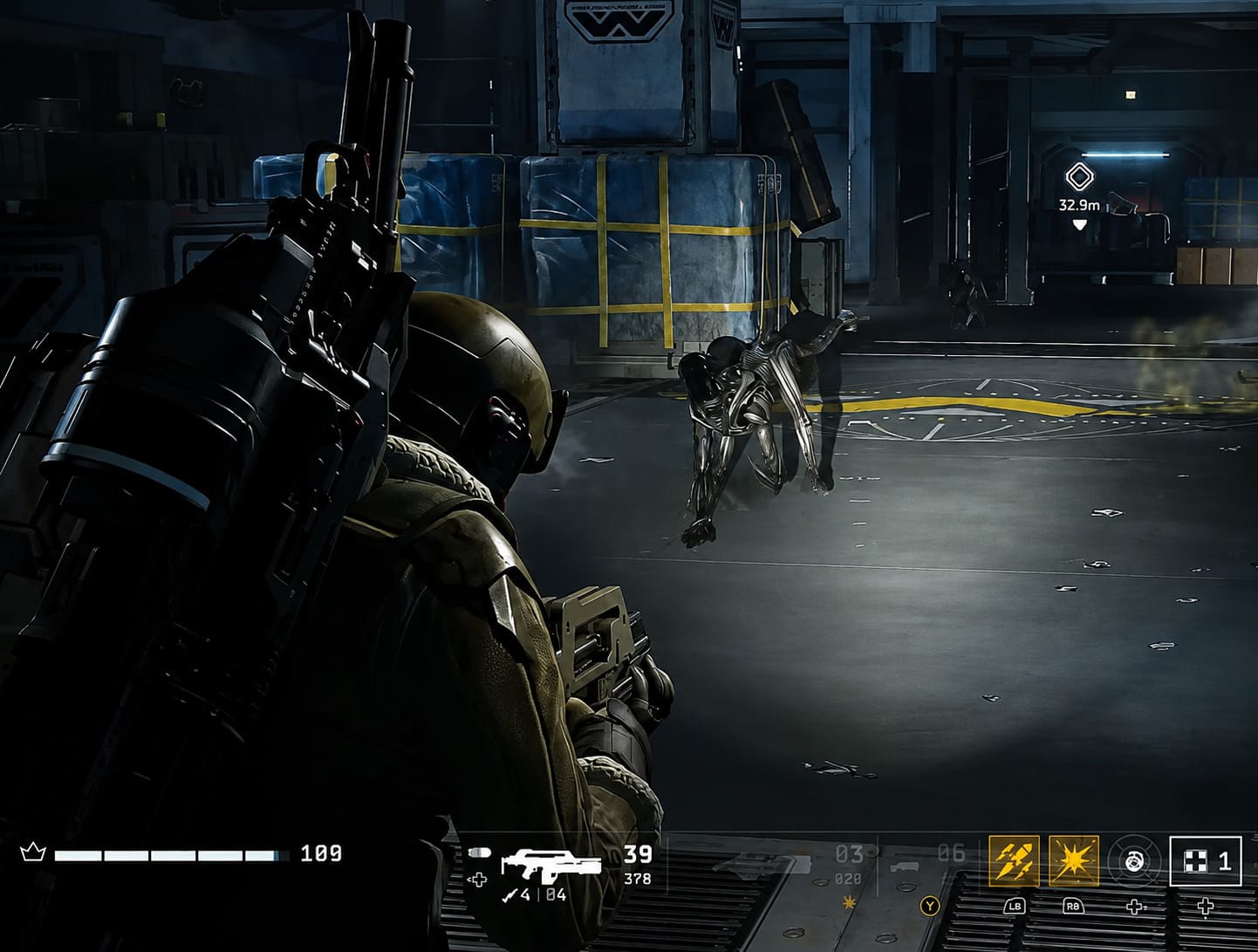
The important thing to understand is that Specialist is progression-gated. You shouldn’t expect to boot up Aliens Fireteam Elite 2 for the first time and immediately have the complete hybrid class available.
Your early hours should be spent getting familiar with the five core archetypes and unlocking their equipment options.
1. Progress Through the Core Classes
The first step is playing and developing the original five classes:
- Marauder
- Duelist
- Machinist
- Hunter
- Medic
You don’t need to treat this as a race to max every class before doing anything else.
In fact, I wouldn’t recommend it.
Play the classes naturally, figure out which abilities you actually enjoy, and pay attention to the perks and skill replacers you unlock. Those rewards eventually become important building blocks for your Specialist.
The system is much more interesting when you think of the five original classes as your toolbox rather than five unrelated characters.
2. Unlock Your First Ability Pieces
As you progress, you’ll start earning interchangeable abilities, perks, modifiers, and skill replacers tied to the core classes.
This is where the Specialist concept starts making sense.
Want more defensive utility? Invest in the appropriate class.
Want stronger single-target damage? Work on Hunter.
Need crowd control? Marauder becomes much more attractive.
The Specialist doesn’t magically give you every option in the game. Your available customization is tied to what you’ve actually unlocked.
That means your progression choices matter.
3. Build Toward Level 10 on the Core Classes
This is where the real grind begins.
Each of the five main classes can be developed to Level 10, and reaching the maximum level gives you access to the deeper portions of that class’s perk and ability catalog.
If your goal is simply to experiment with Specialist, you don’t necessarily need to max everything immediately.
If your goal is to create a genuinely powerful endgame Specialist, however, Level 10 on the core classes should be your long-term target.
Think of it this way:
Your Specialist can only be as versatile as the toolbox you’ve built with the other classes.
That’s why the Specialist isn’t really an alternative to leveling the other classes. It’s almost the reward for understanding them.
The Specialist Progression System
There are effectively two progression paths to think about.
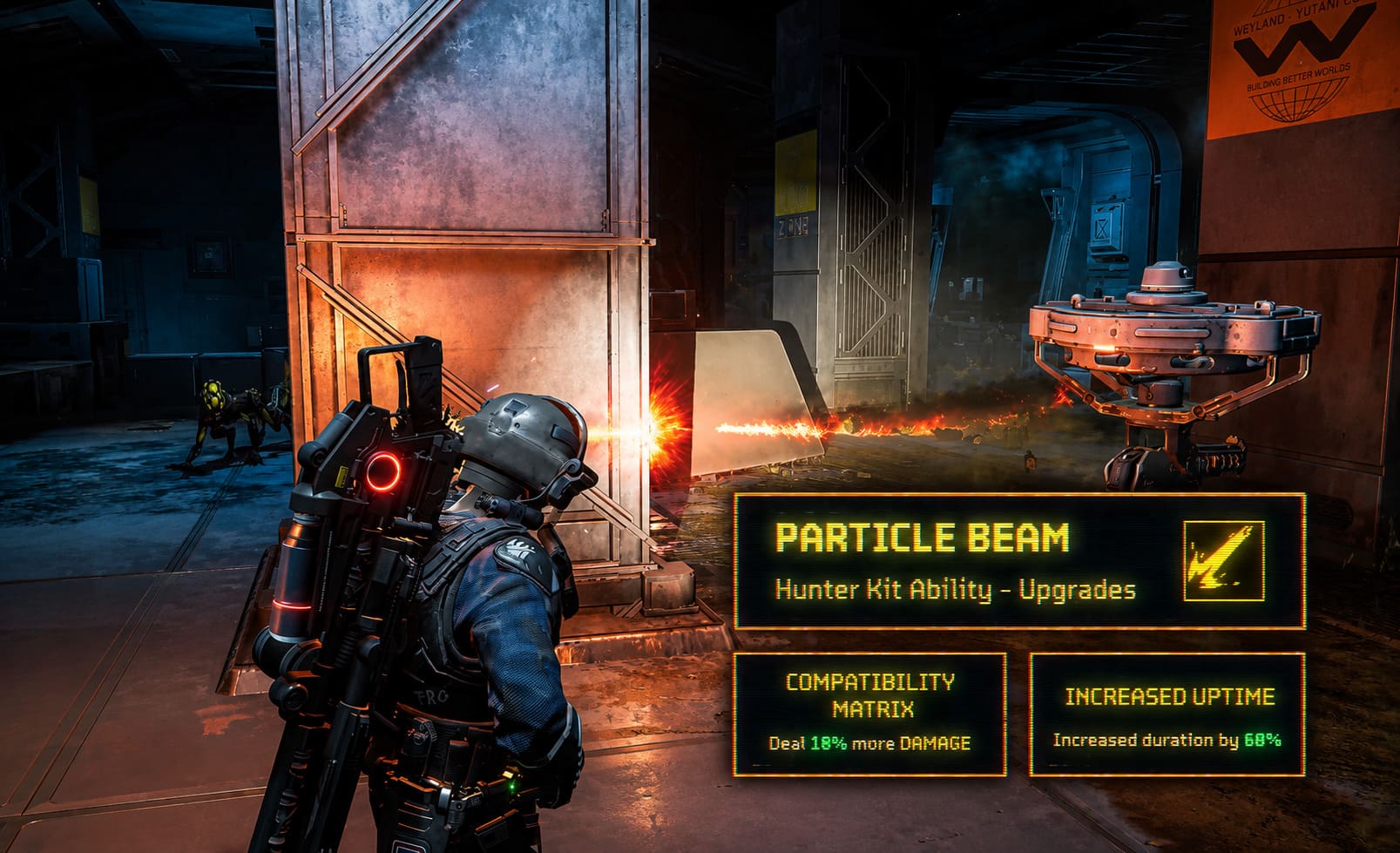
Horizontal Progression: Unlock More Tools
This is the part that happens across your core classes.
You play as Marauder, Hunter, Medic, Machinist, or Duelist and unlock new pieces for your overall collection.
This progression expands what your Specialist can use.
For example, if you want to create a build centered around strong defensive utility and high single-target damage, you need to actually invest in the classes that provide those tools.
This is why constantly playing only Specialist isn’t necessarily the fastest way to expand your options.
Vertical Progression: Expand the Specialist Build
Specialist progression works differently.
Instead of simply giving you another predetermined ability every time you level, Specialist progression expands your ability to construct more complicated builds.
The Tetris-style perk grid is a huge part of this.
If you’ve played the original Aliens Fireteam Elite, you’ll recognize the basic philosophy. Abilities and perks occupy space, and the challenge is fitting everything together efficiently.
The higher your Specialist rank becomes, the more room you have to work with.
And honestly, this is where the class gets addictive.
At lower ranks, you’re constantly making compromises. You have an idea for a build, but there simply isn’t enough space.
Later, the board becomes much more flexible, and suddenly combinations that looked impossible start fitting together.
How I’d Build a Specialist
I wouldn’t start by trying to create the theoretical “perfect” Specialist.
I’d build around a specific job.
Crowd-Control Specialist
For Horde-style situations, I’d lean heavily into Marauder and Machinist options.
The basic idea is simple: control where the Xenomorphs can move, punish large groups, and make your fireteam’s defensive position harder to break.
This is particularly useful when enemies are coming through predictable lanes or when your squad needs someone who can stabilize a chaotic fight.
Aggressive Hybrid
For players who prefer to stay mobile, a Duelist/Hunter-inspired Specialist makes more sense.
You can focus on mobility, aggressive weapon usage, and strong damage against priority targets.
This is the kind of build I’d use when the mission rewards movement rather than sitting in one defensive position.
The danger is obvious, though: flexibility doesn’t make you invincible.
A glass-cannon Specialist is still a glass cannon.
Squad Support Specialist
A Medic-based Specialist can be extremely interesting for coordinated teams.
Instead of becoming a traditional healer, you can combine support-oriented tools with offensive options from another class.
That’s the kind of setup I particularly like in four-player groups because you’re not sacrificing all of your personal damage just to provide utility.
Why Specialist Matters More on Higher Difficulties
The Specialist becomes much more interesting once you stop thinking about normal campaign missions and start looking toward the harder content.
On lower difficulties, you can get away with relatively straightforward builds. You don’t always need perfect synergy because raw weapon damage and basic teamwork can carry a squad surprisingly far.
Higher difficulties are different.
Enemy pressure increases, mistakes become more expensive, and team composition starts to matter much more.
That’s where the Specialist’s flexibility becomes genuinely valuable.
Instead of asking, “Which class should I bring?”, a coordinated team can start asking:
“Which combination of tools does this mission actually require?”
That is a much more interesting question.
Specialist Build Priorities
If you’re planning your long-term progression, I’d prioritize things in roughly this order:
- Unlock the core classes and understand their roles.
- Collect ability replacers and useful modifiers.
- Experiment with Specialist before committing to one build.
- Push the core classes toward Level 10.
- Increase Specialist rank to expand the perk board.
- Optimize your build around the mission rather than trying to make one setup do everything.
The last point is probably the most important.
A build that looks amazing on paper can be mediocre when the mission changes.
My Biggest Tip: Don’t Ignore the Base Classes
It would be easy to look at Specialist and think, “Great, now I never have to play the other classes again.”
I think that’s the wrong way to approach it.
The five original classes are essentially your research lab.
Playing Marauder teaches you what makes explosive crowd control valuable. Hunter shows you why focused damage matters. Machinist demonstrates the strength of area denial. Duelist gives you a completely different perspective on movement and aggression, while Medic teaches you how much a well-timed support ability can change a firefight.
Once you’ve played them, you’ll have a much better understanding of what you actually want from Specialist.
And that makes your builds better.
Aliens Fireteam Elite 2 Crossplay Guide: PC, PS5, Xbox Series X, and Launch Details
Is Specialist Worth the Grind?
For casual players, probably not immediately.
If you’re mostly interested in completing the campaign and moving on, the standard classes already provide plenty of variety.
For players who enjoy Horde mode, high difficulty missions, build crafting, and experimenting with team compositions, Specialist is where Aliens Fireteam Elite 2 becomes much more interesting.
The grind is part of the deal, but I think it makes sense.
If Specialist gave you every ability from the beginning, there would be far less reason to explore the rest of the roster. Instead, the game encourages you to learn the classes individually and then eventually start combining what you’ve learned.
That progression feels much more rewarding.
Final Verdict
The Specialist class in Aliens Fireteam Elite 2 is not just another Marine archetype. It is essentially the game’s answer to players who have spent dozens of hours thinking, “I wish I could combine these two abilities.”
Its biggest strength is freedom.
Its biggest weakness is the amount of progression required to unlock that freedom.
Don’t rush straight toward the Specialist expecting an instant endgame powerhouse. Build your collection first. Level the core classes. Experiment with perks. Learn which abilities actually complement one another.
Then start treating the Specialist as your personal sandbox.
For me, that’s the appeal. The five core classes give Aliens Fireteam Elite 2 its structure, but Specialist is where the game starts letting players bend that structure.
And once you have a fully expanded perk board and a collection of Level 10 class unlocks behind you, creating a Marine that perfectly fits your preferred playstyle becomes one of the most satisfying parts of the game.