Belleright River Dock Guide: Fast Travel, Strategy, and What the Game Doesn’t Tell You
If you’ve spent more than a few hours in Bellwright, you already know the game doesn’t really respect your time. Between long marches, random bandit ambushes, and watching your carefully built squad get stuck on terrain for no clear reason, movement quickly becomes one of the most frustrating parts of the experience.
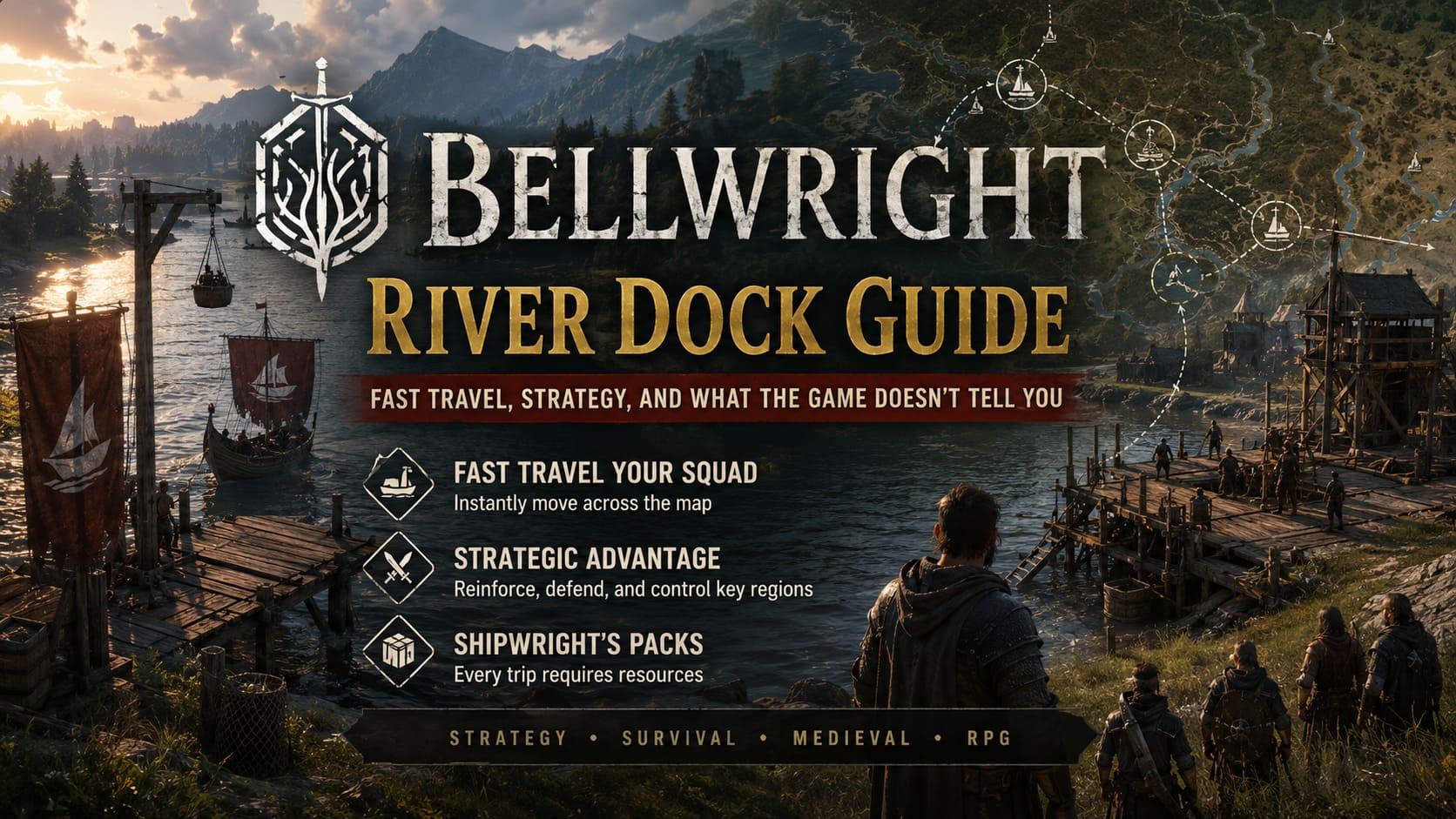
The River Dock system changes that, but not in the way most players expect. It is not a simple quality-of-life fast travel button. It is a logistics system disguised as a building mechanic, and once you understand it, the entire pace of the game shifts.
What River Docks Actually Do in Bellwright
One of the most common misunderstandings among new players is assuming River Docks function as trade hubs or economic exchange points. They don’t.
River Docks are designed exclusively for tactical mobility. They allow you to move your character, companions, and even certain workforce units between distant map locations instantly.
They are not used for item trading, resource conversion, or NPC commerce. Instead, they function as a controlled transport network for military and settlement logistics.
What they are NOT used for
River Docks do not handle item trade, automated deliveries, or caravan systems. Those systems are handled separately through land-based logistics structures and settlement management tools.
Is Belleright Worth Playing in 2026? Honest Player Review After Hundreds of Hours
What they ARE used for
They are used for instant relocation of squads, reinforcement of settlements, and rapid response to threats across the map.
Unlocking the River Dock System
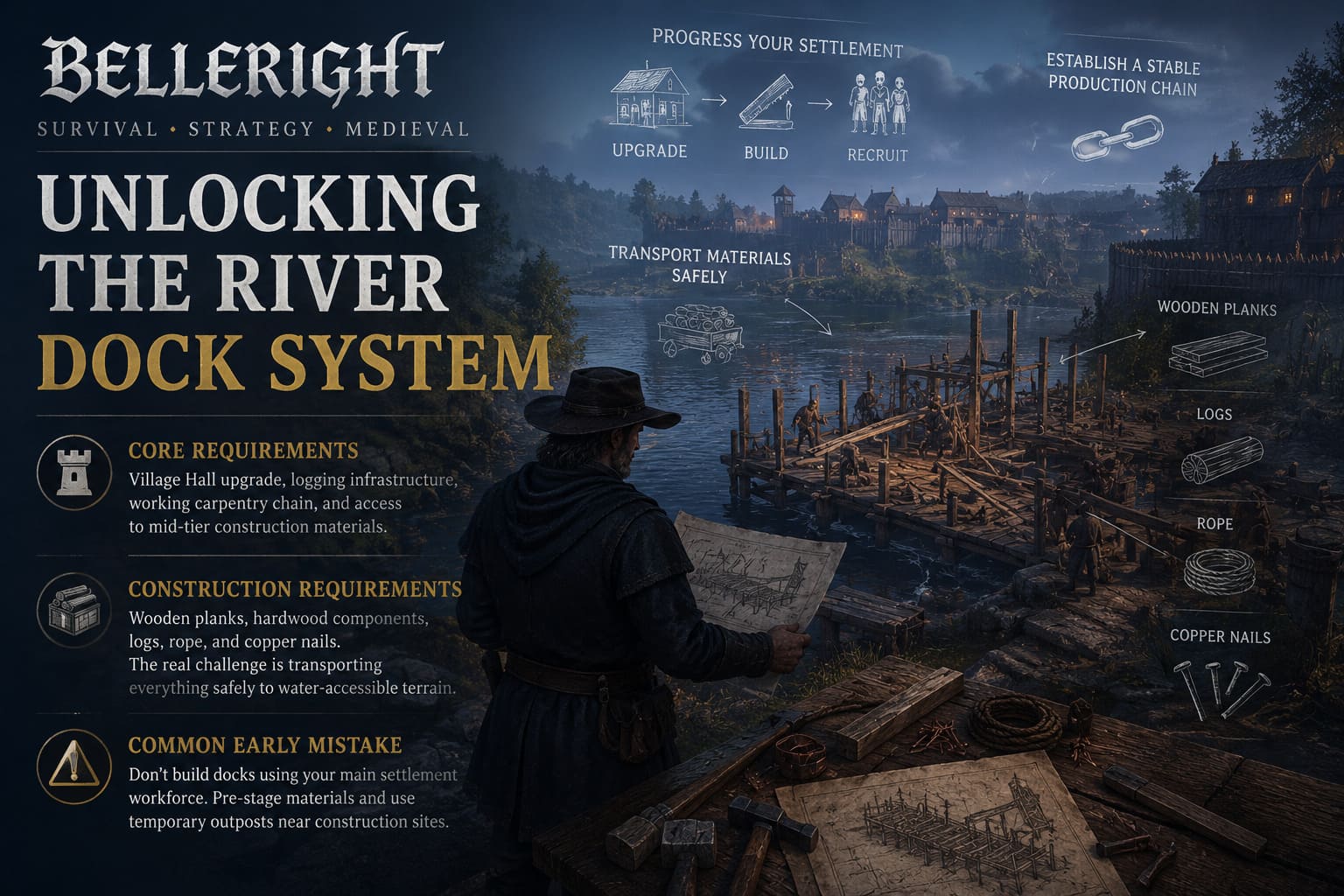
River Docks are a Tier 2 infrastructure feature, meaning they require a functional early settlement before they become available. You cannot rush them in the first hours of the game.
To unlock them, you need to progress through your settlement development and establish a stable production chain. This includes upgrading your village structure, building essential production buildings, and recruiting specialized workers such as carpenters.
Core requirements
Typical prerequisites include a Village Hall upgrade, logging infrastructure, a working carpentry chain, and access to mid-tier construction materials.
Construction Requirements and Practical Issues
Building a River Dock requires a mix of early and mid-game materials. On paper, it looks simple, but the real challenge is transporting everything safely to water-accessible terrain.
Materials generally include wooden planks, hardwood components, logs, rope, and copper nails. The real difficulty is not crafting them, but moving them efficiently without draining your workforce.
Common early mistake
Many players try to build docks directly using their main settlement workforce. This often leads to wasted time and inefficient supply chains. A better approach is pre-staging materials and using temporary outposts closer to construction sites.
Placement Rules and Map Behavior
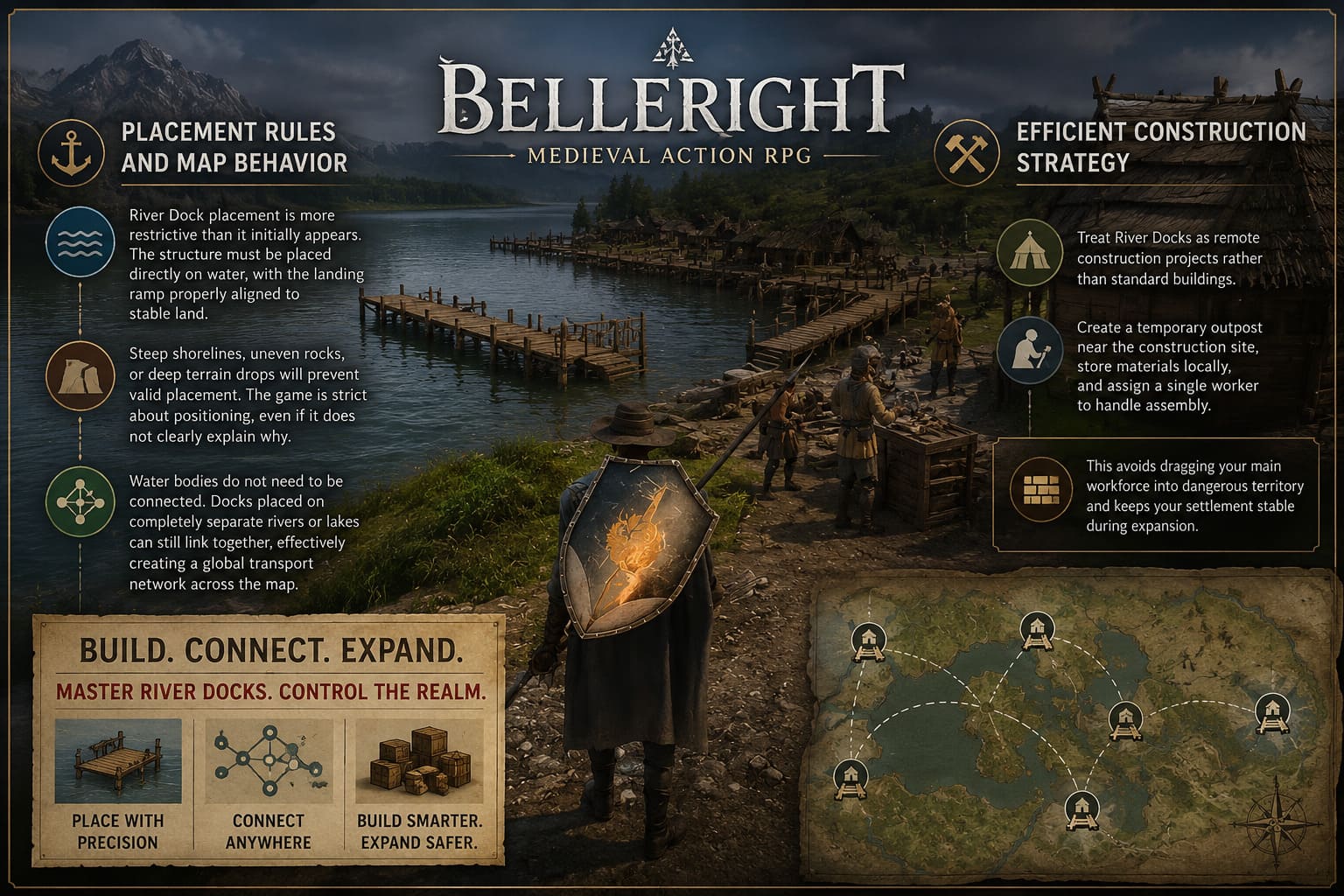
River Dock placement is more restrictive than it initially appears. The structure must be placed directly on water, with the landing ramp properly aligned to stable land.
Steep shorelines, uneven rocks, or deep terrain drops will prevent valid placement. The game is strict about positioning, even if it does not clearly explain why.
Interestingly, the water bodies do not need to be connected. Docks placed on completely separate rivers or lakes can still link together, effectively creating a global transport network across the map.
Belleright Xbox Series X Review: A Deep, Honest Look From a Veteran Survival Gamer
Efficient Construction Strategy
One of the most effective approaches to building River Docks safely is to treat them as remote construction projects rather than standard buildings.
A practical method is to create a temporary outpost near the construction site, store materials locally, and assign a single worker to handle assembly. This avoids dragging your main workforce into dangerous territory and keeps your settlement stable during expansion.

Shipwright’s Packs: The Real Limitation
River Docks are not free travel systems. Every departure requires a consumable item known as a Shipwright’s Pack, which acts as a fuel mechanic for transportation.
Each pack is crafted from wooden planks, copper nails, and linen. Every trip consumes one pack, meaning long-distance movement requires planning and resource management.
This system may feel restrictive at first, but it prevents players from abusing instant travel without consequences. It also adds a layer of logistical planning that becomes important in mid and late game.
How Fast Travel Works in Practice
Using River Docks is relatively straightforward once everything is set up. The key requirement is that your entire squad must physically gather at the departure dock before activation.
After forming your group and confirming all companions are present, you interact with the dock and select your destination from the map. If you have enough Shipwright’s Packs, the entire group is transported instantly to the target location.
Important detail most players miss
If even one unit is stuck on terrain or outside the interaction radius, they will not be included in the transfer. This is one of the most common causes of “missing” companions after travel.
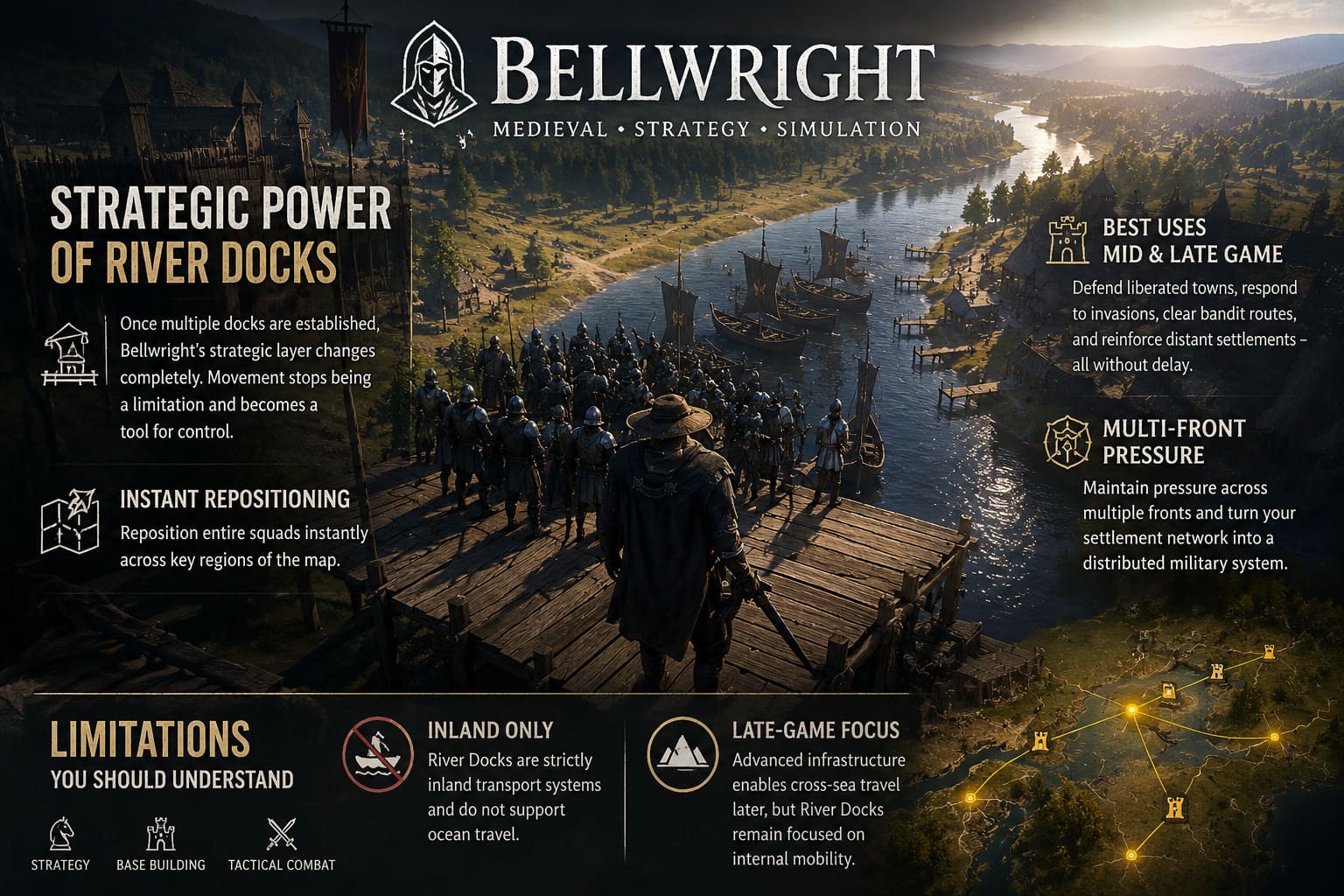
Strategic Importance of River Docks
Once multiple docks are established, Bellwright’s strategic layer changes completely. Movement stops being a limitation and becomes a tool for control.
Instead of reacting slowly to threats, you can reposition entire squads instantly across key regions of the map.
Best uses in mid and late game
River Docks are especially effective for defending liberated towns, responding to invasion events, clearing bandit-controlled routes, and reinforcing distant settlements without delay.
They also allow you to maintain pressure across multiple fronts, effectively turning your settlement network into a distributed military system.
Limitations You Should Understand
Despite their power, River Docks have clear limitations. They are strictly inland transport systems and do not support ocean travel or access to distant island regions.
Later stages of the game introduce more advanced infrastructure systems for cross-sea movement, but River Docks remain focused on internal map mobility.
Final Thoughts
River Docks in Bellwright are not just a convenience feature. They are a structural mechanic that changes how you think about movement, defense, and expansion.
At first, they feel like a niche system with limited use. But once you build a network of them across key locations, the entire game shifts from slow territorial expansion to fast, coordinated control of the world map.
If there is a true turning point in Bellwright’s mid-game progression, this is it. Not because it makes the game easier, but because it finally lets you play it at a strategic scale instead of a purely logistical one.