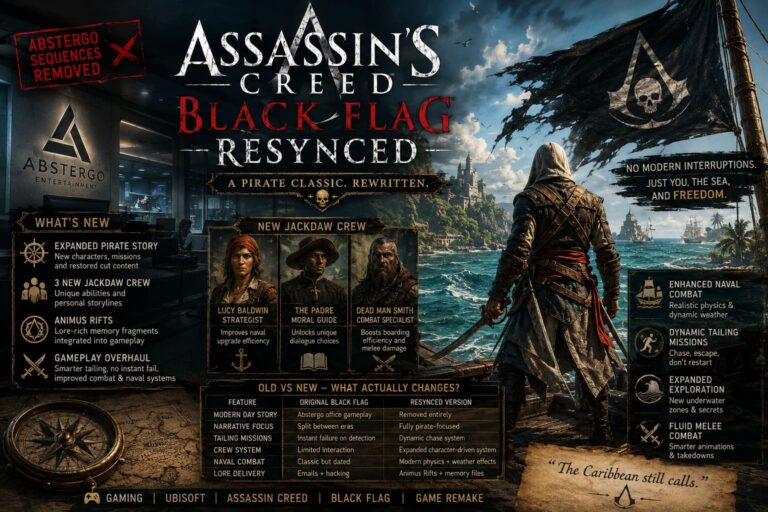
Mastering Naval Combat in Black Flag Resynced: Advanced Tactics
When I first jumped back into Assassin’s Creed Black Flag Resynced, I honestly didn’t expect it to feel this different.
I’ve played the original Black Flag more times than I can count—sometimes just sailing around while listening to the waves, sometimes hunting legendary ships until 3 AM. But this version doesn’t just polish the experience.
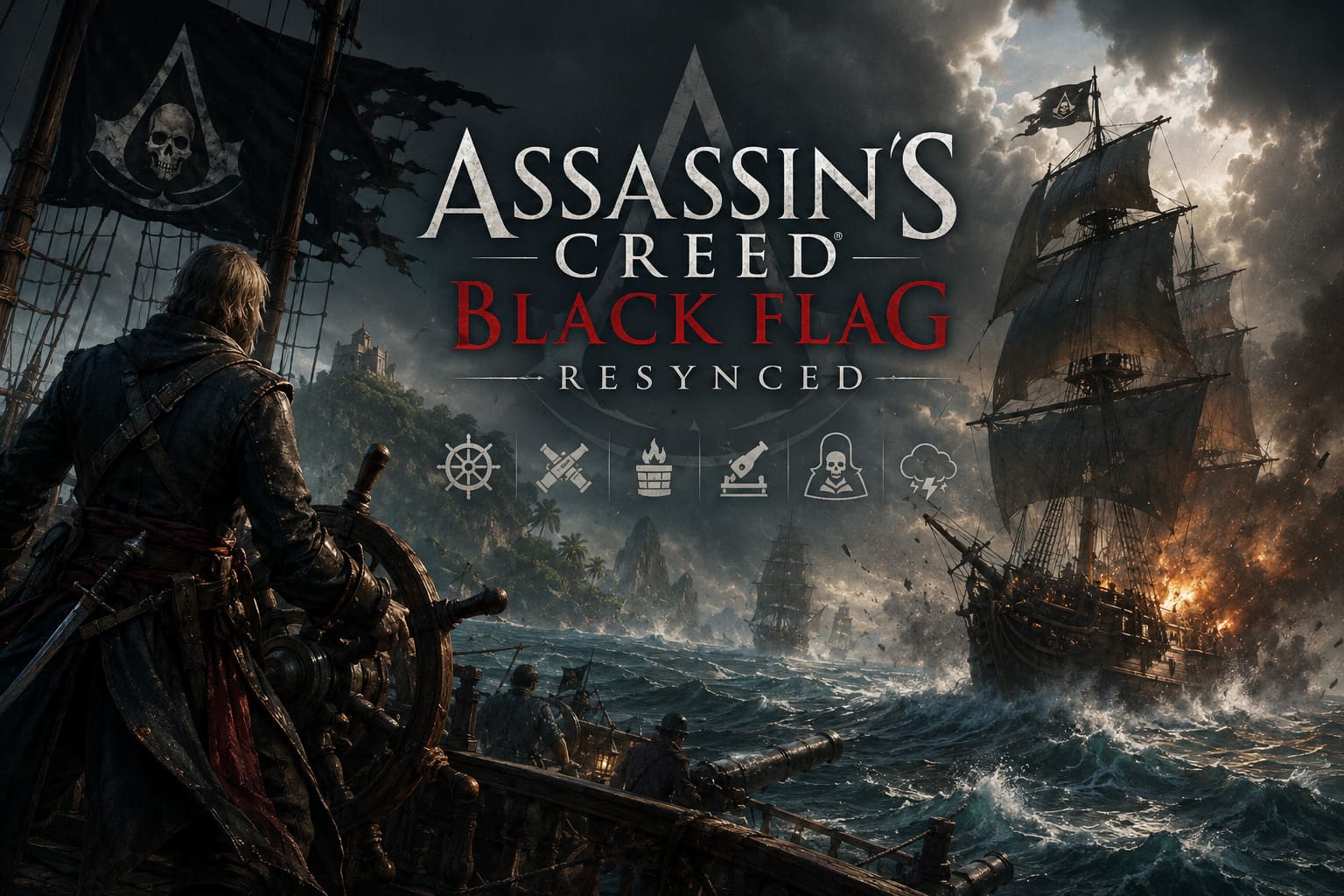
It rethinks it in a way that makes naval combat feel sharper, heavier, and far more demanding.
What surprised me most is that I couldn’t rely on old muscle memory anymore. Every encounter on the sea forces you to actually think—about positioning, timing, weather, and even how you manage your crew.
It’s still Black Flag at its core, but it feels like the Caribbean grew teeth.
Jackdaw Upgrade Strategy: How to Dominate in Black Flag Resynced
The Jackdaw Isn’t Just a Ship Anymore
In the original game, the Jackdaw was powerful, but fairly straightforward. In Resynced, it feels more like a living combat system than a simple vessel.
Every angle matters now:
- – Front = precision control and disruption
- – Sides = raw destructive power
- – Rear = defensive survival tools
What I love is how intuitive it still feels, but there’s clearly more depth hidden underneath. You don’t just spam cannons anymore—you shape fights.
Core Weapons Breakdown
Broadside Cannons – Your Real Damage Engine
This is still your main source of destruction. But now, timing and positioning matter far more.
When I started using broadsides properly, I stopped thinking “shoot when ready” and started thinking how do I force the enemy into my firing line.
The introduction of structural weak points makes sustained pressure incredibly rewarding. If you consistently hit the same area, you start breaking ships apart in a way that feels almost surgical.
Chain Shot – The Silent Killer of Mobility
Chain shot has always been useful, but now it feels essential.
Instead of just slowing ships down, it actively changes the flow of battle. A disabled ship is basically a sitting target, and in harder encounters, that’s the difference between victory and getting sunk in seconds.
I usually open fights like this:
- – Chain shot to cripple sails
- – Rotate to side position
- – Broadside burst damage
Fire Barrels – Defensive Chaos Tool
I underestimated this mechanic at first. Big mistake.
Fire barrels are no longer just panic drops. With the ability to detonate them early, they become a tactical trap system. I’ve used them to completely wipe chasing fleets when timed correctly.
It feels less like escaping and more like setting a trap behind you.
Mortars – Risky But Game-Changing
Mortars are slow, but devastating when used right.
The wind system makes them harder to land consistently, but when they hit, they really hit. I mostly use them before engagement to soften enemy ships, break formations, and force repositioning.
Think of them as battlefield control, not pure damage.
LEGO Batman Legacy on Switch 2: Release Window & Performance
New Systems That Change Everything
Officer System – Your Hidden Power Spike
This is one of my favorite additions. Officers actually feel meaningful instead of cosmetic upgrades.
Here’s how I personally view them:
- – Death Man Smith: Burst damage and doubled cannon output during volleys
- – Padre: Mobility and aggressive ramming capability
- – Lucy: Intel and enemy weakness detection
This system changes your playstyle, not just your stats. You build strategies around officers instead of treating them as passive buffs.
Dynamic Weather – The Real Enemy Sometimes
I’ll be honest—storms have killed me more than enemy ships.
The wave system physically affects cannon accuracy, meaning you’re not just fighting ships anymore—you’re fighting the sea itself.
There were moments where I had the perfect shot lined up, only for a wave to completely block my cannon line. It’s frustrating, but also brilliant design because it forces adaptation.
Movement Is Everything Now
One of the biggest mistakes I made early on was sailing full speed all the time. That doesn’t work anymore.
Sailing modes now define combat effectiveness:
- – Full Sail: travel mode, poor turning
- – Half Sail: best combat balance
- – Stop/Low Speed: maximum turning control
Once I learned to slow down intentionally, combat clicked. I stopped chasing enemies and started controlling them.
The Pivot Trick
This is probably the most important tactic I learned.
Drop speed completely, rotate instantly, then unleash broadsides. It lets you punish ships that think they’ve outmaneuvered you. I’ve turned losing fights into wins just by mastering this mechanic.
Boarding – Not Just Loot Anymore
Boarding used to feel like a reward phase. Now it’s part of your survival loop.
What changed is how tactical it feels:
- – Boarding pauses battlefield pressure
- – Repairs reset momentum
- – Crew scaling matters more than ever
I usually board when my hull is low, enemy ships are clustered, or I need breathing room. It’s not just loot anymore—it’s control.
Upgrade Priority – What Actually Works
If you upgrade incorrectly early game, you’ll suffer. I definitely did.
Here’s the order I now follow every time:
1. Hull Armor + Broadside Cannons – survival and damage foundation
2. Mortars – map control and fort destruction
3. Ramming System – high burst damage tool
4. Crew Capacity – essential for boarding larger ships
Legendary Ships – Not the Same Old Fights
The legendary ships in this version are genuinely intimidating. They don’t behave like scripted enemies anymore.
What I noticed:
- – They flank intelligently
- – They retreat strategically
- – They punish predictable movement
My strategy is simple but strict: disable mobility first, avoid direct broadsides, stay behind blind angles, and never let them dictate range.
Final Thoughts
What makes Assassin’s Creed Black Flag Resynced stand out isn’t just visuals or technical upgrades. It’s how it forces you to think like a pirate captain, not just play as one.
The sea feels alive in a way it didn’t before. Combat isn’t about repeating patterns anymore—it’s about reacting, adapting, and improvising when everything goes wrong.
I’ve played a lot of naval systems in games over the years, but very few make me respect the fight itself. This one does.
If you’re coming back to the Jackdaw, don’t expect nostalgia to carry you. You’ll need to learn it all over again—but that’s exactly what makes it worth it.
The Caribbean isn’t just waiting anymore. It’s fighting back.