Maseylia: Echoes of the Past Review – A Movement-Driven 3D Metroidvania Experience
I’ve played a lot of Metroidvania games over the years—from tightly designed 2D classics like Hollow Knight to exploration-heavy 3D experiences such as Metroid Prime, plus newer indie experiments like Pseudoregalia.
So when I got my hands on the demo of Maseylia: Echoes of the Past, I expected something competent but familiar. What I didn’t expect was a game that re-centers its entire identity around movement in such a deliberate way.
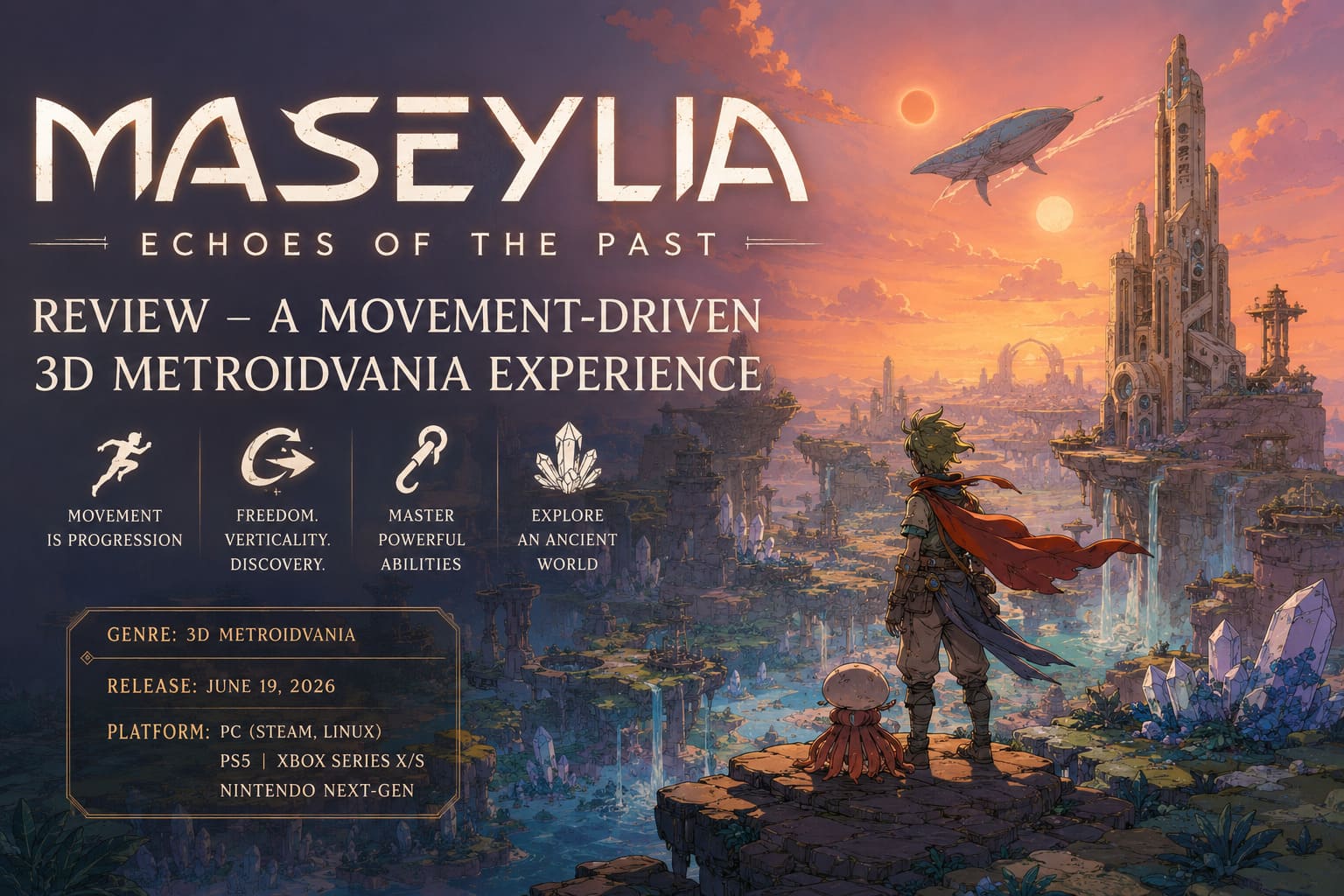
Developed by the small French indie studio Sol Brothers, Maseylia is scheduled to launch on June 19, 2026 for PC (Steam and Linux), with console versions planned for PlayStation 5, Xbox Series X/S, and Nintendo’s next-generation hardware later on.
Movement as the Core Progression System
What immediately separates Maseylia from most Metroidvanias is that traversal is not just a means of exploration—it is the progression system itself. Instead of relying on traditional locked doors and ability gates, the game focuses on how each movement upgrade changes your relationship with the world.
Rather than thinking in terms of “I need a key for this area,” I found myself thinking in terms of momentum, routing, and how far I could push the movement system before it broke in my favor.
Maseylia: Echoes of the Past Gameplay Impressions
Key Traversal Abilities
The core movement toolkit includes a set of abilities that are simple on paper but surprisingly expressive in practice:
- Double Jump – Essential for vertical navigation and recovery during complex platforming sequences.
- 360° Air Dash – A highly flexible directional dash that allows mid-air corrections and chaining movement flows.
- Grapple Hook – Used not just for traversal gaps but for maintaining speed across vertical environments.
- Phasic Transformation – A late-game mechanic allowing partial passage through techno-organic barriers.
- Water Level Manipulation – An environmental mechanic that reshapes terrain and reveals hidden pathways.
What makes these abilities stand out is how naturally they combine. The game rarely isolates mechanics. Instead, it encourages layering them into fluid movement sequences that reward experimentation.
Maseylia: Echoes of the Past Review — A 3D Metroidvania Worth Paying Attention To
A World Built for Vertical Exploration
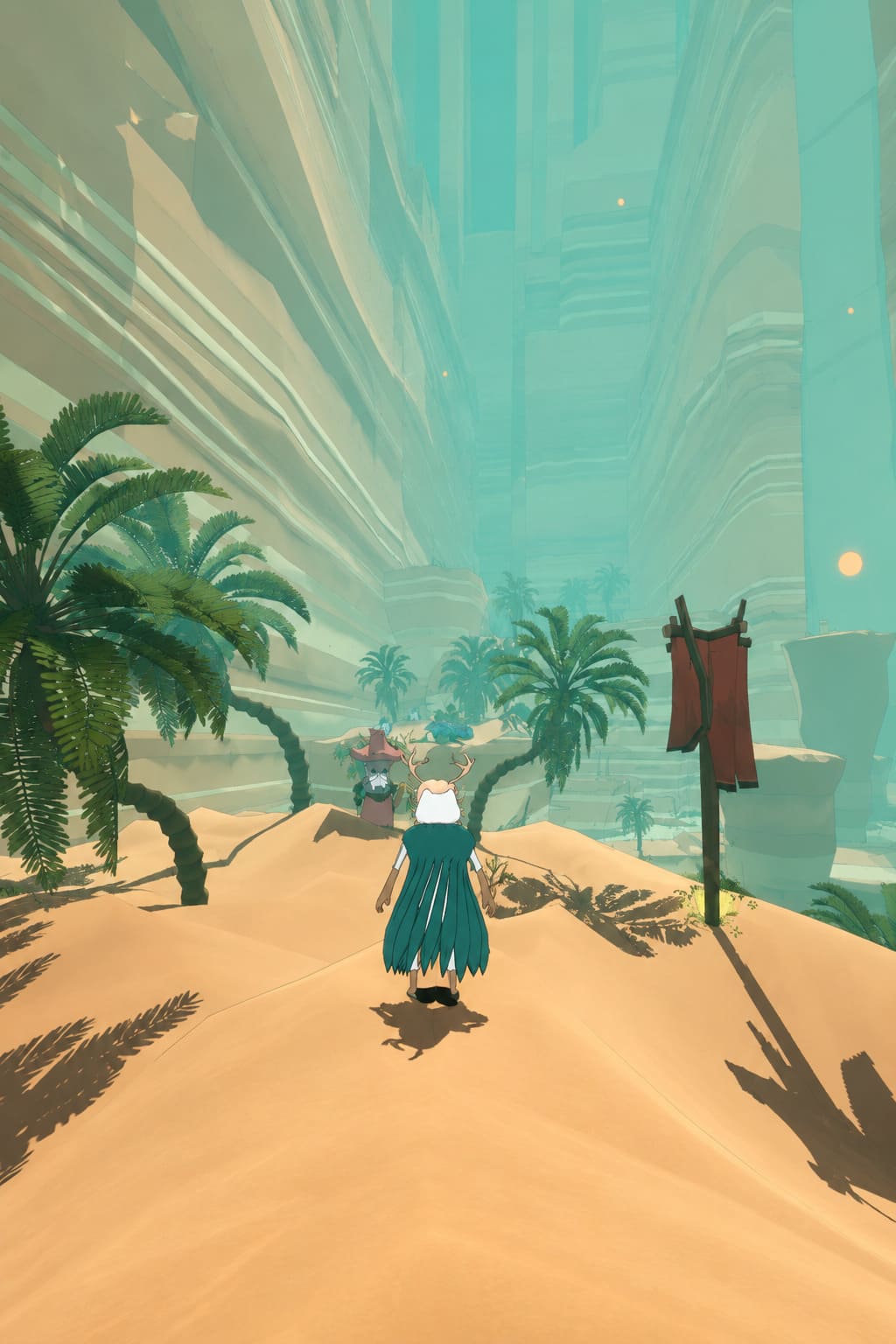
Maseylia’s world design leans heavily into verticality. Unlike traditional Metroidvanias that emphasize horizontal exploration, this game builds upward complexity. Environments feel stacked, interconnected, and designed around climbing, falling, and swinging through layered spaces.
Exploration is not just about finding new rooms—it’s about understanding how those rooms connect vertically across multiple strata of the world.
Design Philosophy
The level design seems built around three core ideas:
- Vertical discovery over linear progression
- Momentum-based exploration rather than careful step-by-step traversal
- Hidden routes that reward mechanical creativity and experimentation
There were multiple moments where I thought I had reached the intended boundary of an area, only to realize I could chain movement abilities to reach entirely new spaces. That sense of discovery feels intentional rather than accidental.
Combat: Present but Secondary
Combat exists in Maseylia, but it is clearly not the main focus. Enemies function more as environmental pressure than structured combat encounters. You’ll encounter aggressive alien creatures and large mechanical guardians, but most of the time, the game encourages you to move through or around threats rather than stop and engage.
This creates a gameplay loop that feels closer to momentum-based platformers than traditional action RPG systems.
In practice, I often found myself prioritizing movement over confrontation—dodging through enemy clusters, using air dashes to bypass threats, or grappling past encounters entirely.
While this design choice strengthens the movement identity of the game, it may leave players who prefer deeper combat systems wanting more complexity.
Story and Atmosphere
Narratively, Maseylia: Echoes of the Past takes a restrained approach. You play as a young survivor raised in isolation who ventures into a ruined world in search of his missing father, Cain. Along the way, you uncover the history of an ancient civilization and its downfall tied to a mysterious energy source known as the Heart.
Rather than relying on heavy exposition, the game tells its story through environmental details, ruins, and fragmented lore scattered across the world.
This approach works well for immersion, but the emotional weight of the narrative will likely depend on how the full game develops its characters and pacing. In the demo, the story is more atmospheric than emotionally impactful.
Visual Design: Strong Identity Inspired by Moebius
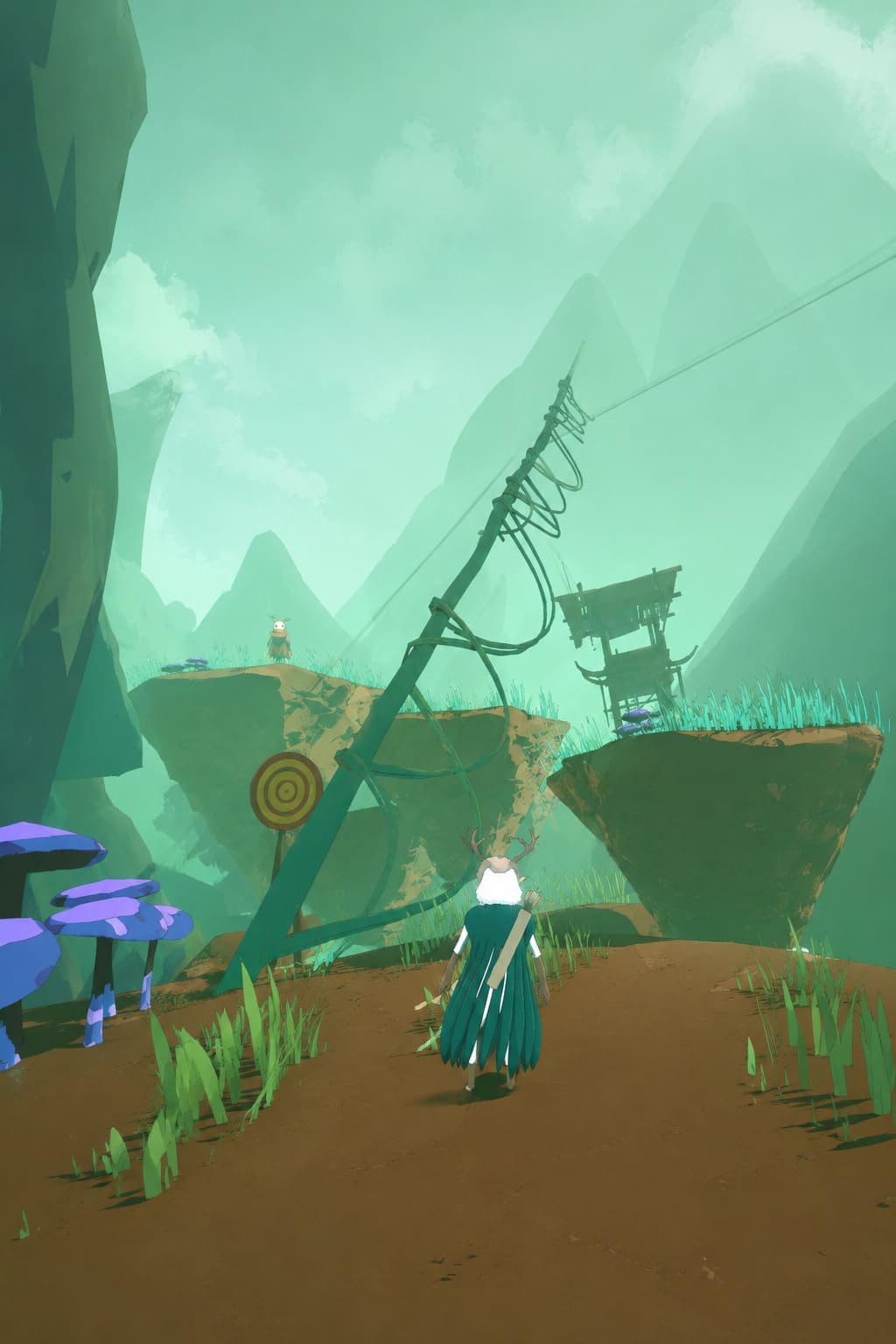
The visual presentation is one of Maseylia’s strongest achievements. Heavily inspired by the work of Moebius, the game features clean linework, soft gradients, and surreal alien environments that blend organic and technological elements.
The result is a world that feels both alien and strangely peaceful, avoiding the usual grimdark sci-fi aesthetic in favor of something more artistic and dreamlike.
Visually, it sits somewhere between Sable and Scavengers Reign, with a strong emphasis on readability despite its artistic complexity. This is especially important in a game where vertical movement and environmental awareness are crucial.
Performance and Technical Direction
Even in its early state, Maseylia runs smoothly. Movement responsiveness is solid, which is essential for a game built around precise traversal. Input handling feels tight, and the camera generally supports vertical movement without becoming disorienting.
The developers have also clearly prioritized accessibility across platforms, including Steam Deck and Linux compatibility, which is reflected in the optimization approach.
Quick Overview
| Category | Impression |
|---|---|
| Movement System | Excellent and deeply expressive |
| World Design | Highly vertical and interconnected |
| Combat | Functional but not central |
| Visual Style | Distinctive Moebius-inspired art direction |
| Story Delivery | Atmospheric and environmental |
| Replay Value | High due to sequence breaking potential |
Final Thoughts
Maseylia: Echoes of the Past feels like a game built around a single strong idea: movement should be the primary form of progression. Everything in its design supports that philosophy—from traversal mechanics to world layout and even combat pacing.
It is not perfect. Combat depth is limited, and the narrative impact still needs to prove itself in the full release. But its core systems are strong enough that it already feels distinct in a crowded genre.
If Sol Brothers can refine its weaker areas, Maseylia has the potential to stand out as one of the more memorable 3D Metroidvania experiments of its generation.
For now, it’s a game that succeeds in making movement feel meaningful, expressive, and constantly engaging—which is more than enough to keep it on the radar for 2026.