Romestead Balance Guide: Single Player vs 8-Player Co-Op Scaling Explained
When I first jumped into Romestead, I expected another survival crafting game with a Roman skin slapped on top. Build a shelter, grind resources, fight enemies at night — we’ve all seen the formula before. But after sinking dozens of hours into both solo sessions and chaotic multiplayer worlds with friends, I realized something important: Romestead feels like two completely different games depending on how many players are in your world.
And honestly? That is both its biggest strength and its biggest balancing challenge.
If you are wondering whether you should start your Roman survival journey alone or gather a full squad of friends, this guide breaks down what actually changes between single-player and 8-player co-op, and which experience feels more rewarding in the long run.
Why Romestead’s Scaling Feels Different
Most survival games claim they “scale” difficulty based on player count, but usually that just means enemies become bigger damage sponges. Romestead actually changes the rhythm of the entire game.
The moment more players join, progression, combat pressure, base design, and even exploration priorities shift dramatically.
In solo, the game feels almost meditative at times — until the undead arrive.
In co-op, it becomes a full-on Roman survival simulator where everyone screams over voice chat because someone forgot to repair the eastern wall.
Neither experience is better universally. They are just wildly different.
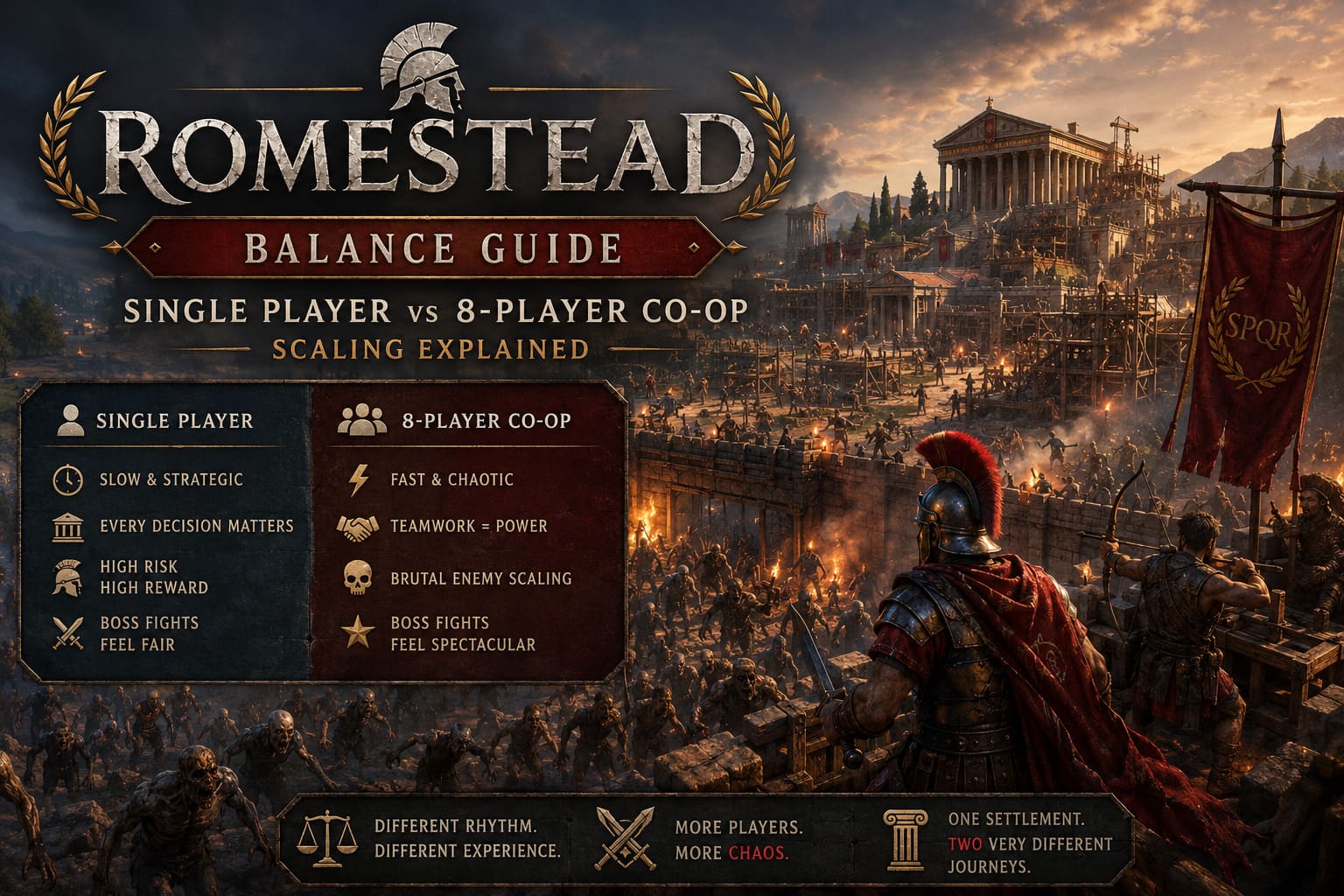
Single Player: Slow, Strategic, and Surprisingly Immersive
Playing alone in Romestead feels much more personal than I expected.
You are not just surviving. You are essentially running an entire settlement while also acting as the labor force, military, architect, and logistics manager.
Because heavy resources need to be physically moved instead of magically teleported into an inventory, every construction decision matters.
Need stone for defenses?
You are carrying it.
Want lumber for a larger workshop?
Better prepare for multiple exhausting supply runs.
At first, this system feels inconvenient. But after several hours, something clicks.
You begin planning smarter routes, designing compact production areas, and optimizing every inch of your town.
Solo play rewards efficiency.
Instead of brute-forcing progress, you think ahead.
Why solo mode works so well
Single-player has several advantages that genuinely surprised me:
- Combat feels cleaner because enemies focus entirely on you.
- Town planning becomes easier since nobody ruins your perfect layout.
- Resources stay meaningful rather than disappearing into shared storage chaos.
- God progression feels more strategic because every decision matters.
One underrated strength of solo mode is combat balance.
Night raids feel threatening but manageable. If you build a smart chokepoint and prepare basic defenses, you can usually survive without feeling overwhelmed.
And boss fights?
This is where solo honestly shines.
Boss behavior becomes predictable because aggro never randomly switches between players. Once you understand attack patterns, dodges, and timing windows, encounters start feeling almost Soulslike.
There is something incredibly satisfying about beating a difficult boss entirely through skill.
That said, solo mode definitely has drawbacks.
The hardest parts of playing solo
| Problem | Why It Hurts |
|---|---|
| Resource hauling | Building large settlements takes forever |
| Exploration | Dangerous zones become risky without backup |
| Mistakes | One death can completely derail progress |
| Progression speed | Everything naturally takes longer |
If you are impatient, solo might occasionally frustrate you.
There were moments where I spent nearly an hour reorganizing storage and hauling materials just to build one defensive upgrade.
But strangely, that slower pacing became part of the charm.
8-Player Co-Op: Absolute Chaos in the Best and Worst Ways
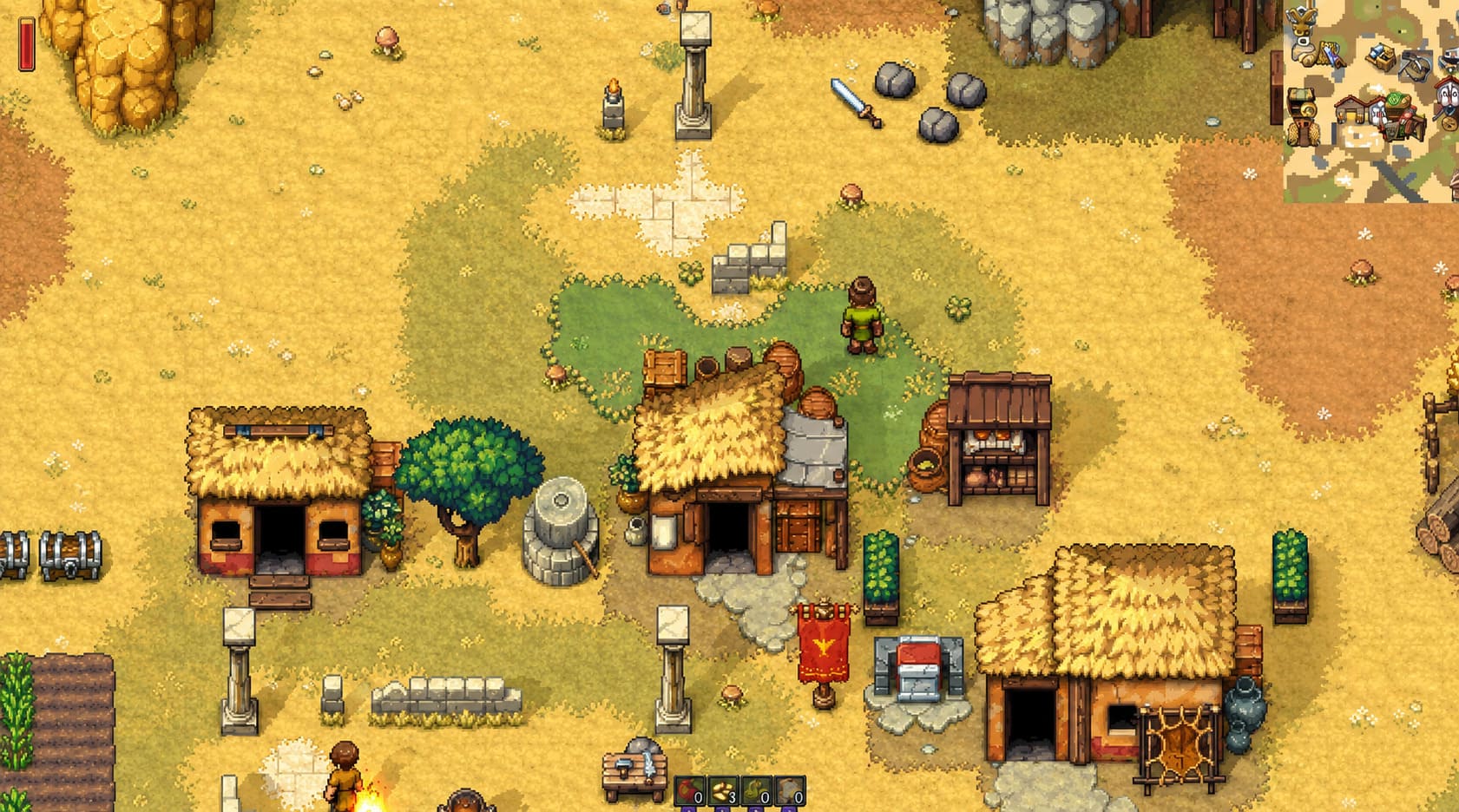
Now let’s talk about multiplayer.
Because this is where Romestead transforms into an entirely different beast.
Playing with seven other people feels less like survival and more like rebuilding civilization after the apocalypse.
During daytime, everything moves insanely fast.
Someone gathers wood.
Someone explores caves.
Someone farms.
Someone accidentally dies trying to fight enemies far above their level.
Meanwhile, the base somehow doubles in size before sunset.
The biggest immediate difference is logistics.
In solo, carrying heavy resources feels like work.
In co-op, it becomes teamwork.
You naturally create supply chains without even trying. Players toss materials between each other, transport stone in groups, and complete projects in a fraction of the time.
Honestly, seeing a massive Roman settlement come together in multiplayer is one of the coolest things in the game.
What multiplayer does better
Co-op absolutely excels in several areas:
- Faster progression
- Massive settlement building
- Shared responsibilities
- Role specialization
- More memorable moments
One player can become a farming specialist.
Another focuses on combat.
Someone else manages crafting stations and infrastructure.
This division of labor makes progression feel incredibly satisfying when your group actually communicates.
But here comes the catch.
Romestead scales aggressively.
And I mean aggressively.
Enemy Scaling Can Feel Brutal in Large Groups
The game clearly expects organized teamwork in larger lobbies.
Enemies hit harder.
Night raids become larger.
Undead numbers increase dramatically.
Elite enemies appear more frequently.
At first, this sounds fair because you have more people.
But in reality, things get messy very quickly.
What starts as a manageable defense often turns into complete chaos.
Suddenly:
- One gate breaks.
- Explosive enemies rush inside.
- Three teammates panic.
- Someone forgets to repair traps.
- Everybody starts reviving each other instead of fighting.
And somehow your entire settlement burns down.
The funniest part?
Those moments are also why multiplayer becomes unforgettable.
Still, if you are expecting a relaxed co-op experience, think again.
The scaling system punishes disorganization hard.
Boss Fights: Solo Feels Fair, Co-Op Feels Spectacular
This is probably my hottest take after spending time in both modes.
Solo boss fights are simply better designed.
Not easier.
Better.
You can read attacks clearly.
Enemy targeting feels predictable.
Movement patterns make sense.
Winning feels deserved.
In multiplayer, bosses become giant health tanks.
And while seeing eight players battle a giant monster sounds epic — and often is — it also creates problems.
Aggro constantly shifts.
AoE attacks clutter the arena.
Visual effects make dodge timing harder to read.
One mistake snowballs into multiple revives and suddenly the fight collapses.
Still, multiplayer boss fights have something solo never can:
Pure spectacle.
When everyone survives by the skin of their teeth after a brutal encounter, it feels legendary.
Romestead Death Guide: How to Retrieve Dropped Gear and Recover Loot Fast
Divine Progression Feels Smarter in Co-Op
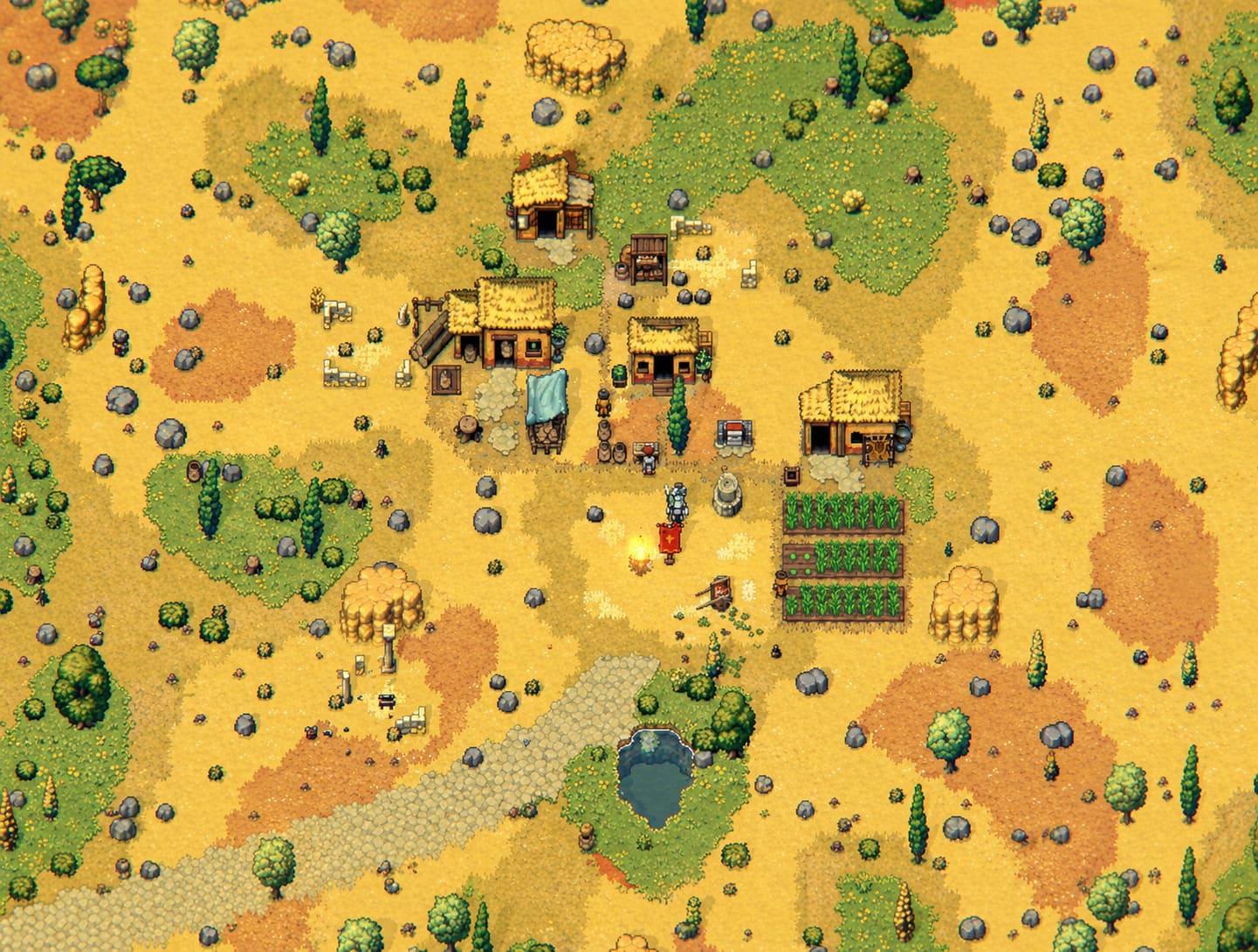
One mechanic I unexpectedly preferred in multiplayer was the divine favor system.
In solo, progression feels restrictive.
You usually focus on one or two gods because spreading resources too widely slows everything down.
That creates meaningful decisions, sure.
But multiplayer unlocks much more creativity.
| Player Role | Focus |
|---|---|
| Builder | Settlement upgrades |
| Farmer | Food production |
| Warrior | Weapons and defenses |
| Explorer | Rare materials and discoveries |
| Crafter | Equipment progression |
This teamwork creates a stronger sense of community.
When everyone contributes to the town differently, the settlement starts feeling alive.
Of course, this only works if your group communicates.
Without coordination?
You end up with five unfinished projects and nobody knows where all the resources disappeared.
So… Which Mode Is Actually Better?
After spending serious time in both, my answer is frustratingly simple:
It depends on what kind of survival experience you enjoy.
Choose single-player if you want:
- A slower, more immersive experience
- Strategic planning and optimization
- Fair, skill-focused combat
- Full control over progression
Choose 8-player co-op if you want:
- Fast-paced progression
- Massive settlement building
- Chaotic night battles
- Social survival moments with friends
Personally?
I think Romestead feels strongest in small groups — around 3 to 5 players.
That sweet spot keeps the cooperative fun while avoiding the overwhelming chaos of full 8-player scaling.
You still get teamwork, faster progression, and huge construction projects without turning every raid into a visual nightmare.
But if you love survival games because of unforgettable stories, hilarious disasters, and absolute multiplayer madness, then full co-op might end up becoming your favorite way to play.
At the end of the day, Romestead deserves credit for something many survival games fail to do: making solo and multiplayer feel equally valuable instead of treating one mode as an afterthought.
That alone makes it one of the more interesting survival games to hit Steam Early Access recently.
And trust me — whether you build your Roman empire alone or with seven screaming friends, the Fallen are still coming when the sun goes down.