Deep Rock Galactic Rogue Core Death Mechanics: Permadeath, Meta Progression, and What Happens When You Die
When Deep Rock Galactic: Rogue Core was first announced, I honestly expected “more Deep Rock Galactic, but darker.” What I didn’t expect was a game that completely changes the emotional rhythm of every mission. The original Deep Rock Galactic always had tension, sure, but Rogue Core turns every single mistake into a panic-inducing disaster waiting to happen.
And after spending hours watching gameplay breakdowns, community reactions, and high-level runs, one thing becomes painfully clear: death is the real progression system.
That might sound frustrating at first, especially for players coming from classic co-op shooters where wipes just mean restarting a checkpoint. But Rogue Core is built differently. This game wants you to fail, adapt, and slowly evolve into a stronger squad through repeated disasters underground.
Honestly, that’s what makes it so addictive.
Rogue Core Is Less Forgiving Than Classic Deep Rock Galactic
The biggest shock for longtime fans is how little safety the game gives you.
In the original game, experienced players could eventually become nearly unstoppable with optimized builds, upgraded gear, and strong class synergy. Rogue Core strips most of that comfort away. Every expedition starts almost from zero, and your power spike depends entirely on what you discover during the run.
You enter Hoxxes IV under-equipped, underpowered, and very mortal.
That changes the psychology of combat immediately.
Instead of casually farming bugs, every fight feels expensive. Ammo matters. Armor matters. Positioning matters even more. Once your squad begins burning through resources too quickly, you can practically feel the mission collapsing before it actually happens.
And then the timer starts becoming your real enemy.
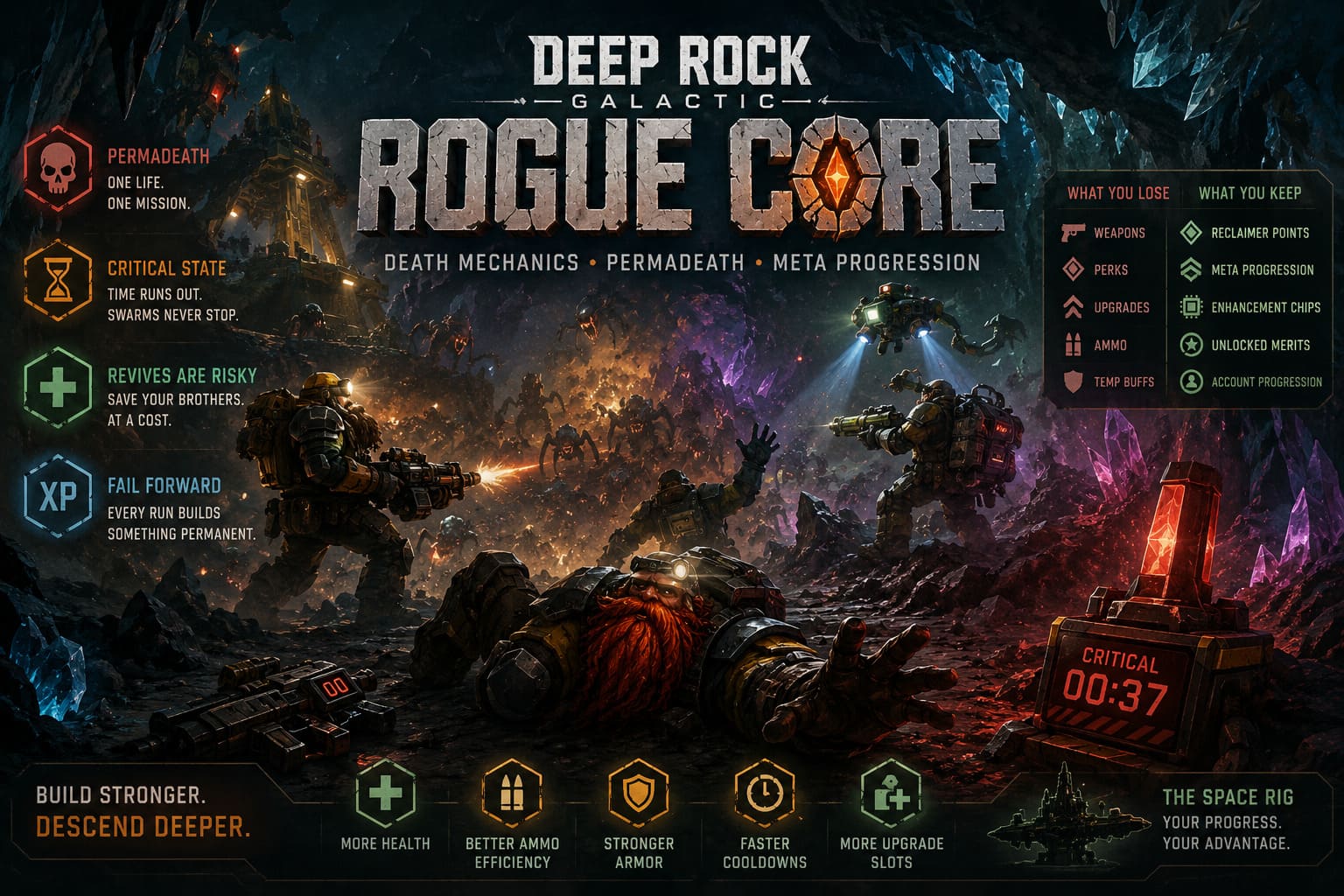
The “Critical” state mechanic is one of the smartest systems Ghost Ship Games has ever designed. Once time runs out, the caves stop feeling survivable. Endless swarms begin pouring into the map, forcing your team into desperate movement instead of defensive camping.
It creates this incredible feeling of controlled chaos that very few roguelites manage to pull off.
What Actually Happens When You Die?
For solo mistakes, Rogue Core stays relatively forgiving.
If your dwarf goes down during multiplayer, you’re not instantly erased from existence. Your teammates can still revive you, but the game intentionally makes revives dangerous. Enemies aggressively gather around fallen players, which turns every rescue attempt into a risk-reward decision.
That small detail completely changes squad behavior.
Instead of reckless hero moments, teams start coordinating:
- One player clears enemies
- Another deploys defensive abilities
- A third covers escape routes
- Then someone commits to the revive
That level of tactical cooperation is where Rogue Core really shines.
Some character abilities make revives even more interesting. The Falconer’s drone-based rescue mechanic, for example, looks incredibly powerful in high-pressure situations because it allows saves without directly exposing teammates to swarm pressure.
Still, revives don’t magically reset the fight.
You usually come back weak, vulnerable, and one mistake away from immediately dying again. In many runs, surviving the post-revive chaos is actually harder than the revive itself.
Team Wipes Hurt — But They Don’t Feel Pointless
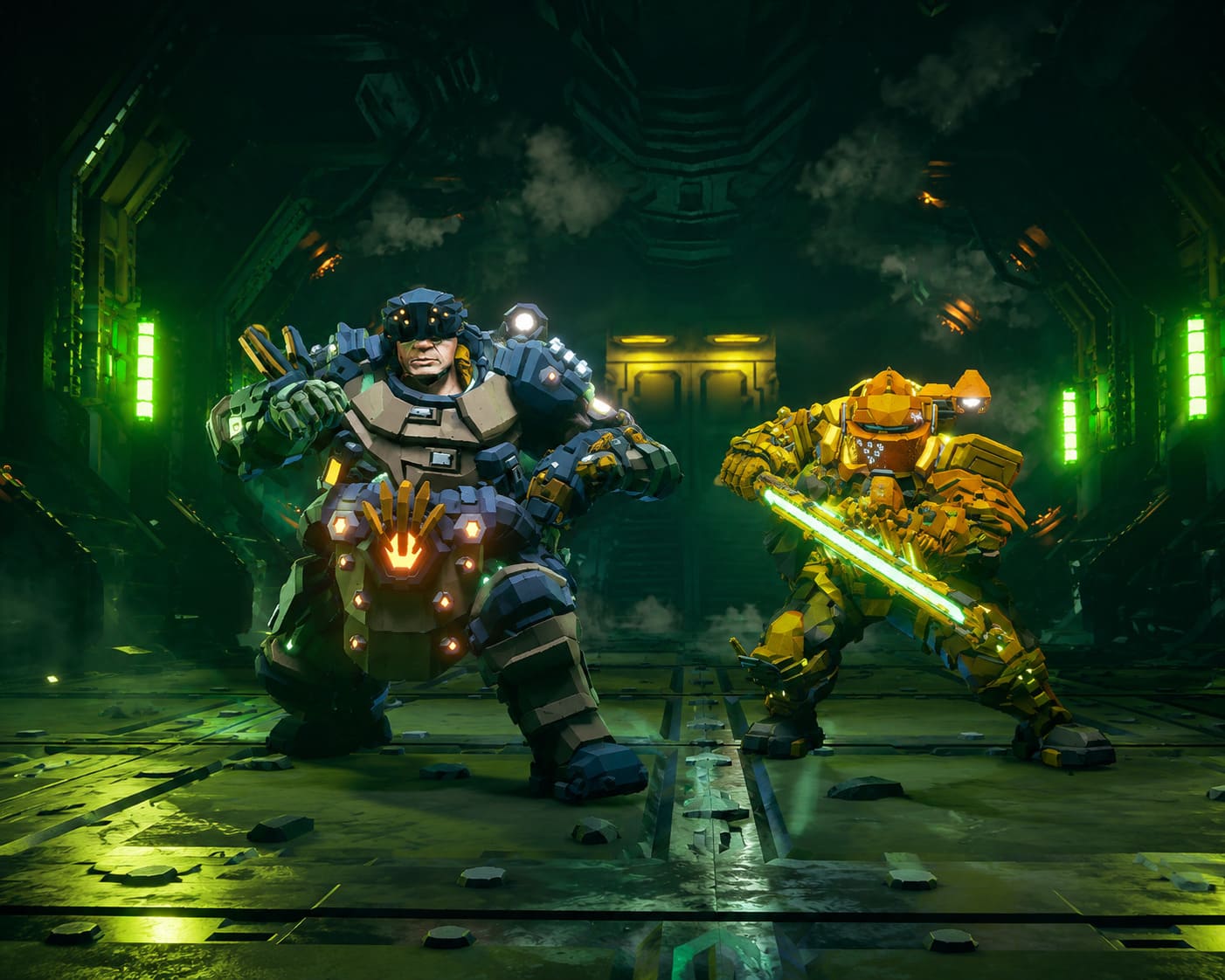
Now let’s talk about the moment every roguelite player eventually faces: the complete squad wipe.
This is where Rogue Core fully commits to its genre identity.
When the entire team dies, the mission ends immediately. All temporary progress disappears:
| Lost After Death | Permanently Kept |
|---|---|
| Salvaged weapons | Reclaimer Points |
| Temporary perks | Meta progression |
| Run-specific upgrades | Enhancement Chips |
| Ammo reserves | Unlocked Merits |
| Temporary buffs | Account-wide progression |
At first glance, that sounds brutal.
And honestly? It is brutal.
Losing a perfect weapon build after a 50-minute run is painful, especially when you were one room away from extraction. But unlike hardcore roguelikes that completely erase your efforts, Rogue Core softens the blow with permanent progression systems.
That’s the key difference.
Even failed missions still reward partial XP, collected resources, and progression currency. So while your run dies, your overall account keeps evolving.
That creates a satisfying “one more run” loop that feels dangerous without becoming discouraging.
The Meta Progression Is What Makes Failure Addictive
I think Ghost Ship Games understood something extremely important here:
Players can tolerate failure if failure still creates momentum.
That’s exactly what the Reclaimer Point system does.
Every failed descent contributes toward permanent upgrades back on the space rig. Over time, you unlock stronger passive bonuses, better starting conditions, and extra enhancement slots that make future runs more manageable.
Some of the permanent improvements include:
- Increased health capacity
- Better ammo efficiency
- Stronger armor resistance
- Faster cooldowns
- Expanded upgrade flexibility
The result is subtle but powerful.
Early runs feel desperate and unstable. Later runs feel more strategic because your baseline survivability improves over time. You still can’t brute-force the game, but you gain enough consistency to push deeper into the caves.
That progression curve feels incredibly satisfying because it respects both skill and persistence.
Why Rogue Core Feels More Intense Than Most Roguelites
A lot of roguelites rely on speed or randomness to create difficulty. Rogue Core feels different because the danger is physical and environmental.
The caves themselves become psychological pressure.
You constantly hear enemies behind walls. Visibility drops during hectic fights. Vertical movement creates panic during retreats. Then you add limited healing, non-regenerating armor, and time pressure on top of all that.
The game basically forces squads into making ugly decisions:
- Save resources or push harder?
- Rescue a teammate or escape?
- Explore deeper or extract early?
- Fight swarms or avoid combat entirely?
Those choices create stories naturally.
That’s why so many players are already sharing insane near-death moments online. Rogue Core generates chaos in a way that feels organic instead of scripted.
The Community Seems Divided — But In a Good Way
After digging through Reddit threads, Steam discussions, and YouTube comments, there’s clearly a split in the community.
Some players absolutely love the increased difficulty. Others think the game is significantly harsher than expected.
Personally, I think that tension is healthy.
Too many co-op games become predictable after a few dozen hours. Rogue Core looks like the kind of game where even experienced players can still get destroyed by bad positioning or poor resource management.
That unpredictability gives the game longevity.
Veteran players are already sharing survival strategies that sound more like tactical shooter advice than traditional horde gameplay:
Common Survival Tips From Experienced Players
- Never stand still — Movement is survival. Stationary players get overwhelmed quickly, especially during swarm escalations.
- Respect ammo economy — Spraying bullets everywhere almost guarantees a failed run later.
- Treat revives like mini-objectives — Blindly rushing toward dead teammates often causes chain wipes.
- Memorize cave layouts — Escape routes become critical once the Critical timer activates.
- Prioritize healing resources — Red Sugar management seems essential at higher difficulties.
These small habits appear to separate successful squads from doomed ones.
Deep Rock Galactic Rogue Core Bio-Booster Mechanics Explained: Build Guide
Rogue Core Understands What Makes Co-Op Games Memorable
The older I get, the more I realize the best co-op games are the ones that create stories players retell afterward.
Not scripted moments.
Not cutscenes.
Pure gameplay chaos.
And Rogue Core seems built entirely around generating those moments.
The final survivor sprinting toward extraction while bugs flood the cave. The desperate revive inside a collapsing defense line. The entire squad panicking when the Critical timer begins.
Those are the experiences players remember.
That’s also why death mechanics matter so much here. If failure carried no consequences, the tension would disappear instantly. The possibility of losing everything is what makes victories feel meaningful.
Deep Rock Galactic: Rogue Core Console Release Date – When Is It Coming to PS5 and Xbox?
Final Verdict
Ghost Ship Games appears to understand exactly why roguelites work emotionally. In Deep Rock Galactic: Rogue Core, death isn’t simply punishment — it’s progression, storytelling, tension, and motivation all combined into one system.
Yes, losing a powerful build after a brutal cave run feels awful.
But that frustration is also what makes the game impossible to stop playing.
Every failed mission teaches something new. Every death unlocks future power. Every wipe pushes squads into becoming smarter, faster, and more coordinated.
And honestly?
That feels perfectly fitting for a game set inside the most hostile planet in the galaxy.
Rock and Stone forever.