Is Iron Nest Worth Playing? Honest Review of the Heavy Turret Simulator
There are games that you play to relax, and there are games that feel like you’ve been drafted into a job you didn’t apply for. Iron Nest: Heavy Turret Simulator sits firmly in the second category, and that is exactly why it became one of the most discussed indie titles during the June 2026 Steam Next Fest. Developed by a two-person team, Nick Nieuwoudt and Dominik Latos, it pushes the idea of mechanical simulation far beyond comfort zones.
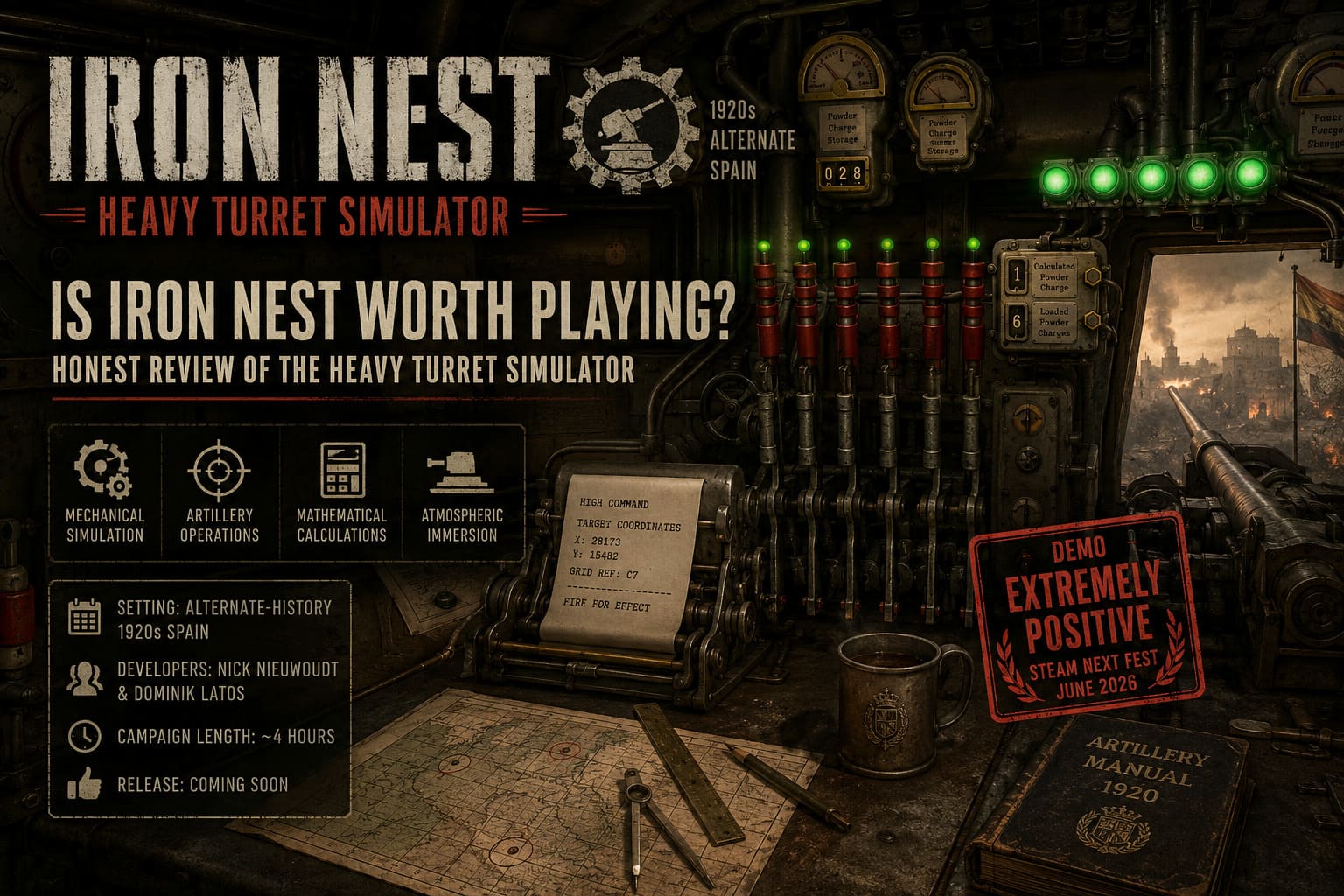
Set in an alternate-history 1920s Spain on the edge of civil war, the game places you inside a massive walking artillery machine. You are not piloting it from outside. Instead, you are physically trapped inside a steel bunker, interacting with machines, tools, and calculation systems that feel like they were built to overwhelm a single human operator.
From a gaming perspective, the key question is not whether Iron Nest is impressive. It clearly is. The real question is whether it remains enjoyable once the novelty of its realism fades and the mechanical workload begins to feel like actual labor.
The Core Gameplay Loop Feels Like Running a War Department
Iron Nest rejects traditional mech design completely. There is no fast movement, no arcade shooting, and no intuitive combat flow. Instead, you operate entirely through manual systems that simulate artillery logistics and mechanical precision under pressure.
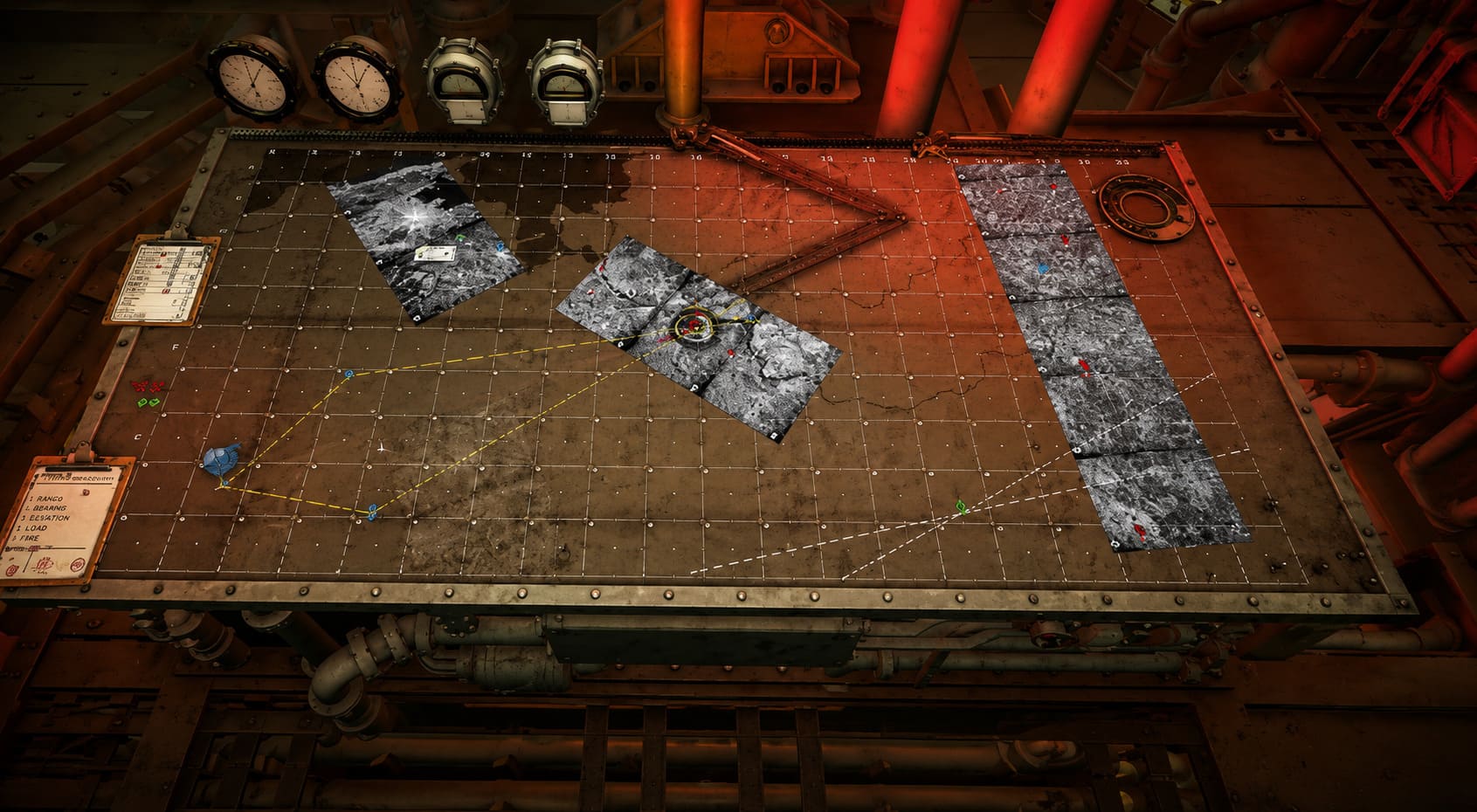
A typical mission begins when a teletype machine prints out coordinates and instructions from High Command. From that moment, gameplay becomes a chain of structured procedures that must be executed correctly. You move between stations, calculate distances on a gridded map, and process firing solutions using mechanical tools.
Once calculations are complete, you input data into a ballistic system that determines shell type, charge level, and elevation angle. Then comes physical execution: loading shells, adjusting heavy mechanisms, and slowly rotating the turret structure. Every action takes time, and every mistake carries consequences.
When everything is aligned, you finally fire—and then wait for impact reports. That delay is not filler; it is part of the tension loop that defines the entire experience.
What Works and What Doesn’t in Iron Nest
The structure of Iron Nest can be understood best through its strengths and weaknesses. It is a highly intentional design where immersion and frustration often exist side by side.
| Strengths | Weaknesses |
|---|---|
| Deep mechanical immersion | Extremely slow pacing |
| Strong satisfaction from successful calculations | Steep learning curve with real mathematical inputs |
| Highly detailed sound and environmental design | Repetitive operational structure over time |
| Unique atmospheric storytelling | Minimal instant feedback or action reward |
| High replay optimization potential | Not suitable for casual play sessions |
The game clearly prioritizes realism and procedural satisfaction over accessibility. It is designed for players who enjoy systems rather than spectacle.
Why Players and Critics Are Hooked
Despite its complexity, Iron Nest has developed a strong early following. The demo has received extremely positive feedback on Steam, largely due to its unusual commitment to mechanical realism and atmospheric tension.
Gaming media outlets such as Kotaku and Rock Paper Shotgun have highlighted the game’s immersive design philosophy and its refusal to simplify core systems for mainstream appeal. The discussion around it often places it alongside other slow, methodical simulation experiences that emphasize procedure over reflex.
Players frequently describe the core appeal as the moment everything clicks. After several minutes of calculations and physical interaction, landing a successful shot feels less like a typical gaming achievement and more like executing a complex operational sequence under pressure.
The environment also plays a major role in engagement. The interior of the turret feels alive in a mechanical sense, with vibrating structures, heavy machinery sounds, and detailed ambient systems that reinforce the sense of scale and weight.
The Downsides: Where Iron Nest Becomes a Test of Patience
Iron Nest is not designed for comfort or instant gratification. It actively challenges the player’s patience, especially during early learning stages.
The most significant barrier is the requirement for constant calculation. Players must interpret coordinates, perform triangulation, and input precise values into mechanical systems. There is no automation or simplification layer, which means every error is meaningful.
Failures are not just mechanical—they carry narrative weight. Missing a target is frustrating, but hitting the wrong target can feel genuinely uncomfortable due to the game’s thematic framing. This emotional layer is clearly intentional, but it may not appeal to all players.
Pacing is another major factor. Movement and system interactions are deliberately slow to reflect the scale of the machinery. While this enhances immersion, it also creates long periods of waiting between meaningful actions.
Replayability and Long-Term Appeal
Although the main campaign can be completed in roughly four hours under optimal conditions, Iron Nest is not designed to end there. The real depth of the game lies in performance optimization and mastery of its systems.
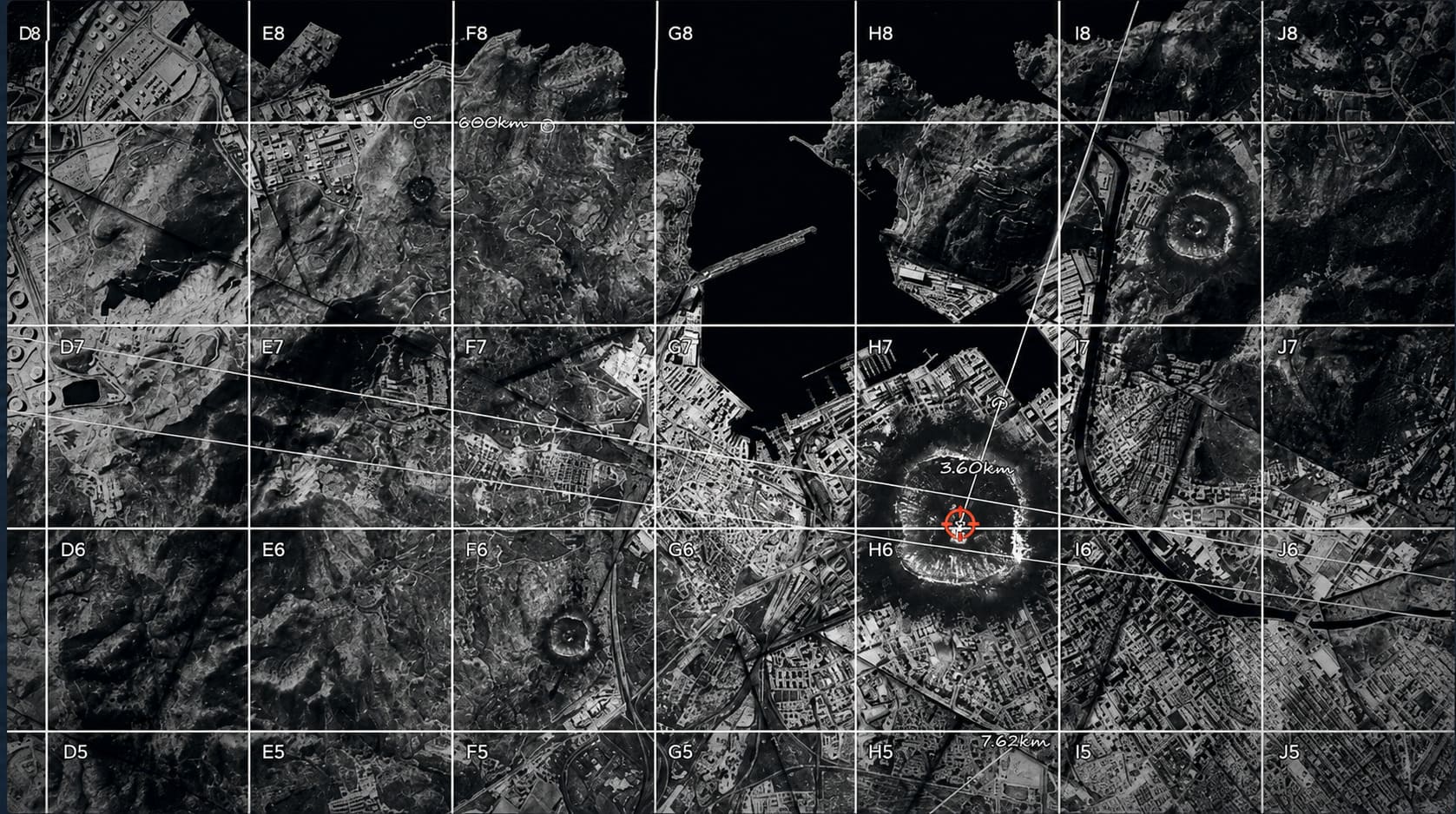
Each mission includes detailed performance tracking, allowing players to refine their approach and improve efficiency over time. Leaderboards and ranking systems encourage repeated playthroughs with better execution strategies.
For some players, the demo alone has already provided dozens of hours of experimentation. This is largely due to the game’s high mechanical ceiling, which rewards precision, planning, and repetition.
Final Verdict: Should You Play Iron Nest?
Iron Nest: Heavy Turret Simulator is absolutely worth playing for a very specific type of player. It is a deeply immersive mechanical simulation that transforms slow, procedural tasks into a high-pressure experience.
If you enjoy systems-driven gameplay, atmospheric design, and the satisfaction of mastering complex procedures, this game offers something genuinely unique in today’s gaming landscape.
However, if you prefer fast-paced action, immediate rewards, or casual accessibility, Iron Nest will likely feel overwhelming and slow. It does not compromise its vision for convenience.
Ultimately, it stands as one of the most distinctive indie simulation experiences in recent years—less a traditional game and more a carefully engineered machine you learn to operate.