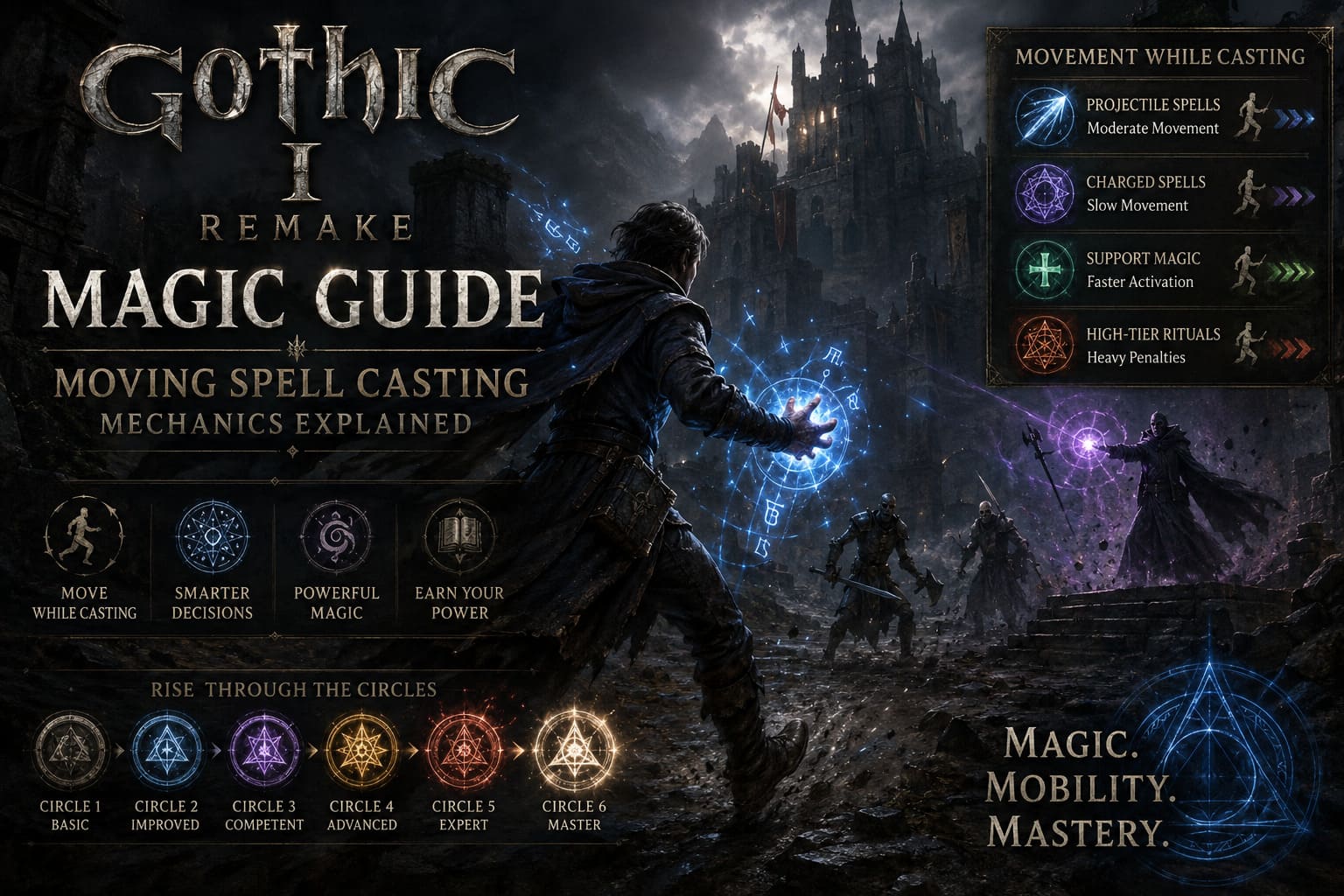
Gothic 1 Remake Magic Guide: Moving Spell Casting Mechanics Explained
When I first heard that Gothic 1 Remake would allow players to move while casting spells, I honestly wasn’t sure how to feel about it.
As someone who spent countless hours playing the original Gothic, one of the defining characteristics of being a mage was vulnerability. Every spell felt like a commitment. Once you started casting, you were locked in place, hoping an Orc wouldn’t reach you before your Fireball left your hands.
Now that the remake is finally here, I can confidently say that the new spell casting system is one of the smartest gameplay changes Alkimia Interactive has made. It modernizes combat without destroying what made Gothic unique in the first place.
The Valley of Mines is still dangerous. Enemies are still aggressive. Becoming a powerful mage still requires patience and investment. The difference is that magical combat finally feels fluid instead of frustrating.
Why the Original Magic System Felt So Punishing
Back in the 2001 release, magic was powerful but often awkward.
Casting a spell meant standing completely still. Even weaker enemies could interrupt your attack simply by reaching melee range before your animation finished.
This created several problems:
- Long casting times became extremely risky.
- Crowd control spells were difficult to use effectively.
- Positioning mistakes were heavily punished.
- Mage characters often felt weaker than melee builds during the early game.
While many fans appreciated the challenge, there is a difference between meaningful difficulty and mechanical limitations. The remake clearly understands that distinction.
Moving While Casting: The Biggest Upgrade for Mages
The new system introduces limited mobility during spell preparation and casting.
This doesn’t mean Gothic suddenly turns into a fast-paced action RPG where players endlessly kite enemies around the map. In fact, movement remains intentionally restricted.
Instead, the game allows controlled repositioning while maintaining the tension that Gothic is known for.
How It Works
| Spell Type | Mobility | Tactical Use |
|---|---|---|
| Projectile Spells | Moderate movement | Positioning and target tracking |
| Charged Spells | Slow movement | High damage and area control |
| Support Magic | Faster activation | Emergency utility and survival |
| High-Tier Rituals | Heavy movement penalties | Massive battlefield impact |
The result is a system that feels far more natural without becoming overpowered.
You can slowly back away from an approaching enemy while preparing a Firebolt, but you cannot sprint across the battlefield while launching devastating spells.
That balance is what makes the system work.
Magic Finally Feels Like a Skill, Not a Handicap
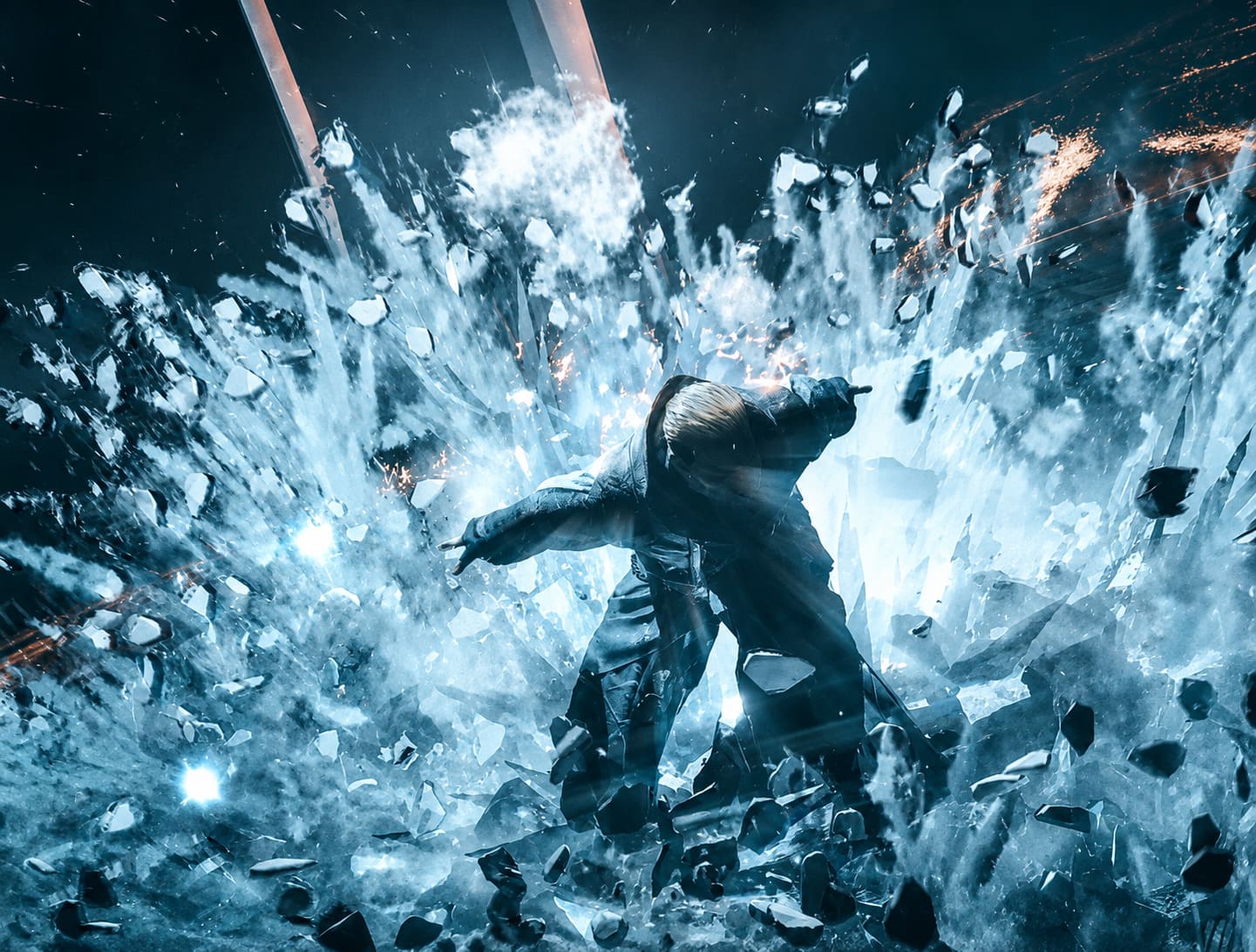
One thing I noticed almost immediately is how much more engaging mage gameplay feels.
In the original game, success often depended on finding the perfect moment to cast.
In the remake, success depends more on:
- Positioning
- Timing
- Mana management
- Environmental awareness
That may sound like a small difference, but it completely changes how encounters play out.
Instead of standing still and hoping for the best, you’re constantly making decisions.
Do you keep charging a stronger spell?
Do you retreat while channeling?
Do you cancel the cast and reposition?
Those choices create tension in a way that feels interactive rather than restrictive.
Visual Improvements Make Magic Feel More Powerful
Another aspect that deserves praise is the presentation.
Runes and scrolls no longer feel like simple inventory items that trigger animations.
When preparing a spell, magical energy visibly gathers around the character. Runes hover, rotate, and emit distinct visual effects depending on the school of magic being used.
Beyond looking impressive, these visual cues provide useful gameplay information.
Players can often judge:
- Charge progression
- Spell readiness
- Cast timing
- Threat level
without constantly checking UI elements.
It’s a subtle improvement, but it greatly increases immersion.
Character Progression Matters More Than Ever
One of the strongest aspects of Gothic has always been its progression system.
You begin as a nobody.
Weak.
Poor.
Completely insignificant.
The remake keeps that philosophy intact.
Early-game magic users still feel inexperienced. Casting is slower, movement penalties are heavier, and mistakes can easily get you killed.
As your magical training advances through the Circles of Magic, everything becomes smoother.
Circle Progression Overview
| Magic Circle | Casting Efficiency | Mobility |
|---|---|---|
| Circle 1 | Basic | Limited |
| Circle 2 | Improved | Limited |
| Circle 3 | Competent | Moderate |
| Circle 4 | Advanced | Good |
| Circle 5 | Expert | High |
| Circle 6 | Master | Excellent |
This progression feels rewarding because improvements are noticeable.
You don’t suddenly become powerful overnight.
Instead, every investment gradually transforms your character from an apprentice into a true master of the arcane arts.
Hybrid Builds Are Finally Worth Considering
One unexpected benefit of mobile spell casting is the rise of hybrid builds.
Historically, many Gothic players felt forced to specialize heavily in either melee combat or magic.
The remake encourages experimentation.
For example:
- Open combat with an Ice spell.
- Slow or stagger an opponent.
- Reposition while maintaining pressure.
- Switch to a sword or axe.
- Finish the enemy in close combat.
The transition feels seamless.
This creates opportunities for battlemage-style characters that simply weren’t as practical in the original game.
Personally, I think this could become one of the most popular playstyles among experienced players.
Enemy Mages Are More Dangerous Too
Of course, players aren’t the only ones benefiting from these changes.
Enemy spellcasters have access to similar mechanics.
That means magical opponents are no longer stationary targets waiting to be interrupted.
Instead, they:
- Retreat while casting.
- Reposition intelligently.
- Maintain distance.
- Continue applying pressure during combat.
As a result, mage encounters feel dramatically more dynamic.
Some of the most memorable fights I’ve experienced involved chasing enemy casters through narrow pathways while trying to avoid incoming spells.
These battles feel far more intense than anything found in the original game.
Gothic 1 Remake Stuttering Fix: How to Stop UE5 FPS Drops and Performance Lag
Community Reactions Have Been Surprisingly Positive
Before release, many longtime Gothic fans were skeptical.
The concern was understandable.
Modern remakes often remove the rough edges that gave classic RPGs their identity.
Fortunately, that doesn’t appear to be the case here.
After extensive gameplay footage, previews, and release impressions, much of the community has embraced the new system.
The reason is simple.
The developers didn’t remove the danger.
They removed unnecessary frustration.
Movement while casting still comes with limitations.
Mana remains important.
Positioning still matters.
Enemies remain lethal.
What changed is that combat feels responsive instead of rigid.
For many players, that’s exactly what a remake should accomplish.
Gothic 1 Remake Combat Guide: How to Block, Parry, and Master Riposte
Final Thoughts
After spending time with the new mechanics, I genuinely believe moving spell casting is one of the best features introduced in Gothic 1 Remake.
It preserves the challenging atmosphere that made the original legendary while bringing magical combat closer to modern RPG standards.
More importantly, it enhances the fantasy of becoming a mage.
You start as an inexperienced novice struggling to control basic magical energy. Through training, learning, and progression, you eventually become a powerful spellcaster capable of dominating the battlefield without losing mobility or tactical awareness.
That’s the kind of character growth Gothic has always excelled at delivering.
The Valley of Mines remains brutal, unforgiving, and dangerous. But for the first time, mages have the freedom to move, adapt, and fight back in ways that feel both modern and authentically Gothic.
For me, that’s exactly the kind of remake upgrade worth celebrating.