Fatekeeper Beginner Guide: 10 Essential Tips and Tricks to Master the Game
When I first launched Fatekeeper, I expected another dark fantasy action RPG with a few interesting mechanics and a familiar progression system. What I got instead was a surprisingly brutal adventure that constantly punished bad habits and rewarded creativity. After spending hours exploring its dangerous corridors, experimenting with spells, and getting launched into traps more times than I would like to admit, I realized that Fatekeeper is not a game you can brute-force your way through.
Developed by Paraglacial and released in Steam Early Access, Fatekeeper combines immersive-sim design philosophy with intense first-person melee combat. It feels like a love letter to classic fantasy action games while still offering enough modern mechanics to stand on its own.
If you’re just beginning your journey, these are the lessons that made the biggest difference for me. They are not simply mechanics explained in a tutorial—they are practical strategies that genuinely improve your chances of survival.
Why Fatekeeper Feels Different
One thing that immediately stood out to me is how much the game encourages players to think rather than react. Many RPGs reward aggression, but Fatekeeper often rewards patience, positioning, and environmental awareness.
The world itself is one of your most powerful weapons.
Enemies are dangerous, resources are limited, and even basic encounters can become deadly if you ignore your surroundings. Learning how to manipulate situations is often more effective than improving your gear.
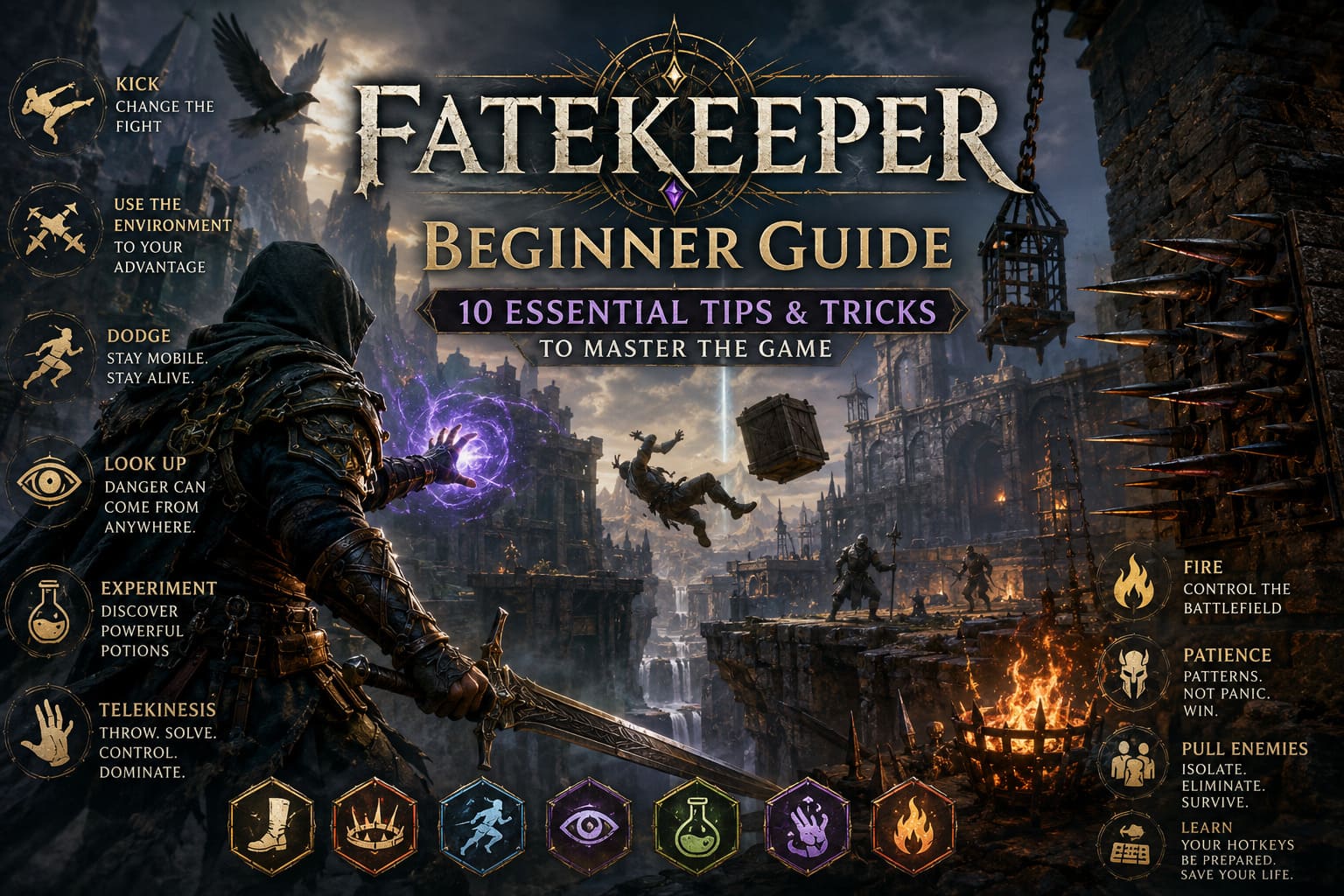
1. Your Foot Is More Dangerous Than Your Sword
This may sound ridiculous at first, but kicking quickly became one of my most-used abilities.
The kick isn’t designed to deal huge damage. Instead, it completely changes the flow of combat. A well-timed kick can:
- Interrupt enemy attacks
- Create breathing room
- Push enemies into hazards
- Knock opponents off ledges
I lost count of how many enemies I eliminated without actually finishing them with a weapon. If there’s a cliff nearby, your boot can become a one-hit kill machine.
My advice: stop viewing kicking as a secondary mechanic. Treat it as a core combat skill.
2. The Environment Is Constantly Trying to Help You
Many players instinctively engage every enemy in direct combat.
That’s a mistake.
Fatekeeper’s levels are packed with hazards that can instantly turn a difficult fight into an easy victory. Spiked walls, traps, fire pits, and deep drops aren’t just decorations—they are opportunities.
I found that luring enemies into dangerous positions often saved health, potions, and durability. Sometimes the smartest move isn’t attacking at all. It’s simply waiting for an opponent to make a mistake.
The game clearly rewards players who pay attention to their surroundings.
3. Dodging Is More Reliable Than Blocking
I started my playthrough relying heavily on shields.
That strategy didn’t last long.
While blocking certainly has its place, it can leave you vulnerable when facing aggressive enemy groups. Once your defense breaks, things can go wrong very quickly.
The tactical dash, on the other hand, offers far more flexibility.
A successful dodge can:
- Avoid heavy attacks
- Escape crowd pressure
- Reposition for counterattacks
- Bypass dangerous projectiles
The timing takes practice, especially when wearing heavier equipment, but mastering movement is one of the most valuable skills in the game.
4. Always Check Above You
One of the earliest mistakes I made was focusing only on enemies directly in front of me.
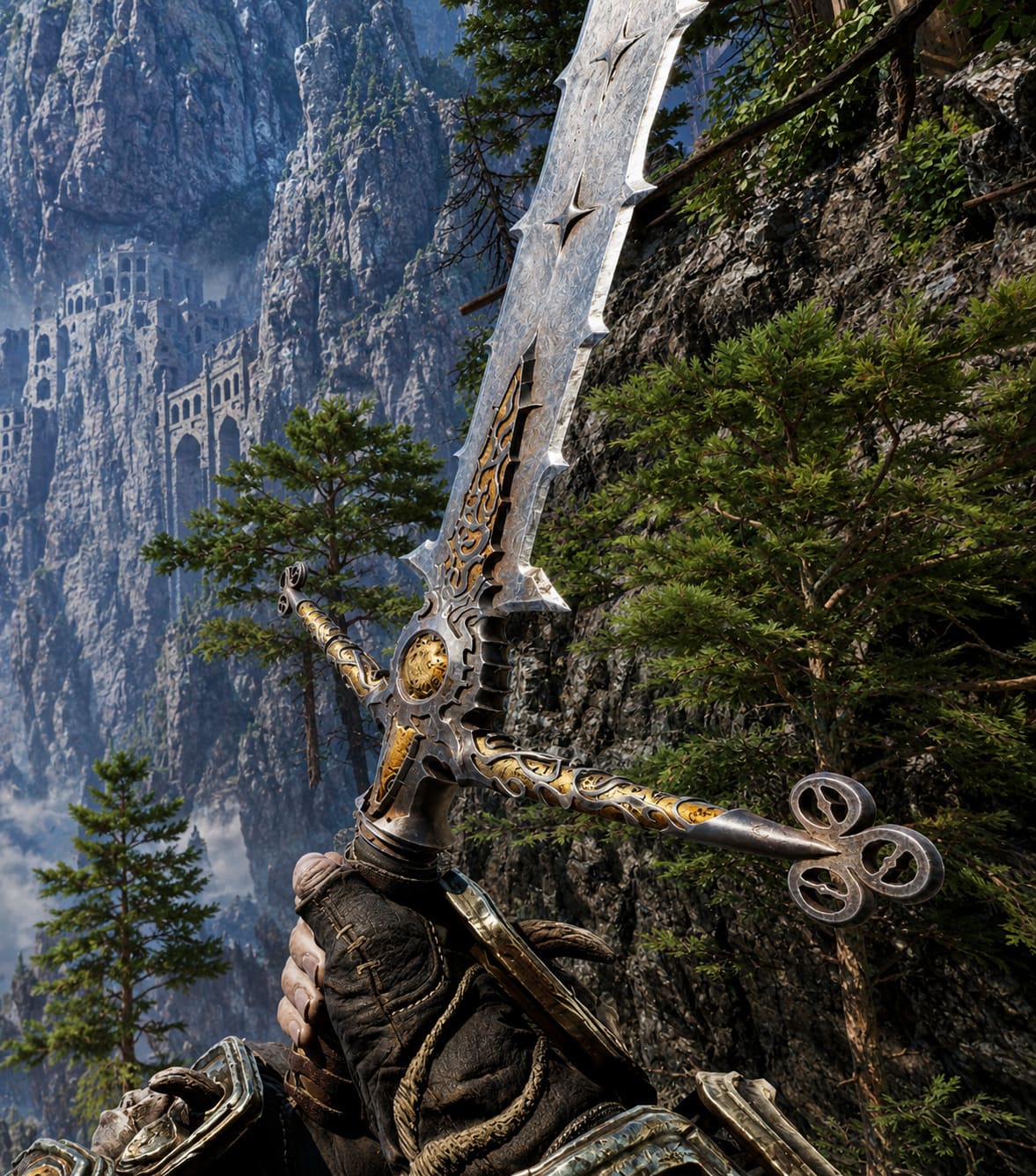
Fatekeeper loves vertical ambushes.
Archers and ranged attackers frequently hide on elevated platforms, beams, and ledges. You might think you’ve cleared a room only to suddenly take an arrow from somewhere above.
Before moving deeper into any area:
- Pause.
- Look around.
- Look up.
That simple habit saved me countless healing items throughout my playthrough.
5. Experiment With Alchemy Whenever Possible
Most RPG players wait until they find recipes before crafting.
Fatekeeper encourages a different approach.
The alchemy system feels surprisingly rewarding because experimentation is part of the progression. Picking up random plants and monster materials may seem pointless at first, but those ingredients can become life-saving potions later.
Whenever I had a quiet moment between encounters, I tested ingredient combinations.
Not every attempt succeeded, but discovering useful concoctions organically made the system feel far more engaging than simply following a recipe list.
6. Telekinesis Is Criminally Underrated
At first, I viewed telekinesis as a utility spell.
Then I started throwing furniture at enemies.
That’s when everything changed.
The spell has incredible versatility:
| Telekinesis Use | Benefit |
|---|---|
| Moving objects | Solving puzzles |
| Pulling items | Easier exploration |
| Activating mechanisms | Safer navigation |
| Throwing crates | Crowd control |
| Dropping objects | Bonus damage |
| Interrupting enemies | Combat advantage |
Creative use of telekinesis often produces better results than direct damage spells.
Some of my funniest victories involved launching random objects across rooms and accidentally defeating enemies in ways I never planned.
7. Fire Magic Controls Entire Encounters
Many players think of fire purely as a damage source.
I think it’s more valuable as a battlefield control tool.
Certain areas contain flammable surfaces that can transform into deadly barriers. Setting a narrow corridor on fire can force enemies to take damage before they even reach you.
This becomes especially useful when fighting multiple opponents at once.
Instead of facing an entire group head-on, you can funnel them through burning choke points and dramatically reduce the threat level.
Fire rewards strategic thinking more than raw aggression.
8. Patience Wins Boss Fights
The first major boss serves as a reality check.
If you’ve been rushing through encounters, the boss will probably punish you.
The biggest lesson I learned was to stop chasing damage opportunities. Many players become greedy during boss fights and get caught by powerful counterattacks.
Instead:
- Stay mobile
- Watch attack patterns
- Wait for openings
- Prioritize survival
Interestingly, the arena itself can become part of the fight. Positioning matters just as much as damage output, and environmental awareness can significantly shorten the battle.
9. Pull Enemies Away From Groups
Crowd management is one of Fatekeeper’s most important skills.
Running into a room and alerting every enemy is usually a terrible idea.
I discovered that slowing down often produced better outcomes. Sometimes opening a door and waiting quietly allows only one enemy to investigate.
Once isolated, that target becomes much easier to defeat.
This strategy may seem simple, but it dramatically reduces unnecessary risk.
Think like a hunter, not a berserker.
Fatekeeper Sentinel Lore Explained: Deep Dive Into the 2026 Dark Fantasy RPG World
10. Learn Your Hotkeys Early
This sounds boring compared to combat tips, but it’s incredibly important.
Fatekeeper’s fights move quickly.
Opening menus during combat is often a death sentence. Having immediate access to healing items, mana potions, and utility spells can save your life when things become chaotic.
Spend a few minutes customizing your controls.
Trust me, future you will appreciate it.
Fatekeeper System Requirements: Can the RTX 3070 Run This 2026 Next-Gen Unreal Engine 5 Title?
Final Thoughts
After dozens of hours in Fatekeeper, my biggest takeaway is that success rarely comes from stronger equipment alone. The game constantly rewards creativity, observation, and adaptability.
The players who thrive are not necessarily the fastest or most aggressive. They are the ones who notice environmental hazards, experiment with mechanics, and use every tool available to gain an advantage.
That’s what makes Fatekeeper so enjoyable.
Every encounter feels like a small puzzle, and every victory feels earned rather than handed to you.
If you’re jumping into Fatekeeper Early Access for the first time, remember this simple rule: the world around you is just as deadly as the enemies you’re fighting. Learn to use it, and you’ll survive far longer than players who only rely on their weapons.