Esports Manager 2026 Contract Guide: How to Negotiate and Sign Top Roster Talent Without Going Bankrupt
If there’s one lesson Esports Manager 2026 taught me after dozens of seasons, it’s this: great players don’t automatically create great teams. I learned that the hard way.
Like many people, I started by chasing every superstar I could afford. Whenever I saw an incredible sniper or mechanical genius available, I threw money at the negotiation screen and hoped for the best. It worked—for about half a season. Soon my payroll exploded, the board became unhappy, and renewing contracts turned into a nightmare.
Eventually I realized that the transfer market isn’t the real game. Contracts are.
Once I started treating negotiations like a strategy game instead of a shopping spree, everything changed. I began winning tournaments while keeping my organization financially stable, and surprisingly, the AI started respecting my offers much more often.
Here’s what I wish I had known from day one.
Every Contract Is a Long-Term Investment
It’s easy to focus only on signing the player you want, but that’s only the first step. Every contract affects your club months or even years later.
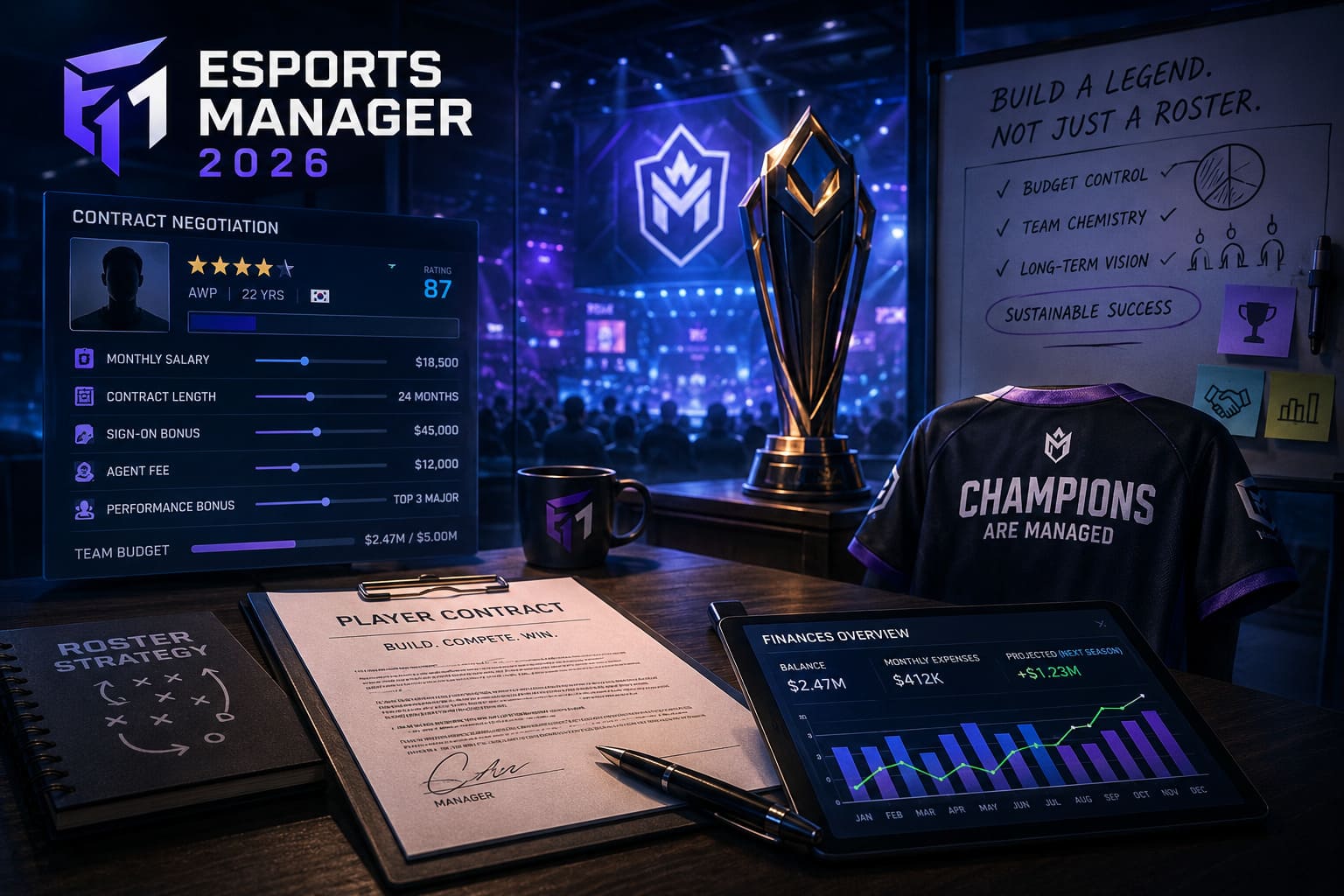
Before pressing the negotiation button, I always ask myself three simple questions:
- Will this player still be worth this salary in a year?
- Can I comfortably afford them if we miss major tournament prize money?
- Will paying them this much upset the rest of my roster?
Those questions alone have saved me countless times.
One expensive signing can force you to ignore contract renewals for your existing core players, and that’s exactly how championship rosters slowly fall apart.
Salary Isn’t Everything
At first I assumed players only cared about their monthly paycheck.
That isn’t really how Esports Manager 2026 feels.
Some players clearly prioritize money, but others seem much more interested in joining a competitive organization, working with respected coaches, or becoming part of a winning project.
Because of that, I rarely accept the first salary demand.
Instead, I try to create a balanced offer that includes:
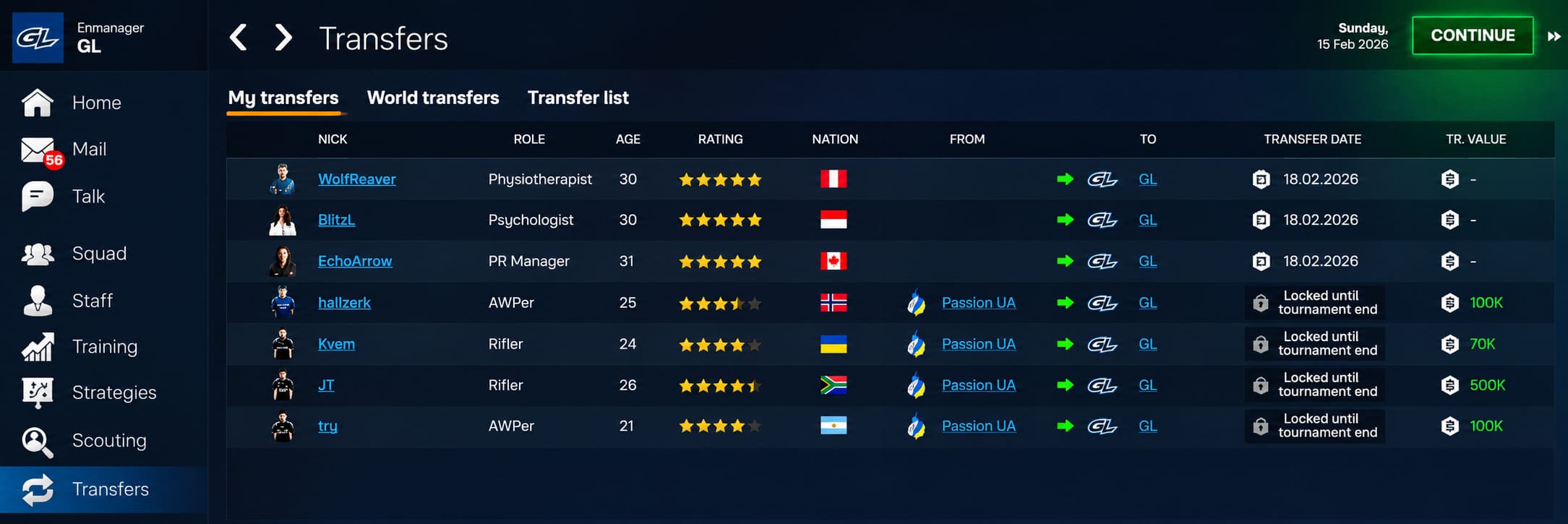
| Contract Element | My Personal Approach |
|---|---|
| Monthly Salary | Slightly below the requested amount |
| Contract Length | Longer deals for young talent, shorter for veterans |
| Sign-On Bonus | Useful when salary negotiations become difficult |
| Agent Fee | Worth increasing if it reduces long-term wages |
| Performance Bonuses | One of the safest ways to reward success |
I’ve found that a flexible contract usually works better than simply increasing the monthly salary over and over again.
Never Start With an Insulting Offer
One mistake I only made once was trying to massively lowball a player.
It didn’t just fail.
The negotiations collapsed immediately, and I lost the opportunity to sign someone who would later become one of the best players in the league.
Since then I follow a simple rule:
Negotiate realistically.
There’s nothing wrong with trying to save money, but offering a fraction of what the player expects usually wastes everyone’s time.
The AI in Esports Manager 2026 has a surprisingly good memory, and reputation matters more than many people realize.
Bonuses Can Save Your Entire Budget
This is probably my favorite mechanic in the whole game.
Performance bonuses let you reward success without risking financial disaster.
Instead of paying huge guaranteed salaries, I prefer rewarding players for achievements like:
- Winning major tournaments
- Reaching playoff stages
- Qualifying for international events
- Individual statistical milestones
The logic is simple.
If the team wins, everyone earns more money—including the organization through prize pools and sponsorships.
If the season goes badly, your fixed expenses remain under control.
To me, that’s simply smarter management.
Agent Fees Are More Important Than They Look
When I first played the game, I treated agent fees like unnecessary expenses.
Big mistake.
After experimenting with dozens of negotiations, I noticed that some agents become dramatically easier to work with if they’re satisfied early in the process.
Sometimes adding a larger one-time payment to the agent allows you to negotiate a noticeably lower monthly salary for the player.
Over a two- or three-year contract, those savings can become enormous.
It’s one of those little mechanics that doesn’t look exciting but quietly improves your finances season after season.
Protect Your Future Stars
Young players are incredibly exciting to sign.
They’re cheaper.
They improve quickly.
They often become the face of your organization.
They’re also magnets for richer clubs.
The first time one of my academy players exploded onto the international stage, another organization activated his release clause almost immediately.
I couldn’t stop it.
Watching my best player leave because I set an average buyout was painful.
Now I almost always negotiate stronger release clauses for players I expect to build around.
If necessary, I’ll sweeten the deal with additional bonuses rather than lowering their protection.
Don’t Ignore Contract Timing
Renewing contracts too late is something many new managers underestimate.
Once a player enters the final months of their deal, they suddenly gain much more leverage.
Other organizations begin showing interest.
Agents become more demanding.
Players feel less pressure to commit.
Nowadays I usually begin renewal discussions somewhere between six and twelve months before expiration.
Negotiations feel smoother, and I rarely have to panic during the offseason.
Team Chemistry Also Has a Price
One thing I genuinely appreciate about Esports Manager 2026 is that money doesn’t exist in isolation.
Your roster notices everything.
If a newly signed player earns two or three times more than your long-time captain, don’t expect everyone to stay happy.
I’ve watched team morale collapse simply because one superstar arrived with an outrageous salary.
Sometimes improving multiple contracts slightly is healthier than giving one player an enormous paycheck.
Happy teams often outperform expensive teams.
That’s something the game constantly reminds me.
Always Have a Backup Plan
Negotiations fail.
Sometimes the player doesn’t like your organization.
Sometimes the agent becomes impossible.
Sometimes another club simply offers more money.
Instead of desperately increasing every offer, I always keep alternative targets on my shortlist.
Knowing that I have another option helps me negotiate with much more confidence.
Ironically, that’s usually when I end up getting better deals.
A Few Mistakes I’d Avoid Every Time
After spending a lot of hours with the game, these are the habits I recommend avoiding:
- Never spend your entire budget on one superstar.
- Don’t assume future tournament winnings will cover expensive contracts.
- Avoid huge salary gaps inside your roster.
- Renew key contracts before they become urgent.
- Don’t ignore your coaching and support staff, because organizational prestige really does matter.
None of these mistakes seem catastrophic individually.
Together, they can quietly destroy an otherwise fantastic season.
My Biggest Lesson After Multiple Seasons
If someone asked me what separates average managers from successful ones in Esports Manager 2026, I wouldn’t say scouting.
I wouldn’t even say tactics.
I’d say patience.
Good negotiations aren’t about winning every conversation.
They’re about building a roster that remains competitive for several years without forcing your organization into financial trouble.
Some of my favorite signings weren’t the biggest stars.
They were the players who accepted fair contracts, developed into elite talent, and stayed with the club long enough to create something special.
Those are the players who eventually win championships.
Esports Manager 2026 Guide: How to Sign Superstars and Build a Championship Roster
Final Thoughts
Esports Manager 2026 does an excellent job of making contracts feel meaningful rather than just another menu between matches. Every decision has consequences, whether it’s a slightly higher salary, a risky release clause, or an expensive signing bonus.
For me, the most satisfying part of the game isn’t landing the biggest superstar on the market. It’s building an organization where talented players actually want to stay because the club is stable, ambitious, and financially healthy.
If you’re patient, negotiate with a plan, and think beyond the next tournament, you’ll eventually discover that sustainable roster building is every bit as rewarding as lifting another trophy.