Crimson Desert Map Size Comparison: Is It Bigger Than Elden Ring? (2026 Guide)
If you’ve spent hundreds of hours wandering through Elden Ring, you already know what a perfectly crafted open world feels like. Every cliff hides a secret, every ruin whispers lore, and even the emptiness feels intentional.
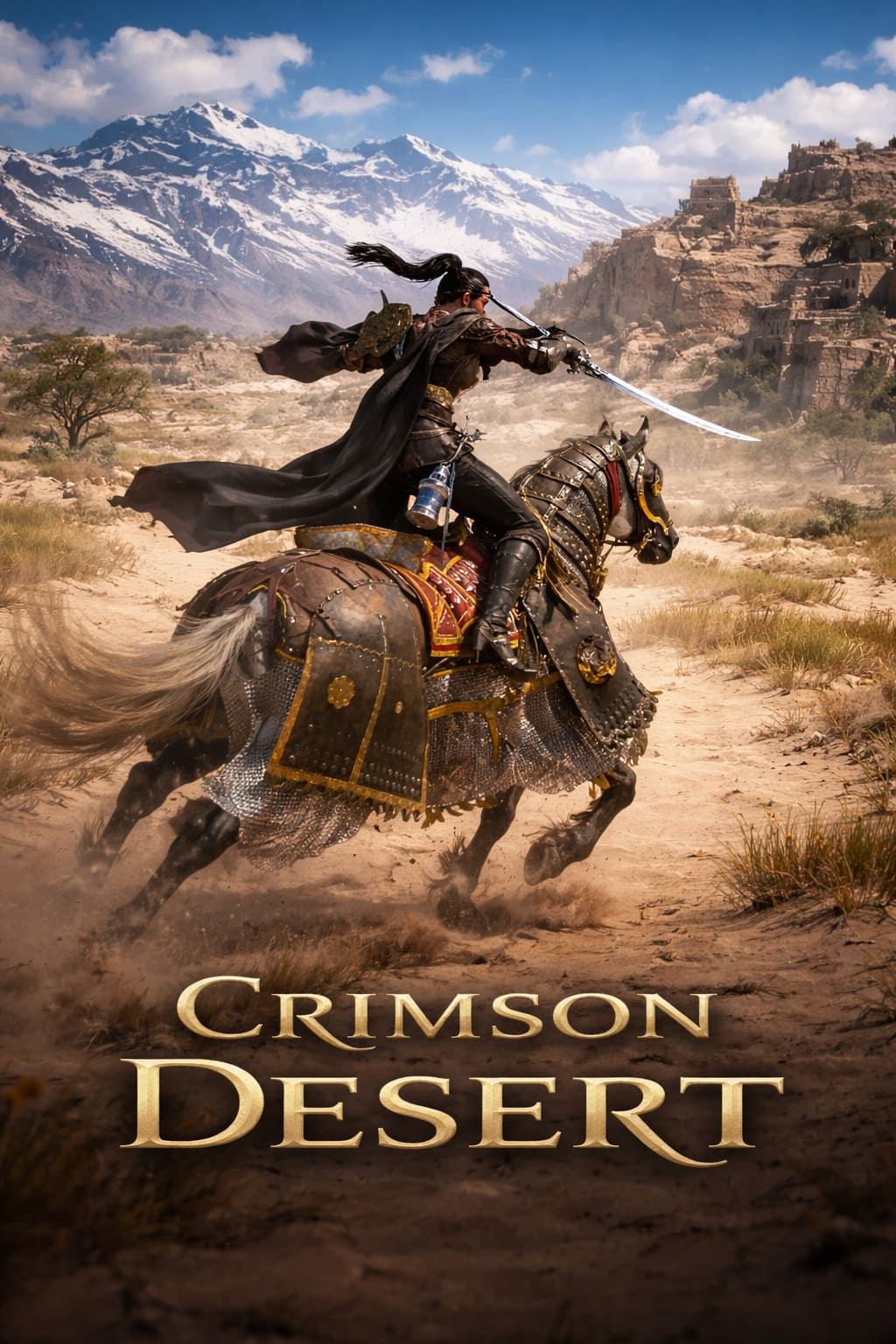
Now fast forward to 2026, and Crimson Desert steps into the ring swinging hard—with a world so massive it almost feels unreal.
So the big question isn’t just “Is Crimson Desert bigger?” It’s: Does bigger actually mean better this time?
Let’s break it down like real players—not marketing copy.
First Impressions: Yeah… It’s Bigger. But That’s Not the Whole Story
| Game | Total Map Size | Playable Land | World Style |
|---|---|---|---|
| Crimson Desert | ~110 km² | ~100+ km² | Living simulation |
| Elden Ring | ~79 km² | ~30–35 km² | Handcrafted, dense |
| The Witcher 3: Wild Hunt | ~54 km² | ~35 km² | Narrative-driven |
| The Legend of Zelda: Tears of the Kingdom | ~80 km² | ~Surface-focused | Vertical sandbox |
Quick takeaway: Crimson Desert is significantly larger in raw scale, while Elden Ring is smaller but more compressed and curated.
And honestly, that difference matters more than the numbers.
Walking the World: Scale You Actually Feel
Here’s something that genuinely stands out: in Crimson Desert, walking across the continent takes around 6 real-life hours, while in Elden Ring you can cross major regions in under an hour using Torrent.
But here’s the twist: in Elden Ring, the world feels endless because of how it’s designed. You always see something unreachable, the Erdtree is constantly looming, and underground zones double the perceived size.
Meanwhile, Crimson Desert doesn’t rely on illusion. It simply shows you everything. You stand on a mountain, see cities far in the distance, and you can actually go there with no loading screens or tricks. That’s not illusion—that’s raw technical scale.
Crimson Desert vs. Black Desert Online (2026): Comparison of Pearl Abyss’s Giants
Verticality: Two Completely Different Philosophies
Elden Ring focuses on hidden layers, with underground cities like Nokron, elevator transitions that feel magical, and carefully staged reveals. It feels like peeling layers off a mystery.
Crimson Desert takes the opposite route with open vertical freedom, featuring massive climbable mountains, floating islands that function as full zones, and gliding mechanics that let you traverse huge distances. It feels less like uncovering secrets and more like total freedom of movement.
Density Debate: “Empty World” vs “Living World”
This is where the community is seriously divided.
Why Elden Ring still wins in density:
- Every area has meaning
- Minimal filler content
- Environmental storytelling everywhere
You’re not just exploring—you’re decoding a fallen world.
Why Crimson Desert feels alive:
- NPCs have daily routines
- Factions fight dynamically
- World reacts to physics
Examples include chopping trees to block roads, destroying structures to affect encounters, and entire regions evolving even if you ignore them.
Crimson Desert Walkthrough Part 1: Essential Tips, Story Guide, and Early Game Secret (2026)
Traversal: How Fast You Move Changes Everything
In Elden Ring, Torrent is fast, responsive, and makes traversal smooth and grounded, especially with its double jump.
Crimson Desert takes things much further with high-speed mounts, parkour climbing, gliding systems, and even dragon riding in the late game. Dragon traversal completely changes perspective, turning the world into a fully visible, living landscape beneath you.
Technology Gap: Why Crimson Desert Feels “Next-Gen”
Pearl Abyss built a new engine for Crimson Desert, and it shows. The BlackSpace Engine enables massive draw distances, real-time world streaming, destructible environments, and minimal pop-in.
In comparison, Elden Ring’s technology still relies on tricks like fog masking and simpler environmental interaction. The result is clear: Elden Ring creates an artistic illusion of scale, while Crimson Desert delivers technical reality.
What Actually Feels Better to Play?
Elden Ring feels like a perfectly crafted dungeon stretched across a continent where every step matters and exploration is always rewarding.
Crimson Desert feels like a sandbox world that exists independently of the player, offering more freedom, more chaos, and sometimes a sense of overwhelming scale—in a good way.
Pros & Cons (Real Gamer Perspective)
Crimson Desert
- Massive, truly open world
- Dynamic systems and living environments
- Impressive visual scale
- Aerial exploration adds a new dimension
- Risk of content dilution
- Less curated experience
- Can feel overwhelming
Elden Ring
- Tight, intentional design
- Exceptional level design
- No wasted space
- Strong atmosphere and lore
- Smaller actual playable area
- Less dynamic world systems
- Limited environmental interaction
So… Which Game Actually Wins?
The truth is, they’re not trying to do the same thing.
Elden Ring is about precision and meaning, while Crimson Desert is about scale and simulation.
If you want a perfectly designed experience, Elden Ring still wins. If you want a massive, living world to get lost in, Crimson Desert takes the crown.
Final Verdict (From a Fan, Not a Reviewer)
Crimson Desert doesn’t just beat Elden Ring in size—it changes what “big” even means.
But bigger worlds don’t automatically create better memories.
Elden Ring gave us unforgettable moments, while Crimson Desert offers a world that might never stop evolving.
And maybe that’s the real shift in 2026 gaming: not just exploring a world, but living inside one.