ILL Weapon Upgrades and Combat System Explained
If you’ve been following modern survival horror games, ILL is one of those upcoming titles that keeps generating conversation across gaming communities. From early gameplay impressions and developer commentary, it’s already clear that this isn’t trying to be a traditional horror shooter.
Instead, it leans heavily into realism, tension, and a weapon system that feels closer to maintaining real machinery than playing a typical video game.
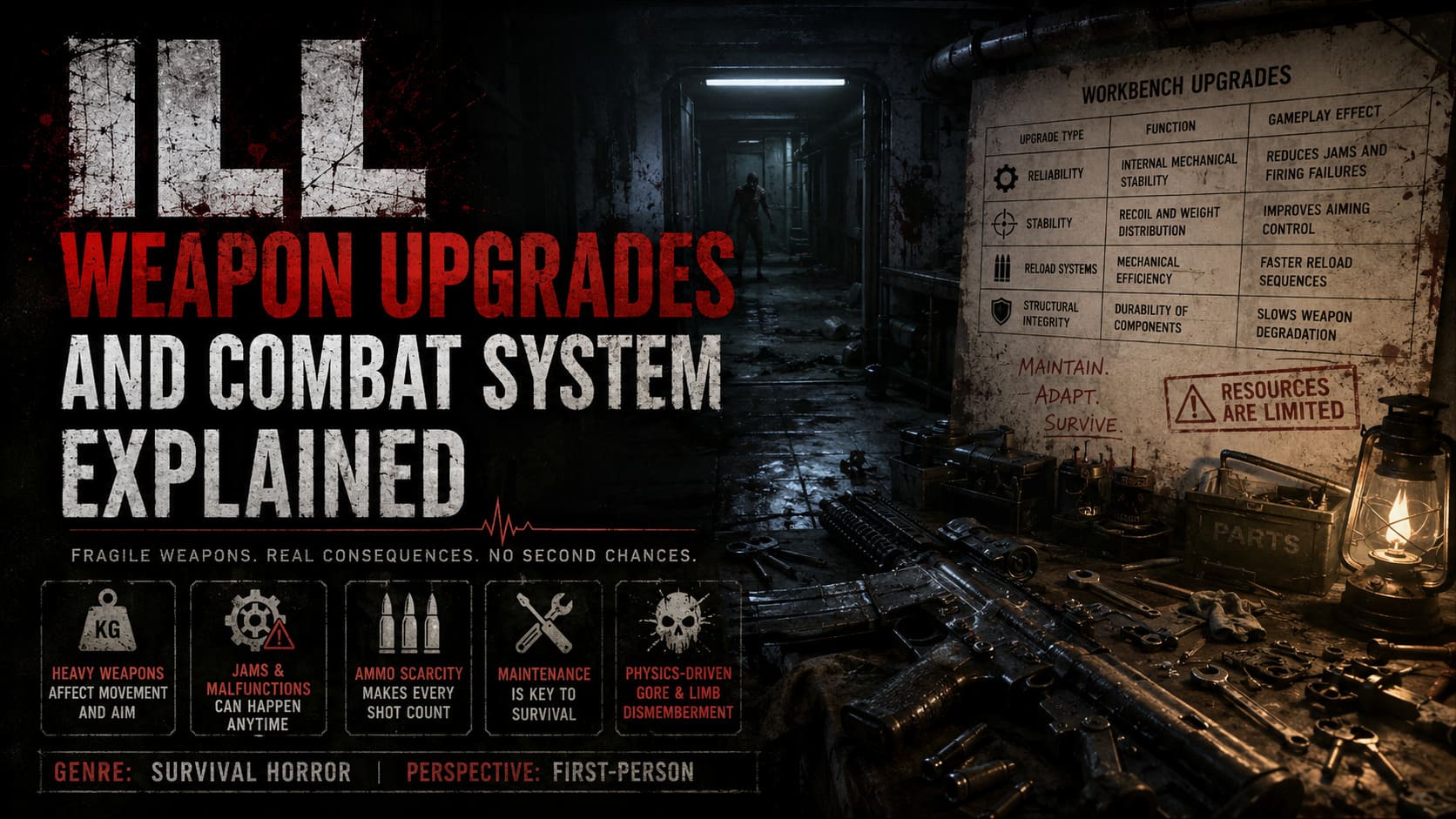
What makes it especially interesting is how much the combat identity depends on weapon behavior. Guns are not designed as stable power tools. They are fragile, weighty systems that can fail, degrade, and force you into dangerous situations when they malfunction.
That design philosophy reshapes the entire survival experience.
ILL Survival Horror Game (2027): Early Impressions and What to Expect
Weapons Designed for Survival, Not Power
Most shooters teach players to think in terms of upgrades that increase efficiency. ILL takes a different route. Weapons feel physically grounded, with weight and recoil affecting every movement and shot. Instead of feeling like precise instruments, they behave more like real mechanical objects under stress.
This creates a gameplay loop where control is never fully guaranteed. You are constantly adapting to instability rather than mastering it. Even aiming down sights or tracking enemies can feel unpredictable, especially during stressful encounters.
Core Design Principles
Several key ideas define how weapons behave in the game:
- Heavy physical weapon weight influences movement and aiming
- Recoil is dynamic and difficult to fully control
- Firearms can jam or malfunction during combat
- Ammunition scarcity forces careful decision-making
- Maintenance is required for long-term survival
Instead of building confidence, the system builds pressure. Every encounter becomes a risk calculation rather than a power fantasy.
Will Stuntman Hollywood Have Multiplayer? Co-Op, Online Modes, and What to Expect
The Workbench Upgrade System
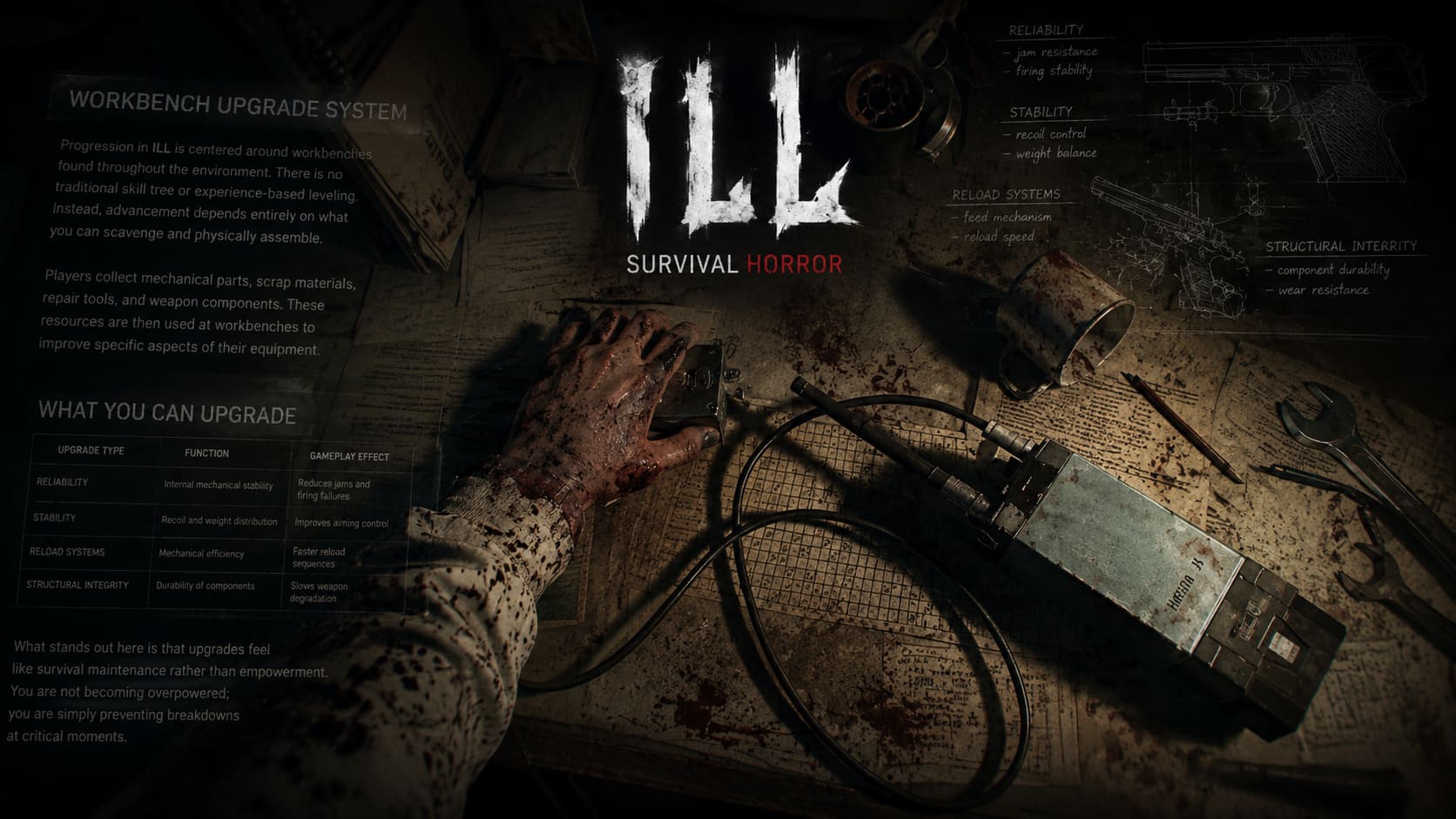
Progression in ILL is centered around workbenches found throughout the environment. There is no traditional skill tree or experience-based leveling. Instead, advancement depends entirely on what you can scavenge and physically assemble.
Players collect mechanical parts, scrap materials, repair tools, and weapon components. These resources are then used at workbenches to improve specific aspects of their equipment.
What You Can Upgrade
Upgrades are practical rather than abstract. Each improvement directly affects how the weapon performs under pressure.
| Upgrade Type | Function | Gameplay Effect |
|---|---|---|
| Reliability | Internal mechanical stability | Reduces jams and firing failures |
| Stability | Recoil and weight distribution | Improves aiming control |
| Reload Systems | Mechanical efficiency | Faster reload sequences |
| Structural Integrity | Durability of components | Slows weapon degradation |
What stands out here is that upgrades feel like survival maintenance rather than empowerment. You are not becoming overpowered; you are simply preventing breakdowns at critical moments.
Combat Feel and Player Experience
Combat in ILL is intentionally uncomfortable. Shooting does not feel smooth or arcade-like. Instead, every action carries weight and hesitation. Weapons sway heavily, recoil is unpredictable, and movement during combat feels physically constrained.
Reloading is also not instant. It is a step-by-step process that exposes the player to danger. This forces careful timing and situational awareness rather than aggressive rushing.
How Combat Changes Player Behavior
- Players avoid unnecessary engagements
- Positioning becomes more important than speed
- Ammo conservation is always a priority
- Every shot carries meaningful risk
This design pushes the experience closer to survival simulation than traditional shooting mechanics. It rewards patience and punishes recklessness.
Weapon Attachments and Tactical Adaptation
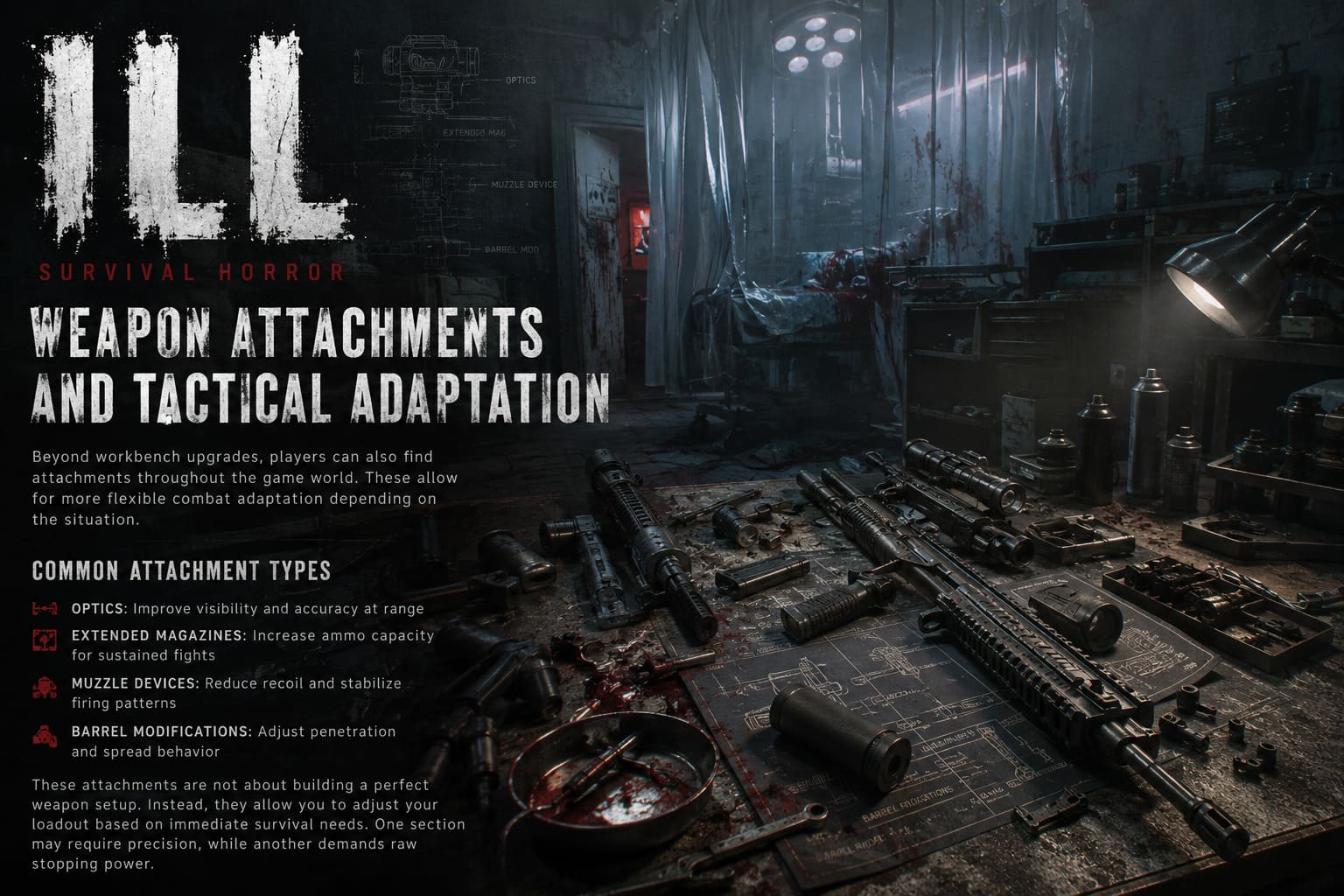
Beyond workbench upgrades, players can also find attachments throughout the game world. These allow for more flexible combat adaptation depending on the situation.
Common Attachment Types
- Optics: Improve visibility and accuracy at range
- Extended Magazines: Increase ammo capacity for sustained fights
- Muzzle Devices: Reduce recoil and stabilize firing patterns
- Barrel Modifications: Adjust penetration and spread behavior
These attachments are not about building a perfect weapon setup. Instead, they allow you to adjust your loadout based on immediate survival needs. One section may require precision, while another demands raw stopping power.
Interaction With Gore and Physics Systems
One of the most defining features of ILL is its physics-driven dismemberment system. Enemies react dynamically to impact force, weapon strength, and hit location. This system is directly influenced by weapon upgrades.
Stronger weapons can disable limbs more effectively, while weaker setups may only partially incapacitate enemies. This is not just visual—it directly affects how threats behave after being damaged.
Combat Impact Differences
- Upgraded weapons can instantly cripple enemy mobility
- Higher penetration improves damage to critical structures
- Strong kinetic force interacts with the environment
- Weak attacks may allow enemies to continue evolving or attacking
This creates a meaningful link between upgrade decisions and survival outcomes. A poorly optimized weapon can literally make encounters more dangerous instead of easier.
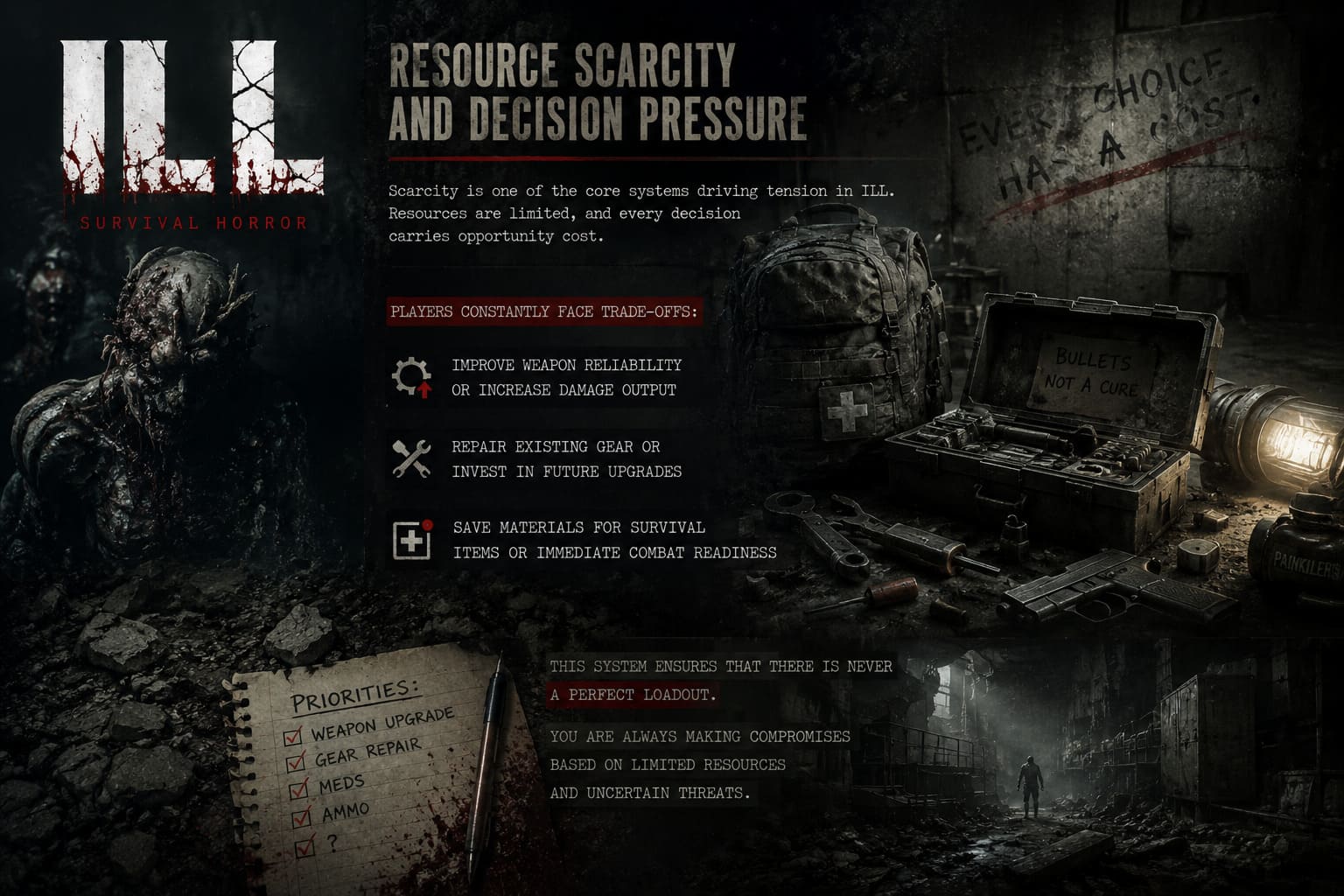
Resource Scarcity and Decision Pressure
Scarcity is one of the core systems driving tension in ILL. Resources are limited, and every decision carries opportunity cost. Upgrading one weapon might mean neglecting another or losing access to healing items.
Players constantly face trade-offs:
- Improve weapon reliability or increase damage output
- Repair existing gear or invest in future upgrades
- Save materials for survival items or immediate combat readiness
This system ensures that there is never a perfect loadout. You are always making compromises based on limited resources and uncertain threats.
Conclusion: Survival Through Fragility
ILL builds its identity around fragility rather than strength. Weapons are not designed to make players feel powerful. Instead, they reinforce the idea that survival depends on preparation, maintenance, and constant adaptation.
The upgrade system, combined with physics-based combat and scarcity-driven progression, creates a survival horror experience where tension never fully disappears. Even late-game upgrades do not eliminate danger—they simply delay failure.
That philosophy is what makes the game stand out. It does not try to comfort the player. It keeps them alert, uncertain, and constantly aware that even their best weapon might fail at the worst possible moment.