ILL Survival Horror Game (2027): Early Impressions and What to Expect
The recent reveal of ILL by Team Clout has quickly become one of the most talked-about moments in modern survival horror.
Even in a landscape already filled with heavy hitters like Resident Evil and Dead Space, this upcoming 2027 release is standing out for one simple reason: it looks genuinely unsettling in a way that feels almost excessive.
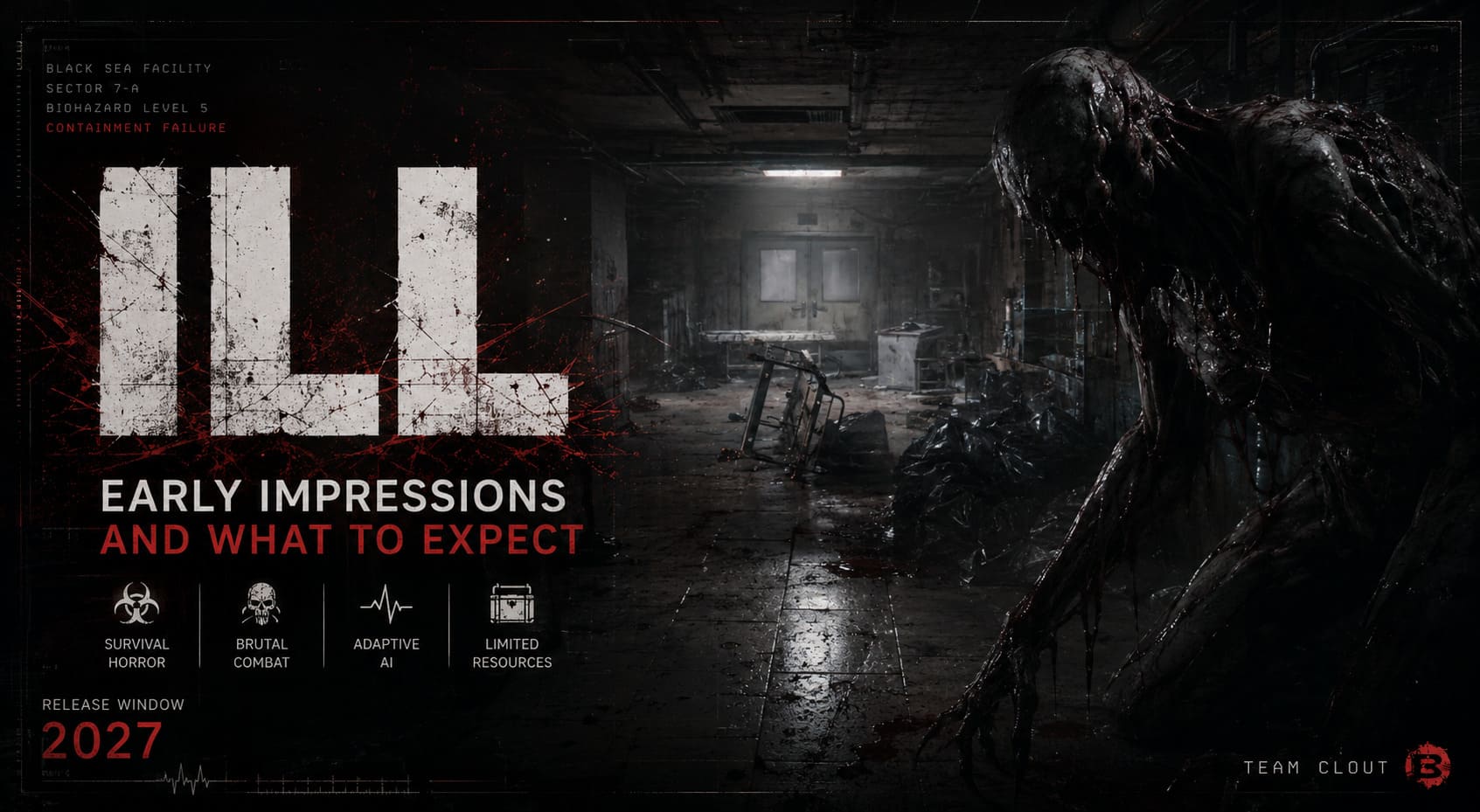
As someone who plays a wide variety of games across genres, I can say this isn’t just another horror title trying to ride the trend. It feels more like an attempt to push interactive horror into uncomfortable new territory — both visually and mechanically.
Will Stuntman Hollywood Have Multiplayer? Co-Op, Online Modes, and What to Expect
A Horror Game Built on Cinematic Experience
What immediately separates ILL from most indie horror projects is the background of its developers. Team Clout is made up of professionals who have worked in cinematic horror environments, which clearly influences how the game is designed.
Instead of focusing purely on traditional game design patterns, the team appears to prioritize atmosphere, framing, pacing, and visual storytelling. This is important because it changes how fear is delivered — not as a scripted event, but as a continuous psychological pressure.
Film-Like Horror Direction in a Game Engine
The game seems to borrow heavily from cinematic techniques rather than standard game-level design logic. Lighting, camera framing, and creature movement all appear to be carefully staged, almost like interactive horror cinema.
This creates a feeling where even simple exploration becomes tense, because you never fully trust what the environment might reveal next.
Stuntman Hollywood DeLorean Time Machine: Back to the Future Returns to Gaming
Gameplay Systems: Brutality Meets Physics
From what has been shown so far, ILL is not just focused on atmosphere — it is also building a deeply reactive gameplay system centered around survival and combat.
Core Gameplay Features
- Real-time physics-based combat interactions
- Procedural dismemberment and damage response
- Adaptive enemy behavior based on injury states
- Close-range survival combat inspired by classic horror shooters
- Limited resources encouraging cautious engagement
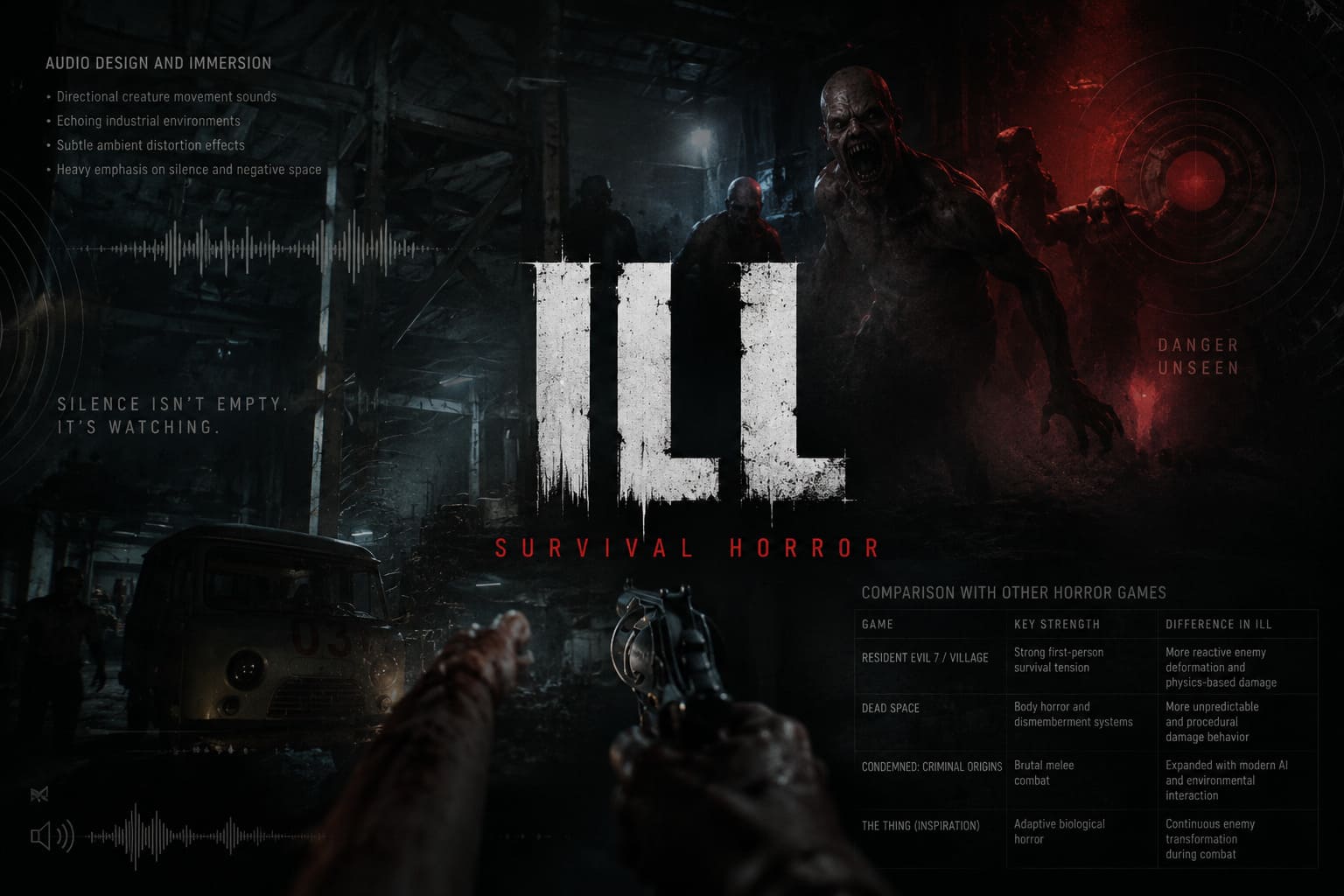
What makes this system interesting is that enemies don’t simply “die” in a conventional way. Instead, they change shape and behavior depending on how they are damaged. This forces players to constantly reassess combat situations instead of relying on predictable patterns.
Enemy Behavior and AI Reactions
The creatures shown in trailers — often referred to as grotesque biological aberrations — do not behave like standard game enemies. They react dynamically to both the environment and player actions.
For example, if a limb is damaged, movement patterns shift rather than stopping completely. This creates unpredictable combat encounters where every shot can meaningfully change the situation in unexpected ways.
Horror Design: Constant Psychological Pressure
Unlike traditional horror games that rely heavily on jump scares, ILL appears to focus more on sustained tension. The environments are designed to feel familiar but corrupted, which creates a constant sense of unease.
Instead of relying on sudden shocks, the game builds discomfort through subtle environmental changes, sound design, and unpredictable enemy presence.
Environmental Horror Approach
The setting appears to be a large isolated research facility that has been overtaken by an unknown biological force. What makes it effective is that the spaces still feel functional beneath the corruption, which makes everything more believable — and more disturbing.
This blend of realism and horror is often more effective than abstract or supernatural environments because it feels like something that could theoretically exist.
Audio Design and Immersion
Sound design plays a major role in horror games, and ILL seems to treat it as a core pillar of immersion rather than a background element.
The use of directional and layered audio means players are constantly exposed to environmental cues that may or may not indicate danger. This uncertainty is what keeps tension high even during quiet moments.
Key Audio Elements
- Directional creature movement sounds
- Echoing industrial environments
- Subtle ambient distortion effects
- Heavy emphasis on silence and negative space
In horror design, silence is often more powerful than noise, and ILL appears to understand this principle well.
Comparison With Other Horror Games
It’s impossible not to compare ILL with other major survival horror titles, even though it clearly aims to carve out its own identity.
| Game | Key Strength | Difference in ILL |
|---|---|---|
| Resident Evil 7 / Village | Strong first-person survival tension | More reactive enemy deformation and physics-based damage |
| Dead Space | Body horror and dismemberment systems | More unpredictable and procedural damage behavior |
| Condemned: Criminal Origins | Brutal melee combat | Expanded with modern AI and environmental interaction |
| The Thing (inspiration) | Adaptive biological horror | Continuous enemy transformation during combat |
Personal Take: Ambition vs Execution
From a personal perspective, ILL is one of those games that immediately grabs attention but also raises valid concerns. The ambition is undeniable, but so is the risk.
What Looks Strong So Far
- Highly detailed visual design and atmosphere
- Innovative enemy behavior systems
- Strong cinematic influence in presentation
- Clear identity in the survival horror space
Potential Risks
- Over-reliance on visual shock value
- Gameplay depth beyond combat systems
- Balancing realism with fun mechanics
Many horror games look incredible in early trailers but struggle to maintain engagement over long play sessions. The real challenge for ILL will be turning its disturbing concepts into a fully satisfying gameplay loop.
Final Thoughts
ILL feels like a deliberate attempt to push survival horror into more extreme territory. It doesn’t seem interested in being comfortable, accessible, or safe. Instead, it aims to create an experience that sticks with players long after they stop playing.
If Team Clout manages to balance its cinematic vision with solid gameplay systems, this could easily become one of the defining horror games of its generation. If not, it will still likely be remembered as one of the most visually extreme and ambitious horror projects in recent years.
Either way, it has already succeeded in doing something important: making the horror genre feel unpredictable again.