Blackwood Game Characters and Voice Actors: The Ultimate Guide to AttritoM7’s Noir Thriller
BLACKWOOD is one of those games that immediately caught my attention because it refuses to be just another crime shooter. After playing through plenty of games built around guns, assassins, organized crime, and morally questionable protagonists, I’ve become a little tired of stories where the main character is basically invincible from the opening cutscene. Blackwood takes a more interesting route. It combines a grounded double life, a gloomy 2012 New York setting, a small-town-business atmosphere, and surprisingly brutal nighttime action into a package that feels closer to an interactive noir thriller than a conventional tactical shooter.
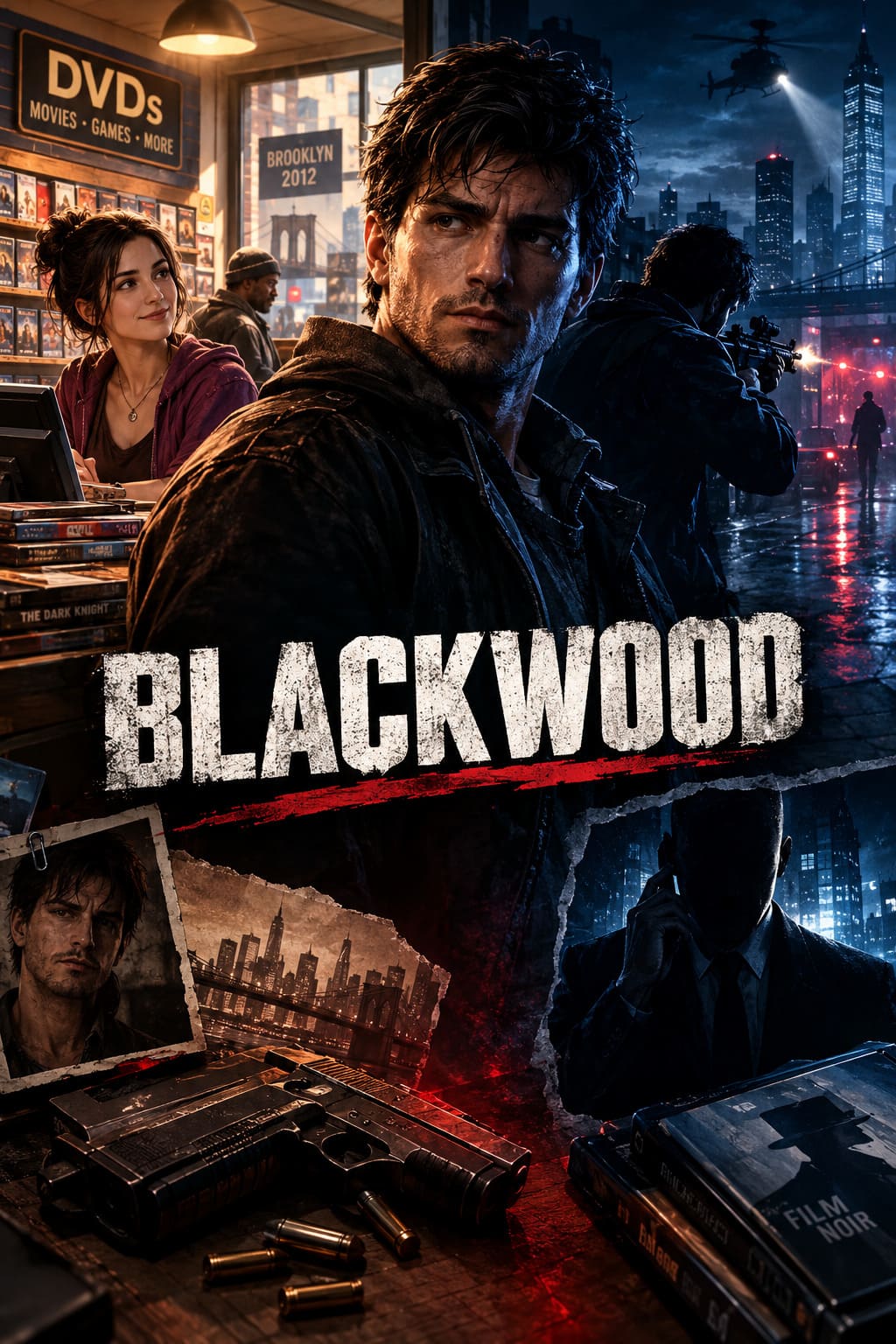
Developed and published by AttritoM7 Productions, the studio behind Zero Hour, with IZilla Games involved as co-publisher, Blackwood puts players in control of Anton Blackwood. During the day, he runs a modest DVD rental store in Brooklyn, deals with customers, manages the business, and tries to look like an ordinary member of the neighborhood. At night, that image completely falls apart as Anton becomes a professional contract killer operating inside New York’s criminal underworld.
That contrast is easily the most interesting thing about the game for me. Plenty of games have attempted a civilian-versus-criminal lifestyle, but Blackwood seems much more interested in showing how those two identities slowly contaminate each other. The people Anton meets during the day are not simply filler NPCs, while the people he hunts at night are not just disposable targets. His choices, behavior, and increasingly unstable state of mind are all connected, making the Blackwood characters an important part of the experience rather than decoration around the action.
Valheim Xbox Series S Performance vs Graphics Mode: 2026 Guide
Anton Blackwood: The Man Behind the Gun
At the center of everything is Anton Blackwood, a protagonist who feels deliberately different from the usual action-game hero. He isn’t presented as some larger-than-life super soldier or unstoppable hitman. Instead, Anton is a tired and complicated man who has built a carefully constructed normal life around something deeply abnormal. His DVD store provides money, routine, and an excuse to maintain the illusion that he is simply another Brooklyn shopkeeper.
The choice of 2012 as the setting works particularly well. This is a New York where DVDs and physical media still feel relevant, but the future of entertainment is already moving toward digital streaming. That gives Anton’s business a slightly nostalgic quality, and it also fits the game’s broader fascination with old crime movies and noir storytelling. The store isn’t just a front; it becomes part of Anton’s personality and the fantasy he has created for himself.
During the daytime sections, players can handle the store, interact with customers, alter Anton’s clothing, and personalize aspects of his living space. These quieter moments are important because they give the character somewhere to breathe. In my experience with games that alternate between intense combat and slower social sequences, the quiet sections only work when the developers make you care about the person underneath the violence. Blackwood appears to understand that principle.
Anton’s Transformation at Night
Once darkness arrives, Anton’s personality changes dramatically. His work becomes much more direct: locate the target, enter dangerous territory, deal with resistance, and get out alive. The combat is designed around fast movement and aggressive close-quarters encounters rather than simply hiding behind cover and waiting for enemies to make mistakes.
Anton can use tactical dives, slides, ground rolls, firearms, counters, and contextual melee attacks. One of the more interesting elements is the game’s emphasis on environmental takedowns. With more than 30 contextual hand-to-hand finishing animations, the surroundings can become part of the fight. Walls, furniture, tools, and other objects can potentially be incorporated into brutal close-range attacks.
That system is important because it gives Anton’s violence a physical personality. A good action game should make movement feel purposeful, and Blackwood seems to be chasing that cinematic feeling where a character doesn’t simply perform a generic execution animation every time. Instead, the environment helps determine what happens next.
The Voice Performance Behind Anton
A character like Anton lives or dies by his performance. You can give a protagonist great animations and stylish gunplay, but if the voice acting feels flat, the entire illusion collapses. Blackwood appears to put considerable emphasis on professional voice recording, motion capture, dialogue synchronization, and sound design to make Anton’s two personalities believable.
His daytime voice is supposed to feel restrained and approachable. He needs to sound like someone who could realistically spend hours behind a counter discussing movies with customers. At night, however, the delivery becomes colder, rougher, and more controlled. That difference is essential because Anton shouldn’t feel like two completely unrelated characters; he should feel like the same person gradually revealing another side of himself.
The source material does not publicly identify a specific actor by name, so I wouldn’t pretend otherwise. What matters from the available character information is the performance style: subdued dialogue during the day, a harder delivery during contracts, and physical vocal reactions during combat. The combination of voice work, internal monologue, radio communications, and environmental audio is intended to make Anton feel like a character rather than simply the camera through which the player experiences the story.
The Mysterious Handler
Anton may believe he understands his own situation, but Blackwood quickly suggests that someone else is pulling the strings. An unidentified handler operates from somewhere inside New York’s criminal network and sends Anton increasingly dangerous assignments. This figure adds another layer to the story because Anton isn’t necessarily the person making the biggest decisions.
The handler’s communication style is deliberately distant. Instead of long emotional conversations, the character relies on cryptic instructions, controlled radio transmissions, and information that leaves Anton with more questions than answers. I like this approach because mystery works better when a game doesn’t explain everything immediately. The handler feels less like a traditional villain and more like an invisible force surrounding Anton.
Brooklyn’s Civilian Characters
The people Anton meets during the day could end up being just as important as the criminals he encounters at night. Among the civilian cast is a prominent female character who knows Anton only as the quiet owner of a local video store. She has no idea what he does after dark, creating an uncomfortable contrast between the person she thinks she knows and the man Anton actually is.
This is where the dialogue system becomes particularly interesting. Anton’s behavior as a killer can influence how he handles conversations during the day. If the player spends every night committing increasingly violent acts, Anton can become more impatient, nervous, distant, or aggressive when speaking with ordinary people. That creates the possibility of relationships changing naturally rather than simply following a basic good-choice/bad-choice meter.
For me, these smaller interactions are potentially one of Blackwood’s strongest ideas. Gunfights are easy to make exciting, but making a player worry about what a shop regular thinks of their character is much harder. If the game manages to connect those two sides successfully, the civilian cast could become one of the reasons players remember Anton after finishing the story.
Blackwood Voice Actors and Audio Design
Although character names and complete voice-cast details are not fully established in the supplied material, the game’s audio direction is clearly intended to play a major role in the experience. AttritoM7 Productions is handling its voice recording, dialogue synchronization, and original audio work internally, giving the developers greater control over how the characters sound across different situations.
The contrast between daytime and nighttime audio is particularly important. During the day, the atmosphere is warmer and more nostalgic: old televisions, DVD cases, neighborhood conversations, storefront noise, and the relatively relaxed voices of customers create the feeling of an ordinary Brooklyn business. It is the kind of soundscape that makes the player’s criminal activities feel even more disturbing when the tone suddenly changes after sunset.
At night, everything becomes harsher. Gunshots, footsteps on wet streets, breaking glass, environmental destruction, enemy reactions, and Anton’s physical exertion create a much more aggressive soundscape. The difference should help reinforce the central theme of Blackwood: Anton is living two completely different lives, and eventually those lives are going to collide.
How the Characters Fit Into Blackwood’s Story
| Character | Role | Connection to Anton | Story Function |
|---|---|---|---|
| Anton Blackwood | Protagonist / Contract Killer | Central character | Explores the conflict between civilian life and violence |
| The Unseen Handler | Criminal Contact | Controls assignments | Introduces mystery and larger criminal conspiracies |
| Brooklyn Store Regulars | Civilian NPCs | Customers and acquaintances | Expose changes in Anton’s personality |
| Close Civilian Contacts | Supporting Characters | Know Anton’s daytime identity | Create emotional consequences for his actions |
Why the Supporting Cast Matters
One mistake I see in a lot of action games is treating supporting characters as checkpoints between missions. They exist to give you an objective, deliver exposition, and disappear until the next cutscene. Blackwood has the opportunity to do something more interesting because its entire structure depends on Anton maintaining relationships while hiding an increasingly dangerous secret.
The strongest version of this concept would make players genuinely nervous about returning to the store after a particularly violent mission. If a character notices that Anton is behaving differently, if a conversation changes because of previous decisions, or if someone begins asking questions about his strange schedule, suddenly the daytime gameplay has real tension. That is much more compelling than simply switching from shooting missions to an unrelated shop-management minigame.
Blackwood’s 2026 Story Structure
The first release focuses on Act 1, establishing Anton’s double life, the criminal network surrounding him, his relationships, and the central mystery. Future chapters are planned to expand the story further, with Act 2 scheduled for March 2027 and Act 3 planned for September 2027 according to the provided release information.
If those later acts follow through on the concept, the cast should become significantly larger. New assassins, rival criminal organizations, additional handlers, and characters connected to Anton’s civilian life could all complicate the central conflict. The most interesting possibility is that relationships established early in the story may eventually affect who survives and how Anton’s story concludes.
PC System Requirements
Blackwood is designed to be relatively accessible on PC, which is good news for players who don’t own a high-end gaming rig. The minimum target focuses on 1080p gameplay at approximately 30 FPS using Low settings, with hardware requirements that are considerably more modest than those of many modern cinematic releases.
| Requirement | Minimum Specification |
|---|---|
| Operating System | Windows 10 / Windows 11 64-bit |
| Processor | AMD Ryzen 5 3600 or Intel Core i5-10400F |
| Memory | 16 GB RAM |
| Graphics | NVIDIA GTX 1650, AMD RX 570, or Intel Arc A380 |
| DirectX | DirectX 11 |
| Storage | 30 GB available space |
| Target | 1080p / 30 FPS on Low settings |
Final Thoughts on Blackwood’s Characters and Voice Acting
What makes Blackwood interesting to me isn’t simply the promise of stylish gunfights or cinematic executions. I’ve played enough crime games to know that shooting mechanics alone aren’t enough to make another noir thriller memorable. The more promising idea here is Anton himself: a man who spends his mornings pretending to be ordinary while spending his nights becoming increasingly comfortable with violence.
The characters surrounding him are therefore extremely important. The mysterious handler represents the criminal world pulling Anton deeper, while the Brooklyn customers and civilian contacts represent the normal life he is desperately trying to preserve. The voice performances, environmental audio, dialogue choices, and changes in Anton’s behavior all have the potential to turn that conflict into something much more personal.
Blackwood isn’t simply about becoming the best assassin in New York. At least from what has been presented so far, it’s about asking how long someone can maintain a normal identity while repeatedly crossing increasingly violent lines. If AttritoM7 Productions can deliver on that idea across its planned story acts, Blackwood could become one of the more distinctive indie crime games of 2026—especially for players who prefer their action games with a strong dose of character drama and noir atmosphere.