Naraka Bladepoint Tara Gan Lore: Guide to the Astrologist’s Story, Skills, and Meta Impact
When a new hero arrives in Naraka: Bladepoint, the community usually asks the same questions: Is the character overpowered? Will they fit the current meta? How long until the next balance patch? After spending plenty of time watching gameplay, reading community discussions, and following competitive matches, I think Tara Gan is one of those rare additions that goes beyond simple balance numbers.
She doesn’t just introduce another combo route or another flashy ultimate. She changes the way players think about every engagement.
Season 20 has already become one of the most talked-about updates in recent memory, and a huge part of that conversation revolves around the game’s newest Astrologist. Instead of relying on brute strength or overwhelming damage, Tara Gan wins fights by controlling positioning, timing, and the flow of battle itself.
If you’ve played Naraka for years, you’ll immediately notice that fights simply don’t feel the same anymore.
A Hero That Actually Feels Unique
One thing I’ve always appreciated about Naraka is that every character tries to represent a different fantasy. Some heroes are relentless duelists, others excel at crowd control, mobility, or survivability.
Tara Gan takes that philosophy even further.
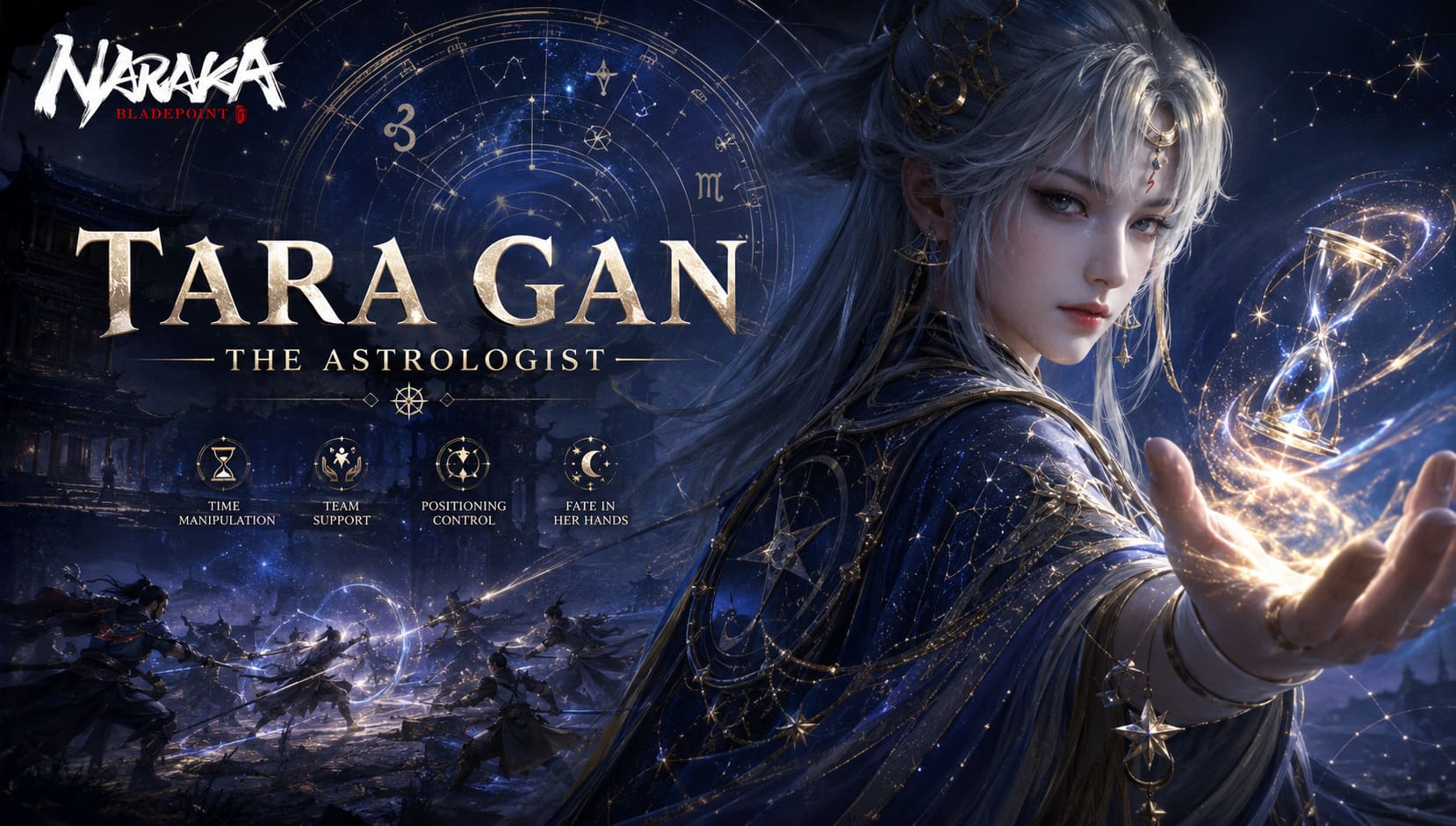
Rather than becoming another damage-focused assassin, she’s built around manipulating moments that normally decide the outcome of a fight. In practice, this creates situations where positioning matters even more than mechanical skill alone.
That’s surprisingly refreshing.
Instead of asking yourself, “Can I out-combo this player?”, you’re often thinking:
- Should I engage now?
- Where will everyone be a few seconds later?
- Is the enemy overcommitting?
- Is it worth saving my ultimate for the next fight?
Those are much more interesting questions than simply chasing damage numbers.
The Astrologist Fits Naraka’s World Perfectly
One reason Tara Gan has received such a warm reception is her lore.
Her entire identity revolves around studying the heavens and understanding destiny through ancient celestial knowledge. Rather than becoming another mythical warrior fueled by rage or supernatural strength, she approaches every battle almost like solving a complicated puzzle.
That concept fits surprisingly well inside Naraka’s wuxia-inspired universe.
Her visual design reinforces that identity throughout every part of her appearance.
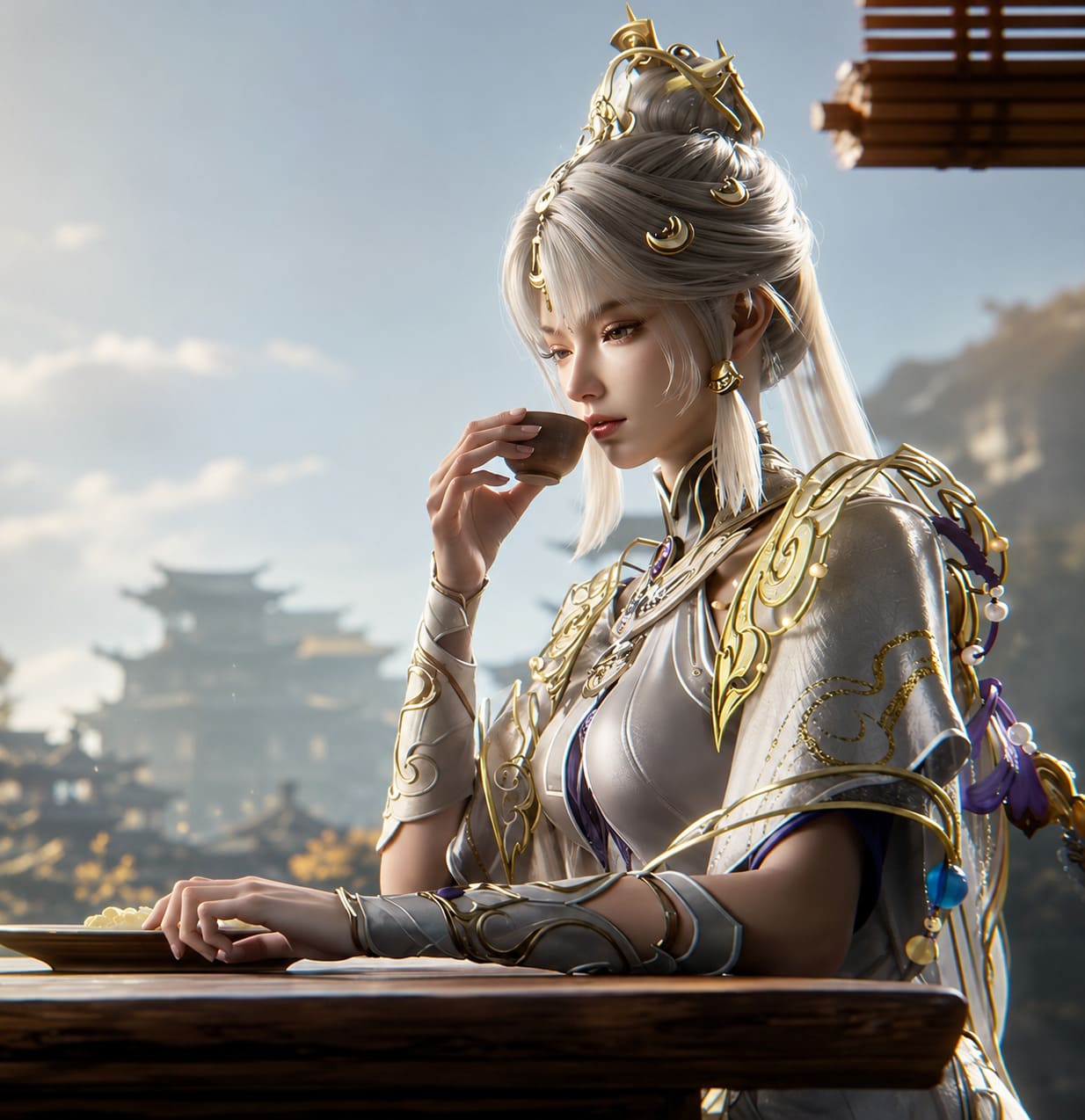
Some of the strongest design elements include:
- Star-themed clothing
- Celestial blue color palette
- Zodiac-inspired symbols
- Elegant animations
- Calm, calculated personality
Nothing about her feels randomly assembled. Every animation, effect, and cosmetic detail supports the idea that she understands fate before everyone else does.
That’s good character design.
Why Her Skills Feel So Different
Most Naraka heroes create advantages through direct aggression.
Tara Gan creates advantages through control.
Her regular ability gives her team breathing room while disrupting enemy momentum. Instead of encouraging reckless pushes, it rewards patience and coordinated positioning.
That’s especially valuable in ranked matches where one poorly timed engage can instantly lose the fight.
Her support capabilities also feel surprisingly active. You’re rarely standing around waiting for cooldowns.
Instead, you’re constantly evaluating the battlefield and asking whether it’s better to protect teammates or punish enemy mistakes.
That constant decision-making keeps the gameplay engaging.
The Ultimate Is the Real Game Changer
If there’s one ability everyone talks about, it’s her ultimate.
Time manipulation sounds incredibly overpowered on paper, yet in actual gameplay it creates fascinating strategic moments instead of guaranteed victories.
The ability can dramatically alter fights in several ways:
- Reset enemy positioning, forcing aggressive opponents back to an earlier location.
- Save teammates by restoring their previous combat state.
- Create comeback opportunities through revival mechanics.
- Punish overextension from players who dive too deeply into your formation.
What makes this interesting is that success depends heavily on timing.
Use it too early, and you’ve wasted one of the strongest cooldowns in the game.
Use it too late, and your teammate may already be beyond saving.
That’s a healthy kind of difficulty.
Why Team Composition Suddenly Matters More
Before Tara Gan, many ranked teams leaned heavily toward explosive initiation.
The goal was simple: burst one opponent immediately before the enemy squad could react.
That strategy still works—but now it’s much riskier.
Teams have to think twice before committing everything into a single target because Tara Gan can potentially undo the momentum they’ve spent several seconds creating.
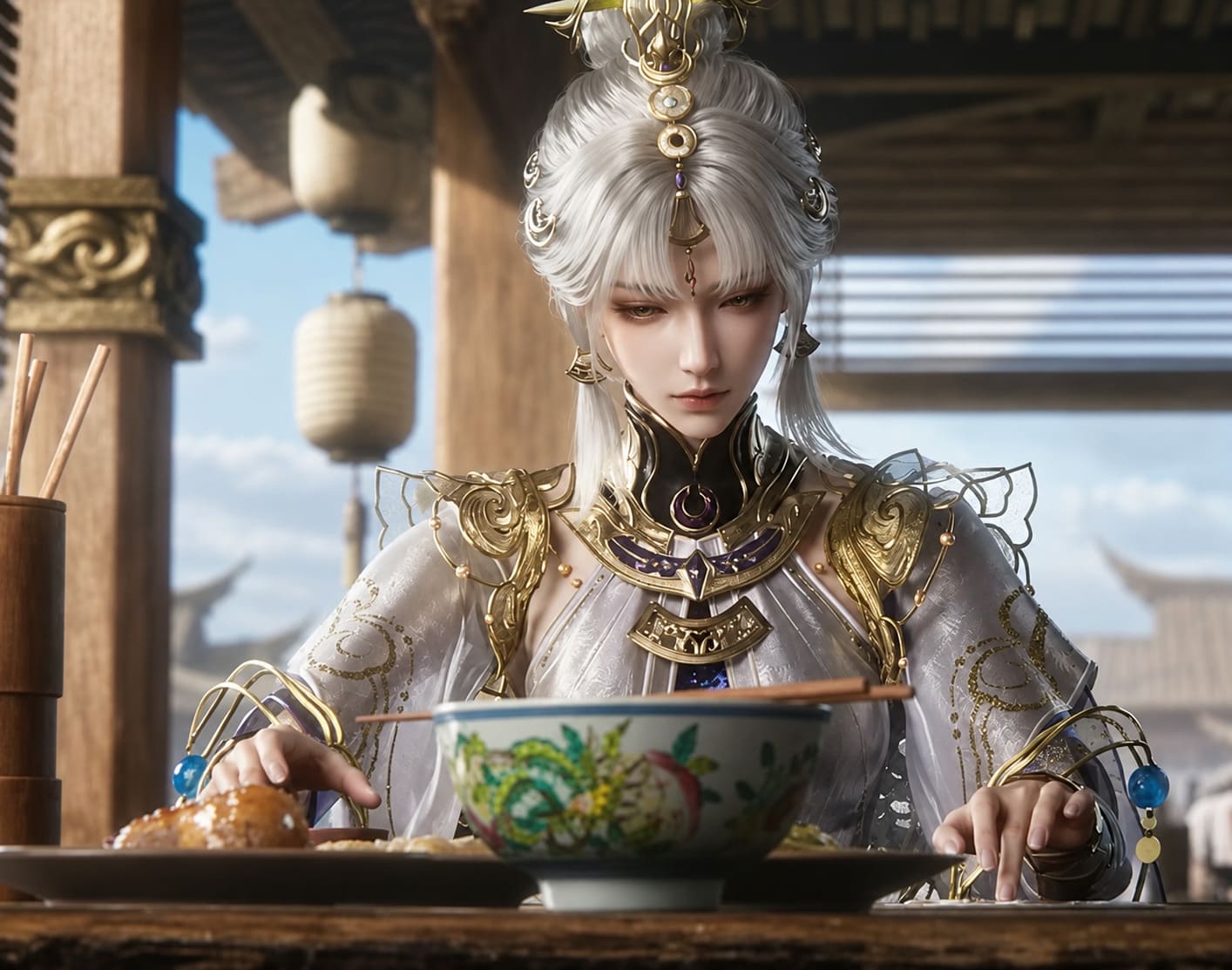
Instead of pure aggression, coordinated teams now value:
| Team Priority | Why It Matters |
|---|---|
| Positioning | Prevents unfavorable rewinds. |
| Communication | Helps maximize support timing. |
| Cooldown Tracking | Essential against Tara Gan’s abilities. |
| Target Focus | Reduces wasted damage. |
| Patience | Prevents reckless engagements. |
| Map Awareness | Improves defensive rotations. |
Personally, I think that’s a positive direction for the game.
Anything that rewards teamwork over blind aggression generally creates healthier competitive matches.
Solo Players Shouldn’t Ignore Her Either
It’s easy to assume Tara Gan exists only for Trio play.
I don’t completely agree.
While her support tools obviously shine in coordinated teams, Solo players have discovered some surprisingly creative applications.
Because enemies briefly lose momentum after certain time-based effects resolve, experienced players can capitalize with devastating weapon combos.
Weapons that benefit from predictable openings become even more dangerous, especially when opponents suddenly find themselves returned to an earlier position.
This doesn’t automatically make Tara Gan the strongest Solo character.
It simply means skilled players have another high-ceiling hero capable of rewarding intelligent decision-making.
The Community Seems Divided—And That’s Probably Healthy
Looking through community discussions, one trend becomes obvious.
Most players love the creativity.
Not everyone loves fighting against her.
That’s fairly common whenever a hero introduces mechanics that temporarily rewrite the normal rules of combat.
Some players argue she forgives positioning mistakes.
Others believe she finally gives defensive players meaningful tools against endless aggression.
Personally, I think both opinions have some truth behind them.
Yes, she can rescue teammates from situations that previously meant certain defeat.
But she also requires considerably more planning than many existing heroes.
Poor timing often turns a powerful ultimate into a completely wasted opportunity.
That naturally limits how dominant she can become outside experienced hands.
Learning Curve Is Much Higher Than It Looks
One mistake newer players often make is assuming Tara Gan is easy simply because she supports the team.
In reality, she might demand more awareness than many damage-focused heroes.
Playing her well requires understanding:
- Enemy movement patterns
- Team positioning
- Ultimate economy
- Cooldown management
- Fight pacing
- Future positioning rather than current positioning
Those aren’t skills you master after a few matches.
They’re developed through experience.
That’s exactly why high-level players continue discovering new applications for her abilities weeks after release.
Is She Overpowered?
This is probably the biggest question floating around Reddit and YouTube.
My answer?
Not necessarily.
She’s certainly powerful.
But powerful doesn’t automatically mean broken.
Most of her strongest moments require teammates who understand what she’s trying to accomplish.
Without communication, many opportunities simply disappear.
Likewise, experienced opponents quickly learn to bait cooldowns before committing to major engagements.
That’s usually a sign of solid hero design.
Characters that dominate regardless of player skill are unhealthy.
Characters that become exceptional only in skilled hands usually create a more rewarding competitive environment.
Naraka Bladepoint Myriad Season: Battle Pass Rewards, Wanchu Map, and 2026 Hero Tier List
Final Thoughts
Season 20 already had plenty of reasons to attract returning players, but Tara Gan easily stands out as its defining feature.
She introduces mechanics that feel genuinely fresh without abandoning the identity that has made Naraka: Bladepoint unique among battle royale games.
From her celestial lore to her battlefield presence, everything about the Astrologist feels carefully designed around strategy instead of spectacle alone.
Will balance adjustments happen in future patches?
Almost certainly.
That’s the nature of every competitive multiplayer game.
But regardless of future tuning, I think Tara Gan has already achieved something far more important.
She’s changed how players approach fights.
Instead of every engagement becoming a race to delete an opponent as quickly as possible, there’s now greater emphasis on prediction, positioning, teamwork, and smart decision-making.
For me, that’s exactly the kind of evolution Naraka needed. Heroes don’t have to deal the highest damage to become memorable. Sometimes all it takes is introducing a mechanic that makes everyone on the battlefield rethink their next move.