Diablo 4 Season 14 Surging Ruptures vs Colossal Ruptures: Endgame Difficulty Gap Guide
When I first stepped into Diablo 4’s Season 14, I assumed the new Pandemonium Ruptures would simply become another efficient farming activity. After dozens of runs, however, one thing became obvious: Surging Ruptures and Colossal Ruptures are not separated by a small increase in difficulty—they feel like two entirely different game modes.
I’ve seen plenty of players on forums claiming that if you can comfortably clear Surging Ruptures, you’re automatically ready for Colossal ones. From my experience, that’s simply not true. The first time I entered a Colossal Rupture with what I believed was a powerful build, I spent more time reviving than fighting.
That’s why I think understanding the difference between these activities is much more important than simply increasing your damage numbers. Season 14 rewards smart positioning, mobility, and defensive planning far more than previous seasonal content.
The Jump Is Bigger Than Most Players Expect
Surging Ruptures work perfectly as a bridge between standard Helltide farming and true endgame content.
You’ll already be collecting resources, killing large enemy packs, and sealing Tears while moving through familiar areas. The pacing feels natural, and even if your build isn’t perfectly optimized, you can usually recover from small mistakes.
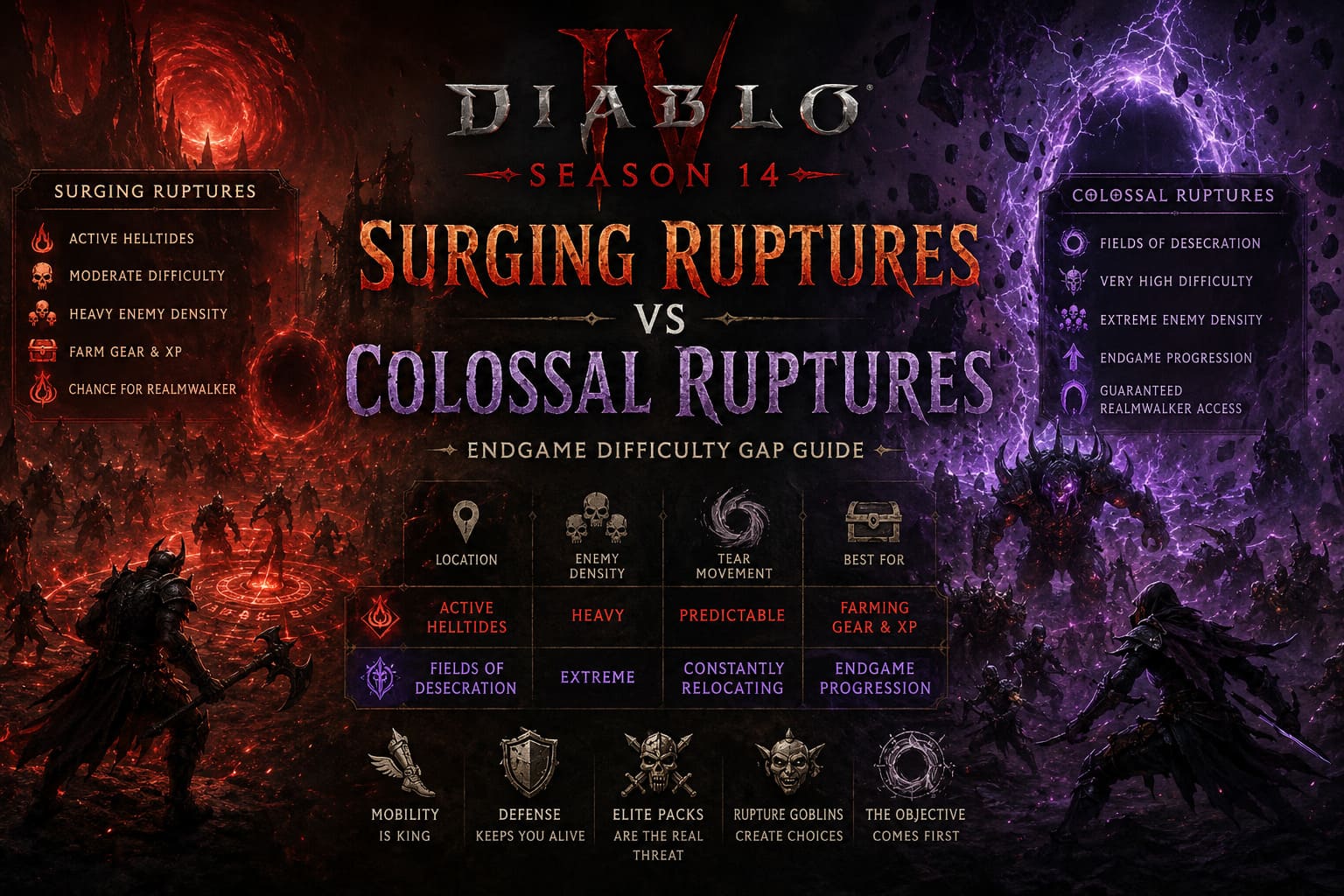
Colossal Ruptures completely remove that safety net.
Instead of gradually introducing pressure, they immediately throw overwhelming enemy density, relentless elite combinations, and constantly shifting objectives at you. Everything happens faster than expected, and the margin for error becomes incredibly small.
For me, that sudden change is what makes Season 14 feel refreshing instead of repetitive.
Comparing Both Activities
| Feature | Surging Ruptures | Colossal Ruptures |
|---|---|---|
| Location | Active Helltides | Fields of Desecration |
| Difficulty | Moderate | Very High |
| Enemy Density | Heavy | Extreme |
| Tear Movement | Mostly predictable | Constantly relocating |
| Best For | Farming gear and experience | Endgame progression |
| Main Reward | Chance for Realmwalker | Guaranteed Realmwalker access |
Looking at the table, the differences seem straightforward.
Once you’re actually inside the event, though, the gameplay changes far more dramatically than the numbers suggest.
Mobility Suddenly Becomes Your Strongest Stat
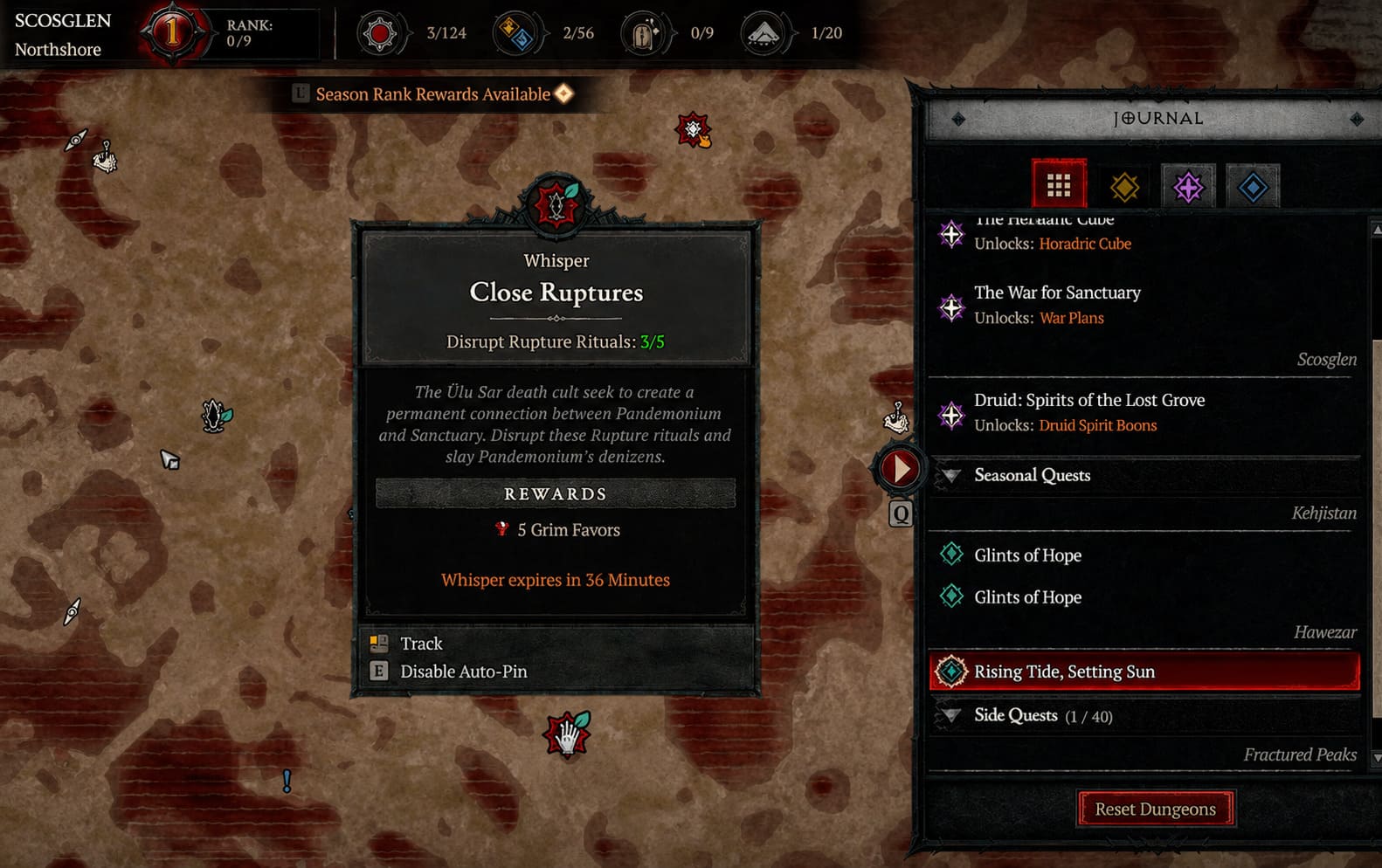
One lesson Season 14 taught me is that movement can sometimes be more valuable than raw damage.
During Surging Ruptures, stationary builds still have plenty of opportunities to shine. You can establish your damage zone, rotate cooldowns, and comfortably eliminate incoming enemies while staying inside the ritual circle.
Colossal Ruptures completely destroy that rhythm.
The active Tears relocate constantly, forcing you to abandon comfortable positions over and over again. If you’re too slow reaching the next objective, progress disappears almost immediately.
Instead of asking yourself:
“How much damage can my build produce?”
The better question becomes:
“Can my character reach every new objective without falling apart?”
That subtle shift completely changes how I evaluate builds this season.
Defensive Stats Matter More Than Ever
Many players continue focusing almost entirely on offensive upgrades.
That strategy works surprisingly well during Surging Ruptures because monsters rarely punish every mistake.
Colossal Ruptures are another story.
Large elite groups often combine multiple dangerous modifiers simultaneously. One second you’re dealing with suppressors, the next you’re standing inside overlapping explosions while ranged enemies attack from every direction.
Without proper survivability, even excellent mechanical play won’t save you forever.
The priorities I found most valuable include:
- High maximum Life
- Armor reaching effective caps
- Capped elemental resistances
- Reliable Damage Reduction
- Consistent healing or barrier generation
Once those foundations are established, increasing damage becomes significantly more rewarding because you’ll actually stay alive long enough to use it.
Elite Packs Become the Real Bosses
Ironically, I don’t think the final encounter is the hardest part of Colossal Ruptures.
The elite waves are.
Instead of isolated dangerous enemies, Blizzard packs numerous elites into relatively small spaces, creating situations where several mechanics overlap at once.
You’ll often encounter combinations that include:
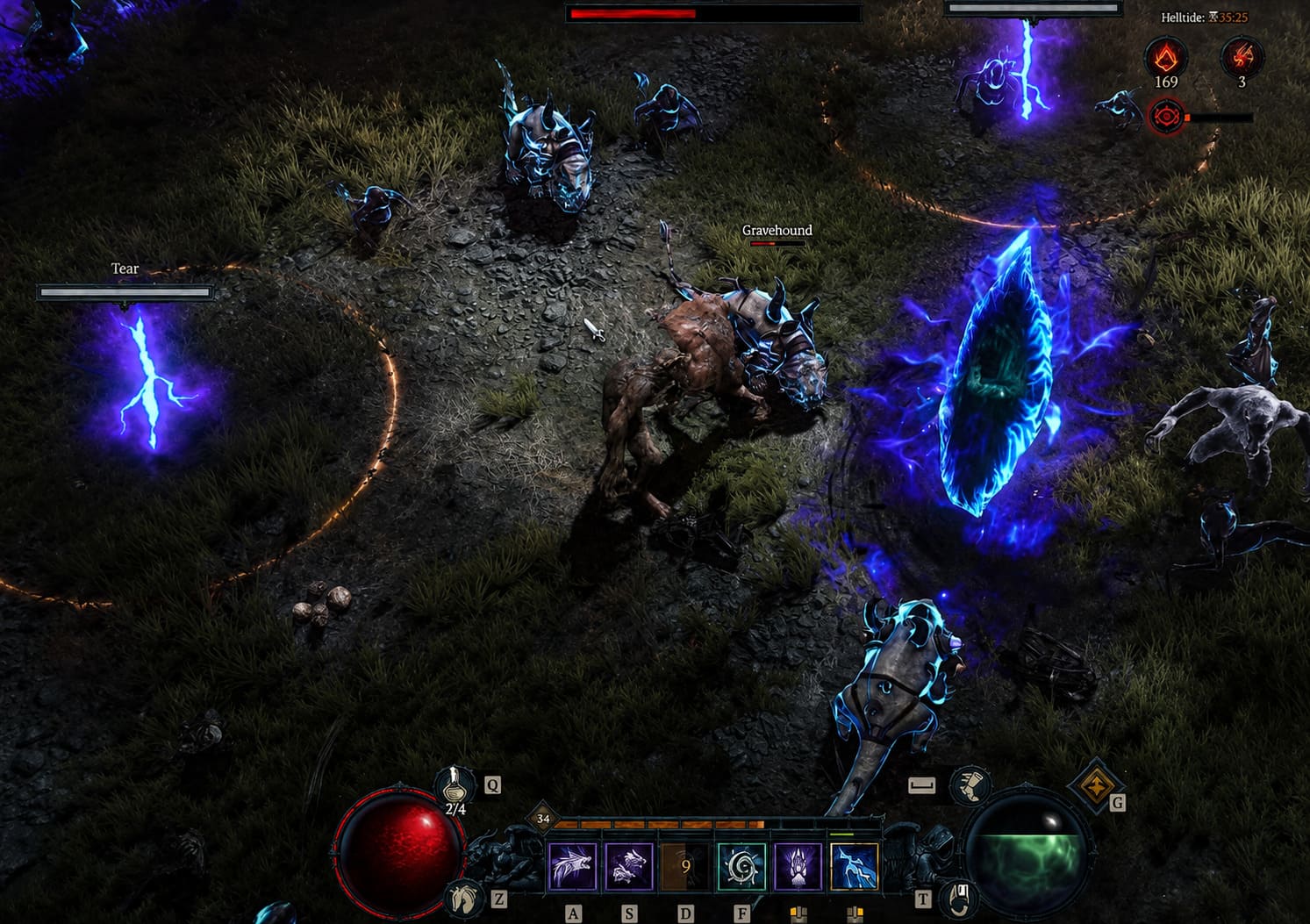
- Area denial effects
- High burst melee attacks
- Persistent ranged pressure
- Crowd control chains
- Environmental hazards
Trying to tunnel vision a single target almost always ends badly.
Learning when to reposition is just as important as learning your damage rotation.
Rupture Goblins Create Interesting Decisions
One feature I genuinely enjoy is the way Rupture Goblins affect decision-making.
Normally, loot goblins are simple.
See goblin.
Chase goblin.
Collect rewards.
Season 14 complicates that formula.
Inside Colossal Ruptures, chasing one often means leaving the active ritual zone, potentially risking event progress while dozens of enemies continue attacking.
That creates meaningful choices rather than automatic ones.
Sometimes securing additional crafting materials is worth it.
Other times, staying inside the objective is clearly the smarter play.
I actually appreciate this design because it forces players to think instead of reacting automatically.
Which Classes Adapt Best?
Although nearly every class can complete Colossal Ruptures with enough investment, some definitely feel more natural.
- Barbarian remains incredibly comfortable thanks to outstanding durability, mobility options, and reliable sustained damage.
- Druid also transitions smoothly, especially builds that naturally combine movement with wide-area damage.
- Rogue can absolutely dominate events in skilled hands, but mistakes become extremely expensive because of lower survivability.
- Sorcerer probably experiences the biggest adjustment. Builds that dominate stationary encounters often need to rethink both positioning and defensive layering before they become truly comfortable inside Colossal content.
The gap isn’t necessarily about class balance.
It’s about how easily each class adapts to constantly moving objectives.
My Biggest Advice for New Players
If you’re consistently succeeding in Surging Ruptures, resist the temptation to jump immediately into Colossal runs expecting similar results.
Instead, spend some time improving your overall character.
Focus on:
- Better defensive affixes
- Improved movement speed
- Cooldown reduction
- Higher-quality Ancestral equipment
- More complete Paragon optimization
These improvements make a far larger difference than squeezing another small percentage of damage from your build.
The Objective Comes Before the Kill Counter
One mistake I repeatedly noticed—both from random groups and from my own early attempts—was treating Colossal Ruptures like another monster-clearing event.
They’re not.
The objective is sealing Tears.
Enemies exist primarily to prevent you from doing exactly that.
Once I stopped chasing every elite pack and instead prioritized reaching each active ritual immediately, my completion rate increased dramatically.
It’s a surprisingly simple adjustment that changes the entire flow of the encounter.
Diablo 4 A Gospel of Despair Guide: Full Season of Death Awakening Walkthrough
Are Colossal Ruptures Worth Farming?
Personally, I think yes.
They’re stressful.
They’re occasionally frustrating.
Sometimes they feel completely overwhelming.
But they also provide something Diablo 4 has occasionally struggled to deliver: genuine tension.
Instead of mindlessly deleting enemies while barely paying attention, you’re constantly making decisions about movement, survival, cooldown management, and target priority.
Every successful completion actually feels earned.
That’s something I can’t honestly say about every seasonal activity we’ve received over the years.
Diablo 4 Mythic Uniques 3.0 Crafting & Enchanting Guide: Master Your End-Game Gear
Final Thoughts
After spending a significant amount of time with Diablo 4 Season 14, my opinion is that Blizzard succeeded in creating an activity that finally separates routine farming from genuine endgame mastery.
Surging Ruptures remain an excellent place to gather gear, gain experience, and prepare your character. They’re exciting without becoming exhausting and fit naturally into regular Helltide sessions.
Colossal Ruptures, however, demand a completely different mindset. They reward preparation far more than aggression and expose every weakness in a character build almost immediately. Mobility, survivability, and intelligent objective management become far more valuable than simply chasing bigger critical hits.
If you’re planning to push deep into Season 14, don’t treat Colossal Ruptures as just “harder Surging Ruptures.” Approach them as a separate challenge entirely. Once your build reaches the necessary defensive benchmarks and you learn to prioritize the moving Tears over endless monster slaying, these encounters transform from frustrating roadblocks into some of the most satisfying endgame content Diablo 4 has offered in a long time.