Resident Evil May Finally Head to Japan – What It Means for the Future of the Franchise
As someone who has spent years deep in the Resident Evil universe—replaying classic survival horror moments at night, breaking down lore theories, and getting lost in the franchise’s evolving identity—this latest Capcom rumor actually feels bigger than it first appears.
The idea of a Resident Evil game finally being set in Japan is not just another fan theory cycle. It feels like a long-delayed creative direction that the series has been quietly building toward for decades.
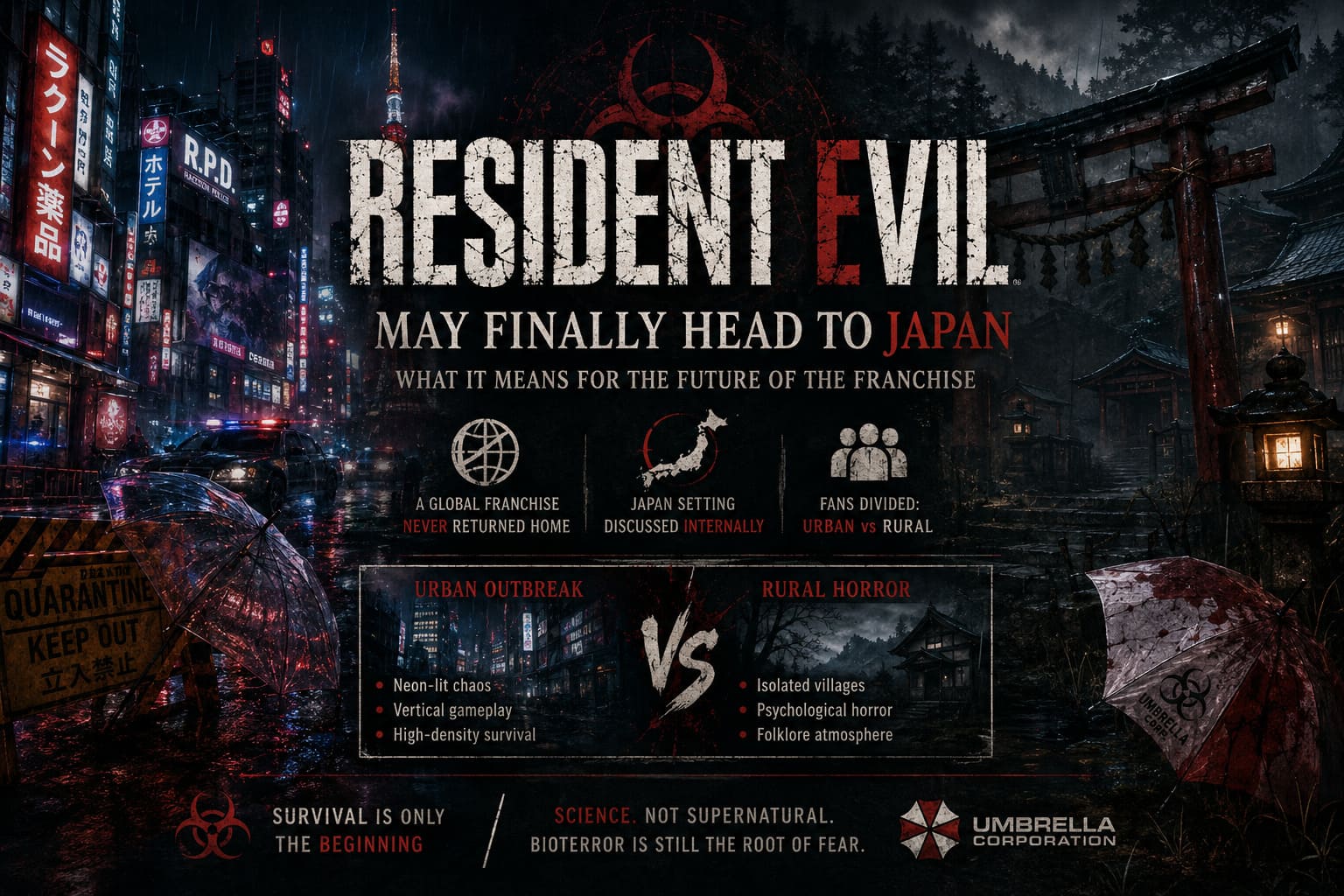
And now, thanks to comments from Capcom producer Masato Kumazawa, the possibility is no longer just speculation—it feels like something actively being considered inside Capcom itself.
A Global Franchise That Has Never Returned Home
Resident Evil, known as Biohazard in Japan, is one of the most successful survival horror franchises ever created. Ironically, despite being developed in Japan, the series has rarely, if ever, placed Japan at the center of its mainline stories.
Instead, players have explored outbreak zones across the world:
- Abandoned American cities like Raccoon City
- European rural nightmares such as Resident Evil Village
- Industrial and laboratory environments tied to global corporations
- Fictional megacities inspired by Asia in RE6
Yet Japan itself has remained absent as a core playable setting. For longtime fans, that absence has always felt intentional—almost like Capcom was saving it for a major milestone.
Clutch Open World Racing Game First Look
The Kumazawa Interview That Sparked Everything
The current wave of speculation began when Masato Kumazawa mentioned in an interview that a Japan setting has been discussed internally within Capcom.
While nothing was officially confirmed, the wording was enough to ignite the community. He acknowledged that both developers and fans have thought about the idea, and that it could realistically happen in the future without breaking the series identity.
That final part is especially important because Resident Evil rarely makes drastic shifts without careful planning.
Key Takeaways from the Statement
- Japan setting has been considered internally by developers
- Fan demand for the idea has existed for years
- The franchise could evolve geographically without losing its core identity
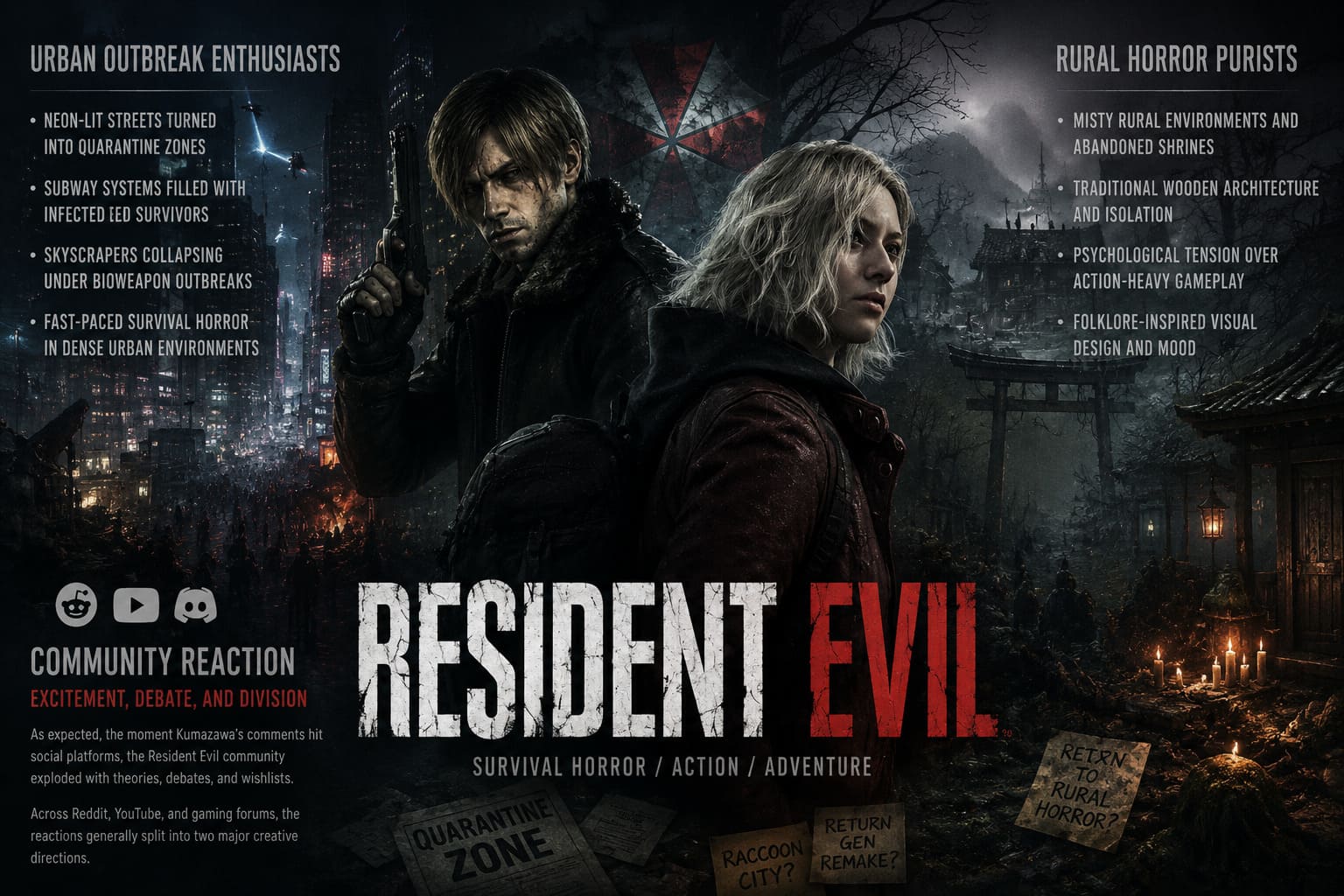
Community Reaction: Excitement, Debate, and Division
As expected, the moment Kumazawa’s comments hit social platforms, the Resident Evil community exploded with theories, debates, and wishlists.
Across Reddit, YouTube, and gaming forums, the reactions generally split into two major creative directions.
Urban Outbreak Enthusiasts
This group wants a modern, high-density city outbreak set in places like Tokyo or Osaka. Their vision focuses on chaos, vertical gameplay, and large-scale destruction.
- Neon-lit streets turned into quarantine zones
- Subway systems filled with infected survivors
- Skyscrapers collapsing under bioweapon outbreaks
- Fast-paced survival horror in dense urban environments
Rural Horror Purists
On the opposite side, some fans want a return to slow, atmospheric horror in isolated Japanese villages and mountain regions.
- Misty rural environments and abandoned shrines
- Traditional wooden architecture and isolation
- Psychological tension over action-heavy gameplay
- Folklore-inspired visual design and mood
Urban vs Rural Horror Design Comparison
| Style | Concept | Strength | Risk |
|---|---|---|---|
| Urban Tokyo Outbreak | Modern city consumed by bioweapons | High energy, vertical gameplay, modern visuals | May feel similar to past action-heavy entries |
| Rural Japanese Horror | Isolated village with psychological horror tone | Strong atmosphere and tension building | Already explored in other horror franchises |
The Biggest Challenge: Keeping Resident Evil Grounded
One of the defining traits of Resident Evil is that it never truly embraces supernatural horror. Even its most extreme creatures are always explained through science.
Whether it’s viruses, parasites, fungi, or experimental biotech, everything eventually ties back to biological experimentation rather than mythology.
If Capcom introduces Japan-inspired enemies, they will likely need to reinterpret folklore through a scientific lens.
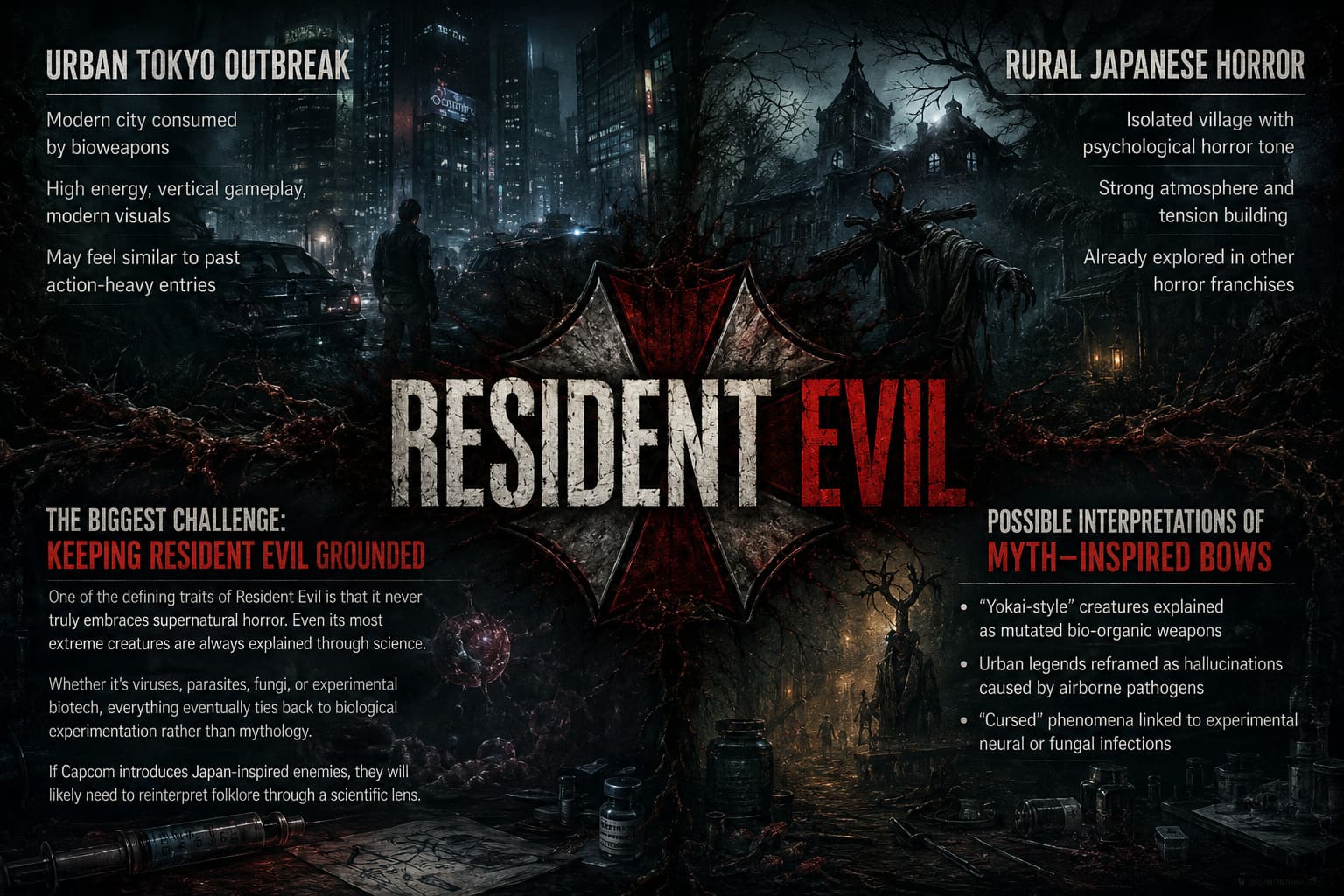
Possible Interpretations of Myth-Inspired BOWs
- “Yokai-style” creatures explained as mutated bio-organic weapons
- Urban legends reframed as hallucinations caused by airborne pathogens
- “Cursed” phenomena linked to experimental neural or fungal infections
Why This Timing Actually Makes Sense
Looking at Capcom’s current pipeline, the timing of this rumor is surprisingly logical.
The franchise is entering a transitional phase after Resident Evil Requiem, while multiple remakes like Code Veronica and Resident Evil Zero are expected to keep players engaged.
This creates a window where Capcom can experiment with bold ideas without risking the core fanbase.
A Japan setting could easily appear in several forms:
- A full mainline Resident Evil 10 concept
- A spin-off testing new gameplay ideas
- A narrative branch exploring Umbrella Japan remnants
Personal Take as a Longtime Player
From a player’s perspective, this is one of the most interesting directional possibilities the franchise has had in years.
Resident Evil has always been about taking familiar spaces and turning them into survival nightmares. And Japan is one of the richest environments Capcom has never fully explored in the main series.
Whether it becomes a neon-drenched urban outbreak or a quiet rural horror story, the potential is enormous—but so are the risks.
If Capcom plays it too safe, it will feel like just another location swap. If they push too far into experimentation, they risk losing the identity that defines Resident Evil in the first place.
Final Thoughts
Nothing is officially confirmed yet, and everything remains in the realm of developer discussion and community interpretation.
But moments like this usually matter in hindsight. When a franchise as established as Resident Evil starts openly discussing entirely new geographic directions, it often signals that something is already in motion behind the scenes.
If Japan really does become the next major setting, it could mark one of the most important evolutions in the history of survival horror gaming.