Fable’s Styleweaving Combat System Explained From a Player’s Perspective
After spending years jumping between action RPGs—from methodical soulslikes to flashy hack-and-slash titles—I’ve learned to spot when a combat system is genuinely evolving and when it’s just marketing dressing.
The upcoming Fable reboot, developed by Playground Games, sits in a very interesting space. It’s trying to modernize a beloved classic while also competing with today’s giants of the genre.
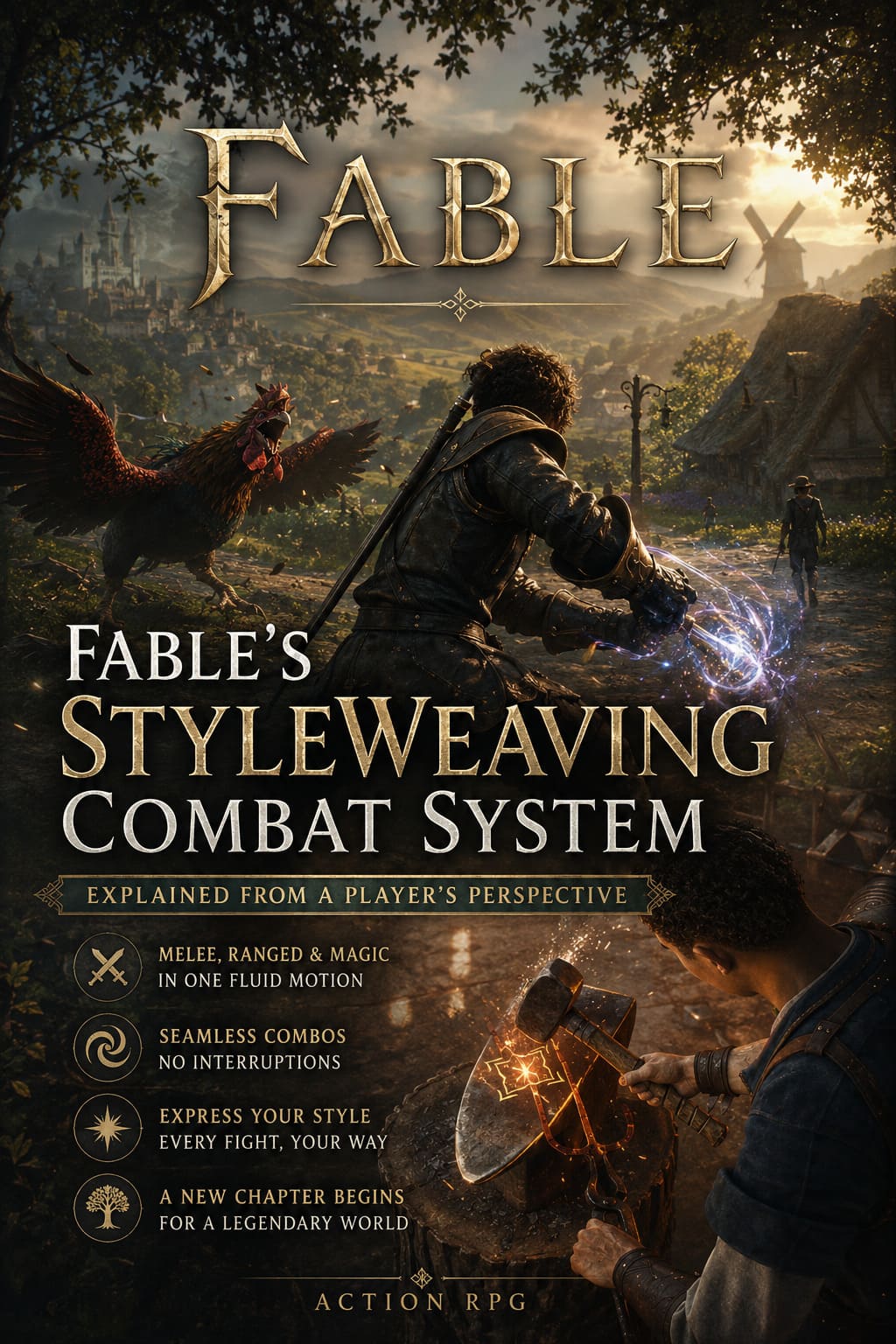
At the center of this ambition is the new combat philosophy often referred to as styleweaving. And after going through all the available footage, breakdowns, and developer insights, I can honestly say: this is one of the more intriguing combat redesigns I’ve seen in years.
Fable is clearly not trying to be a nostalgia trap. It’s trying to redefine how fluid combat feels in an open-world RPG.
How to Fix Space Haven Black Screen on Launch: 2026 Guide
First Impressions: A Combat System Built for Flow, Not Friction
Most RPGs—even the great ones—still suffer from “interrupt moments.” You swing a sword, then pause to cast a spell, then awkwardly swap to a bow. That pause breaks immersion more than players often admit.
What styleweaving is trying to remove is exactly that friction.
From what we’ve seen, the idea is simple on paper but ambitious in execution: melee, ranged, and magic are not separate systems anymore—they are one continuous motion loop.
As someone who has played everything from The Witcher 3 to Devil May Cry 5, I immediately recognize what this is aiming for: a hybrid between tactical RPG structure and character-action fluidity.
But Fable isn’t just copying that formula—it’s trying to “soften” it for a broader RPG audience.
What Styleweaving Actually Feels Like (In Theory)
If I translate the system into player experience rather than design language, it would feel something like this:
- You start a melee combo
- Instead of ending it, you branch into a ranged attack mid-motion
- Then instantly transition into a spell without resetting animation flow
- The entire sequence reads as one uninterrupted combat sentence
This is where styleweaving becomes more than a mechanic—it becomes a rhythm system.
Lucia in GTA 6: Why This Feels Like a New Era for Rockstar
The goal isn’t just efficiency. It’s expression.
In older Fable games, combat identity was tied to separate “paths”: Strength, Skill, and Will. They worked, but they rarely interacted smoothly.
Now those boundaries seem intentionally blurred.
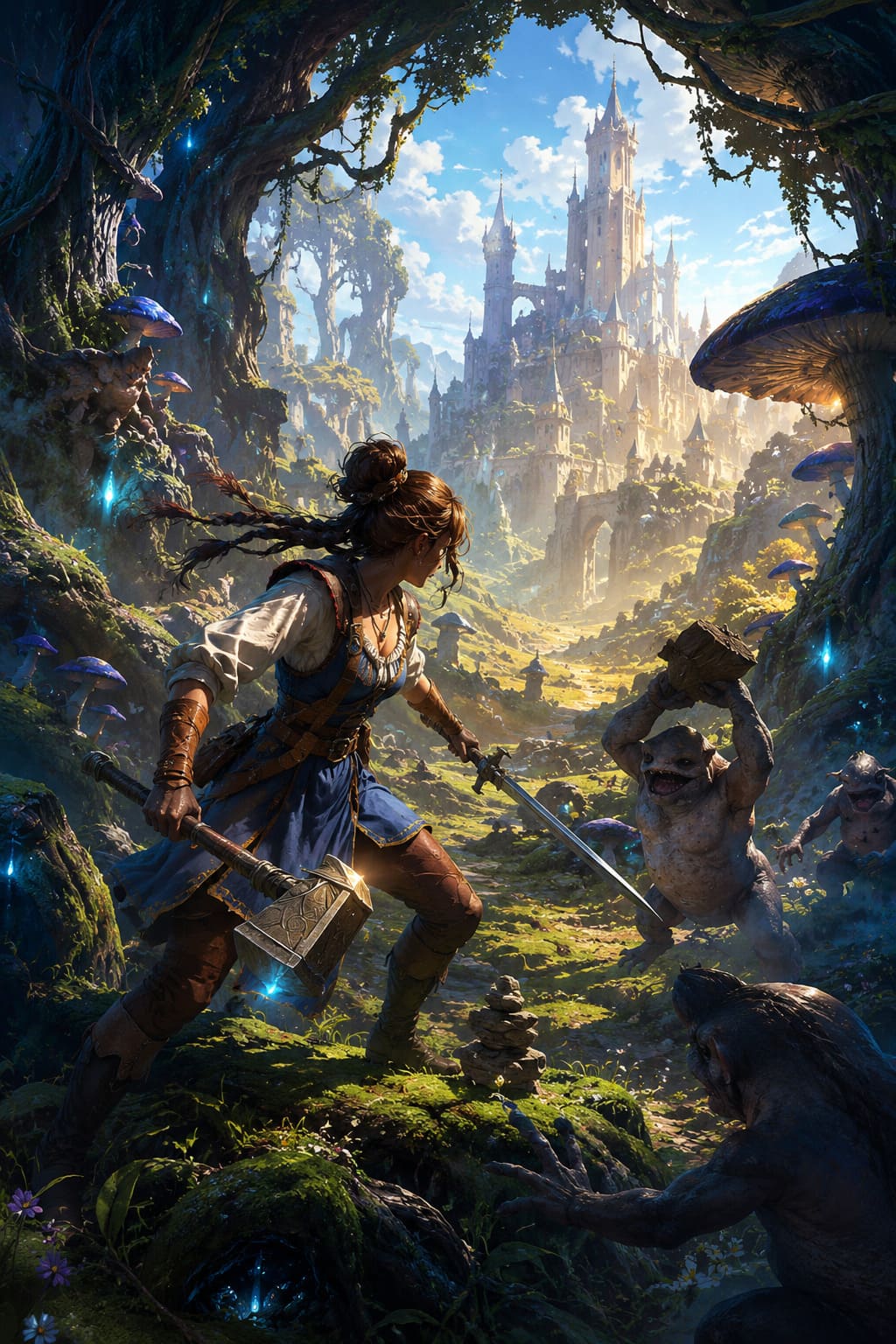
Old vs New Combat Philosophy
| Feature | Classic Fable Combat | Styleweaving System |
|---|---|---|
| Combat Structure | Separated abilities | Fully blended actions |
| Weapon Switching | Manual, interruptive | Seamless integration |
| Magic Usage | Standalone spells | Combo-driven magic flow |
| Player Expression | Class-based identity | Hybrid combat identity |
| Combat Rhythm | Stop-start cycles | Continuous motion loop |
This is the biggest philosophical shift: the game no longer asks “what are you playing?” but instead “how creatively can you fight in this moment?”
Why the System Feels Promising (and Risky)
As someone who has seen dozens of “revolutionary combat systems” come and go, I try to stay skeptical. But styleweaving does have real strengths—at least conceptually.
What Excites Me
- No more dead air between actions
- Combos feel like improvisation instead of memorization
- Encourages experimentation instead of fixed builds
- Makes magic feel like part of combat, not a separate mode
- Better synergy between melee, ranged, and spellcasting
The biggest win here is psychological. When combat flows smoothly, players feel more powerful even if numbers haven’t changed.
But There Are Real Risks
- If animations are too scripted, freedom becomes illusion
- Balancing hybrid builds is extremely difficult
- Combat readability might suffer in chaotic fights
- Could overwhelm casual players with too many options at once
I’ve seen systems like this before in smaller-scale games, and they often struggle with clarity under pressure. If Fable pulls it off at scale, it will genuinely be impressive.
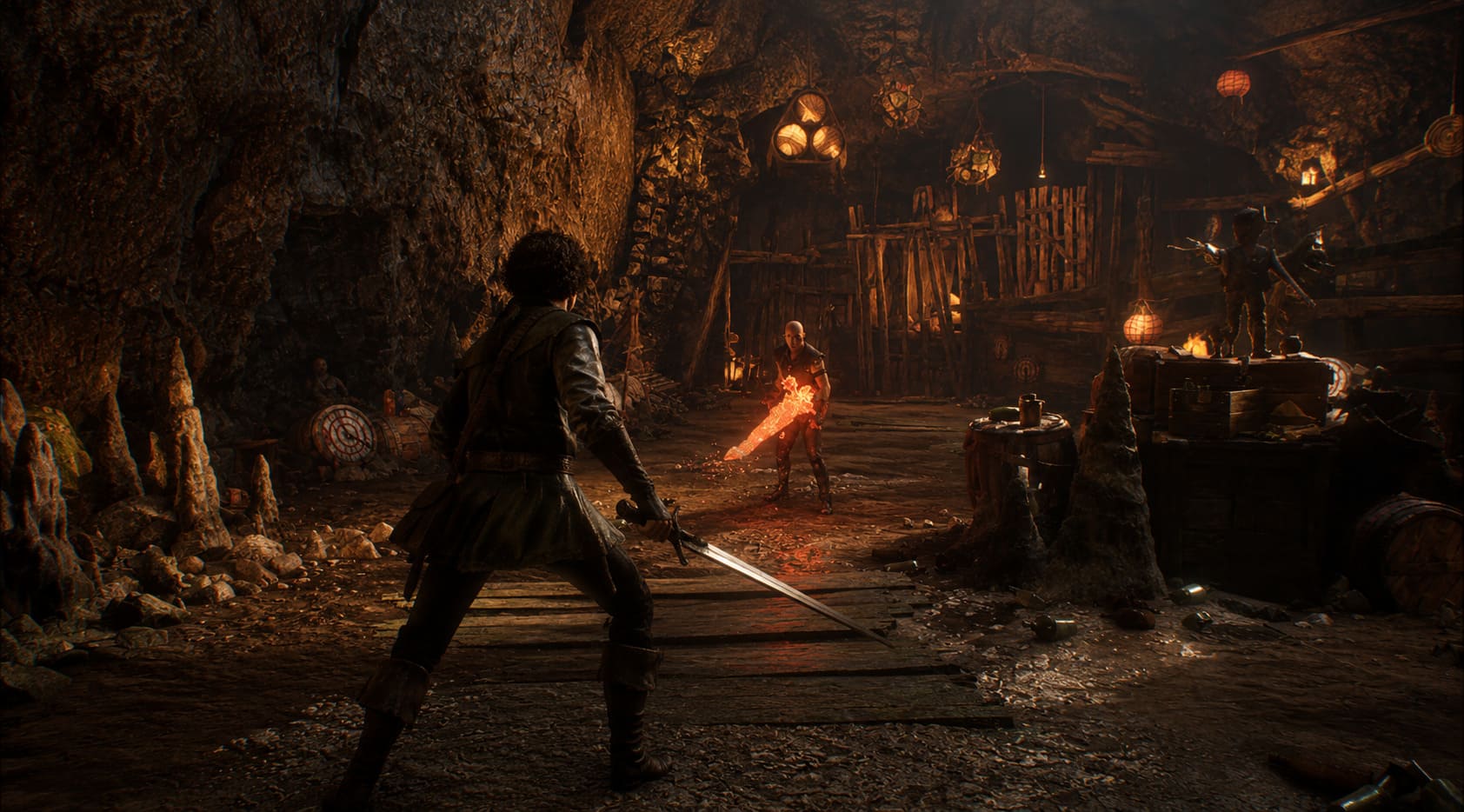
Magic Isn’t a Side Tool Anymore
One of the most interesting design shifts is how magic is being treated.
Instead of being a “spell mode,” it now functions like a combat catalyst.
In practical terms, magic is no longer something you switch to—it’s something you inject into your actions.
Spells can interrupt enemy movement, modify positioning mid-combo, launch enemies into follow-up attacks, and control battlefield spacing dynamically.
This turns magic into momentum control rather than raw power delivery.
Combat Built Around Situations, Not Rotations
Encounters are designed as layered problems rather than predictable patterns. Heavy enemies force close combat adaptation, ranged attackers punish static positioning, agile units demand constant movement, and magical enemies disrupt timing.
The system actively pushes players away from single-style gameplay and toward improvisation.
This is where the design feels modern. It’s not about repeating rotations—it’s about reacting.
Where Fable Might Actually Stand Out
If I had to summarize what sets this system apart from other RPGs, it’s this:
- It is not class-based
- It is not weapon-based
- It is not cooldown-driven
Instead, it is moment-driven combat design.
That’s rare in open-world RPGs, which usually prioritize accessibility over mechanical depth.
A Veteran Gamer’s Honest Take
After years of playing everything from slow tactical RPGs to hyper-fast action games, my expectations are measured.
If styleweaving works, it could redefine how AAA RPG combat feels. If it partially works, it will still be one of the most interesting systems in years. If it fails, it will likely fall back into “cool but shallow” territory.
The difference will come down to execution, not concept.
Because the concept itself is strong.
Final Thoughts
The biggest promise of styleweaving isn’t complexity—it’s freedom. It removes rigid boundaries between combat styles and replaces them with continuous motion where every action feeds the next.
For a franchise known for charm and accessibility, this is a bold direction.
Whether it becomes a genre-defining system or just an ambitious experiment, it already pushes RPG design conversations forward.
And honestly, that alone makes it worth watching closely.