No Man’s Sky 2026 Roadmap: Next Major Updates and Cosmos 7.0 Overhaul Explained
There was a time when mentioning No Man’s Sky meant bringing up one of the biggest launch controversies in modern gaming. In 2016, Hello Games promised a gigantic science-fiction universe, and what players received at launch felt painfully smaller than the dream many had imagined.
Ten years later, that conversation feels almost surreal.
No Man’s Sky has become one of those rare games where the comeback story is arguably more interesting than the original launch. Hello Games kept adding systems, rebuilding old mechanics, expanding planets, introducing new ways to explore, and doing it without turning the game into a traditional paid live-service product.
And now, in 2026, the studio has taken another huge swing.
The Cosmos 7.0 update doesn’t simply add another expedition or a handful of new cosmetics. It attempts to fix one of the oldest weaknesses of No Man’s Sky: space itself.
After spending so much time exploring the planets, collecting resources, building bases, and upgrading ships, I always felt that the actual space between those destinations was strangely underused. Cosmos finally seems determined to change that.
If you have been away from No Man’s Sky for a while, the No Man’s Sky 2026 roadmap is probably the best excuse yet to come back.
The 2026 Roadmap Is Surprisingly Ambitious
Hello Games has never been the studio I would trust to give us a traditional five-year roadmap with every update neatly labeled six months in advance. That’s part of the charm.
The studio’s development rhythm has usually been much more mysterious. A cryptic message from Sean Murray appears, speculation explodes across Reddit, and then suddenly a major update is sitting in front of everyone.
The 2026 roadmap followed that familiar philosophy, but the scale of the changes made this year feel different.
Here is the basic progression:
| Update | Release | Main Focus |
|---|---|---|
| Remnant 6.20 | February 11, 2026 | Physics And Exocraft |
| Xeno Arena 6.30 | April 8, 2026 | Creature Battles |
| The Swarm 6.40 | May 27, 2026 | Factions And Planetary Defense |
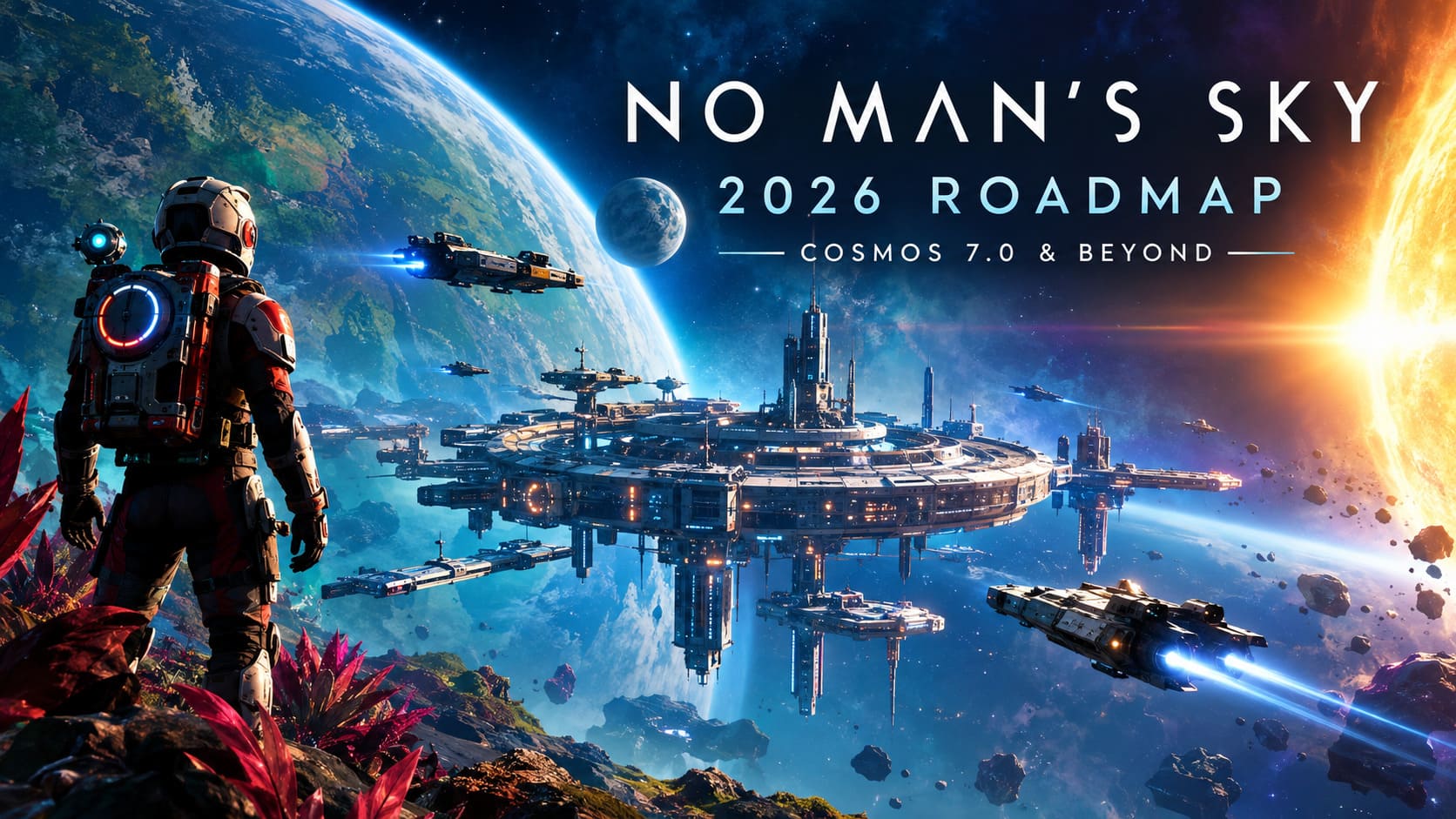
| Cosmos 7.00 | September 9, 2026 | Space Overhaul And Stations |
What I like about this progression is that each update attacked a different part of the game. Instead of simply throwing more planets or items into the universe, Hello Games kept experimenting with the actual gameplay structure.
And that becomes especially obvious when you look at Cosmos.
Remnant Made the Universe Feel More Physical
The first major 2026 update, Remnant, introduced the Gravitino Coil, and honestly, this is the kind of weird mechanic I love seeing in No Man’s Sky.
The idea was simple but potentially transformative: players could interact with large environmental objects using an anti-gravity multi-tool module.
You could lift, move, carry, and fling objects around the environment.
That might sound like a novelty at first. It isn’t.
Once you give players physical control over objects in a procedural world, suddenly the environment becomes more than scenery. It becomes something you can actually manipulate.
That opens the door for environmental puzzles, improvised combat strategies, resource handling, and plenty of completely ridiculous situations that probably weren’t planned by the developers.
And let’s be honest, those unpredictable moments are part of what makes No Man’s Sky special.
Remnant also gave the Colossus exocraft some serious attention. The machine became considerably more useful for heavy exploration, with improved traction, scanning equipment, and industrial processing capabilities.
For builders, the update also expanded the industrial construction catalog. Toxic and radioactive planets suddenly became much more appealing locations for creating sprawling factories, processing facilities, and salvage operations.
Xeno Arena Finally Gave Creatures More Purpose
Then came Xeno Arena, an update that targeted one of the game’s most underused systems: companions.
Creature collecting has been part of No Man’s Sky for years, but there was always a feeling that these animals could do more than simply follow you around.
Xeno Arena pushed that idea much further.
Players could train their creatures, experiment with different diets and activities, and eventually enter them into battles through the new Arena League system.
This is probably the most unexpected direction Hello Games could have taken the companion system.
Instead of simply making creatures prettier or adding more genetic variations, the update turned them into something approaching a secondary progression system.
Specialized training, rare genetic modifiers, competitive rankings, and multiplayer battles gave collectors an actual reason to care about the creatures they found.
And yes, it does sound a little bit like Pokémon in space.
But considering how long players have been asking for deeper companion mechanics, I’m not exactly complaining.
The Swarm Turned the Galaxy Into a Community Event
If Remnant was about physical interaction and Xeno Arena was about creatures, The Swarm went in a completely different direction.
This update introduced the mysterious Hive of Glass, enormous crystalline structures appearing above planets and creating a new threat that could be seen from orbit.
The visual concept alone sounds fantastic.
For a game built around exploration, there’s something incredibly effective about looking up into the sky and realizing that something enormous and hostile has appeared above the world you’re standing on.
The Swarm also introduced three player factions through an interactive personality test. Players were then encouraged to cooperate with members of their faction while competing against the others through a large-scale community event.
This added something No Man’s Sky doesn’t always emphasize enough: social identity.
You weren’t simply another traveler passing through a procedural galaxy. You had a side.
Planetary defense missions, crystalline outposts, atmospheric battles, and global contribution rankings helped turn the update into something the community could participate in together.
From a gameplay perspective, I think this was an important experiment because it showed that No Man’s Sky doesn’t necessarily need traditional PvP to create competition. Give players factions, objectives, rankings, and a reason to cooperate, and the community will create the rivalry themselves.
Cosmos 7.0 Is the Update That Changes the Formula
And then we arrive at Cosmos 7.0.
This is where the 2026 roadmap stops feeling like a collection of ambitious updates and starts looking like a genuine redesign of how No Man’s Sky handles space.
For years, planets were where most of the interesting things happened.
Space was often the transition.
You launched from a planet, flew through space, warped somewhere else, entered another atmosphere, and started exploring again.
Cosmos flips that relationship.
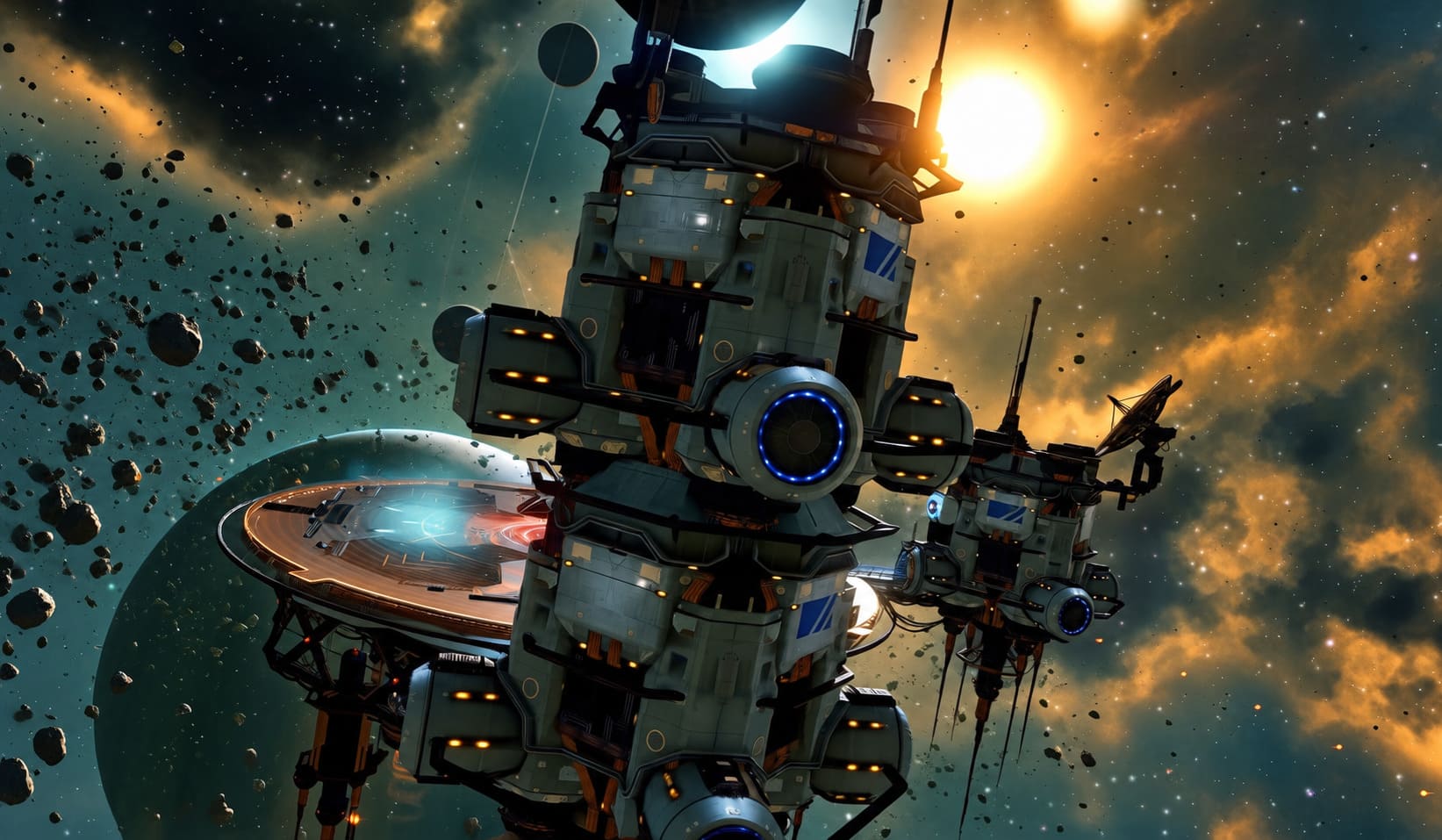
Players can now expect considerably more reasons to remain in space, explore orbital locations, customize stations, and search for opportunities that exist far away from planetary surfaces.
Space Stations Become Player-Owned Bases
The headline feature is easily space station ownership.
Players can now acquire and customize their own stations, transforming them from static locations into enormous personal bases.
But Hello Games apparently didn’t make ownership completely effortless.
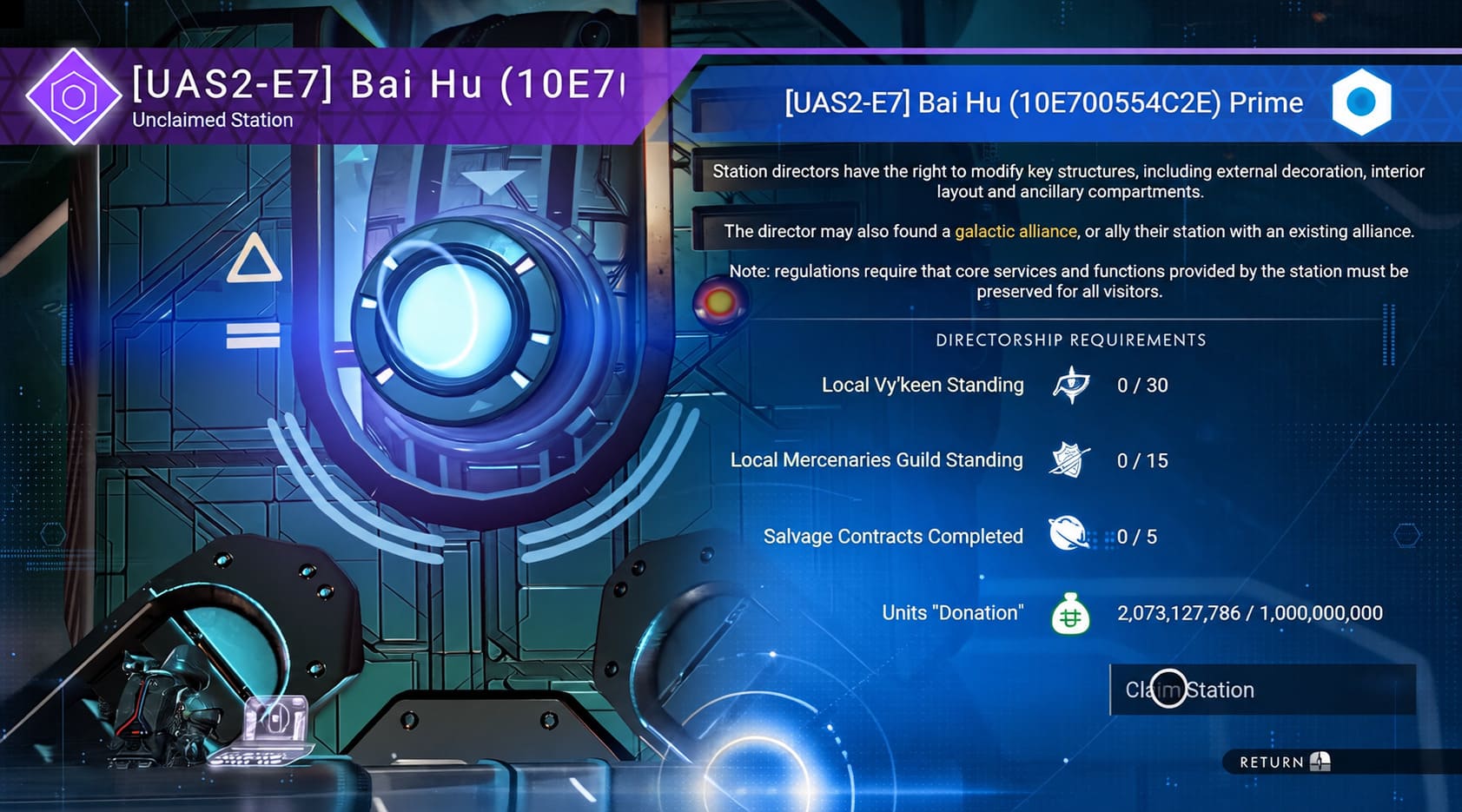
Players have to complete faction-related missions, contribute industrial resources, and pay a massive 1 billion unit fee to the local overseer.
At first glance, one billion units sounds absurd.
But I actually think that’s the point.
Veteran No Man’s Sky players eventually reach a stage where money stops meaning much. Once you’ve accumulated huge reserves, regular purchases don’t really provide a meaningful goal.
A billion-unit station therefore becomes more than a feature.
It becomes a late-game money sink.
And when you finally have one, it should feel like something you earned.
Once acquired, the station can reportedly be extensively redesigned. Players can remove existing structures, reposition internal equipment, create new rooms, and customize the exterior appearance using additional blueprints.
For builders, this could easily become one of the biggest additions in the game’s history.
Space Bases Finally Make the Void Worth Exploring
Station ownership is only part of the Cosmos overhaul.
The update also introduces free-floating orbital bases, allowing players to construct functional settlements directly in space.
That immediately makes asteroid belts more interesting too, especially with specialized bases embedded among massive fields of rocks.
This is one of those features that makes me wonder why the game didn’t have it years ago.
The whole fantasy of No Man’s Sky is being an explorer in an enormous science-fiction universe. Building a tiny outpost on a distant planet is great, but building a home in the middle of deep space feels much closer to the fantasy that attracted many players in the first place.
The redesigned System Star Map also plays a bigger role.
Instead of simply helping you jump from one system to another, the map now highlights additional points of interest, anomalies, and massive derelict structures.
These deep-space hulks can be explored and stripped for valuable components and physical salvage before their structural integrity becomes too dangerous.
That adds another reason to simply wander.
And wandering has always been one of No Man’s Sky’s strongest qualities.
Yes, You Can Finally Fly Toward the Sun
There is also a feature that feels almost symbolic after ten years: you can finally travel toward the sun.
For most of the game’s history, system stars effectively functioned as part of the visual backdrop.
Cosmos changes that.
Players can approach the star itself, encountering extreme radiation, magnetic anomalies, and potentially valuable solar resources along the way.
You’ll need advanced protection systems to survive, which makes this more than a visual gimmick.
Personally, I love additions like this.
They don’t necessarily revolutionize the entire gameplay loop, but they make the universe feel more believable. When you see a giant star in the sky, you should be able to wonder what happens if you actually try to reach it.
Now, apparently, you can find out.
The 10th Anniversary Expedition Is a Perfect Celebration
Alongside Cosmos, Hello Games introduced Our Journey Continues, a special expedition designed around the game’s decade-long history.
Instead of functioning purely as another progression challenge, the expedition acts almost like a playable museum.
Milestones reference major updates released throughout No Man’s Sky’s history, allowing players to revisit mechanics and systems associated with different eras of the game.
Developer commentary and historical information accompany the experience, while completion rewards include commemorative cosmetics and artwork inspired by the game’s development history.
I think this is one of the smarter ways Hello Games could celebrate ten years.
A normal anniversary event would have been fine.
Turning the game’s own history into something players can actually experience is much more meaningful.
Why Cosmos Might Be the Most Important Update Yet
Looking at the entire No Man’s Sky 2026 roadmap, I don’t think the biggest story is any individual feature.
It’s the direction.
Remnant made the environment more physical.
Xeno Arena gave creatures more gameplay value.
The Swarm created stronger community interaction.
Cosmos makes space itself more active and customizable.
That’s a very different philosophy from simply adding another planet type or another batch of cosmetics.
Hello Games appears to be asking a much bigger question: what parts of No Man’s Sky still feel like they belong to its 2016 foundations?
And then they’re rebuilding them.
The community reaction makes sense in that context. The billion-unit space station requirement has already become a major talking point, while builders have plenty of new toys to experiment with. Meanwhile, the alliance systems and competitive leaderboards provide another reason for multiplayer groups to keep returning.
For a game that is already ten years old, that’s impressive.
No Man’s Sky Cosmos Update Guide: How to Buy a Space Station and All New Features
The Real Question Is What Happens After 2026
There is still one obvious question hanging over everything.
What happens to No Man’s Sky when Light No Fire becomes Hello Games’ primary focus?
The studio has repeatedly demonstrated that it doesn’t necessarily follow the conventional live-service model. The continued technical work, engine improvements, platform support, and systemic updates suggest that No Man’s Sky isn’t being treated like a finished product that simply needs maintenance.
And that’s perhaps the most impressive part of the whole story.
Ten years after launch, Hello Games is still willing to change the foundations.
For me, that’s why the Cosmos update feels more important than a normal content patch. It doesn’t feel like Hello Games is trying to keep No Man’s Sky alive.
It feels like they’re still trying to figure out what the game can become.
After a decade, that’s an unusually exciting position for a game to be in.
If you abandoned No Man’s Sky years ago because you felt like you’d already seen everything it had to offer, 2026 might be the year worth checking back in. The planets are still there, the galaxies are still enormous, and the procedural exploration remains the heart of the experience.
But now there’s considerably more to do between those worlds.
And if Hello Games keeps following this philosophy into the game’s second decade, the most interesting part of No Man’s Sky may not be what was added during its first ten years.
It may be what comes next.