No Man’s Sky Cosmos Update Guide: How to Buy a Space Station and All New Features
I have played No Man’s Sky through quite a few of its major updates, and every time Hello Games announces another big expansion, there is always that little question in the back of my mind: “What are they possibly going to change this time?” With the Cosmos Update, I honestly think they found one of the most exciting answers yet.
The 2026 update arrives alongside the game’s huge 10-year anniversary and completely shifts the feeling of space exploration. No Man’s Sky has always been about discovering planets, collecting resources, upgrading ships, and occasionally getting distracted for three hours because you found a strange creature you absolutely had to scan. Cosmos takes that familiar formula and pushes much harder toward the space itself.
The biggest addition is easily Space Station ownership. For years, stations have mostly been places we visit, trade in, upgrade our equipment, and then leave behind. Now the idea is much bigger: you can work toward controlling one yourself and turn it into the center of your galactic operation.
That alone would have been enough to make this update interesting for me. But Cosmos goes much further with deep-space salvage, new economic systems, orbital construction, alliances, sector conflicts, and even the ability to travel much closer to the stars themselves.
Space Station Ownership Is the Feature I’ve Wanted for Years
Let’s start with the obvious headline feature. Owning a Space Station completely changes how you look at the galaxy. Instead of treating every station as another convenient shopping stop, the station becomes something you can actually build around and manage.
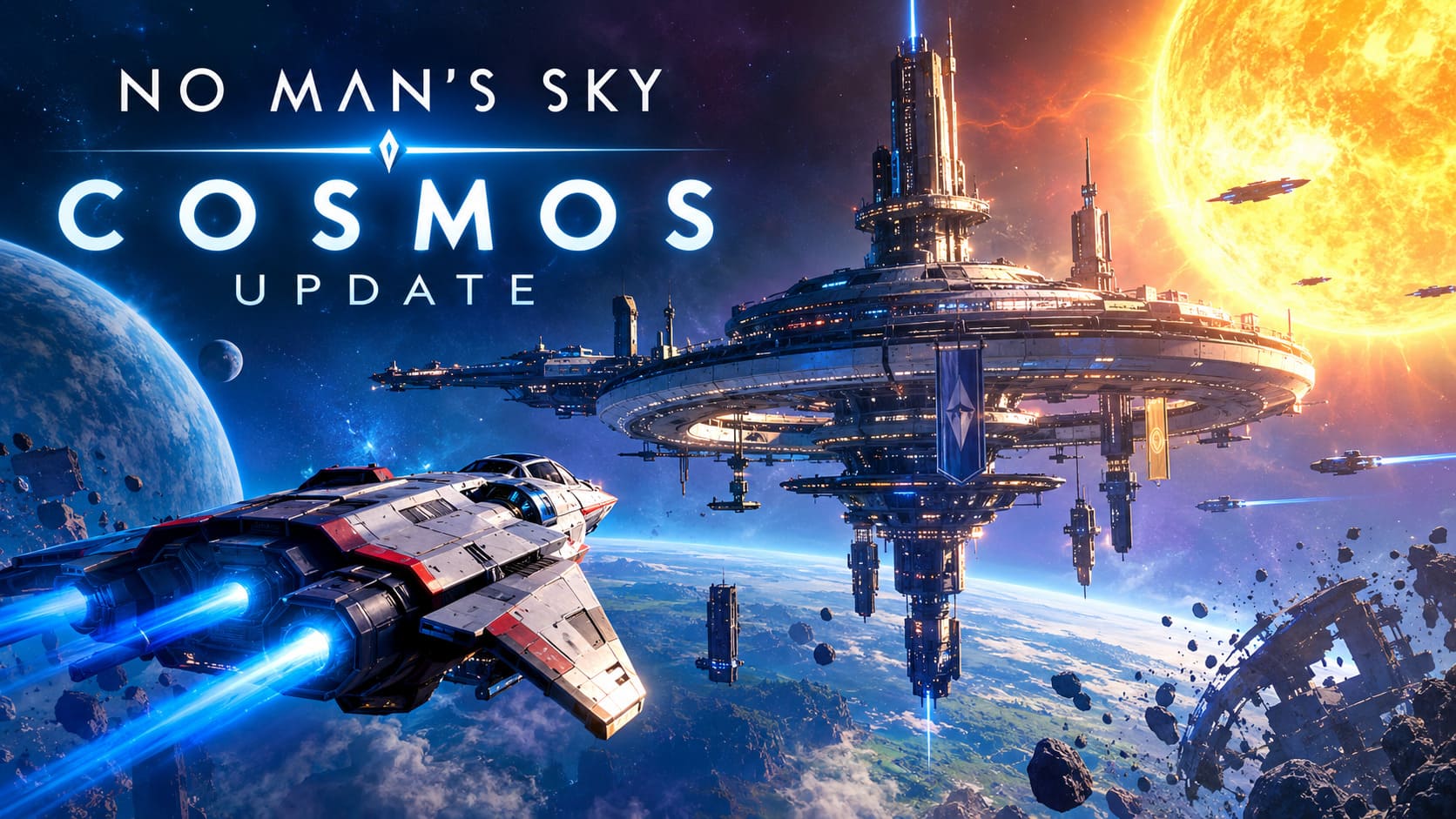
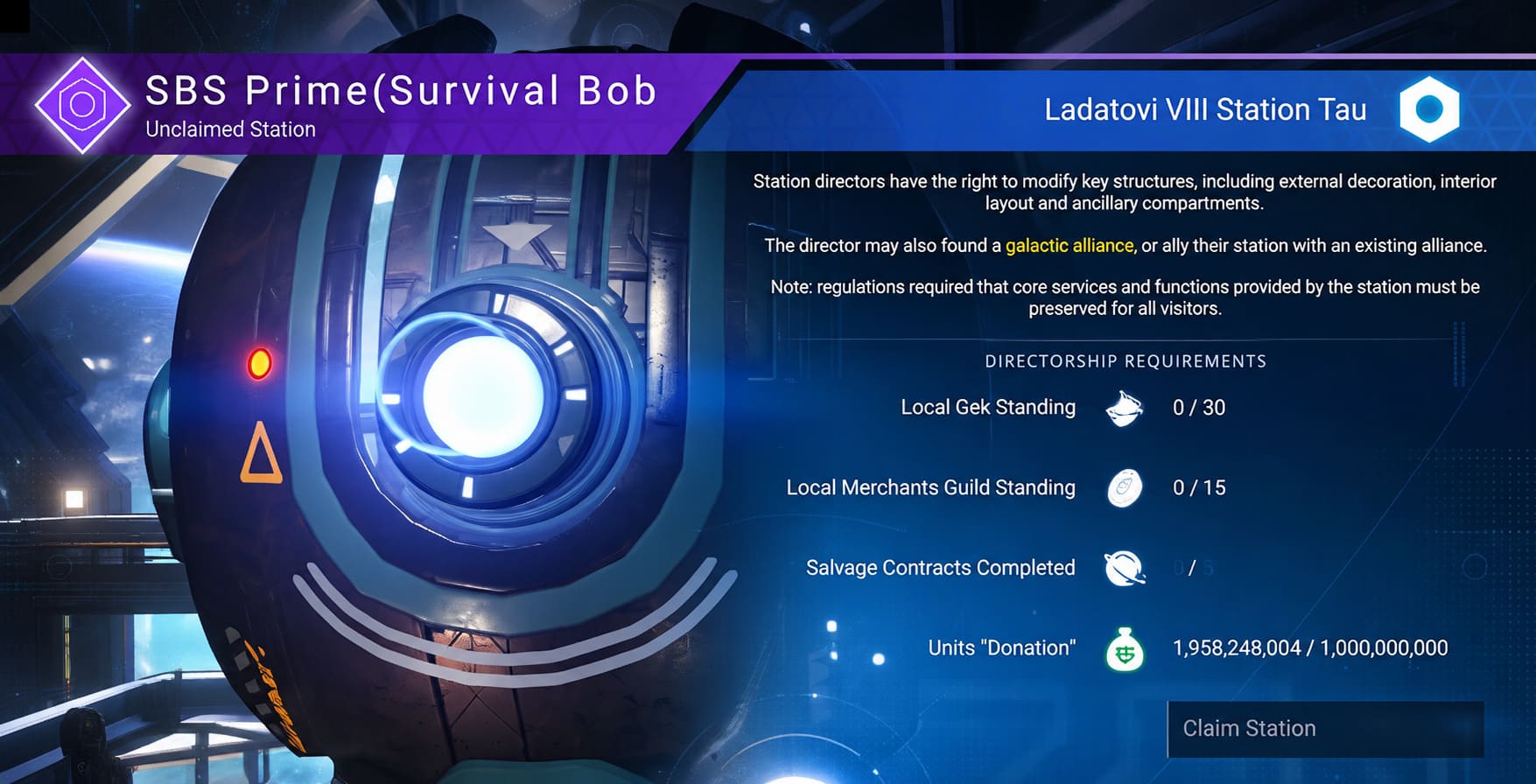
The important thing to understand is that this isn’t simply another base-building option. Station ownership is designed more like a long-term progression system. You need to establish yourself, work with the new space outposts, build faction reputation, complete specialized activities, and eventually put together enough money to make the purchase.
From my perspective, this is a smart direction for No Man’s Sky. The game has always given us enormous freedom, but there wasn’t always a strong reason to become attached to a particular location in space. Owning a station gives you exactly that reason.
How to Work Toward Buying a Space Station
If you’re starting Cosmos specifically because you want your own station, don’t expect to fly into the nearest system and buy one immediately. The new progression path is designed to make you earn that privilege.
1. Find the New Space Outposts
Your first stop should be the new Space Outposts. These locations act as smaller operational hubs for salvagers, traders, and other deep-space activities. They are also where you begin interacting with the new systems that eventually lead toward station ownership.
When you’re exploring an inhabited system, keep an eye on your navigation interface and system map for the new outpost locations. Once you find one, take some time to explore it instead of simply grabbing whatever mission is closest to you and leaving.
2. Complete Salvage and Extraction Contracts
The new Outposts introduce a Quartermaster and specialized contracts centered around space salvage. These missions are an important part of the new progression loop.
- Property Extraction and Delivery tasks focus on recovering and transporting valuable materials.
- Space Scrap Salvaging sends you into debris fields and dangerous orbital locations to recover useful components.
- Some activities involve unstable wrecks where you have to collect what you can before the structure collapses.
You’ll want to complete several of these missions as you progress. The exact activities can vary, but the important thing is to become familiar with the salvage economy rather than treating these contracts as simple filler quests.
3. Build Your Faction Reputation
This is where the Cosmos progression starts feeling more like a proper galactic career.
You cannot simply arrive in a system with a backpack full of Units and expect the locals to hand over their most important orbital facility. You need to build your reputation with the dominant race in the system you are targeting, whether that’s the Gek, Korvax, or Vy’keen.
A high standing with the local race is important, while Explorer-related reputation and guild activities also become part of the process. If you’re trying to do everything at once, this can become unnecessarily slow, so I would personally concentrate on one system and one faction path first.
4. Start Saving Serious Money
This is the part where your usual No Man’s Sky savings suddenly don’t look quite as impressive.
Station ownership is an expensive late-game investment. The new salvage and refining systems are designed to help you build that fortune, but you’re still looking at a potentially enormous number of Units before you can complete the purchase.
Depending on the economy of the system and the station you’re targeting, the investment can reach hundreds of millions of Units and potentially approach the billion-Unit range. So if you’ve been casually spending every paycheck on ships and multitools, Cosmos is a good reason to start thinking like an actual space tycoon.
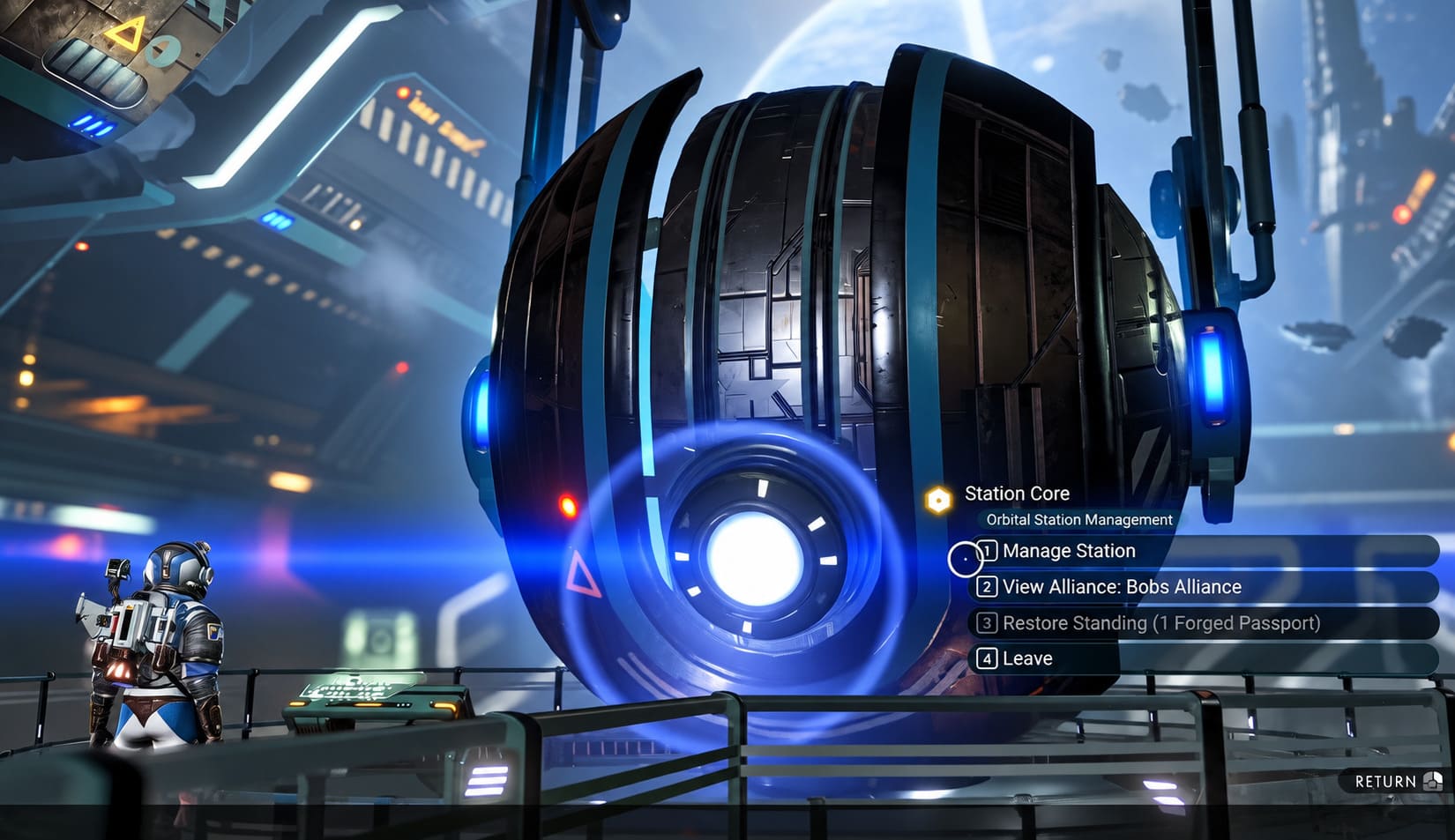
5. Complete the Purchase
Once your contracts, reputation, and finances are in place, you can move toward the central management area of the station you’re targeting. The newly available management terminal is where the final purchase takes place.
And that’s the moment when the game really changes. You’re no longer just another Traveller passing through.
You own the station.
What Can You Do With Your Own Station?
Buying the station is only the beginning. Cosmos turns ownership into a broader management system, giving you several ways to customize and use your new headquarters.
- Manage local trade: Your station can become an important economic hub and generate income through its commercial activity.
- Customize the interior: You can modify layouts, terminals, themes, and other visual elements.
- Recruit staff: Different alien species can fill specialized roles, including trade and security.
- Use the station as a headquarters: Your station can serve as the central base for your wider activities and alliances.
For me, the most interesting part isn’t even the passive income. It’s the feeling of having a location in the galaxy that actually belongs to your character. After spending hundreds of hours jumping between systems, having a permanent orbital home makes the universe feel a little more personal.
Flying Toward the Sun Finally Feels Like a Real Possibility
One of the stranger limitations of No Man’s Sky has always been the stars themselves. They look close enough to touch, but ultimately remain part of the background of each system.
Cosmos changes that relationship by allowing players to travel directly toward the system’s star and encounter the extreme conditions around it.
This isn’t exactly a relaxing sightseeing trip. The closer you get, the more dangerous the environment becomes, with intense heat and radiation putting enormous pressure on your ship’s defenses. You’ll need appropriate upgrades if you want to survive for long.
The reward is potentially worth the risk, though. The regions around the solar corona can contain unusual anomalies and rare materials that give experienced players another reason to push their ships beyond their normal comfort zone.
I’m particularly interested in this feature because it changes something that players have looked at for literally years. A star stops being just a pretty light in the sky and becomes another destination.
Deep-Space Salvaging Creates a New Gameplay Loop
If there is one new system that ties a lot of Cosmos together, it is deep-space salvaging.
The galaxy now feels more cluttered in a good way. Instead of empty stretches of space between major locations, you can encounter enormous debris fields, ruined vessels, damaged capital ships, and other objects that are actually worth investigating.
The basic idea is simple: find valuable wreckage, recover it before it’s destroyed, take the materials back to an outpost, process them, and sell or use the resulting products.
But the risk is what makes it interesting. Some wrecks are unstable, meaning you can’t spend ten minutes carefully collecting everything. You have a limited opportunity to grab what matters before the structure falls apart.
There are also infected structures scattered through deep space. These locations have a much darker atmosphere, with dangerous biological growths and hazardous environments. They feel almost like small survival-horror encounters inside what is normally a colorful exploration game.
The New Refining Economy Makes Salvage More Valuable
Raw scrap isn’t necessarily the final prize. The Cosmos economy encourages you to bring recovered materials back to Outposts and process them through the new refining systems.
This creates a satisfying chain:
Explore → Salvage → Refine → Trade → Upgrade → Explore Further
That’s exactly the kind of loop that works well in No Man’s Sky. You’re not just collecting random junk because the game told you to. You’re building an actual economic operation around your exploration.
Alliances and Sector Wars Add a Political Layer
Another major addition is the Alliance System, which pushes No Man’s Sky into territory the game has only lightly touched before: galactic politics.
Players can work with existing faction coalitions or build alliances of their own. These alliances can compete for control of space, protect important trade routes, and fight powerful pirate groups.
This could become especially interesting for players who have already done most of the traditional exploration and survival progression. Once you’ve accumulated a ridiculous number of Units, collected multiple ships, and built bases on more planets than you can remember, having a larger strategic objective gives you something new to chase.
Orbital Bases Are Perfect for Builders
Not everyone wants to purchase a completed station. Some players would rather build their dream headquarters from scratch, and Cosmos also gives them more freedom to do exactly that.
Orbital Base building lets you create large modular structures directly in open space. That means shipyards, observation platforms, luxury lounges, industrial facilities, hidden research stations, or whatever bizarre creation you can come up with.
Personally, this might be one of those features I spend far more time on than I initially expect. No Man’s Sky builders have always found ways to create ridiculous structures within the game’s existing limitations. Removing some of those planetary restrictions opens up an entirely different playground.
The 10-Year Anniversary Expedition
Cosmos also arrives as part of a major celebration of 10 years of No Man’s Sky, and Hello Games is marking the occasion with a special Expedition.
The anniversary Expedition leans heavily into the history and lore of the game while connecting that history with the strange new mechanics introduced in Cosmos. It is designed to feel nostalgic without simply replaying old content.
Completing its milestones can unlock exclusive rewards, including anniversary-themed starships, cosmetic items, jetpack effects, and trophies that can be displayed as part of your station customization.
Cosmos Update Features at a Glance
| Feature | What It Adds | Why It Matters |
|---|---|---|
| Space Station Ownership | Buy and manage orbital stations | Creates a long-term galactic headquarters |
| Solar Flight | Travel toward system stars | Adds new exploration risks and rewards |
| Deep-Space Salvage | Recover resources from wrecks and debris | Introduces a lucrative new gameplay loop |
| Space Outposts | Contracts, refining, and progression | Connects exploration with station ownership |
| Alliance System | Faction cooperation and territorial conflict | Adds a strategic layer to the galaxy |
| Orbital Bases | Build large structures in open space | Expands creative freedom for builders |
My Tips for Starting the Cosmos Update
If you’re returning to No Man’s Sky after a long break, I wouldn’t recommend immediately trying to chase every new feature at the same time. There is simply too much going on.
First, upgrade your Exosuit cargo capacity. Deep-space salvage can fill your inventory surprisingly quickly, and constantly throwing valuable materials away because you ran out of storage gets annoying fast.
Second, choose one faction and one system to focus on. Raising Gek, Korvax, and Vy’keen reputation simultaneously sounds productive, but in practice it can spread your progression too thin. Pick a target and build your reputation there.
Third, don’t underestimate the value of the new salvage economy. Even if you’re not interested in owning a station immediately, the new refining chain can provide a strong source of income for ships, upgrades, and other expensive purchases.
Finally, keep an eye on the community. No Man’s Sky players have always been extremely good at sharing discoveries, coordinates, unusual systems, and efficient money-making strategies. Once players start finding particularly interesting stations and profitable sectors, I expect the community to become a huge source of useful information.
Valheim Deep North Secret Trade Items: Trader Inventory Upgrades and Hidden 1.0 Mechanics
Is the Cosmos Update Worth Coming Back For?
If you’ve stopped playing No Man’s Sky because you felt like you’d already seen everything, Cosmos is exactly the kind of update that could pull you back in.
It isn’t simply another batch of cosmetic items or a handful of new missions. The biggest additions actually change what you can do with your time in the galaxy. You can salvage wrecks, build orbital facilities, establish alliances, chase rare solar resources, and eventually work toward owning a station that becomes the center of your operation.
What I like most is how these systems connect. Space Station ownership encourages reputation and exploration. Salvaging provides money and materials. Outposts give you a place to process what you find. Alliances give you a reason to care about territory. Orbital construction gives builders another massive creative canvas.
That interconnected design is what makes the Cosmos Update feel much more substantial than a typical content drop.
Final Thoughts
After ten years, No Man’s Sky is still finding ways to make the galaxy feel bigger. That’s probably the most impressive thing about Hello Games at this point. The game has already gone through so many transformations that it would be easy for a new update to feel like more of the same.
Cosmos doesn’t really have that problem.
Space Station ownership alone gives veteran players a new long-term goal, while solar exploration, deep-space salvage, alliances, orbital bases, and the anniversary Expedition provide plenty of reasons to keep jumping between systems.
If you’re starting fresh, my advice is simple: don’t rush toward the biggest rewards. Explore the new Outposts, learn the salvage loop, build your reputation, and start saving your Units. Eventually, that ordinary-looking station on the horizon could become your own headquarters.
And honestly, after spending so many years visiting other people’s space stations, finally having one with my name on it sounds like exactly the kind of ridiculous late-game goal that makes me want to keep playing.