Project TAL Release Date Window, PC and Console Platforms, and Gameplay Details Revealed
Project TAL has the kind of reveal that immediately makes me stop scrolling. After spending years playing everything from sprawling open-world RPGs to brutally difficult action games, I have become pretty hard to impress with flashy trailers. A lot of upcoming games look incredible for three minutes and then turn out to be much less interesting once you start looking at the actual mechanics. Project TAL, however, caught my attention because it is combining several ideas that I genuinely enjoy: fast combat, giant monsters, exploration, strong visual direction, and a fantasy world that does not feel like another copy of medieval Europe.
Developed by MADNGINE and published by WEMADE MAX, Project TAL is being positioned as a major Korean AAA action RPG for the global market. The game is being built with Unreal Engine 5 and is designed around a single-player cinematic adventure rather than multiplayer progression. It is still early, so there are plenty of details we do not know yet, but the information and gameplay footage already give us a surprisingly clear picture of what the developers are trying to achieve.
Grounded 2 Crossplay Guide: How to Invite Friends Cross-Platform (Xbox, PS5, Steam)
Project TAL Release Date: When Is the Game Coming Out?
The current Project TAL release date window is 2027. There is no specific day or month confirmed at this point, so anyone claiming to know an exact launch date is getting ahead of the official information.
Personally, I think 2027 is probably the right target for a project of this scale. Unreal Engine 5 can produce some ridiculous visuals, but impressive screenshots are the easy part. Building a huge open world where combat, physics, enemy AI, traversal, lighting, animation, and streaming all work together is a completely different challenge.
A game like this also needs serious optimization before launch. Nobody wants another beautiful Unreal Engine title that runs brilliantly in a trailer and struggles once you actually enter a crowded area. If MADNGINE can use the extra development time to polish performance and combat responsiveness, waiting until 2027 could end up being a very good decision.
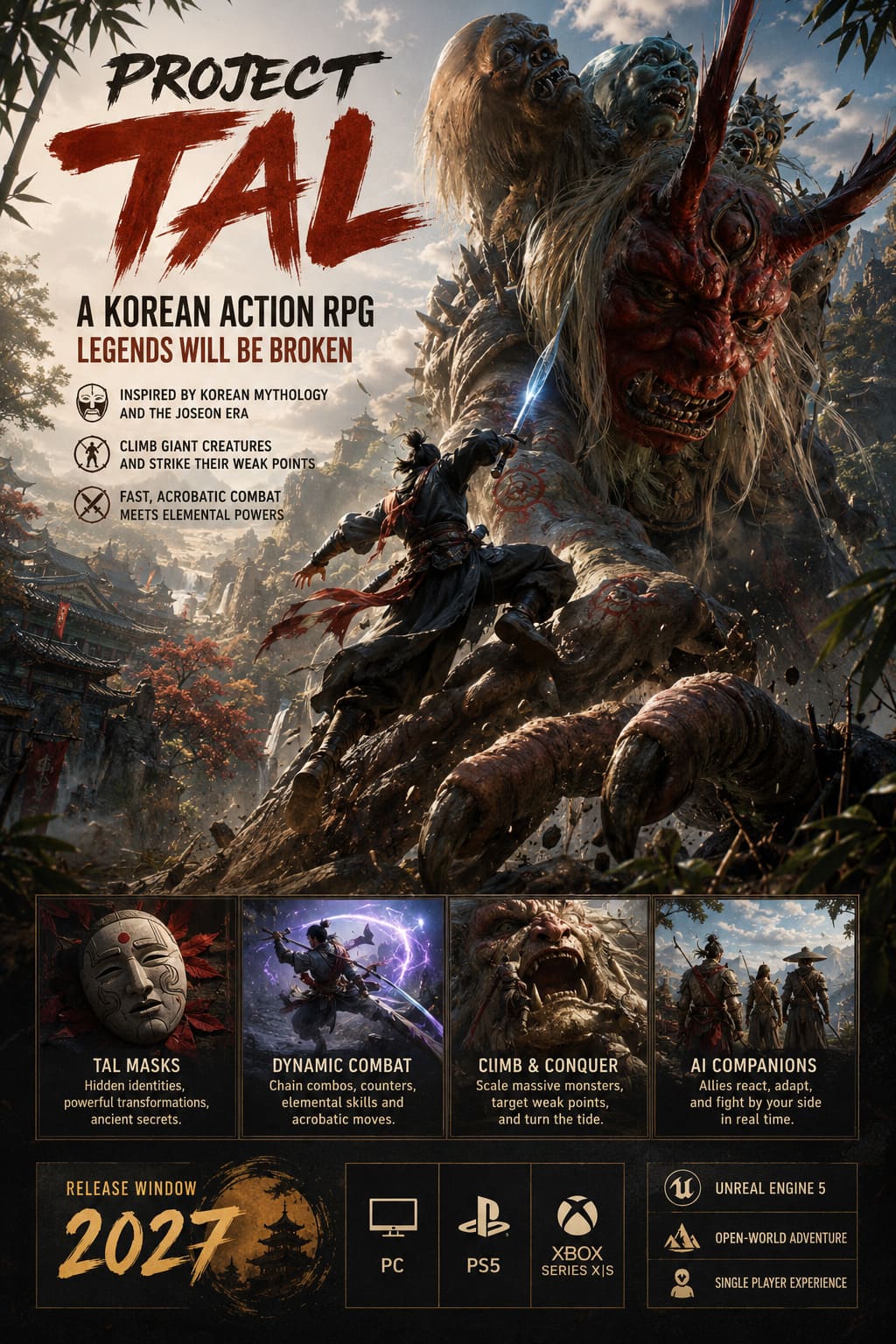
Project TAL Release Window
| Detail | Current Information |
|---|---|
| Release Window | 2027 |
| Developer | MADNGINE |
| Publisher | WEMADE MAX |
| Engine | Unreal Engine 5 |
| Genre | Open-World Action RPG |
| Mode | Single Player |
| Platforms | PC, PlayStation 5, Xbox Series X|S |
The important thing here is that 2027 is a release window, not a confirmed launch date. I would expect more specific information closer to release, potentially alongside additional gameplay showcases, character reveals, and details about the progression system.
Project TAL Platforms: PC, PS5, and Xbox Series X|S
Project TAL is confirmed for PC, PlayStation 5, Xbox Series X, and Xbox Series S. There is no current version planned for PlayStation 4 or Xbox One, which honestly makes sense considering the technical ambitions of the project.
This is one of those cases where leaving older consoles behind can actually benefit the game. Project TAL is supposed to feature huge environments, detailed character models, large-scale creatures, complex effects, and cinematic battles. Trying to make all of that work on hardware from the previous generation could force the developers to reduce environmental detail, enemy counts, physics, or visual effects.
PC players should have the most flexibility, particularly if MADNGINE provides a comprehensive selection of graphical settings. Unreal Engine 5 games can be extremely demanding, so options for resolution scaling, shadows, textures, global illumination, ray tracing, and other settings will be particularly important.
For console players, the big question will be performance modes. I would love to see a stable 60 FPS option on PS5 and Xbox Series X|S, because fast combat simply feels better when the response is immediate. Hopefully, visual quality and frame-rate options are treated as equally important rather than forcing players to choose between a gorgeous slideshow and a heavily compromised performance mode.
A Korean Fantasy World Instead of Another Generic RPG
The setting is probably the part of Project TAL that interests me most.
The game draws heavily from Korean mythology, folklore, traditional culture, and the historical atmosphere of the Joseon era. That immediately gives it an identity that many fantasy RPGs desperately lack. We have seen countless games use European castles, knights, dragons, gothic villages, and vaguely Scandinavian mythology. Project TAL is taking a different route.
The name itself is connected to traditional Korean masks known as tal. These masks have deep cultural associations with performance, ritual, storytelling, and identity, and the game appears to use that concept as an important part of its narrative.
That is a particularly interesting foundation for a fantasy RPG because masks can represent much more than simple equipment. They can symbolize transformation, hidden identity, social roles, or even freedom from a predetermined fate. If the developers actually build the game’s story around those ideas instead of using the masks as a convenient visual gimmick, Project TAL could have a much stronger narrative identity than its trailers initially suggest.
A World Destroyed by Supernatural Forces
The story takes place in a world that has been thrown into chaos by supernatural forces and mysterious creatures. Players will travel through a large fantasy environment containing dramatically different regions, from ancient ruins and dense bamboo forests to volcanic landscapes and enormous temple complexes.
What I like about the visual direction is that the developers are not simply making everything dark and miserable. There appears to be a strong contrast between beautiful natural environments and the monsters that inhabit them. That contrast can make exploration much more memorable because the world feels like a place that existed before the player’s arrival rather than a collection of combat arenas.
And this is where Unreal Engine 5 could really help. The technology is capable of producing incredibly detailed environments, but the art direction still matters more than raw graphical power. Project TAL seems to understand that its Korean-inspired architecture, landscapes, creatures, and visual motifs are what will ultimately make screenshots recognizable.
Project TAL Gameplay Looks Fast and Aggressive
If you have played enough Souls-like games, you probably know the rhythm by heart: study the enemy, wait for an opening, dodge or parry, land a few hits, then repeat. I enjoy that style when it is done well, but I am glad Project TAL appears to be chasing something more aggressive.
The combat shown so far is much faster and more acrobatic. The protagonist can combine melee attacks, abilities, elemental powers, evasive movements, and counterattacks into sequences that look closer to a character-action game than a traditional slow RPG.
That immediately puts games like God of War and Dragon’s Dogma II into the conversation, although Project TAL appears to have its own direction. The most important thing now is whether the combat actually feels as good as it looks. Flashy animations are easy to show in a trailer. Making every attack connect with satisfying impact, giving enemies convincing reactions, and maintaining precise controls is where the real work happens.
Combat Features to Watch
- Fast melee attacks and chained combos
- Elemental abilities and magic
- Tactical counters and defensive moves
- Highly mobile character movement
- Large-scale monster encounters
- Environmental and vertical combat opportunities
If MADNGINE gets the responsiveness right, this could become one of the strongest parts of the game.
The Monster-Climbing Mechanic Could Be Project TAL’s Secret Weapon
The creature battles are where Project TAL starts getting genuinely interesting.
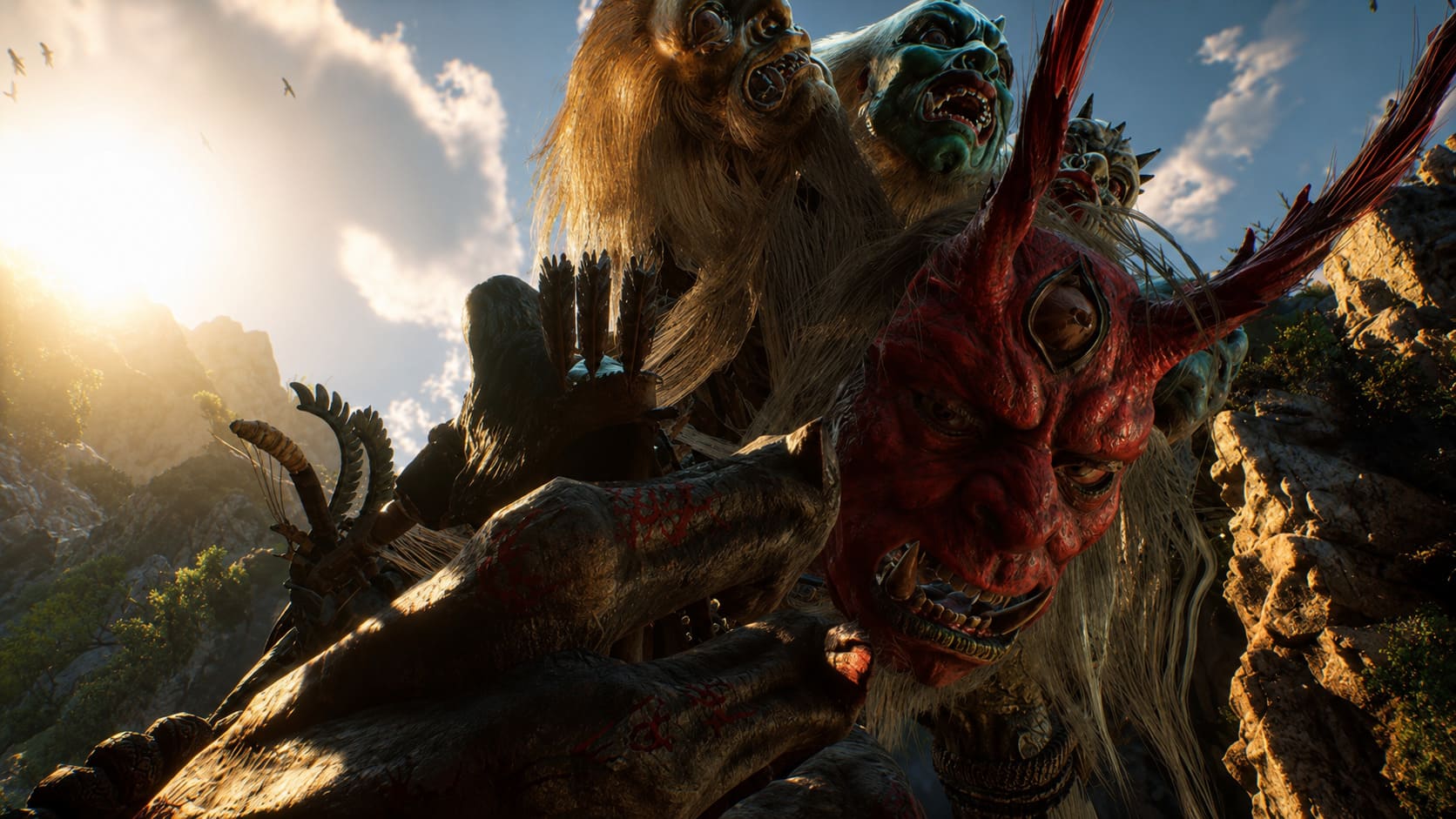
Instead of simply standing underneath a giant boss and repeatedly attacking its legs, the player can apparently climb directly onto enormous creatures. During these encounters, the character can move across the monster’s body, search for vulnerable areas, and attack specific weak points.
I have always liked games that make giant enemies feel like actual creatures rather than oversized health bars. Shadow of the Colossus remains the obvious example, but the idea has also appeared in different forms throughout action games and RPGs. Project TAL seems to be taking that concept and combining it with a much faster combat system.
If the mechanic works properly, boss battles could become some of the game’s most memorable moments. Imagine being thrown from a creature, grabbing onto its armor, climbing back up while it is moving through the environment, and then reaching a weak point for a cinematic attack. That sounds considerably more exciting than simply memorizing a boss’s five-hit combo.
Of course, the execution will matter enormously. Monster climbing can quickly become frustrating if the camera fights you, movement feels sticky, or the weak points are too obvious. Hopefully, the developers understand that spectacle needs to be supported by good controls.
Dynamic AI Companions Add Another Layer
Project TAL is a single-player game, but the player will apparently have companions throughout the adventure. These characters are not simply background NPCs who follow the protagonist around and occasionally shout something during a cutscene.
The developers have described a dynamic companion system where allies can perform different combat roles and react to what is happening around them. Some companions can focus on defense, others on melee damage, ranged attacks, or magical support.
That sounds promising because companion AI can completely change the feeling of an action RPG. Good allies make the world feel alive and encourage experimentation. Bad allies become walking obstacles that you spend half the game trying to keep alive.
The footage has shown examples of companions reacting to dangerous situations, including defensive abilities and physical interactions during combat. The idea of allies responding dynamically to the player’s actions is much more interesting to me than simply choosing a character from a menu and assigning them a fixed attack pattern.
Why Project TAL Has My Attention
There are plenty of reasons to be skeptical about ambitious AAA games before launch. Unreal Engine 5 visuals are everywhere now, and the industry has produced more than a few trailers that promised something extraordinary before the final game failed to deliver.
Project TAL still has a lot to prove. We need to see longer gameplay demonstrations, more information about progression, equipment, character customization, exploration, quests, enemy variety, and how the open world actually functions outside carefully prepared showcase footage.
But I like the direction. The combination of Korean mythology, large-scale monsters, acrobatic combat, companion AI, and a single-player focus gives Project TAL a personality that is easy to recognize. It is not just trying to be another dark fantasy RPG with a different protagonist.
What I Want to See Before Launch
- A long, uninterrupted gameplay demonstration showing normal exploration rather than only boss fights.
- More information about progression and customization, especially how the tal masks influence the character.
- A proper performance breakdown for PC, PS5, and Xbox Series consoles.
- More companion gameplay showing how different allies behave during difficult encounters.
- A detailed look at the open world, including side quests, exploration rewards, and environmental activities.
Final Thoughts on Project TAL
Project TAL is still some distance away from release, but it has already managed something that many upcoming RPGs struggle with: it has given me a reason to remember its name. The Korean-inspired setting is distinctive, the monster encounters look spectacular, and the combat appears to be aiming for speed rather than simply copying the current Souls-like formula.
The 2027 release window means there is still plenty of time for MADNGINE to refine the experience. That is important because Project TAL is clearly aiming high, and games at this level can fall apart when developers rush them toward the finish line.
For now, I am keeping Project TAL firmly on my watch list. If the final game delivers on the combat shown in the early footage while maintaining the cultural identity of its world, it could become one of the more interesting Korean-developed action RPGs of the next generation. The potential is definitely there; now MADNGINE has to prove that the finished game can turn all that potential into something worth spending dozens of hours with.