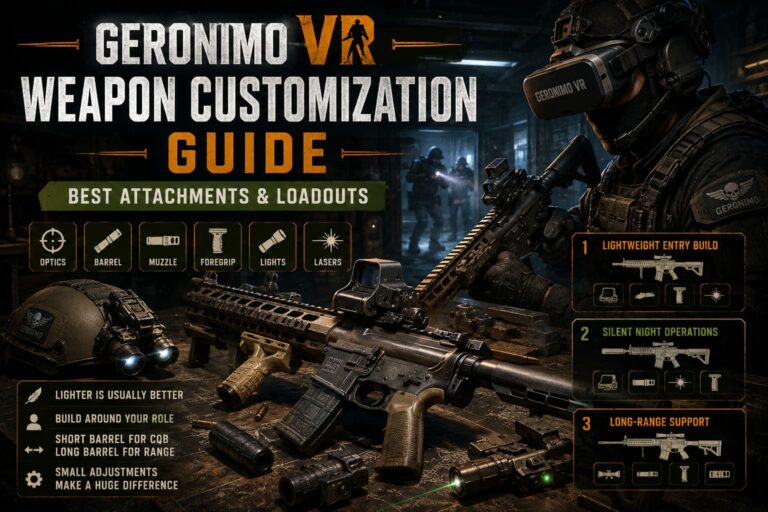
WARDOGS Weapon Balance Meta Guide 2026: Best Guns and Tactical Loadouts
There’s a particular moment in WARDOGS that tells you whether you’re playing smart or just playing angry.
You’re sitting at your faction base, looking at your bank balance, and thinking about buying that expensive rifle you’ve been saving for. You’ve got enough money for the gun, the armor, a few grenades and medical supplies. Everything looks good.
Then you remember one important detail: if you die, that money is gone.
That changes the entire conversation around weapons.
In most shooters, the question is simply, “Which gun is strongest?” In WARDOGS, I think the better question is, “Which gun gives me the best chance of winning without destroying my economy?”
After looking at the current weapon balance and thinking about how the different guns actually fit into WARDOGS’ huge battles, I’ve come away with a pretty simple conclusion: the most expensive weapon isn’t automatically the best weapon. In fact, some of the most interesting choices are the rifles that leave enough cash in your pocket to actually build a complete loadout.
So, if I were heading into a Hot Zone today, these are the weapons I’d be looking at first.
Why WARDOGS Weapon Balance Feels Different
WARDOGS isn’t built around the usual arcade-shooter formula. Its 100-player, three-team battles create a weird mix of tactical positioning, chaotic firefights and economic decision-making.
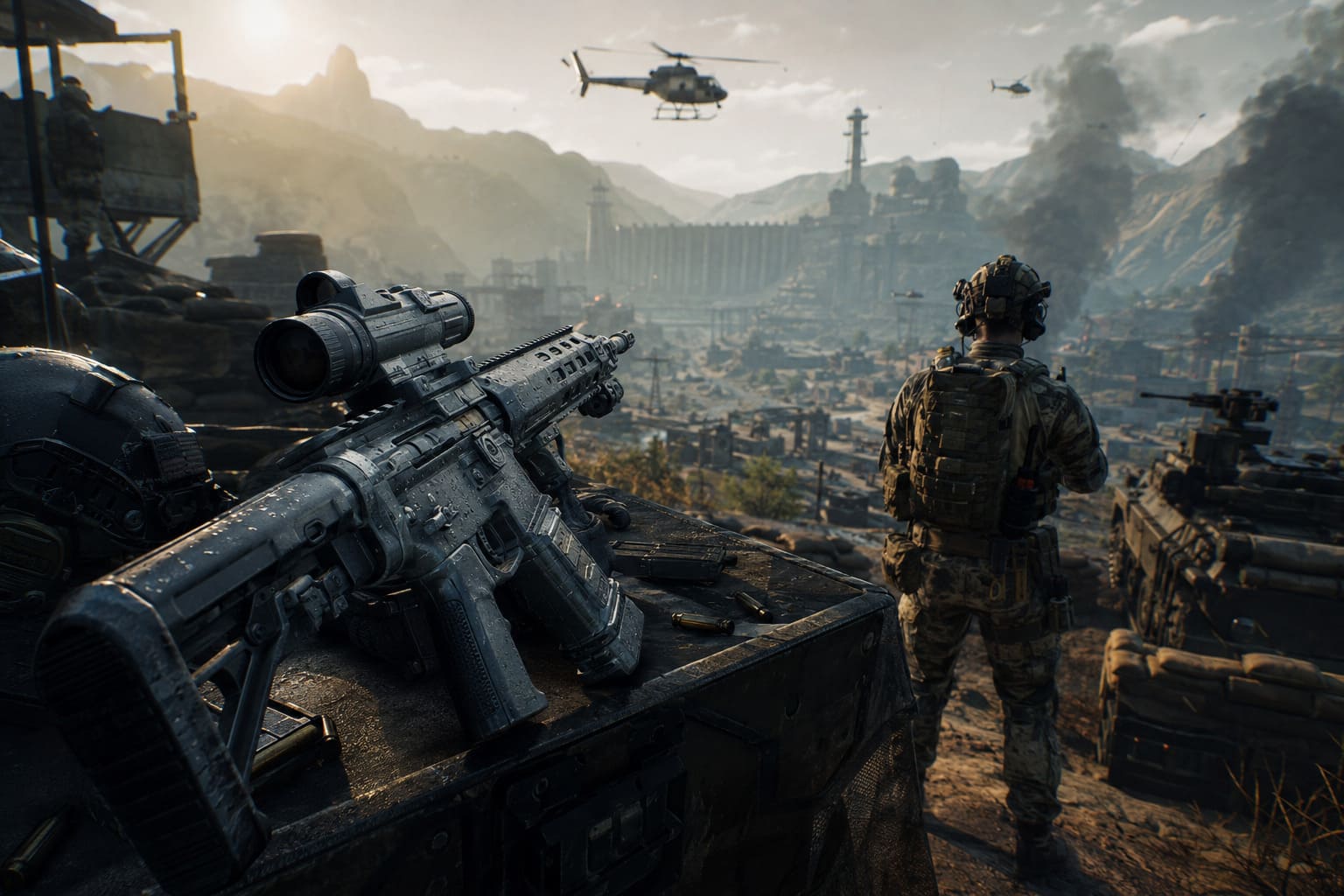
The enormous environments mean you can be fighting at one distance one minute and suddenly find yourself clearing a warehouse at point-blank range the next. Vehicles complicate things even further.
And then there’s armor.
Body armor from Level 1 through Level 4 can completely change how a gun performs. A weapon that feels ridiculous against an unarmored target can suddenly feel mediocre when you’re shooting at someone wearing serious protection.
That’s why damage, rate of fire, penetration, range and price all matter at the same time.
Personally, I think that’s one of WARDOGS’ strongest ideas. It creates situations where a cheap rifle can actually be the correct competitive choice.
The T-21 Is Still the Gun I’d Buy First
If I had only $600 to spend on a primary weapon, I’m not overthinking it.
I’m taking the T-21.
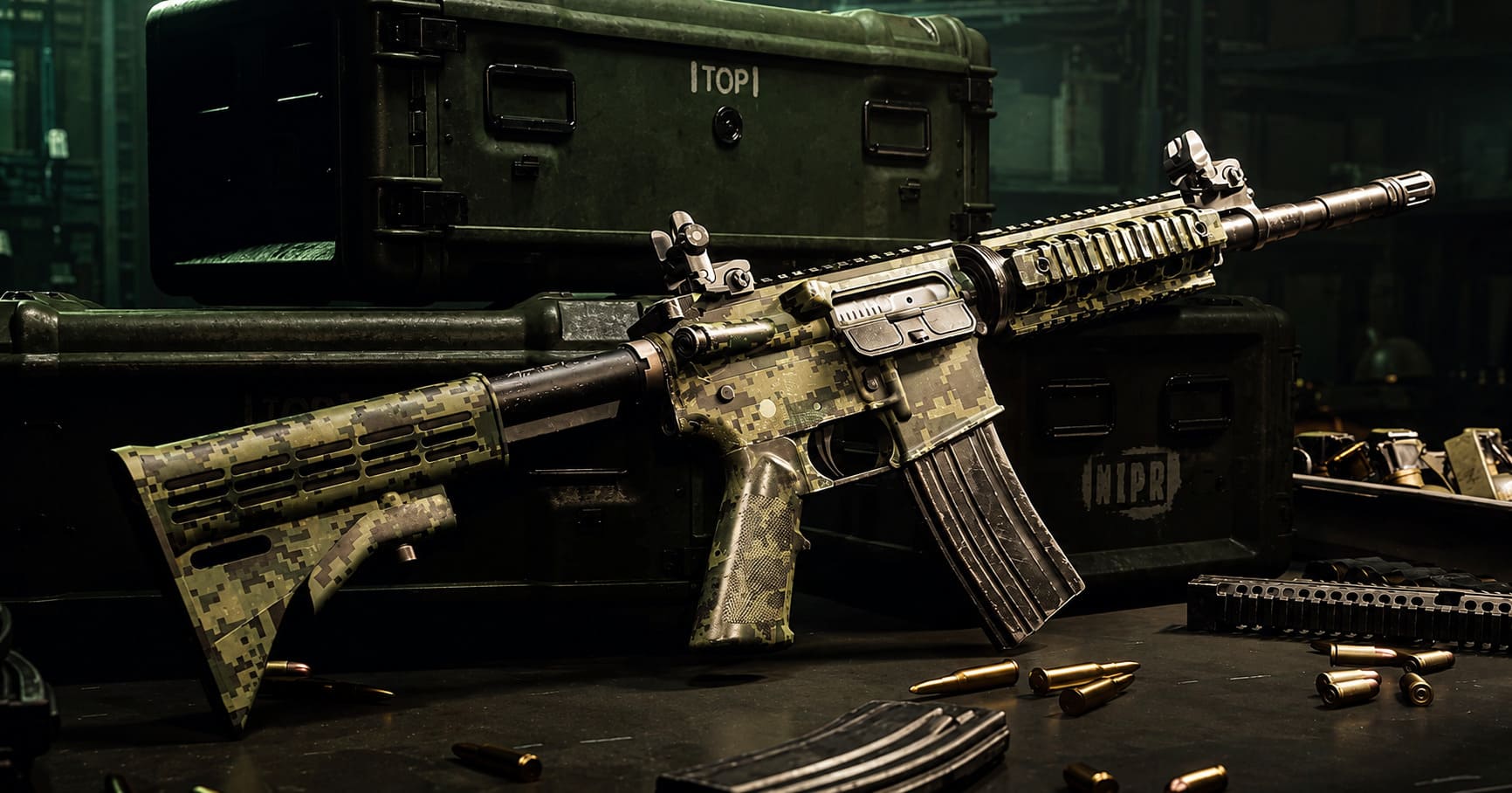
This is the kind of gun that doesn’t necessarily look spectacular on paper, but after several matches you start appreciating why people keep coming back to it. It offers dependable full-auto fire, useful attachment flexibility and a very comfortable accuracy profile without forcing you to gamble a huge chunk of your cash.
The reported optimal time-to-kill sits around 240 milliseconds, which is more than respectable for something in this price bracket.
And that price is really the point.
Buying a T-21 leaves you money for the things that actually keep you alive: armor, medical equipment, grenades and other essentials.
I’ve always preferred this kind of weapon design in economy-based shooters. Give me a rifle that is 90% as effective for a fraction of the price and I’ll take it over the flashy premium option most of the time.
The T-21 isn’t exciting because it’s exotic. It’s exciting because it makes financial sense.
My Verdict
S-Tier — Best budget weapon in WARDOGS.
Don’t Sleep on the Free A-91
There is another weapon that deserves considerably more respect than it gets: the A-91.
It’s free, which immediately makes it useful.
But “free” doesn’t mean useless.
The A-91 fires 5.56mm ammunition, has a listed base damage of 28 and runs at roughly 700 RPM. More importantly, it gives new players and experienced players alike a way to enter a match without putting their savings at risk.
This is particularly useful when you’re farming cash or trying to recover after a disastrous run.
Imagine losing an expensive kit and being tempted to immediately spend another fortune trying to replace it. That’s exactly when a free rifle becomes valuable.
Take the A-91. Keep your spending low. Scavenge. Capture objectives. Grab weapons from fallen players.
WARDOGS rewards players who understand when not to spend money.
The Bushmaster M17S and KH-2002 also occupy this general budget-friendly space, but the A-91 would be my personal starting point.
FAL: The Rifle for People Who Don’t Mind Recoil
Now we get into the serious stuff.
The FAL is the rifle I would pick when money is less important than winning the gunfight.
Its biggest selling point is obvious: 60 base damage with a respectable 650 RPM fire rate.
That is a completely different philosophy from the T-21.
The FAL isn’t about throwing a mountain of bullets downrange. It’s about making the bullets you fire count.
At medium range, that damage profile becomes especially attractive against armored targets. The trade-off is recoil, and you absolutely have to respect it.
If you’re the kind of player who holds the trigger down and hopes for the best, the FAL will probably punish you.
If you’re comfortable with controlled bursts and deliberate shots, however, this thing can feel brutal.
For me, that’s what puts it firmly into S-Tier territory.
The FAL is not forgiving, but it rewards good aim.
Super-45: When the Fight Gets Personal
Every large tactical shooter eventually has those moments when all your careful positioning disappears.
A door opens.
Someone is five meters away.
Everybody starts shooting.
That’s where the Super-45 earns its reputation.
With a reported 1,200 RPM, this SMG is designed to turn close-range fights into extremely short arguments.
The Super-45 isn’t the weapon I’d carry when expecting long sightlines. But inside industrial buildings, corridors and objective rooms, it makes perfect sense.
Its rate of fire gives it a terrifying ability to overwhelm opponents before they have time to react properly.
And this is where WARDOGS’ Hot Zones become particularly interesting. A rifle that dominates an open hillside doesn’t necessarily dominate a cramped factory.
The Super-45 understands the assignment.
If I’m entering a building first, this is one of the weapons I’d want in my hands.
M500: The Shotgun for Holding the Door
The M500 isn’t necessarily the weapon I’d recommend to everybody, but there is a very specific situation where it becomes nasty: defensive fights inside buildings.
Compared with alternatives such as the MP43, the M500 offers useful attachment support and better follow-up potential.
The basic concept is simple.
You’re defending an objective. The enemy has to come through a doorway. They don’t have much room to maneuver.
That’s exactly where a shotgun becomes more than just a weapon — it becomes a psychological deterrent.
The downside is obvious. Once the engagement stretches beyond close range, its usefulness drops dramatically.
So I wouldn’t call the M500 a universal meta pick.
I’d call it a specialist weapon that becomes extremely good when the map gives it the right fight.
SVD: The DMR I’d Bring for Open Terrain
WARDOGS’ enormous maps make designated marksman rifles extremely relevant.
The SVD stands out because it sits in a useful middle ground between assault rifles and dedicated sniper rifles.
The semi-automatic action lets you put follow-up shots downrange much faster than a traditional bolt-action rifle. That matters when an enemy squad is crossing open terrain and you don’t have the luxury of waiting several seconds between shots.
With armor-piercing ammunition, the SVD becomes even more threatening against geared opponents.
This is the kind of weapon I would give to the player in the squad who naturally looks for overwatch positions.
You don’t necessarily need to get the most kills with it.
Sometimes your job is simply to make the enemy afraid to cross the road.
That’s good tactical pressure, and WARDOGS has plenty of opportunities for it.
SV98: For Players Who Still Love the One Perfect Shot
The SV98 is the more traditional sniper choice.
It doesn’t have the rapid follow-up potential of the SVD, but that’s not really the point. The appeal is precision, rhythm and consistency.
A 10-round magazine gives you enough ammunition to stay engaged without constantly worrying about reloads, while the rifle’s handling characteristics make it attractive for players who enjoy methodical bolt-action gameplay.
Personally, I think sniper rifles are at their best in games where positioning matters.
WARDOGS is practically built for that.
You can spend several minutes getting into the right position, watch an enemy squad move through the landscape, and suddenly one carefully timed shot changes the entire engagement.
That’s a very different experience from running around with an SMG, and both playstyles have a place in the game.
AMR 50: Incredible Gun, Terrible Financial Decision?
Then we have the AMR 50.
This thing costs around $8,800 per spawn.
Yes, you read that correctly.
At that price, I’m not calling it a weapon. I’m calling it an investment.
The AMR 50 reportedly has the highest single-shot damage among the weapons discussed here and can also threaten lightly armored vehicles. That’s obviously powerful.
But WARDOGS’ economy makes the price impossible to ignore.
There’s also an important limitation: Level 4 armor can prevent a chest one-shot, meaning even this monster isn’t a magical delete button against the best-equipped players.
So who should use it?
Probably not the player who is still struggling to maintain a positive cash flow.
The AMR 50 makes much more sense for experienced players, organized squads and players who already have enough money that an $8,800 death won’t completely ruin their next several matches.
Fantastic weapon. Questionable everyday purchase.
PKM: The Squad Weapon
The PKM is where individual firepower starts turning into squad utility.
With a 100-round box magazine and support for FMJ and AP ammunition, it is designed for sustained fire rather than quick hit-and-run engagements.
And I think this is one of the weapons people can undervalue when looking strictly at kill statistics.
Suppressing a window matters.
Keeping an enemy pinned behind cover matters.
Forcing a squad to stop advancing matters.
If your assault players are pushing toward an objective while the PKM user is keeping defenders’ heads down, the machine gun is doing its job even if the scoreboard doesn’t fully reflect it.
For organized teams, I’d put the PKM comfortably in the A-Tier.
RPG-7: Not Sexy, Just Necessary
The RPG-7 might not be the weapon everyone dreams about unlocking, but when a $15,000 tank appears near your position, suddenly everybody wants one.
At roughly $2,000, the RPG-7 gives infantry a relatively economical answer to vehicle pressure.
That’s important because WARDOGS isn’t purely an infantry shooter. Vehicles can dramatically change the flow of a battle, and ignoring them can leave an entire squad in a terrible position.
The RPG-7 becomes particularly effective when players coordinate instead of firing randomly.
One player spots the vehicle.
Another gets into position.
The squad waits.
Then the rockets start flying.
It isn’t glamorous. It is useful.
And in a game built around money and survival, useful is often better than glamorous.
My Personal WARDOGS Weapon Tier List
If I had to simplify the entire current weapon meta into one list, this would be my personal ranking:
| Tier | Weapons | Why |
|---|---|---|
| S-Tier | T-21, FAL, Super-45 | Exceptional combination of lethality, consistency and practical value |
| A-Tier | SVD, SV98, PKM, A-91 | Extremely strong when used in the right role |
| B-Tier | AMR 50, M500, RPG-7 | Powerful specialists with major limitations or economic considerations |
Of course, I wouldn’t treat this as some kind of sacred competitive law.
That’s the fun part.
WARDOGS is a game where the “best” weapon depends heavily on what you are trying to accomplish.
WARDOGS 2026 Progression Guide: How to Complete Contract Objectives and Maximize Cash Fast
The Real WARDOGS Meta Is Your Bank Account
After looking at the weapons as a whole, I think there’s one mistake new players are particularly likely to make: assuming the strongest loadout is the one with the most expensive equipment.
I don’t think it is.
The real meta is economic efficiency.
A player with a T-21, decent armor, medical supplies and enough money left over for another run can potentially be much more dangerous over an entire evening than somebody who spends almost everything on one spectacular AMR 50 setup.
That’s what makes WARDOGS interesting to me.
The weapon balance isn’t just about recoil patterns, damage numbers and RPM. It’s about risk.
Do you take the FAL because you’re confident you can survive?
Do you run the A-91 because you’re rebuilding your bankroll?
Do you spend $8,800 on an AMR 50 because your squad needs a specialist?
Or do you save the money and take the T-21 because you know you’ll probably get into three more fights before the night is over?
Those decisions are what make the game’s combat system feel different.
WARDOGS Won’t Launch on Steam: How to Fix Startup Crashes and Errors (2026 Guide)
Final Verdict
If I were starting a fresh WARDOGS session right now, the T-21 would be my default purchase, the FAL would be my serious mid-range choice, and the Super-45 would come out whenever I expected close-quarters chaos.
The SVD and SV98 would cover the long-range roles, while the PKM and RPG-7 would be weapons I’d specifically bring when playing around the needs of the squad.
And the AMR 50?
I’d probably stare at the price for thirty seconds, laugh, and buy the T-21 instead.
Because in WARDOGS, sometimes the smartest flex isn’t showing up with the biggest gun.
It’s surviving long enough to afford another one.