33 Immortals: How to Get Legendary Boss Relics (Endgame Guide)
Playing 33 Immortals from Thunder Lotus Games feels like being dropped into a controlled chaos simulator disguised as a roguelike MMO raid. It’s fast, messy, and surprisingly strategic once you stop panicking and start actually reading what the game is doing.
The deeper I’ve gone into its endgame systems, the more I’ve realized one thing: Legendary Boss Relics are not optional—they are the difference between barely surviving and consistently clearing high-end content.
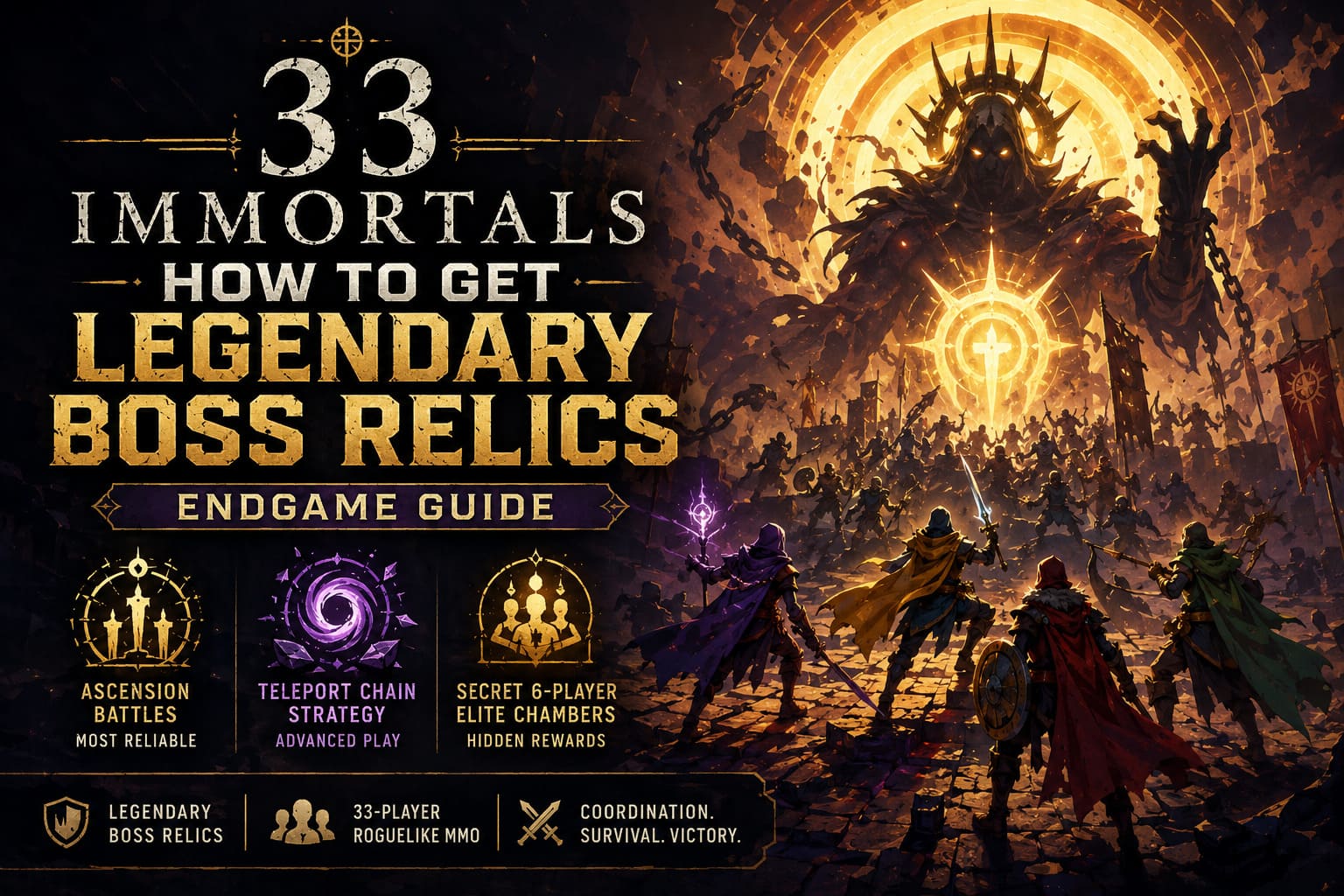
This guide is a reworked, more personal breakdown of how these relics function, how to reliably obtain them, and how they fundamentally shape late-game runs in 33 Immortals.
33 Immortals Ordeals and Agony Levels Ultimate Guide: How to Survive the Endgame
Why Legendary Boss Relics Matter So Much
In most runs, you’ll collect standard relics that boost damage, cooldowns, or survivability. They’re useful, but they feel like baseline progression. Legendary Boss Relics are something entirely different—they redefine how encounters behave.
Instead of small stat improvements, these relics often introduce:
- Raid-wide healing or shielding effects
- Massive conditional damage boosts during boss phases
- Team synergy bonuses tied to positioning
- Scaling buffs based on boss health thresholds
When fights reach their most chaotic moments—especially during final phase burn windows—these relics decide whether your group stabilizes or collapses.
In short: standard relics help you survive the run, but Legendary Boss Relics decide if you actually finish it.
Main Methods to Obtain Legendary Boss Relics
After multiple runs and a lot of trial-and-error coordination, three consistent farming methods stand out. Each one rewards a different type of player behavior—from structured teamwork to exploration-heavy playstyles.
1. Ascension Battles (Most Reliable Method)
Ascension Battles are the primary source of Legendary Boss Relics and the backbone of late-game progression in 33 Immortals. These encounters appear during the final overworld stages and split players into multiple simultaneous objectives.
The intended design is simple: coordinated groups clear separate zones at the same time to maximize rewards. Each successful Ascension completion can grant a Legendary Boss Relic to participating players.
Common failure pattern
Most random groups fail not because of difficulty, but because of poor distribution:
- Entire lobby rushes a single Ascension point
- Two zones get ignored and fail automatically
- Overall relic output drops drastically
Optimal approach
The most efficient strategy is structured splitting:
- Divide the lobby into three balanced teams
- Assign experienced players to weaker groups
- Start all Ascension Battles simultaneously
This approach consistently produces the highest relic yield per run and dramatically improves final boss readiness.

2. Teleport Stone Chain Strategy (Advanced Play)
This method is more experimental and depends heavily on coordination and timing. It revolves around using fast travel to participate in multiple Ascension Battles within a single phase.
The general flow looks like this:
- Purchase a Teleport Stone before the late-game phase
- Join and complete your assigned Ascension Battle quickly
- Immediately teleport to another ongoing Ascension fight
- Assist and complete additional encounters if timing allows
If executed properly, this can result in stacking multiple Legendary Boss Relics in one run.
Reality check: this strategy is powerful but inconsistent unless your group is highly coordinated and clears fights at synchronized speeds.
3. Secret 6-Player Elite Chambers
One of the more interesting systems in 33 Immortals is the hidden elite chamber mechanic. These are optional encounters scattered across the overworld that require exactly six players to activate.
There is no obvious UI marker, which makes them easy to miss unless your team is actively exploring.
Inside, players face tightly packed elite combat scenarios designed to test coordination under pressure. If the group survives, a hidden chest rewards each participant with a Legendary Boss Relic.
This method feels the most “organic”—it rewards curiosity, communication, and willingness to deviate from the main path.
Practical Tips for Consistent Relic Farming
After many runs, a few consistent patterns stand out. These are not strict rules, but they significantly improve success rates.
- Do not over-stack one group early; distribution matters more than raw damage
- Always preserve mobility tools for repositioning between objectives
- Prioritize survival in Ascension fights over greedy damage plays
- Communicate early, even simple pings improve coordination massively
The biggest misconception is that relic farming is RNG-heavy. In practice, it is far more about structure and team discipline.
Relic Farming Methods Comparison
| Method | Difficulty | Consistency | Reward Potential | Best Use Case |
|---|---|---|---|---|
| Ascension Battles | Medium | High | High | Standard endgame progression |
| Teleport Chain Strategy | High | Medium | Very High | Coordinated premade groups |
| Secret Elite Chambers | Medium | Low | Medium | Exploration-focused runs |
Why This System Works So Well in Endgame
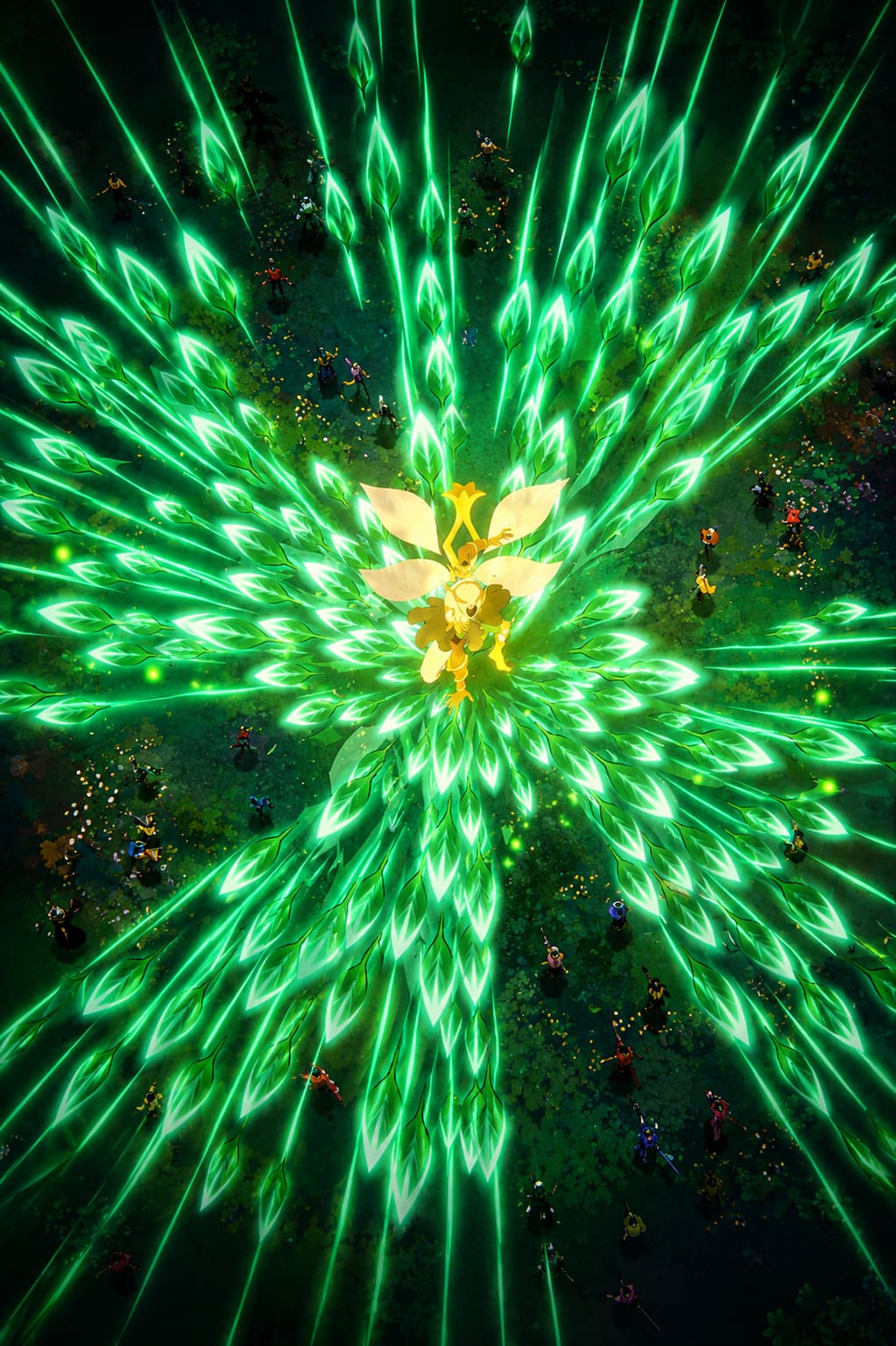
Once you reach final boss encounters in 33 Immortals, fights become less about individual performance and more about layered group survival. Mechanics overlap, damage spikes escalate, and mistakes multiply quickly in 33-player chaos.
Legendary Boss Relics smooth out these rough edges. A strong relic setup can:
- Convert lethal damage phases into survivable moments
- Push boss damage thresholds before enrage timers
- Stabilize chaotic multi-player encounters
- Reduce dependency on perfect execution
What stands out most is how these relics shift the game away from pure mechanical perfection and toward coordinated adaptability.
Final Thoughts
After spending significant time with the system, it’s clear that Legendary Boss Relics are not just upgrades—they are the core layer of endgame progression. Without them, runs feel fragile. With them, everything becomes more controlled, even in the middle of 33-player chaos.
The most important lesson I’ve learned is simple: coordination matters more than individual skill. The game quietly rewards teams that organize early, communicate consistently, and split responsibilities properly.
When everything clicks—Ascension Battles are cleanly split, teleport plays line up, and secret chambers are discovered—the game stops feeling like chaos and starts feeling like a well-orchestrated raid machine.
And that’s where 33 Immortals really shines.