Witchspire Guide: Open World Survival Crafting Tips for Beginners
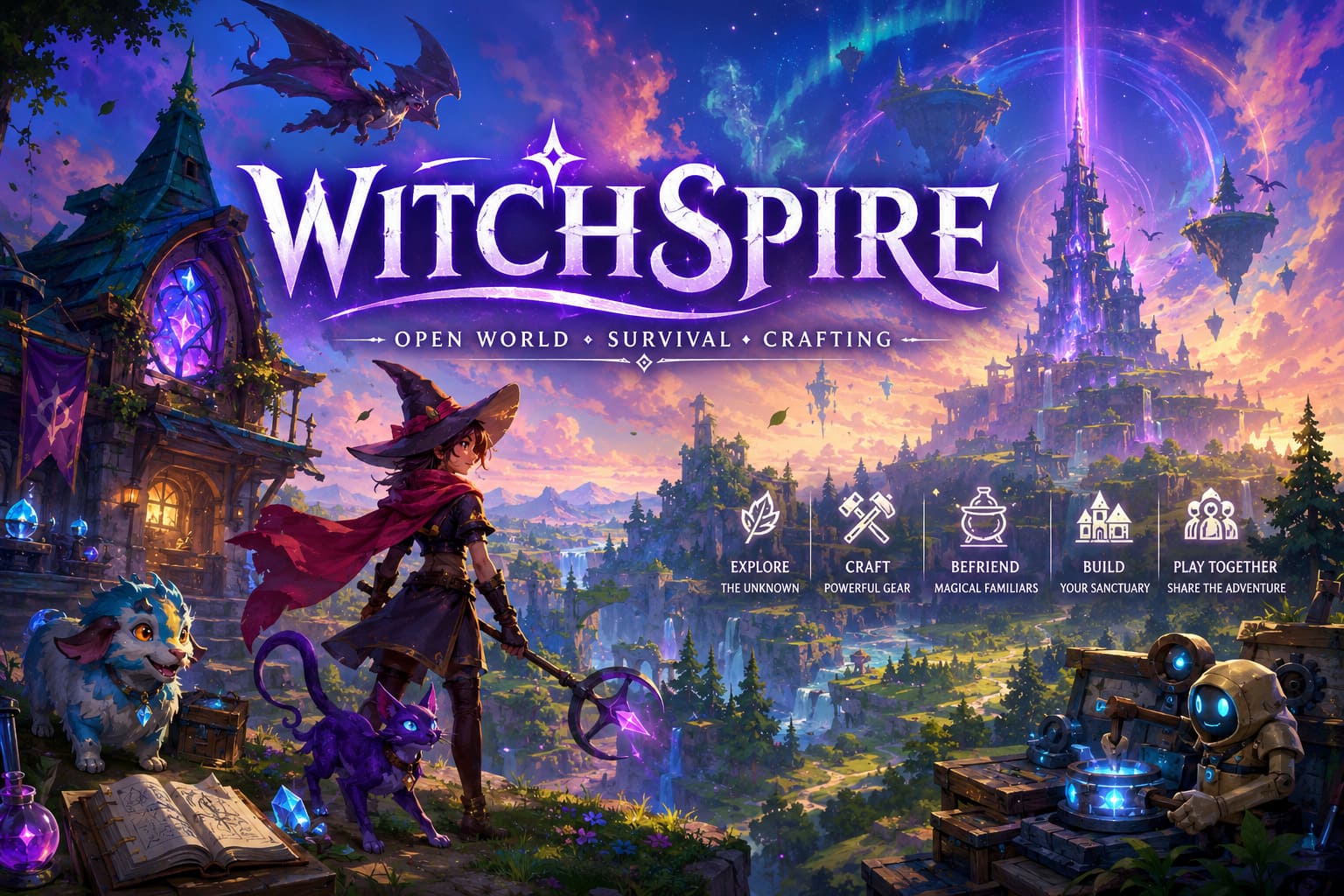
The survival crafting genre has been crowded for years. Every few months, another game arrives promising bigger worlds, tougher enemies, and more systems to manage. After spending time exploring Witchspire, I can honestly say it feels different from most of its competitors. Instead of forcing players to constantly worry about food bars, thirst meters, and endless grinding, it focuses on something much more enjoyable: magical exploration, creative freedom, and building your own fantasy adventure.
As someone who has played countless survival games over the years, I was surprised by how quickly Witchspire managed to hook me. It takes familiar mechanics and reshapes them into something that feels fresh without abandoning what makes the genre fun in the first place.
A Fantasy World That Actually Encourages Exploration
One of the first things I noticed was how inviting the world feels. Many survival games throw players into bleak wastelands filled with constant punishment. Witchspire goes in the opposite direction.
The world is colorful, mysterious, and packed with magical landmarks. Dense forests hide rare ingredients, ancient ruins contain valuable secrets, and strange creatures roam nearly every biome. Exploration never feels like a chore because there is almost always something worthwhile around the next corner.
The game’s central story revolves around a spreading corruption that threatens the land. While the narrative isn’t overly intrusive, it provides enough motivation to keep pushing deeper into dangerous territory.
What I appreciate most is that exploration feels rewarding instead of stressful. You’re encouraged to investigate unusual locations rather than rushing back to base every few minutes to manage survival meters.
Survival Without the Annoying Parts
One of Witchspire’s smartest design choices is removing traditional starvation mechanics.
You can still gather food, cook meals, and brew potions, but these items serve a different purpose. Instead of simply preventing death, they provide meaningful advantages such as:
- Mana regeneration
- Temporary elemental resistance
- Increased stamina recovery
- Combat bonuses
- Environmental protection
This simple change completely transforms the pacing. Rather than constantly hunting for food to survive, you’re preparing for upcoming challenges.
The result is a much more relaxed and enjoyable experience that still rewards preparation.
Early Progression Feels Satisfying
The opening hours are incredibly important in any survival game, and Witchspire handles them surprisingly well.
When starting out, you’ll spend most of your time collecting basic resources scattered throughout the environment. Flowers, wood, magical dust, and gemstones quickly become valuable crafting ingredients.
The first equipment upgrades feel meaningful because every new item noticeably improves efficiency.
Recommended Early Priorities

| Priority | Why It Matters |
|---|---|
| Gather Flowers | Essential for healing and mana recovery |
| Collect Wood | Required for most beginner crafting recipes |
| Upgrade Your Hearth | Expands building options and unlocks progression |
| Craft a Wand Early | Provides reliable ranged combat |
| Explore at Night | Rare materials become easier to find |
One of the biggest lessons I learned early was not to avoid nighttime exploration. While nights can be dangerous, they are also one of the best opportunities to gather rare magical resources that become crucial later.
The Hearth System Creates Clear Goals
Many crafting games overwhelm players with dozens of progression paths immediately.
Witchspire keeps things focused through its Hearth system.
Your Hearth essentially acts as the center of your magical settlement. Upgrading it unlocks:
- Advanced crafting stations
- Expanded building zones
- Higher-tier recipes
- Stronger equipment options
- Additional progression systems
Because of this structure, progression always feels purposeful. You know exactly what resources you’re gathering and why they matter.
Instead of randomly chasing upgrades, you’re steadily building toward meaningful milestones.
Choosing a Coven Actually Matters
Character identity is another area where Witchspire stands out.
Rather than locking players into rigid classes, the game allows significant customization through its Coven system.
Different covens offer unique starting advantages and thematic playstyles.
Cloudpiercers
Cloudpiercers are perfect for players who enjoy mobility-focused combat. Their bonuses support fast movement, aerial positioning, and aggressive engagements.
If you’re the type of player who likes staying mobile and constantly repositioning during battles, this path feels fantastic.
Foretellers
Foretellers cater to players who prefer traditional magical combat.
Their strengths include:
- Powerful ranged attacks
- Resource detection
- Enhanced scouting capabilities
- Long-distance engagement
I generally gravitate toward mage-style characters, so Foretellers immediately felt like the natural choice for me.
The best part is that the shared progression system still allows experimentation regardless of your initial selection.
Familiars Are More Than Just Pets
One of my favorite features in Witchspire is the familiar system.
Creature companions are often little more than cosmetic additions in many games. Here, they become a core part of progression.
After weakening magical creatures, players can bind them through special rituals and add them to their collection.
Each familiar has its own development path, allowing specialization into different combat roles.
Some focus on:
- Tanking damage
- Supporting allies
- Crowd control
- Status effects
- Direct damage output
This creates a surprising amount of strategy when building your team.
A carefully developed familiar can completely change the flow of difficult encounters.
Automation Makes Base Management Better

Another area where Witchspire impressed me is automation.
As survival games become larger, crafting often turns into repetitive busywork. Witchspire addresses this problem by allowing familiars to operate crafting stations.
While you’re out exploring, your companions can continue producing resources and refining materials back at base.
This system creates a satisfying sense of progression because your settlement gradually becomes more self-sufficient.
The result is less grinding and more adventuring.
Honestly, that’s exactly how automation should work in modern survival games.
The Building System Is Surprisingly Innovative
Building has become a major selling point for survival titles, but few games truly innovate in this area.
Witchspire introduces one mechanic that immediately stood out to me: Astral Projection Building.
Instead of constructing awkward temporary scaffolding just to place a roof tile or upper wall segment, players can temporarily leave their physical bodies and freely float around construction sites.
This offers several advantages:
- Easier roof placement
- Faster tower construction
- Better decorative control
- Improved visibility
- Less building frustration
After using this system for a few hours, returning to traditional building mechanics in other games feels surprisingly outdated.
It is one of those features that seems obvious once you’ve experienced it.
Combat Rewards Skillful Play
Although Witchspire embraces a more relaxed approach to survival mechanics, combat remains engaging.
The game emphasizes movement and positioning rather than standing still and trading damage.
Core abilities like teleportation and enhanced jumping create dynamic encounters that constantly keep players moving.
I particularly enjoyed how battles encourage combining mobility with spellcasting.
Large groups of corrupted enemies can quickly overwhelm careless players, making area-of-effect spells incredibly valuable.
Boss encounters become even more interesting once environmental hazards begin appearing during fights.
Meteor impacts, corruption zones, and magical anomalies force players to stay alert rather than relying solely on gear progression.
Co-Op Makes Everything Better
While Witchspire works perfectly well as a solo experience, the game truly shines in cooperative play.
Exploring dangerous biomes with friends naturally creates memorable moments.
Different players can specialize in:
| Role | Focus |
|---|---|
| Explorer | Resource gathering and scouting |
| Builder | Base expansion and organization |
| Mage | Long-range magical damage |
| Familiar Specialist | Companion management |
| Support | Buffs and utility abilities |
This flexibility allows groups to create their own unique strategies.
Even simple activities like gathering resources become more enjoyable when everyone contributes toward shared goals.
Final Thoughts
After spending considerable time with Witchspire, I genuinely believe it has the potential to become one of the most memorable fantasy survival crafting games in recent years.
What makes it special isn’t a single mechanic. It’s how all of its systems work together.
The game removes unnecessary frustrations while preserving the excitement of exploration, progression, combat, and creative building. The familiar system adds depth, the Hearth progression keeps players focused, and the Astral Projection building mechanic is one of the smartest quality-of-life features I’ve seen in the genre.
Most importantly, Witchspire remembers that games are supposed to be fun.
Instead of overwhelming players with constant punishment, it encourages experimentation, creativity, and adventure. Whether you’re exploring alone or building a magical sanctuary with friends, the world always feels inviting and rewarding.
For fans of open-world survival crafting games who are looking for something beyond the usual post-apocalyptic formula, Witchspire is absolutely worth keeping on your radar.