The Evolution of Horror Simulators: Why Midnight Watcher & Post-Soviet Games Are Dominating 2026
I’ve been noticing a pretty clear shift in how horror games are being designed lately. It’s no longer just about dark corridors, cheap jump scares, or running away from monsters with a flickering flashlight.
The newer wave—especially games like the upcoming Midnight Watcher: Village—leans heavily into something more uncomfortable in a different way: routine, responsibility, and the creeping dread that comes from managing everyday survival in a world that slowly turns wrong.
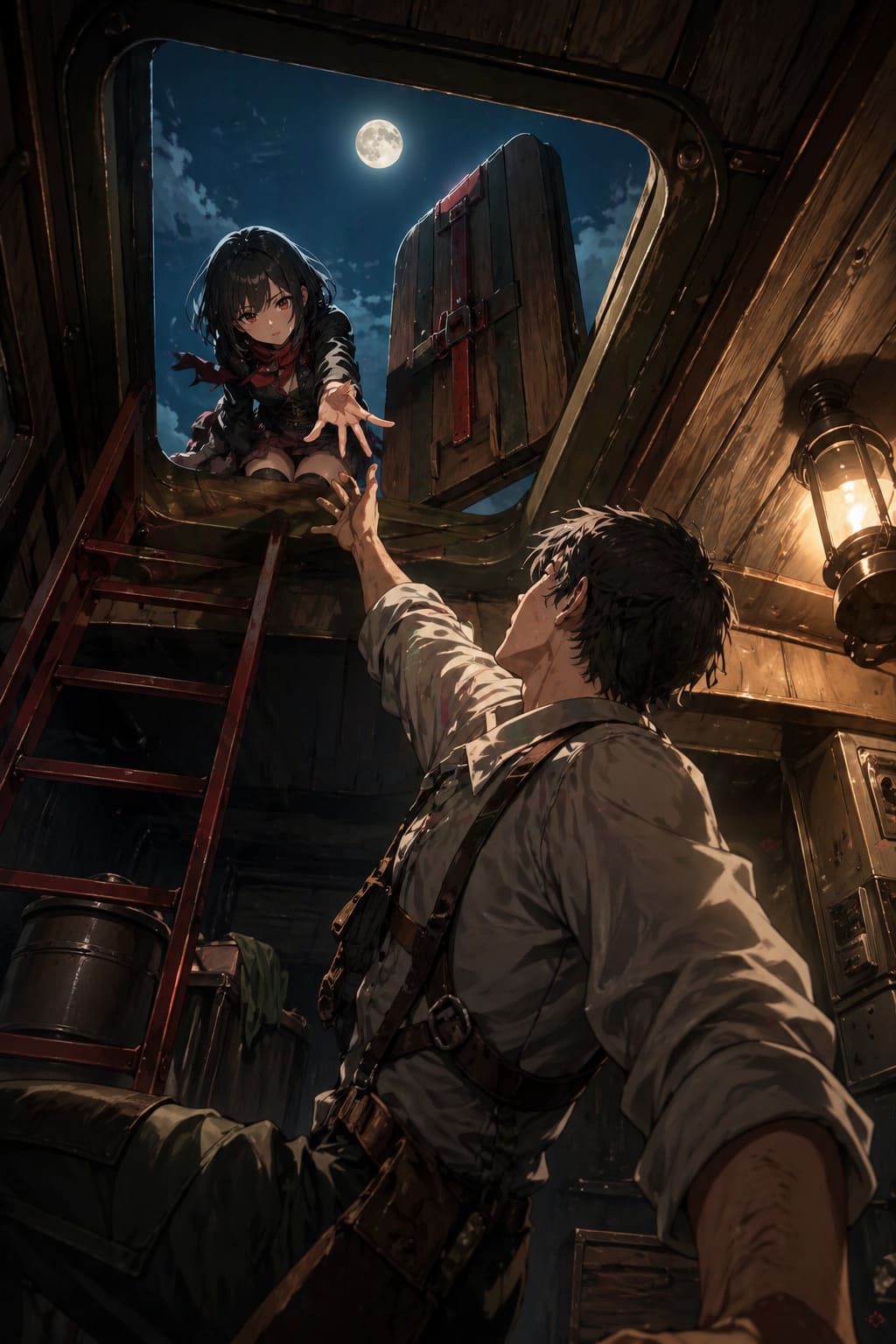
That combination of simulation mechanics + psychological horror is quietly becoming one of the strongest trends in gaming going into 2026.
And honestly? It works disturbingly well.
Windrose Steam Deck Performance Fix: Best Settings for 40+ FPS
Why Horror Simulation Games Hit So Hard
What makes these games different is not just what you’re scared of—it’s how long you have to live with it.
In traditional horror games, fear is often short bursts: a monster appears, you hide or run, and the tension resets. But in horror simulation titles, the tension is constant. You’re not just surviving horror—you’re maintaining life inside it.
That’s the key appeal of games like Midnight Watcher: Village: you’re doing normal things—collecting firewood, cooking food, managing supplies—but every small mistake echoes into the night.
It creates a loop like: “I should’ve saved more fuel…”, “Why did I waste ammo earlier?”, “Did I really need that extra trip outside?”
It’s stress, but in a very controlled, immersive form.
Best Games Like Midnight Watcher: Village (Personal Picks)
I’ll break these down based on what kind of experience they deliver, because not every player is looking for the same type of dread.
Survival Simulators with Real Pressure
These are the closest to the Midnight Watcher formula—resource management meets isolation.
The Long Dark is probably one of the purest survival experiences ever made. No monsters, no supernatural tricks—just you, freezing weather, and limited supplies. What makes it terrifying is how quiet everything is. You start paying attention to calories, wind direction, and daylight like your life depends on it—because it does.
Atomfall is a newer survival-action experience set in a post-nuclear rural Britain. What stands out is the atmosphere: abandoned villages, strange factions, and that constant feeling that something is not quite right. It’s survival with mystery layered on top.
Medieval Dynasty feels calmer at first, but don’t be fooled. Managing a growing settlement, assigning tasks, and keeping everyone alive turns into a long-term resource nightmare. It lacks supernatural horror, but the stress loop is absolutely there.
Psychological & Supernatural Horror Sims
These games lean more into narrative dread and strange systems rather than pure survival math.
World of Horror is a stylized cosmic horror RPG that feels like playing through cursed folklore. Every decision costs something, and every investigation makes you feel like you’re digging deeper into something you shouldn’t understand.
Pathologic 3 (if it lives up to its legacy) will likely be one of the most intense “suffering simulators” ever made. The series is known for forcing players to manage exhaustion, illness, and social collapse while a plague spreads through a surreal town.
Resident Evil Requiem is expected around 2026 and is rumored to return to more grounded, rural horror environments. If it continues the direction of recent entries, expect a blend of survival tension and cinematic dread.
“Job Horror” and Everyday Simulation Gone Wrong
This is probably the most interesting subgenre right now. Instead of being a soldier or survivor, you’re just doing a job. That’s it. And somehow it becomes terrifying.
Home Safety Hotline puts you in a phone support role diagnosing “household issues.” At first it’s normal pests and maintenance problems. Then things escalate into descriptions that don’t belong in reality.
Strange Horticulture lets you run a plant shop in a quiet town, identifying mysterious and sometimes dangerous plants. The horror is subtle, but it grows as your choices begin affecting the townspeople in unexpected ways.
Mind Scanners is a dystopian psychiatric simulation where diagnosing citizens becomes a mechanical, unsettling process. The more you play, the more you question whether the system—or you—is actually helping anyone.

2026 Horror Survival Watchlist
A lot of upcoming titles are pushing this “simulation horror” direction even further. Here’s a quick breakdown of games that are either confirmed or widely discussed in the community.
| Game Title | Expected Release | Core Experience |
|---|---|---|
| Sinking Eternity | Q1 2026 | Survival in a collapsing, sinking world |
| Aethus | March 2026 | Exploration-heavy survival with resource tension |
| Subnautica 2 | 2025–2026 | Deep ocean survival with extreme environmental horror |
| State of Decay 3 | 2025–2026 | Community survival in a zombie apocalypse |
| Pathologic 3 | 2025–2026 | Psychological survival in a collapsing town |
What’s interesting here is that almost all of these are shifting away from “hero fantasy” and toward systems-based survival. You’re not saving the world—you’re just trying to manage your corner of it.
What Makes This Genre So Addictive
From my perspective as someone who plays a lot of different genres, the appeal comes down to one thing: ownership of failure.
In these games, when you lose, it rarely feels random. It feels earned. You didn’t stock enough supplies. You mismanaged time during the day. You ignored a small problem until it became a big one.
That creates a very specific emotional loop: “I can do better next time.”
Even when the game is punishing, it rarely feels unfair. Instead, it feels like a system you’re slowly learning to survive.
And that’s where the horror becomes personal.
Beyond the Village: Why I Can’t Stop Thinking About Post-Soviet Horror Games in 2026
I’ve been playing horror games for years, from classic survival titles to modern psychological experiments, but something strange happened recently: I stopped being impressed by monsters—and started being unsettled by maintenance tasks.
That’s probably why the wave of post-Soviet horror and isolation sims in 2026 feels so different. It’s not just about fear anymore. It’s about routine, decay, and loneliness in systems that barely hold together. Games inspired by Eastern European landscapes, Brutalist architecture, and “forgotten infrastructure” are quietly becoming one of the most interesting shifts in modern gaming.
And honestly? I get why people are hooked.
The New Horror Isn’t Monsters – It’s Maintenance
One of the biggest changes in this genre is how horror is structured. Instead of running from creatures, you’re usually repairing broken generators, rationing fuel or electricity, boiling contaminated water, checking radios that barely work, and surviving systems that actively degrade.
This “work-based horror” approach feels almost mundane on paper, but in practice it creates something unique: anxiety from responsibility, not just danger.
Games like Midnight Watcher: Village showed that survival doesn’t need jump scares. Sometimes it’s just you, a freezing cabin, and a decision about whether you waste fuel or risk the dark.
That design philosophy has expanded into what many now call Isolation Simulators.
Why Post-Soviet Settings Hit So Hard
There’s something oddly specific about the environments these games use: decaying apartment blocks, empty snow-covered highways, abandoned industrial towns, endless forests with no landmarks, and Soviet-era infrastructure that still functions, but barely.
It’s not just aesthetic—it’s emotional design.
I think the appeal comes from what these places represent: systems that once promised structure, now left running without meaning. That creates a kind of quiet dread that feels different from traditional horror.
Instead of asking “What’s chasing me?” these games ask: What happens if nothing comes to save me?
That shift is powerful.
Brutalist Horror: When Buildings Feel Alive
One of the most interesting sub-trends I’ve seen is the use of Brutalist architecture in horror design. Games like the upcoming Concrete Silence push this idea further by trapping players in massive, oppressive apartment complexes. And I don’t mean “levels”—I mean entire living ecosystems of concrete corridors.
Typical gameplay includes managing power distribution across floors, interacting with neighbors through locked steel doors, navigating stairwells that seem to loop unnaturally, and avoiding anomalies hidden in structural dead zones.
It’s basically a psychological maze built out of concrete and repetition.
The buildings don’t just feel like environments—they feel like systems that observe you.
Survival Mechanics Have Become the Horror
What surprised me most in 2026 is how deeply simulation mechanics are tied to fear now.
Instead of abstract health bars, we get systems like thermal degradation where your fingers literally affect aiming accuracy, fatigue-based controls where movement becomes physically harder, resource decay over time where equipment fails realistically, and routine dependency systems where missing daily tasks has cascading effects.
In Black Blizzard, for example, cold doesn’t just lower stats—it actively changes how your controls respond. Reloading a weapon under freezing conditions becomes a fight against your own input lag.
It sounds frustrating, but it’s also immersive in a way traditional horror isn’t.
You don’t feel like a hero or victim. You feel like a person trying not to fall apart in a system that doesn’t care if you succeed.
The Return of Folklore – But Not the Way You Expect
Another trend I didn’t expect to enjoy as much as I do is the resurgence of Slavic mythology in modern survival horror.
Instead of generic zombies or alien threats, we’re seeing creatures and forces like Leshy, Domovoi, and Baba Yaga-inspired entities. But these aren’t just enemies. They’re systems you manage.
In Navi’s Call, for example, survival depends on maintaining ritual balance. Forget to leave offerings or follow specific rules, and your environment itself starts malfunctioning—stoves fail, lights flicker, and essential systems break down.
It’s horror built on logic, not randomness.
And weirdly, that makes it feel more real.
Why Players Are Obsessed
There’s been a noticeable rise in interest from Western players, especially in the US, and I think it comes down to one thing: earned survival.
Modern gaming often holds the player’s hand. These games don’t.
Instead, they demand patience, observation, trial and error, and acceptance of failure.
Players often talk about the satisfaction of doing something small but difficult—like restarting an old tractor in a snowstorm or restoring power to a broken radio tower.
That kind of gameplay feels grounding. Almost therapeutic in a strange way.
You’re not chosen. You’re just persistent.
Notable Games Defining the Genre in 2026
| Game | Setting | Core Simulation Focus |
|---|---|---|
| Volga Drift | Frozen river systems | Ice fishing, boat survival mechanics |
| Panelka Night | Soviet apartment complex | Power rationing, neighbor interaction |
| Siberian Guard | Remote outpost | Fuel logistics, paranoia systems |
| Krasnoyarsk-26 | Underground city | Oxygen, light management, isolation |
Each of these games focuses less on combat and more on systems under stress.
Technology Is Making the Fear More Physical
The rise of Unreal Engine 5 and advanced lighting systems has taken this genre further than I expected.
What used to be atmospheric fog is now physically simulated darkness, detailed micro-surfaces like rust and frost, real-time lighting failures, and hyper-detailed environmental decay.
When you can zoom into a rusted can and actually read the label, it changes how you perceive the world. Everything feels real enough to be uncomfortable.
It’s not about graphical fidelity for its own sake—it’s about making every object feel like it has weight and history.
Co-op Isolation: A Strange New Direction
One of the most interesting evolutions is asymmetric multiplayer.
Instead of teaming up equally, players are separated into roles like The Watcher, monitoring systems from a safe location, and The Scavenger, physically exploring dangerous environments.
Communication becomes the main tension point. If the Watcher loses power, the Scavenger is completely alone. If the Scavenger goes silent, the Watcher can only guess what happened.
It turns cooperation into anxiety management.
Final Thoughts: Why This Genre Works
After spending time with these kinds of games, I don’t think their appeal is just aesthetic. It’s structural.
Post-Soviet horror works because it removes certainty. It replaces action with maintenance, enemies with systems, and victory with survival.
And maybe that’s why it sticks.
Because in the end, the scariest thing isn’t a monster in the dark.
It’s realizing the lights might never come back on—and you’re still responsible for keeping them running.