Shift At Midnight ID Verification Guide: How to Spot Doppelgangers and Survive the Graveyard Shift
When I first loaded into Shift At Midnight, I honestly expected another quick indie horror game where jump scares do most of the work. Instead, I ended up playing something that constantly made me doubt every customer standing at my counter. After a few shifts, I realized this isn’t really about shooting monsters—it’s about paying attention to tiny details while your brain slowly convinces you that everyone is suspicious.
That’s what makes the game so addictive.
You spend most of your time doing completely ordinary gas station work, but underneath that routine is an investigation game where a single mistake can destroy an otherwise perfect run. Every customer becomes a puzzle, and every decision feels important because the consequences arrive a few minutes later instead of immediately.
After dozens of successful and not-so-successful nights, I’ve found that surviving has very little to do with fast reflexes. It’s about creating a routine and trusting it, even when the pressure starts building.
Why ID Verification Is the Most Important Mechanic
Many new players focus on guns, traps, barricades, or surviving monster attacks.
I think that’s backwards.
Those mechanics only exist because someone failed an inspection earlier.
If your identification process is consistent, you’ll spend far less time desperately boarding windows while horrifying creatures try to force their way inside.
The game constantly randomizes customers, documents, and suspicious behavior, so memorizing appearances simply doesn’t work. Instead, every visitor should be treated like a completely new investigation.
The biggest lesson I learned is simple:
Never rush an ID check just because the line is getting longer.
A few extra seconds at the counter is always better than spending the next several minutes hiding in a locker.
My Personal Verification Routine
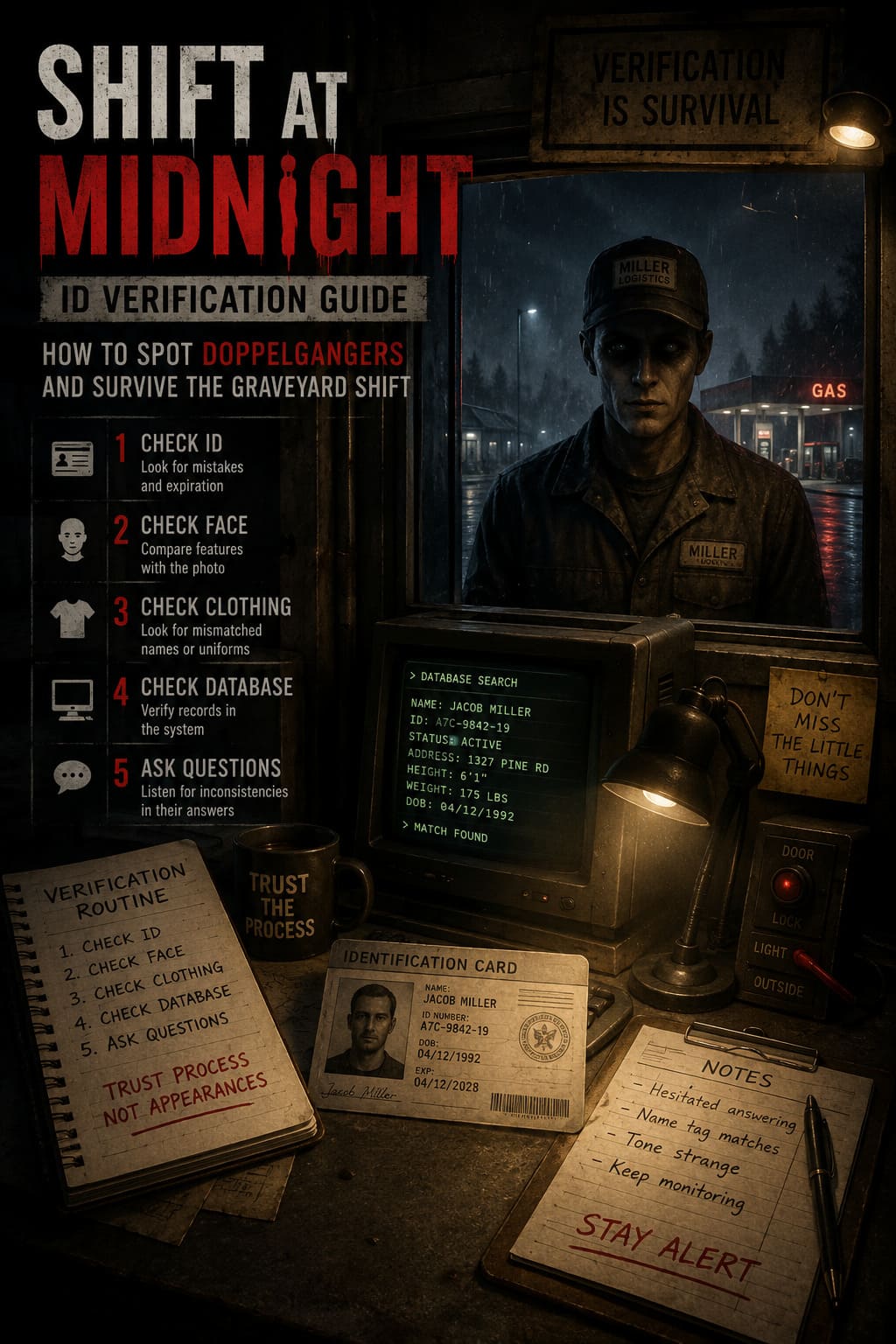
I eventually settled into a process that I now follow with every single customer.
| Step | What I Check | Why It Matters |
|---|---|---|
| 1 | Physical ID | Look for obvious mistakes and expired documents. |
| 2 | Customer’s Face | Compare facial features with the ID photo. |
| 3 | Clothing Details | Watch for mismatched names or uniforms. |
| 4 | Computer Database | Verify official records against the card. |
| 5 | Questions | Listen carefully for inconsistent answers. |
Following the exact same order every time dramatically reduces mistakes.
Don’t Just Read the ID—Actually Study It
At first glance, every identification card looks legitimate.
That’s exactly the point.
The monsters aren’t trying to fool careless players—they’re trying to fool attentive ones.
When I receive an ID, I don’t immediately read the name. Instead, I scan the entire card first.
Things I always inspect include:
- Expiration date.
- Overall formatting.
- Font consistency.
- State markings.
- Photograph quality.
Sometimes nothing seems wrong initially, but after comparing several details together, the fake becomes obvious.
The game rewards patience far more than speed.
Faces Tell You More Than Documents
One mistake I made early was trusting paperwork too much.
Now I spend almost as much time looking at the customer as I do looking at the card.
Some differences are incredibly subtle.
I usually compare:
- Eye shape.
- Hairstyle.
- Jawline.
- Facial structure.
- Visible age.
- Unique facial features.
Even if every document appears legitimate, something about the person’s appearance can immediately reveal that something isn’t right.
If your instincts say the photo doesn’t match the person standing in front of you, don’t ignore that feeling.
Double-check everything.
Clothing Can Expose a Fake Instantly
This is probably the easiest clue to overlook.
Some customers wear uniforms, jackets, or work clothing with visible name tags.
Whenever I notice one, I immediately compare that name against the driver’s license.
Surprisingly often, everything on the ID appears legitimate while the clothing tells a completely different story.
That tiny inconsistency is enough to expose an impostor.
It’s one of those details that experienced players naturally begin checking without even thinking.
The Computer Is Your Best Friend
The old desktop terminal might not look exciting, but it’s arguably the strongest tool available.
Every time I receive an ID, I immediately verify it through the database.
I compare several pieces of information:
- Full name.
- Identification number.
- Address.
- Birthday.
- Height.
- Weight.
A single mismatch should immediately raise suspicion.
The database often catches problems that are almost impossible to notice by simply examining the physical document.
Whenever I skip this step because I’m in a hurry, I usually regret it.
Ask Smart Questions Instead of Random Ones
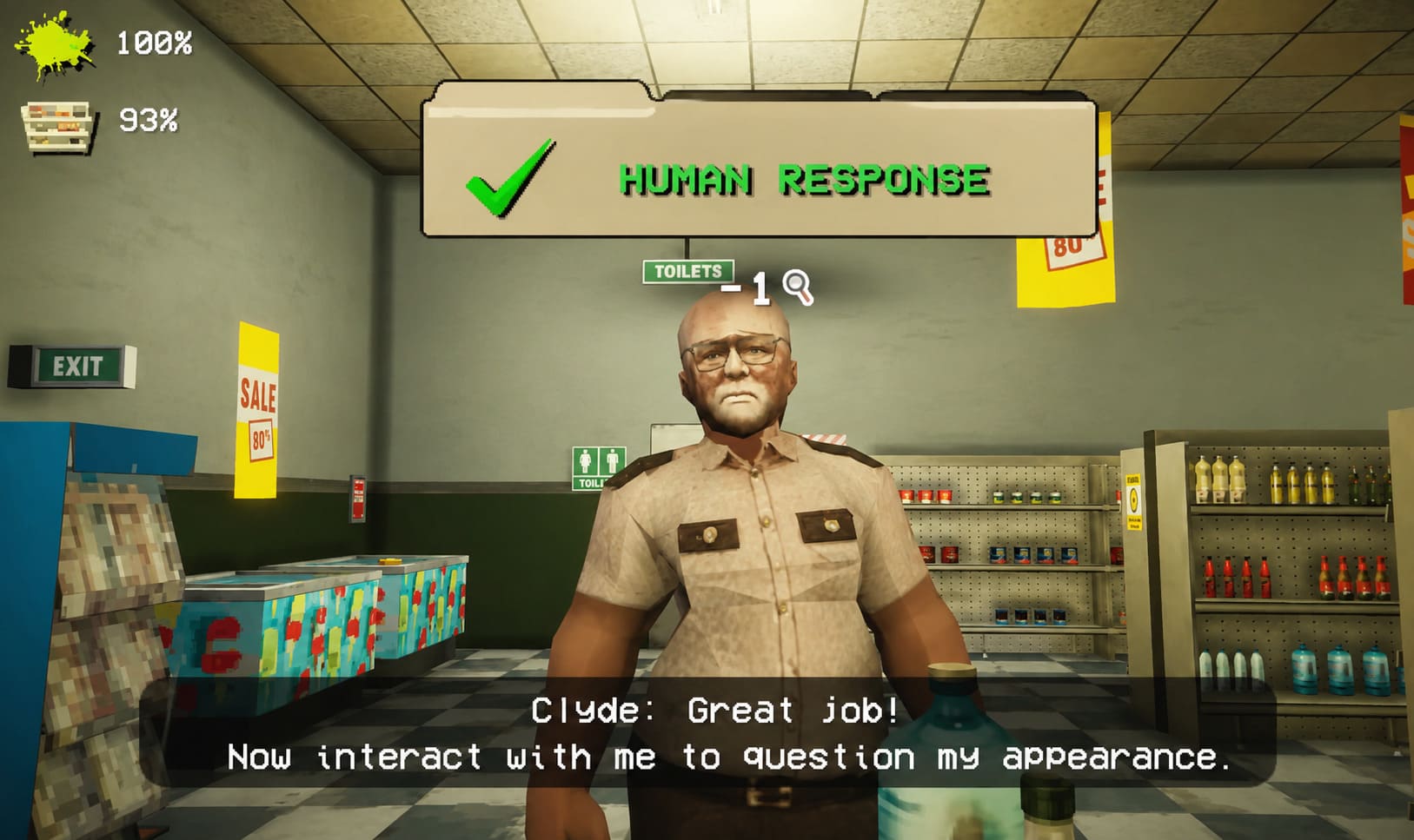
The dialogue system isn’t there just for immersion.
It’s another investigation tool.
Rather than clicking through questions randomly, I try to ask things that naturally connect with the information already on the ID.
For example:
- Where are you heading tonight?
- Why are you traveling so late?
- Where do you live?
- What’s your reason for stopping here?
The interesting part is that believable answers aren’t always correct answers.
Sometimes customers hesitate.
Sometimes they contradict their own paperwork.
Sometimes they repeat strange phrases that sound almost rehearsed.
The longer the conversation continues, the easier it becomes to notice behavior that simply doesn’t feel human.
The Creepiest Clues Aren’t Always on the Customer
One thing I absolutely love about Shift At Midnight is how environmental storytelling becomes part of the investigation.
Sometimes the warning signs appear somewhere else entirely.
I’ve noticed moments where:
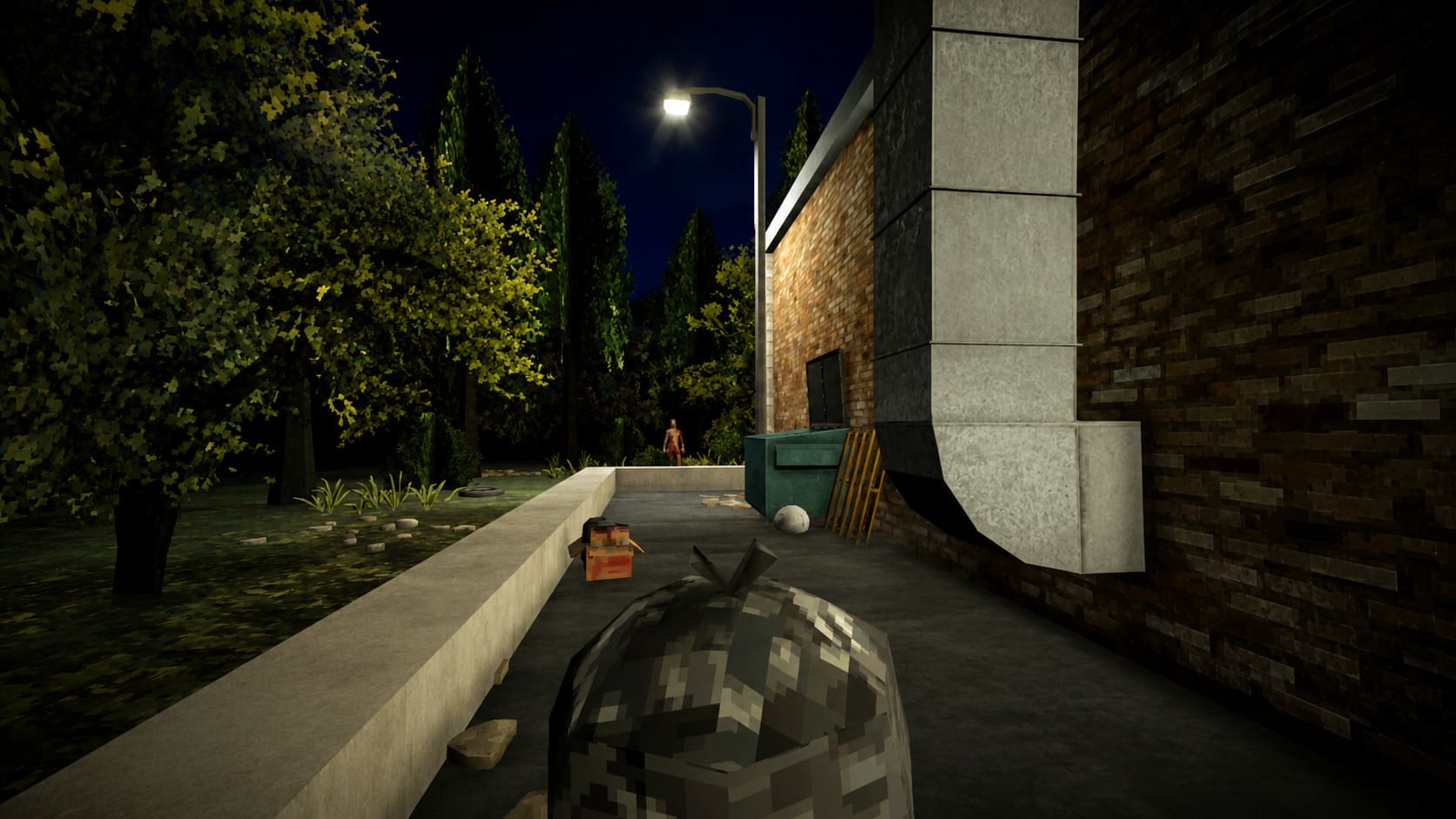
- Strange noises begin outside.
- Unusual movement appears through windows.
- Nearby rooms suddenly feel different.
- Animals start behaving strangely.
- The atmosphere shifts before anything obvious happens.
None of these guarantee that a customer is fake.
But together they create enough suspicion that I’ll perform another full verification before making a decision.
The game constantly encourages you to observe everything instead of focusing on only one screen.
When a Monster Slips Through
Eventually everyone makes a mistake.
I definitely have.
The first time I accidentally cleared a doppelganger, I thought I had simply missed some minor clue.
A minute later I understood exactly how serious that mistake was.
The game quickly shifts away from detective work and becomes pure survival horror.
Instead of calmly checking paperwork, you’re suddenly trying to keep monsters outside while every second feels shorter than the last.
When that warning appears, my priorities immediately change.
- Secure entrances. Boarding windows buys valuable time.
- Place traps carefully. Random placement usually wastes resources.
- Stay quiet. Voice proximity makes unnecessary conversations incredibly dangerous.
One careless mistake during inspection can snowball into a full-scale siege that drains your supplies and leaves almost no room for recovery.
My Favorite Co-op Strategy
I honestly believe Shift At Midnight is at its best with friends.
Not because it’s less scary—but because everyone slowly develops a specific responsibility inside the station.
Our group eventually settled on this setup.
| Role | Main Responsibility |
|---|---|
| Investigator | Handles customers, checks IDs, and asks questions. |
| Database Operator | Verifies records through the computer terminal. |
| Store Manager | Restocks shelves, cleans the station, and monitors suspicious activity. |
| Defender | Prepares barricades, traps, and emergency defenses. |
Having dedicated roles removes a surprising amount of confusion during busy periods.
Instead of everyone trying to do everything, each player becomes extremely efficient at one responsibility.
Communication also becomes much cleaner, allowing the team to react immediately whenever someone spots a suspicious inconsistency.
Small Habits That Improved My Survival Rate
These simple routines increased my survival rate far more than memorizing monster behavior.
- Always inspect every document before serving a customer.
- Never trust appearances alone.
- Listen carefully to every answer.
- Use the computer for every verification.
- Follow the same inspection routine every time.
- Keep defensive supplies ready even during quiet moments.
Consistency is what separates successful shifts from complete disasters.
Final Thoughts
What impressed me most about Shift At Midnight is that it transforms incredibly ordinary tasks into some of the most stressful moments I’ve experienced in a horror game.
Checking IDs shouldn’t be exciting. Comparing addresses shouldn’t make your palms sweat. Looking at someone’s face shouldn’t feel dangerous. Yet somehow this game makes every tiny decision feel meaningful because the consequences arrive later instead of immediately.
You’re constantly wondering whether you overlooked one tiny clue, and that lingering uncertainty creates more tension than many scripted jump scares ever could.
If I could give one piece of advice to new players, it would simply be this: slow down. Don’t let the growing customer line pressure you into rushing inspections. Treat every visitor as though they’re trying to fool you, because eventually one of them absolutely will be. Follow the same verification routine every single time, trust the computer database as much as your own observations, and never ignore even the smallest inconsistency.
The doppelgangers become smarter with every passing night, but so do you. Once you stop searching for obvious mistakes and begin paying attention to subtle details, you’ll catch far more monsters before they ever get the opportunity to turn your quiet overnight shift into a desperate fight for survival.