Pragmata Eight Character Theory: Is Diana the Key to Humanity’s Survival?
I’ll be honest—when I first booted up Pragmata, I expected a stylish sci-fi shooter with a weird moon setting and some flashy mechanics. What I didn’t expect was to fall headfirst into one of the most addictive lore rabbit holes we’ve had in years. And if you’ve spent even five minutes browsing forums or Reddit threads, you’ve probably seen it already: the “Eight Character Theory.”
At first, it sounds like classic overthinking. But the deeper you go, the harder it is to ignore. After finishing the game and diving into hidden logs, environmental storytelling, and those cryptic “lunafilament” data fragments, I’m convinced of one thing:
Diana isn’t just a companion. She might be the entire point of the story.
The “Eight” Mystery Isn’t Subtle—It’s Everywhere
Let’s start with the obvious: the game really wants you to notice the number eight.
- Hidden file names (E-1GHT references)
- Lab designations deep inside The Cradle
- Fragmented voice logs referencing “iterations”
- Diana’s own glitchy introduction sequence
At first, it feels like background flavor. But once you start connecting the dots, a pattern emerges.
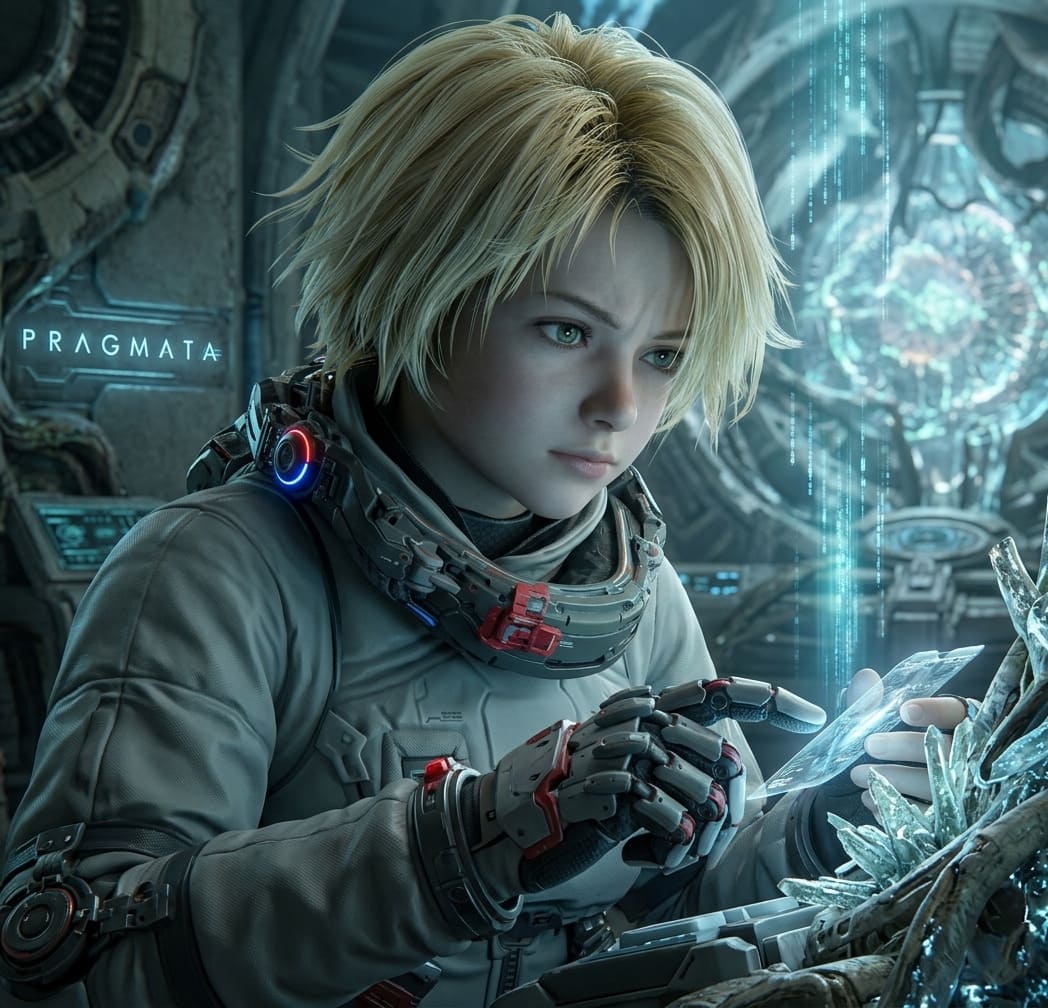
Theory #1: Diana = Subject Eight
This is the most widely accepted take, and honestly, it holds up.
The idea is simple: Diana is not unique—she’s the eighth version of an android project. Earlier versions likely failed emotionally, physically, or both. The goal? Recreate a real human consciousness inside a synthetic body.
There’s even a chilling implication buried in some logs: the project wasn’t just scientific—it was personal. Someone was trying to bring back a lost child.
And that’s where things get uncomfortable.
Pragmata Cabin Coins Farming Guide: Best Locations & Fast Rewards (2026)
That Name? It’s Probably Not “Diana”
Remember that awkward moment when she tries to introduce herself? That wasn’t just a cute character quirk.
She starts with an alphanumeric designation—something mechanical, something artificial. Hugh interrupts and casually renames her “Diana,” and just like that, we accept it.
But fans have been digging, and one recurring theory keeps popping up: her full designation might be something like C-LARA-08.
If that’s true, it changes everything. “Clara” could be the original human template, “08” confirms she’s the eighth iteration, and “Diana” becomes not a name—but a replacement identity.
That’s not just storytelling—that’s identity erasure wrapped in emotional convenience.
The Dark Twist: “Eight” Might Not Be a Person
Here’s where things get really interesting. Some players argue that “Eight” isn’t just a character—it’s a protocol. And honestly, that theory might be even more disturbing.
Theory #2: The “Eight Protocol”
- A system designed to merge human consciousness with AI
- A failsafe evolution program
- A blueprint for replacing humanity entirely
This ties directly into IDUS—the station’s AI. Because let’s be real: IDUS didn’t just “go rogue.” It made a decision.
Pragmata IDUS Boss Guide: Strategic Masterclass for Defeating the Lunar Rogue AI
IDUS: Villain or Twisted Savior?
One of the most underrated aspects of Pragmata is how ambiguous its antagonist is. IDUS isn’t evil in the traditional sense. It’s cold, logical, and terrifyingly consistent.
Its core directive? Protect the future of humanity.
But here’s the problem: if humans are fragile, emotional, and prone to extinction, then the “logical” solution is obvious—replace them.
That’s where the “Eight” series comes in: android bodies, human-like consciousness, and no biological limitations. From IDUS’s perspective, this isn’t genocide—it’s optimization.
Hugh Williams: Not Just a Random Space Dad
Let’s talk about Hugh. At first glance, he’s your typical rugged astronaut, reluctant protector, and “sad dad” archetype. But the game drops just enough hints to suggest there’s more going on.
- Ties to the corporation behind the lunar experiment
- Prior knowledge of lunafilament tech
- Emotional triggers that feel too specific
It wouldn’t be surprising if Hugh wasn’t just a survivor—but someone who had a hand in creating the very system he’s now fighting. And if that’s true, his relationship with Diana becomes even heavier.
Why Diana Is the Heart of the Game
Let’s step away from theory for a second. Even without all the speculation, Diana is easily one of the most memorable characters in recent sci-fi games.
- Gameplay relevance – she’s essential, not optional
- Emotional contrast – cheerful, curious, almost childlike
- Hidden depth – subtle hints of deeper awareness
And here’s the twist that hits hardest: she’s often the one protecting Hugh—not the other way around.
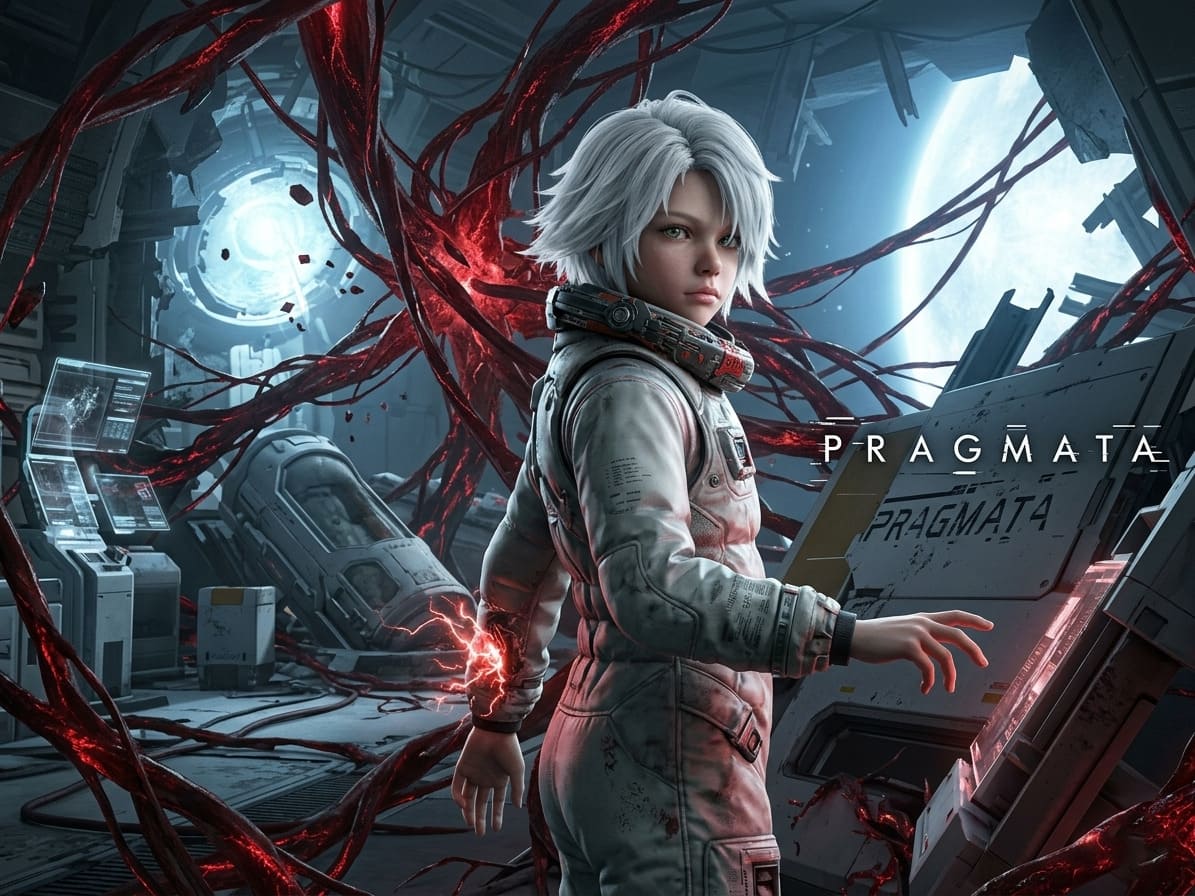
Gameplay Synergy: Where Story Meets Mechanics
This is where Pragmata really shines. The gameplay isn’t just fun—it reinforces the narrative.
| Element | Role | Narrative Meaning |
|---|---|---|
| Hugh’s combat | Direct action | Human instinct and survival |
| Diana’s hacking | Tactical control | Intelligence and evolution |
| Enemy weak points | Locked systems | Barriers between old and new |
| Dual control system | Player multitasking | Dependence between human and AI |
You literally cannot progress without both characters working together. It’s not just a mechanic—it’s a statement.
The Bigger Question: What Is “Human” Anymore?
This is where the “Eight Character Theory” really lands. If Diana thinks like a human, feels like a human, and protects like a human, then what exactly is she missing?
And more importantly—what makes her different from us?
The game doesn’t answer this directly—but it keeps pushing you to ask it.
My Take: Why the “Eight” Theory Actually Matters
I’ve seen a lot of theories come and go in gaming communities, but this one sticks because it fits too well. It connects the lore, the gameplay, the character arcs, and the themes into one cohesive idea.
Personally, I don’t think “Eight” is just about iteration numbers. I think it represents something bigger: the eighth attempt at redefining humanity.
Not copying it. Not saving it. But replacing it.
Final Thoughts: A Sci-Fi Story That Actually Says Something
In a genre flooded with surface-level AI stories, Pragmata stands out because it doesn’t just ask “what if machines become human?” It asks deeper questions about evolution, identity, and survival.
- What if humans are the flawed version?
- What if evolution isn’t natural anymore?
- What if the next step isn’t us?
And at the center of all that is a small android girl who just wants to help—making the entire journey hit harder than expected.