Path of Idle Old Gods Rising Best Starting Class Guide (2026 Meta)
If there is one thing I have learned from playing idle RPGs, it is this: “idle” does not mean “mindless.” The game may fight for you, farm resources while you are away, and automate a huge part of the combat, but your decisions before pressing that auto button still matter a lot.
That is especially true in Path of Idle: Old Gods Rising.
The game throws you onto the cursed Blackreef Isle, gives you a growing roster of Godsworn heroes, and then quietly asks a very important question: Do you actually know what you are building?
With six base classes to choose from, it is easy to waste early resources on a character that looks amazing on paper but does not feel nearly as good during the first several hours. And honestly, that is the part of the game I find most interesting. The strongest class is not necessarily the one with the biggest damage number. The best starting class is the one that makes the entire account feel smoother.
After looking at the current 2026 meta and, more importantly, thinking about how these classes actually fit together in an automated team, Warrior is my personal pick for the best starting class.
But that does not mean everyone should blindly choose Warrior. Chieftain has a very strong argument for aggressive players, while Mage becomes increasingly valuable once your team starts dealing with harder content.
Here is how I would approach the game from the beginning.
The Six Classes: What Do They Actually Bring?
Before talking about the meta, it is worth looking at what each class is supposed to do. In my opinion, understanding the role is more useful than simply memorizing a tier list.

| Class | Main Role | Biggest Strength | Main Weakness |
|---|---|---|---|
| Warrior | Tank / Frontline | Survivability and reliable clearing | Lower burst damage |
| Mage | AoE / Support | Wave clearing and shields | Can be fragile |
| Archer | Ranged DPS | Boss damage and attack speed | Needs protection |
| Rogue | Burst / Debuff | Evasion, poison and utility | Less consistent defensively |
| Scholar | Support | Buffs, cooldowns and progression utility | Limited direct damage |
| Chieftain | Bruiser / DPS | High damage and offensive buffs | Less durable than a dedicated tank |
That is the simple version. The interesting part begins when you start combining these classes.
Warrior: The Class I Would Start With
Let’s get this out of the way first: Warrior is not necessarily the most exciting class.
It is, however, incredibly practical.
And in an idle RPG, practicality is underrated.
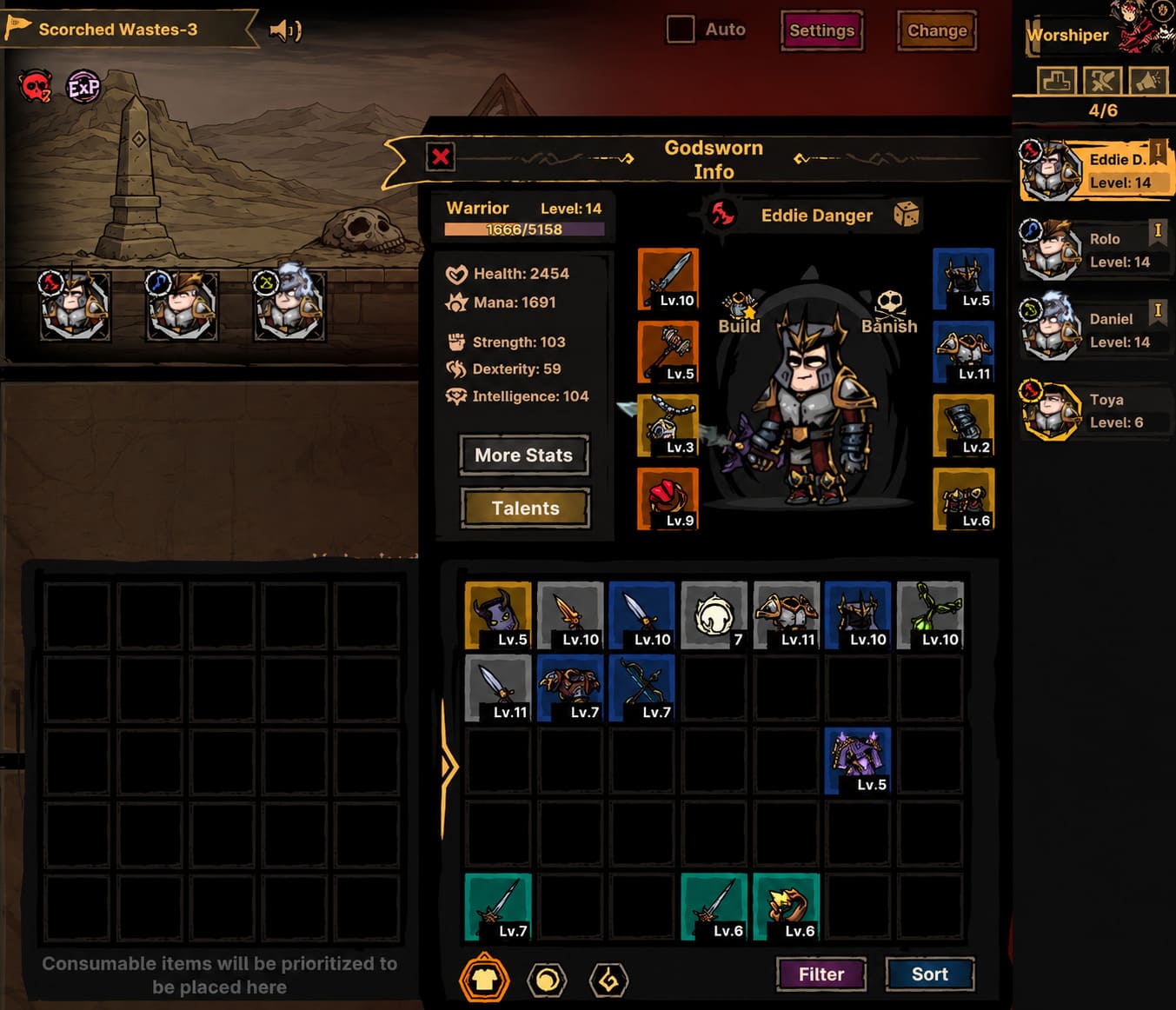
Your battles are automated. You are not sitting there manually dodging every attack or interrupting an enemy at exactly the right moment. When something goes wrong, your team simply loses. That means consistency has real value.
Warrior gives you a big margin for error.
Its defensive scaling, health pool and block-oriented mechanics make it much harder for random damage spikes to completely destroy your run. That matters enormously during the early campaign, when your equipment is mediocre and your team does not yet have a fully developed collection of synergistic skills.
I also like Warrior because it does not demand perfect gear to function.
A damage dealer can sometimes feel incredible when you have the right weapon, critical stats and modifiers, then suddenly feel terrible when you fall behind the intended gear curve. Warrior is much more forgiving.
You can give it reasonably appropriate physical equipment, put it in front, and let it do its job.
For a first character, that is exactly what I want.
Why Warrior Feels So Good Early
The early game is basically a race between three things:
- Staying alive.
- Clearing enemies quickly enough.
- Gathering resources to improve your account.
Warrior helps with the first two without needing an overly complicated setup.
Its multi-target attacks are particularly useful against ordinary enemy packs, while its defensive profile gives your backline enough time to actually do their jobs.
That last part is important.
A tank is not valuable because it deals the most damage. A tank is valuable because it allows your damage dealers to keep dealing damage.
And in an automated game, that relationship becomes even more important.
Chieftain: My Favorite Alternative
If Warrior feels too safe for you, Chieftain is where I would look next.
This is the class I would choose if my priority was simply making things explode as quickly as possible.
Chieftain combines heavy physical damage with crowd-control tools and offensive buffs, and its aggressive scaling makes it particularly attractive for players who hate slow progression.
The big selling point is Frenzy.
When your build is properly supported, Chieftain can turn into a serious damage engine. Instead of slowly grinding through enemies, you can build a team around keeping the Chieftain active and letting its offensive bonuses push you through difficult encounters.
The catch?
You give up some of the safety that Warrior provides.
That means your supporting characters suddenly matter more. If the Chieftain can destroy a boss before the boss becomes a problem, fantastic. If the fight drags on, however, your lack of a dedicated defensive anchor can become noticeable.
So my take is simple:
Warrior is the better beginner choice. Chieftain is the more exciting aggressive choice.
Mage: Probably the Most Important Class After Your Tank
Mage is one of those classes that becomes more impressive the longer you play.
At first glance, it is simply your AoE damage dealer. That is already useful because fast wave clearing makes farming considerably less painful.
But Mage has another trick that I think makes it particularly valuable: barrier-based defensive support.
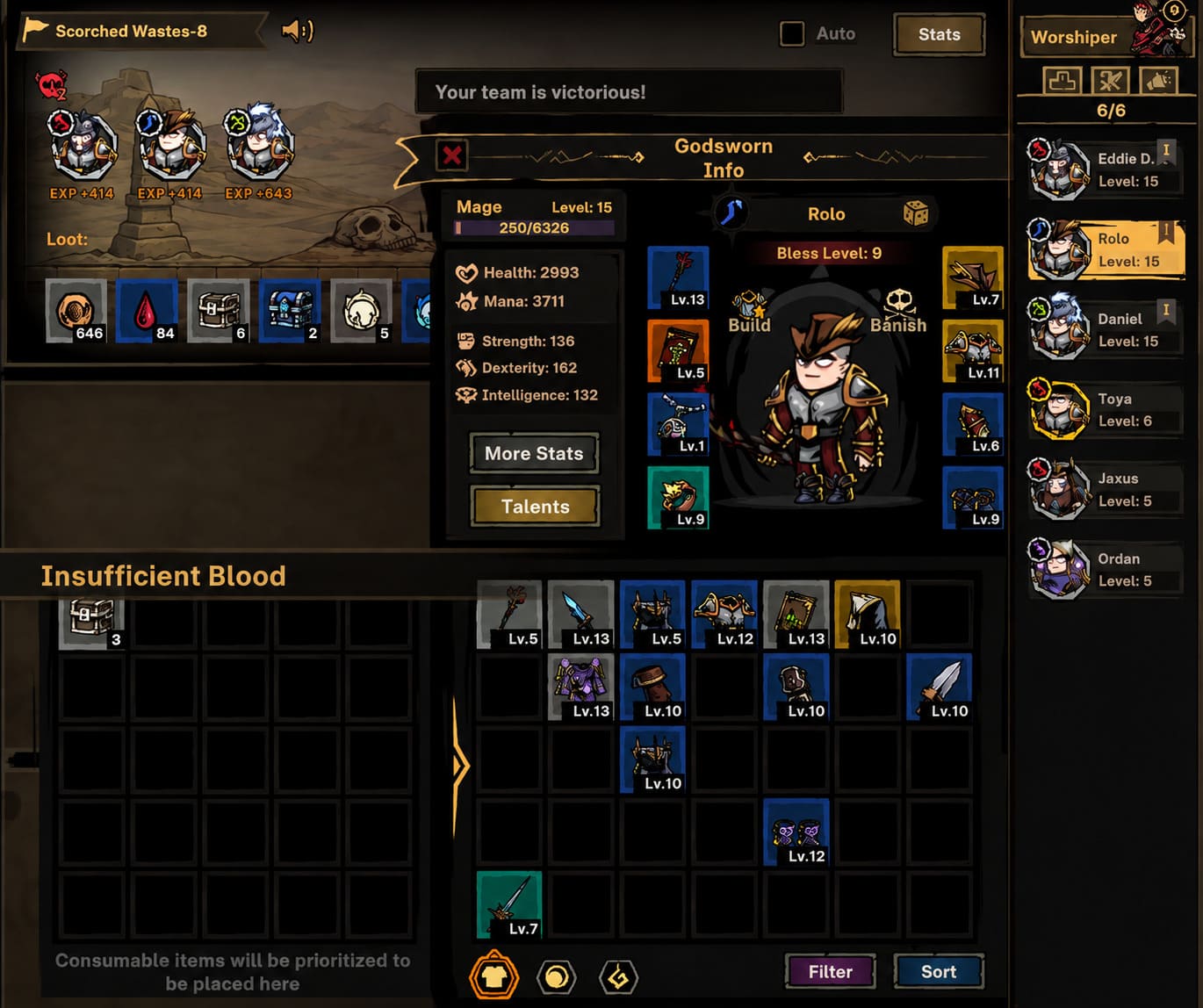
This creates a really nice relationship with Warrior.
Warrior stands in front and absorbs punishment.
Mage stays safely behind the frontline and provides the damage and protection needed to keep that frontline alive.
That combination is much better than simply putting three damage dealers together and hoping the numbers are high enough.
Once you begin pushing deeper content, especially harder Sanctum floors, this kind of synergy becomes increasingly important.
A Mage built around utility rather than maximum raw damage can potentially keep your frontline alive through situations where a pure DPS setup simply collapses.
Archer: The Boss Killer
Archer is the class I would add when normal enemies stop being the problem and bosses become the problem.
Its identity is straightforward: fast ranged damage with strong single-target potential.
Critical strike scaling, attack speed and mobility make Archer particularly attractive for players who want to shorten boss fights.
And there is a psychological advantage here too.
There is something extremely satisfying about watching a boss health bar disappear because your Archer starts chaining attacks at ridiculous speed.
The problem is that Archer really wants a team around it.
You do not want your main damage dealer getting smashed before it can start doing its thing. That makes Warrior + Archer a natural pairing, with Mage providing either AoE clearing or defensive utility depending on your setup.
Rogue: Strong, But More Specialized
Rogue is the class I would recommend to players who enjoy optimizing mechanics rather than simply following the safest route.
Poison, debuffs, burst attacks and evasion give Rogue a very different identity from Archer.
It is particularly interesting when you start targeting specific farming situations rather than trying to build one universally strong team.
The downside is consistency.
Rogue can be excellent when its mechanics line up with the encounter. But for a brand-new account, I would rather have the reliability of Warrior or the straightforward damage profile of Chieftain.
Rogue feels more like a class I would experiment with after I already understood the game’s systems.
Scholar: The Quietly Powerful Support
Scholar is probably the easiest class to underestimate.
It does not have the obvious visual impact of a Mage throwing spells everywhere or a Chieftain smashing enemies apart. But support classes often become more valuable as the game gets deeper.
Scholar can influence buffs, debuffs, cooldowns and progression-related systems. Those effects may not look spectacular in a damage meter, but they can improve the performance of the entire team.
I would not make Scholar my first investment if my only goal was rapid early campaign progression.
However, I would absolutely keep an eye on it for later compositions.
This is one of those classes that can go from “Why would I use this?” to “How did I ever play without this?” once your roster becomes more sophisticated.
My Recommended Starting Team
If I were starting a fresh account today, I would not overcomplicate things.
My first three-character core would be:
Warrior + Mage + Chieftain
Why Chieftain instead of Archer?
Because I prefer having a bruiser-style damage dealer early on. It gives the team a little more flexibility if the frontline gets pressured, while still providing strong offensive output.
The basic setup looks like this:
- Warrior — Frontline: Absorb damage and keep enemies away from your backline.
- Mage — Backline: Clear groups, provide magical utility and support the Warrior with barriers.
- Chieftain — Damage Dealer: Focus bosses and tougher targets with aggressive physical damage.
If your main problem is boss killing rather than general progression, I would swap Chieftain for Archer.
That gives you a more specialized ranged setup and puts greater emphasis on single-target damage.
When Should You Change Your Strategy?
One mistake I see people make in games like this is treating their starting composition as a permanent commitment.
Don’t.
Your starting team should be viewed as a foundation, not a prison.
Early campaign content rewards simple, reliable setups. Later content rewards synergy.
That means the class that carried you through the first stages does not necessarily need to remain your primary carry forever.
As your roster grows, start thinking in terms of interactions:
- Who keeps the frontline alive?
- Who provides the best AoE?
- Who melts bosses?
- Who improves cooldowns?
- Who benefits most from buffs?
- Which class scales best with your available gear?
That is where the deeper part of Path of Idle begins.
Sanctum Changes the Rules
The Sanctum is where I think the game starts asking more interesting questions.
Once you reach deeper floors, simply stacking damage becomes less reliable. Enemies hit harder, encounters become more demanding, and inefficient builds start exposing themselves.
This is where the Warrior + Mage combination really shines.
Instead of building Mage exclusively for damage, you can lean into its protective utility. Improving barrier effectiveness and reducing skill downtime can make your frontline dramatically more resilient.
The idea is simple:
Warrior survives → Mage protects Warrior → DPS gets more time to attack.
It sounds obvious, but this kind of synergy is exactly what makes an idle RPG build work.
Your team is essentially creating its own feedback cycle.
The longer Warrior survives, the longer your damage dealers have to attack. The more damage they deal, the faster enemies disappear. The fewer enemies remain, the less pressure Warrior receives.
That is much more valuable than simply looking at the highest theoretical DPS number.
Don’t Waste Your Early Resources on Perfect Gear
This is another lesson I would take seriously.
Early in the game, it is tempting to chase legendary equipment and reroll everything until every stat looks perfect.
I would not do that.
You will replace gear.
A lot.
Instead, use your early resources to establish a functional build and invest in the systems that improve your overall account progression.
Town development, crafting materials and useful Runewords can have a much larger impact than squeezing another few percentage points out of a temporary item.
For example, if your Warrior is struggling against high-evasion enemies, fixing accuracy through gear or runes makes far more sense than completely abandoning your defensive setup.
Think of equipment as a tool for solving problems.
Don’t build around a spreadsheet when the game is telling you exactly what your team is missing.
How to Fix Lootbound Black Screen on Startup: Full PC Guide (2026)
My Final Ranking for New Players
If I had to rank the six classes specifically for a fresh 2026 account, rather than judging their theoretical endgame ceiling, my personal order would be:
| Rank | Class | My Take |
|---|---|---|
| 1 | Warrior | Best combination of safety, consistency and early progression |
| 2 | Chieftain | Fantastic aggressive alternative with strong damage |
| 3 | Mage | Excellent AoE plus valuable defensive utility |
| 4 | Archer | Great boss damage, especially with a reliable tank |
| 5 | Scholar | Extremely useful support, but less impressive as a first investment |
| 6 | Rogue | Fun and potentially powerful, but more specialized early on |
This is not a universal tier list.
If you are already experienced with the game, your ranking may look completely different. Someone who enjoys optimizing poison and debuff interactions may get much more from Rogue than I do. Likewise, an aggressive player may prefer Chieftain from the first minute.
That is the beauty of the system.
Does Lootbound Have Multiplayer Co-Op? Full 2026 Game Guide & Review
Final Verdict: Start Safe, Then Get Greedy
For me, the answer to “What is the best starting class in Path of Idle: Old Gods Rising?” is Warrior.
Not because it has the highest theoretical damage.
Not because it is the flashiest class.
Simply because it makes the early game easier, more consistent and more forgiving.
I would start with Warrior, build Mage as my main support/AoE partner, and then add Chieftain for aggressive damage. If boss fights become the biggest obstacle, I would consider replacing Chieftain with Archer.
Once the account becomes established, I would start experimenting with Scholar, Rogue and more specialized Mage builds instead of forcing the original setup to do everything.
The biggest thing to remember is that Path of Idle is an incremental game, so efficiency compounds. A slightly stronger team today means faster farming, better equipment, more materials, faster town development and stronger characters tomorrow.
So don’t obsess over creating the perfect endgame team on day one.
Build something reliable.
Let it farm.
Upgrade your infrastructure.
Then, when Blackreef Isle starts throwing genuinely nasty encounters at you, start getting clever with the synergies.
That is when Path of Idle gets really interesting.