Lost Castle 2 Inscription Resonance Guide – How Tier 3 Really Feels in Endgame Runs (Player Perspective)
When you spend enough time inside modern roguelites, you start noticing how progression systems quietly reshape the entire experience. Lost Castle 2 is one of those games where the deeper you go, the less it feels like a simple beat-em-up and the more it turns into a build optimization puzzle wrapped in chaos.
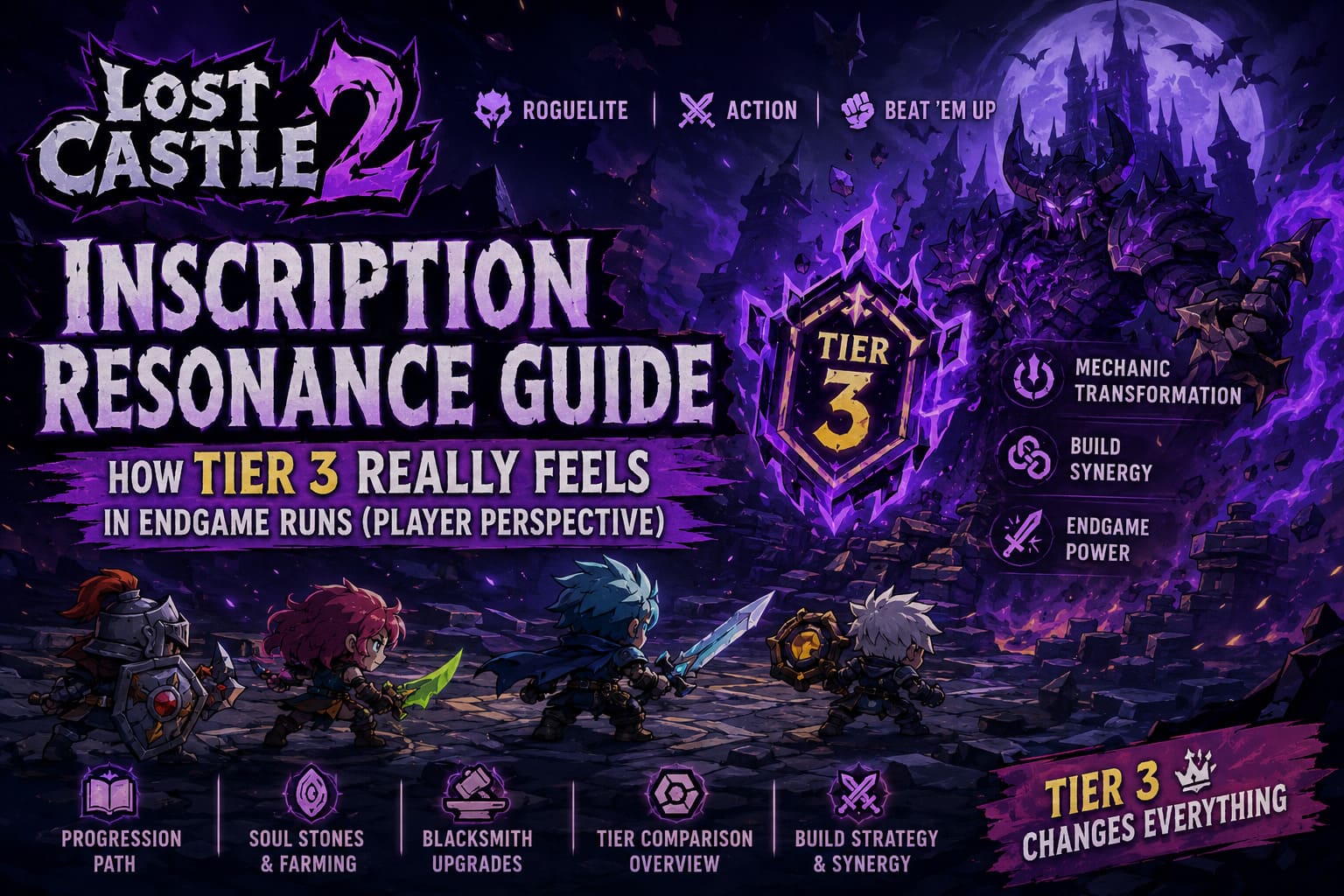
After multiple runs across different difficulty spikes and build experiments, the Inscription Resonance system stands out as the real backbone of endgame power scaling.
Tier 3 in particular is where the game stops holding your hand and starts rewarding players who actually understand synergy instead of just raw stats.
Lost Castle 2 1.0 Full Release Review: A Veteran Gamer’s Honest Take on Endgame, Builds, and Chaos
How Inscription Resonance Changes Gameplay
At first glance, inscriptions look like standard RPG modifiers. You equip gear, stack traits, and unlock bonuses. But in practice, the system behaves more like a hidden evolution layer for builds.
Here’s how it typically unfolds during progression:
- Tier 1: Basic stat improvement and early-game comfort
- Tier 2: Partial synergy effects that start defining build identity
- Tier 3: Full mechanical transformation of abilities and combat loops
Tier 3 is where things stop being “+damage upgrades” and start becoming “your character now plays differently.” That distinction matters a lot more than players initially realize.
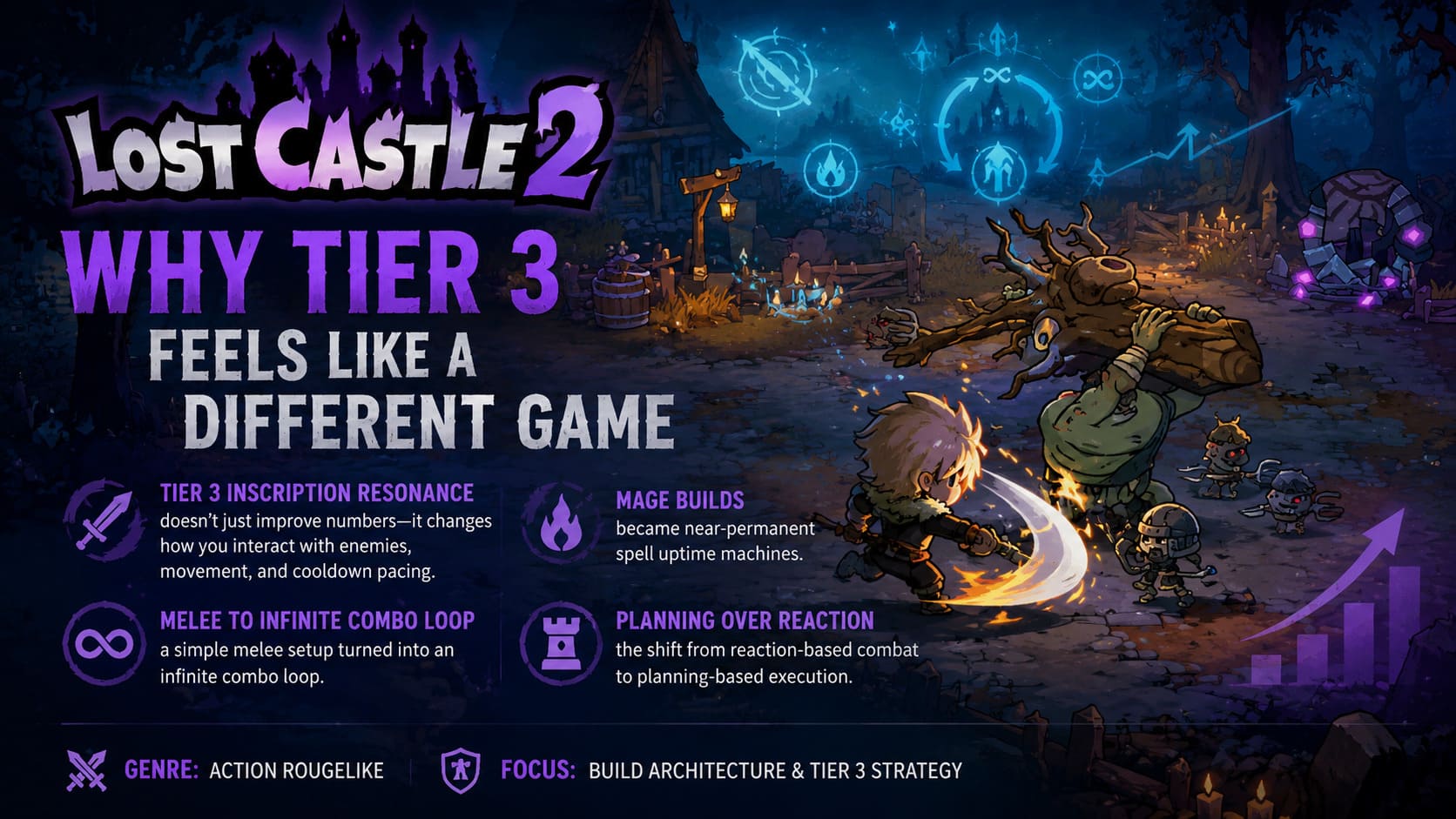
Why Tier 3 Feels Like a Different Game
In most runs, Tier 3 Inscription Resonance doesn’t just improve numbers—it changes how you interact with enemies, movement, and cooldown pacing. I’ve had runs where a simple melee setup turned into an infinite combo loop, and mage builds that effectively became near-permanent spell uptime machines.
This is the point where the game shifts from reaction-based combat to planning-based execution. Instead of asking whether you can survive a boss, you start asking whether your build architecture is even capable of reaching Tier 3 consistency.
Unlocking Tier 3 – The Real Progression Path
Progressing toward Tier 3 isn’t a single milestone. It’s a layered system that forces you through multiple gameplay loops and difficulty spikes. Based on experience, it usually looks like this:
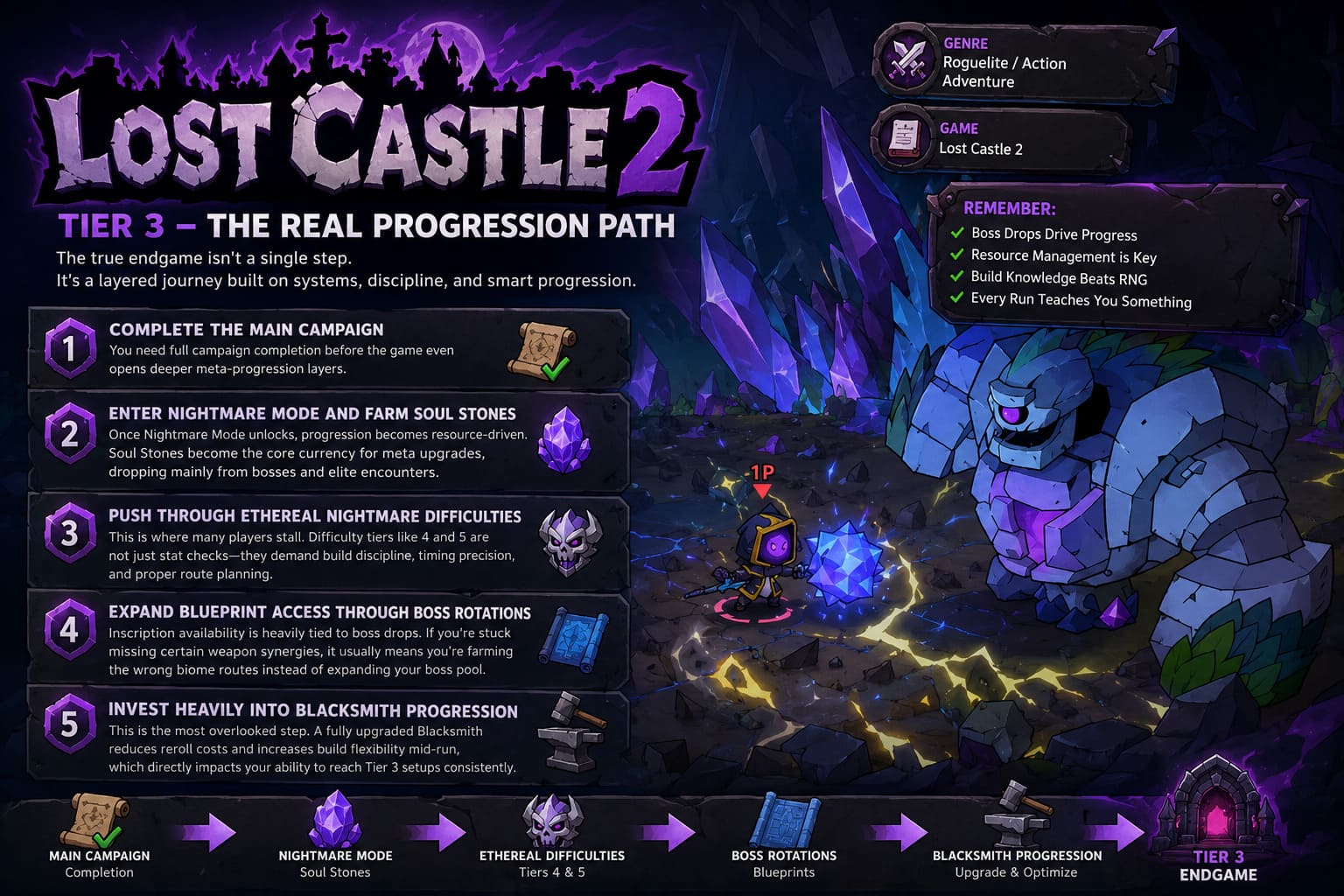
1. Complete the Main Campaign
You need full campaign completion before the game even opens deeper meta-progression layers. This is the baseline entry point into advanced systems.
2. Enter Nightmare Mode and Farm Soul Stones
Once Nightmare Mode unlocks, progression becomes resource-driven. Soul Stones become the core currency for meta upgrades, dropping mainly from bosses and elite encounters.
3. Push Through Ethereal Nightmare Difficulties
This is where many players stall. Difficulty tiers like 4 and 5 are not just stat checks—they demand build discipline, timing precision, and proper route planning.
4. Expand Blueprint Access Through Boss Rotations
Inscription availability is heavily tied to boss drops. If you’re stuck missing certain weapon synergies, it usually means you’re farming the wrong biome routes instead of expanding your boss pool.
5. Invest Heavily Into Blacksmith Progression
This is the most overlooked step. A fully upgraded Blacksmith reduces reroll costs and increases build flexibility mid-run, which directly impacts your ability to reach Tier 3 setups consistently.
Build Strategy Once Tier 3 Is Available
Unlocking Tier 3 is only half the challenge. Actually using it effectively requires understanding how synergy thresholds work across gear pieces.
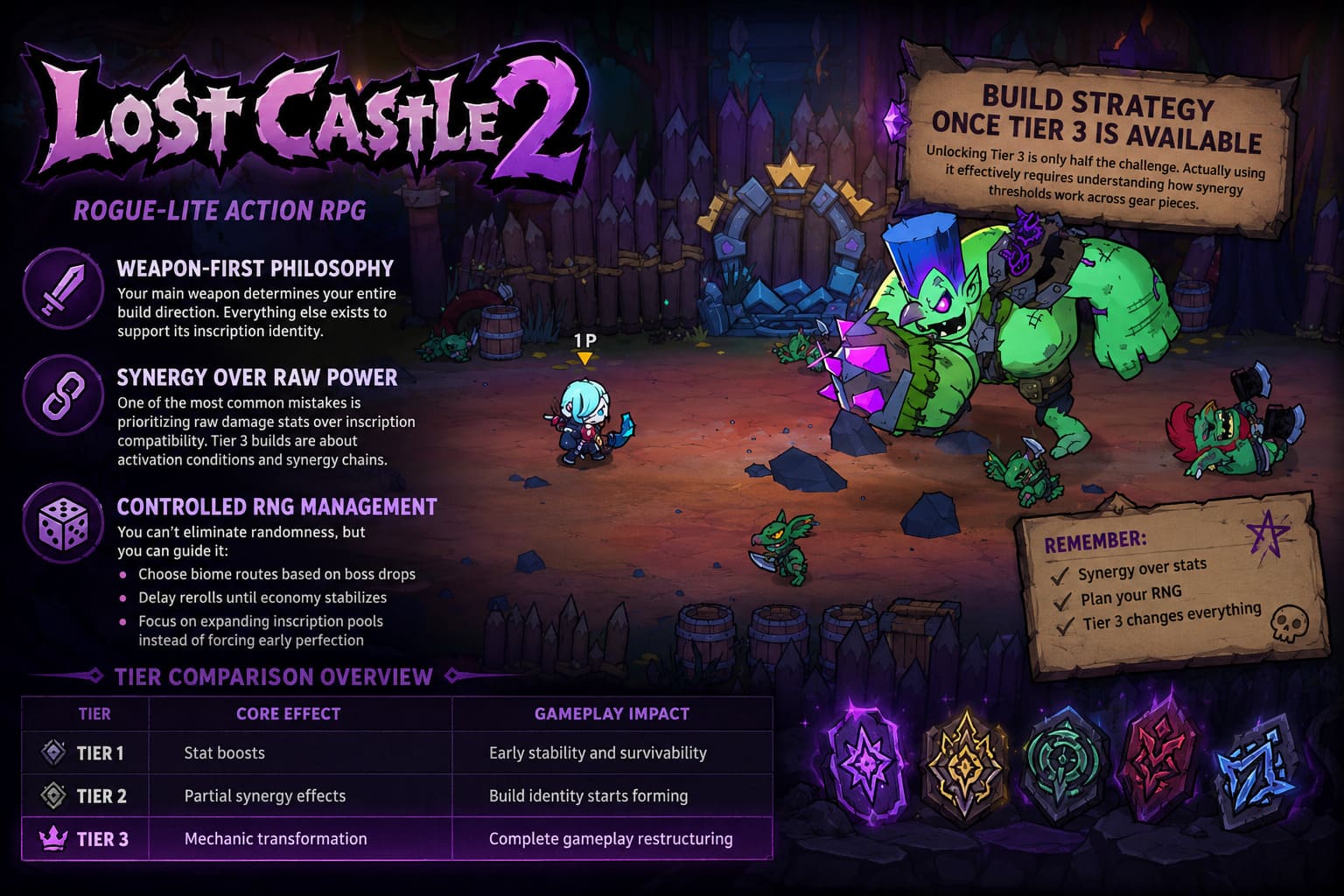
Weapon-First Philosophy
Your main weapon determines your entire build direction. Everything else exists to support its inscription identity. If your weapon doesn’t align with your intended Tier 3 effect, the build collapses late-game regardless of other stats.
Synergy Over Raw Power
One of the most common mistakes is prioritizing raw damage stats over inscription compatibility. Tier 3 builds are not about isolated upgrades—they are about activation conditions and synergy chains.
Controlled RNG Management
You can’t eliminate randomness, but you can guide it:
- Choose biome routes based on boss drops
- Delay rerolls until economy stabilizes
- Focus on expanding inscription pools instead of forcing early perfection
Tier Comparison Overview
| Tier | Core Effect | Gameplay Impact |
|---|---|---|
| Tier 1 | Stat boosts | Early stability and survivability |
| Tier 2 | Partial synergy effects | Build identity starts forming |
| Tier 3 | Mechanic transformation | Complete gameplay restructuring |
Common Mistakes Players Make
After observing how most players approach progression, a few recurring issues stand out clearly:
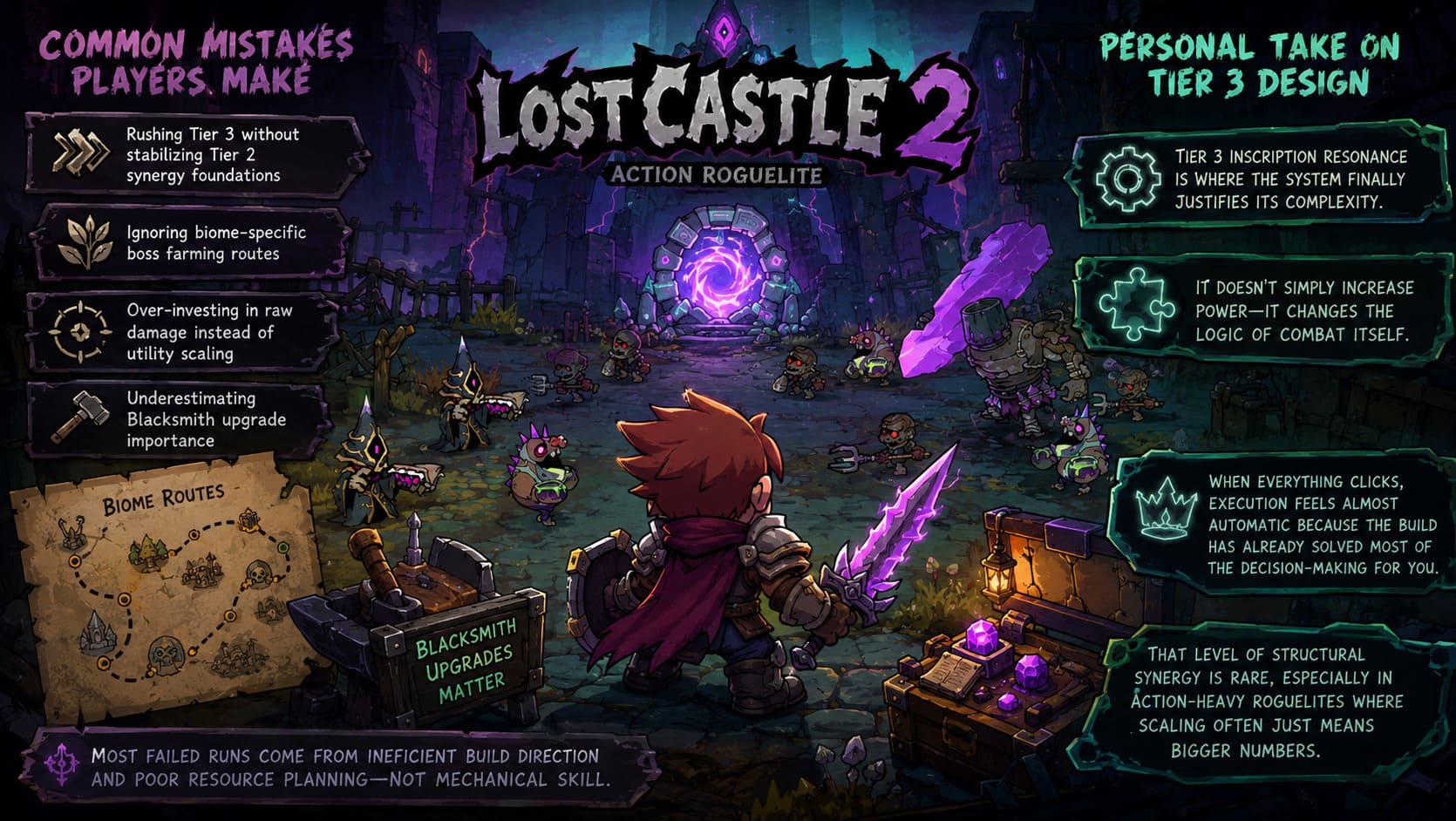
- Rushing Tier 3 without stabilizing Tier 2 synergy foundations
- Ignoring biome-specific boss farming routes
- Over-investing in raw damage instead of utility scaling
- Underestimating Blacksmith upgrade importance
Most failed runs aren’t actually about mechanical skill—they come from inefficient build direction and poor resource planning.
Personal Take on Tier 3 Design
From a long-time roguelite player perspective, Tier 3 Inscription Resonance is where the system finally justifies its complexity. It doesn’t simply increase power—it changes the logic of combat itself.
When everything clicks, the gameplay shifts into a state where execution feels almost automatic because the build has already solved most of the decision-making for you. That level of structural synergy is rare, especially in action-heavy roguelites where scaling often just means bigger numbers.
Conclusion
Tier 3 Inscription Resonance represents the true endgame identity of Lost Castle 2. It’s not just a reward for progression—it’s a transformation layer that turns familiar builds into entirely new playstyles.
Once you reach it, the game stops being about survival and starts being about execution of a system you personally assembled through multiple layers of progression, farming, and experimentation.
If you enjoy roguelites that reward long-term planning over short-term reaction speed, this is where the game finally opens up fully.