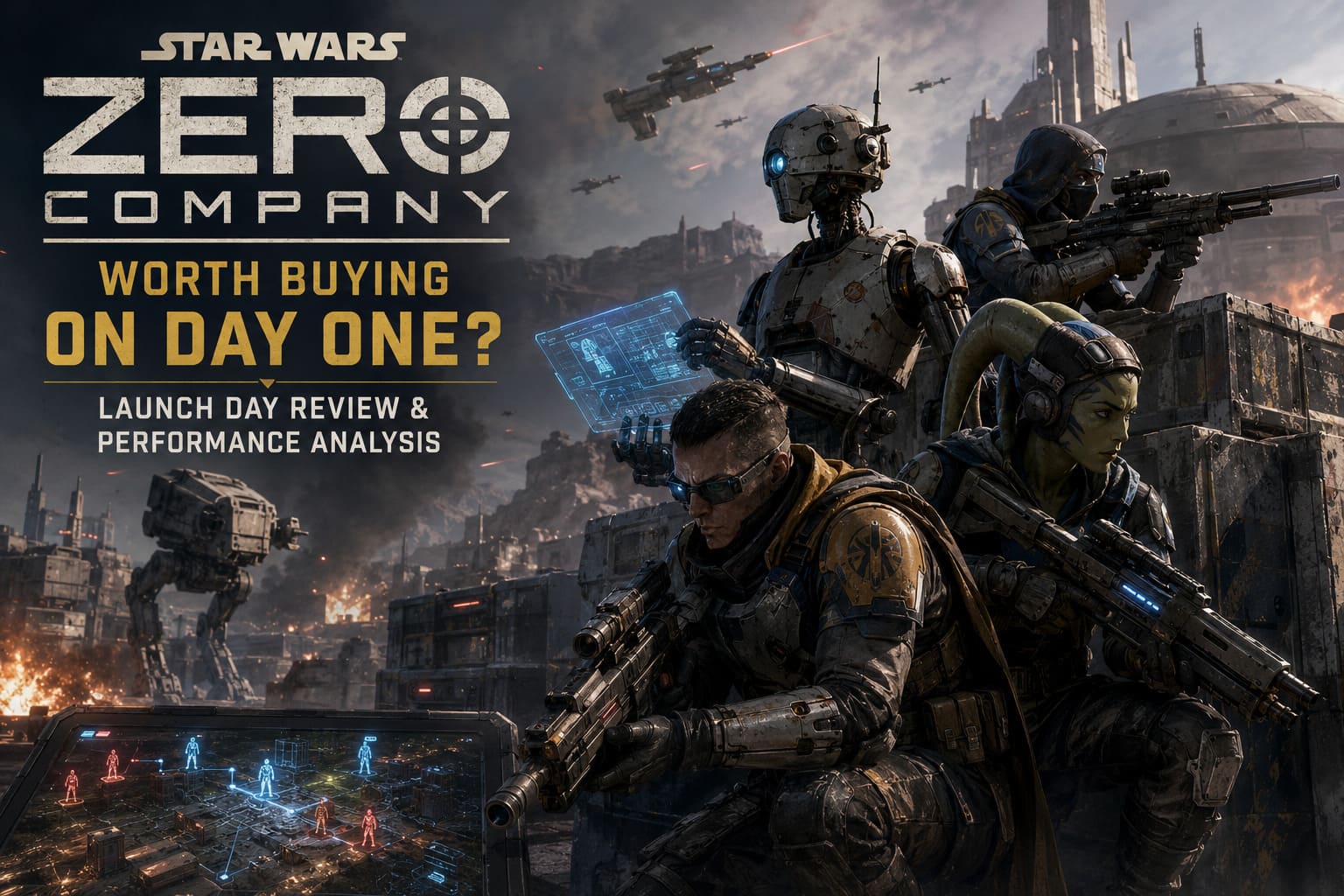
Is Star Wars Zero Company Worth Buying on Day One? Launch Day Review and Performance Analysis
There’s a particular kind of game I’ve been waiting for almost forever: something that takes the Star Wars universe seriously, but doesn’t feel like it needs lightsaber combat or another cinematic action sequence every five minutes.
That’s exactly why Star Wars Zero Company caught my attention.
Developed by Bit Reactor with Respawn Entertainment and published by Electronic Arts, Zero Company arrives on August 27, 2026, bringing a single-player, turn-based tactical experience to PC, PlayStation 5, and Xbox Series X/S. On paper, it sounds almost too good for fans of games like XCOM: a Clone Wars-era setting, a customizable squad, destructible environments, character relationships, strategic management, and a completely original story.
But there’s one question I keep coming back to:
Is Star Wars Zero Company actually worth buying on day one?
After looking at what the game is trying to do, its tactical systems, early impressions, reported performance concerns, and the reaction from strategy fans, my answer is a little complicated.
Yes, I think the game is worth buying at launch—but only if you already know that turn-based strategy is your thing.
For everyone else, waiting might be the smarter move.
A Star Wars Game That Finally Feels Like a Strategy Game
The biggest reason I’m interested in Zero Company is that it doesn’t appear to be trying to turn Star Wars into another action game.
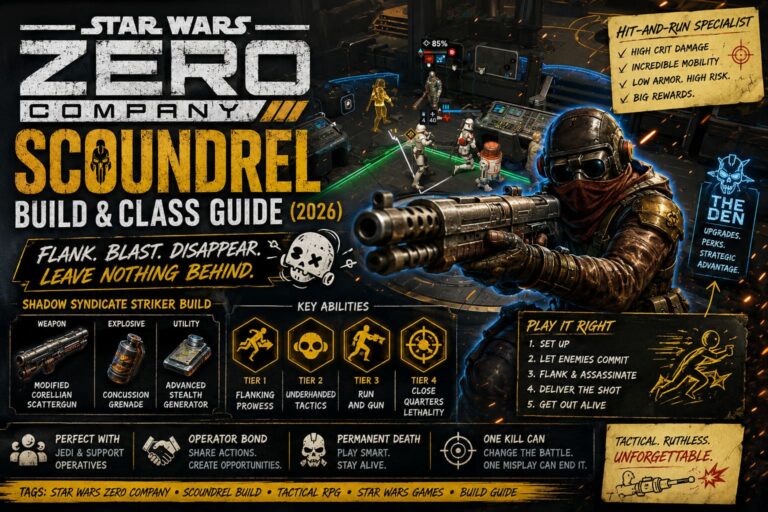
You play as Hawks, a former Galactic Republic officer who commands Zero Company, a group of mercenaries, soldiers, and other unpredictable characters pulled together to investigate a dangerous threat known as the Infinite Coil.
The story takes place during the Clone Wars era, which is arguably one of the best possible periods for this kind of game. There are clones, Jedi, Mandalorians, droids, criminal factions, and plenty of room for morally questionable characters.
And that matters because tactical games live or die by their atmosphere.
When you spend 20 or 30 hours with a squad, you want those characters to feel like more than pieces on a chessboard. Zero Company seems to understand that.
The campaign combines authored companions with customizable Operators, giving players both recognizable personalities and the freedom to create their own squad.
That combination is probably one of the game’s biggest strengths.
The Combat Is Familiar, But There’s More Freedom Than Classic XCOM
If you’ve played XCOM, you’ll understand the basic idea almost immediately.
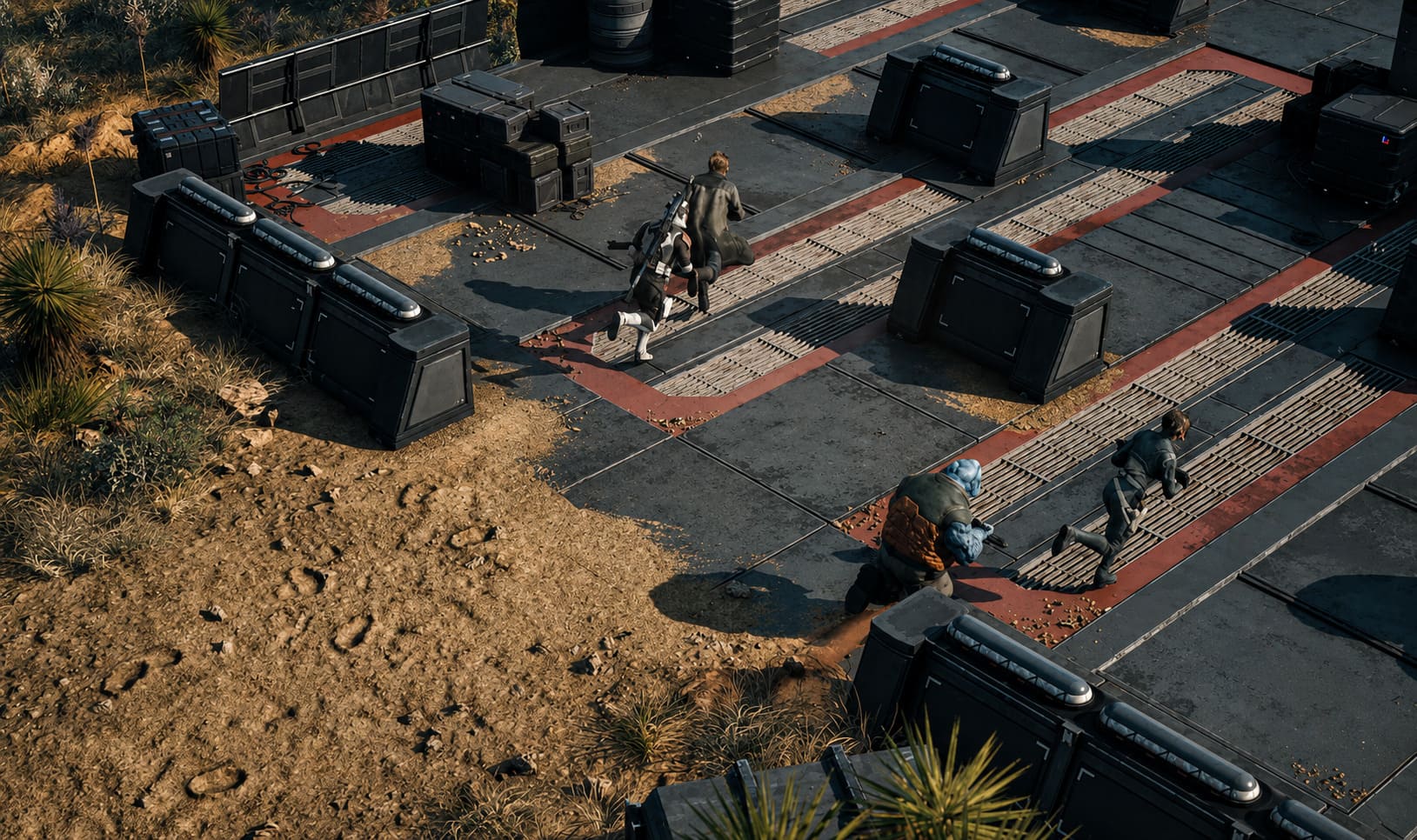
You move your units around a battlefield, use cover, take shots, activate abilities, manipulate enemy positions, and try desperately not to watch your favorite soldier get destroyed because the game decided that your 90% shot wasn’t actually good enough.
The major difference is the three Action Point system.
Instead of being locked into the traditional two-action structure, characters have more flexibility during their turns. Movement, attacks, abilities, and other actions can be combined in different ways.
That sounds like a small change, but it can have a huge impact on tactical decision-making.
You can take a more aggressive approach, reposition after attacking, or spend your AP on abilities rather than simply following the classic move-and-shoot rhythm.
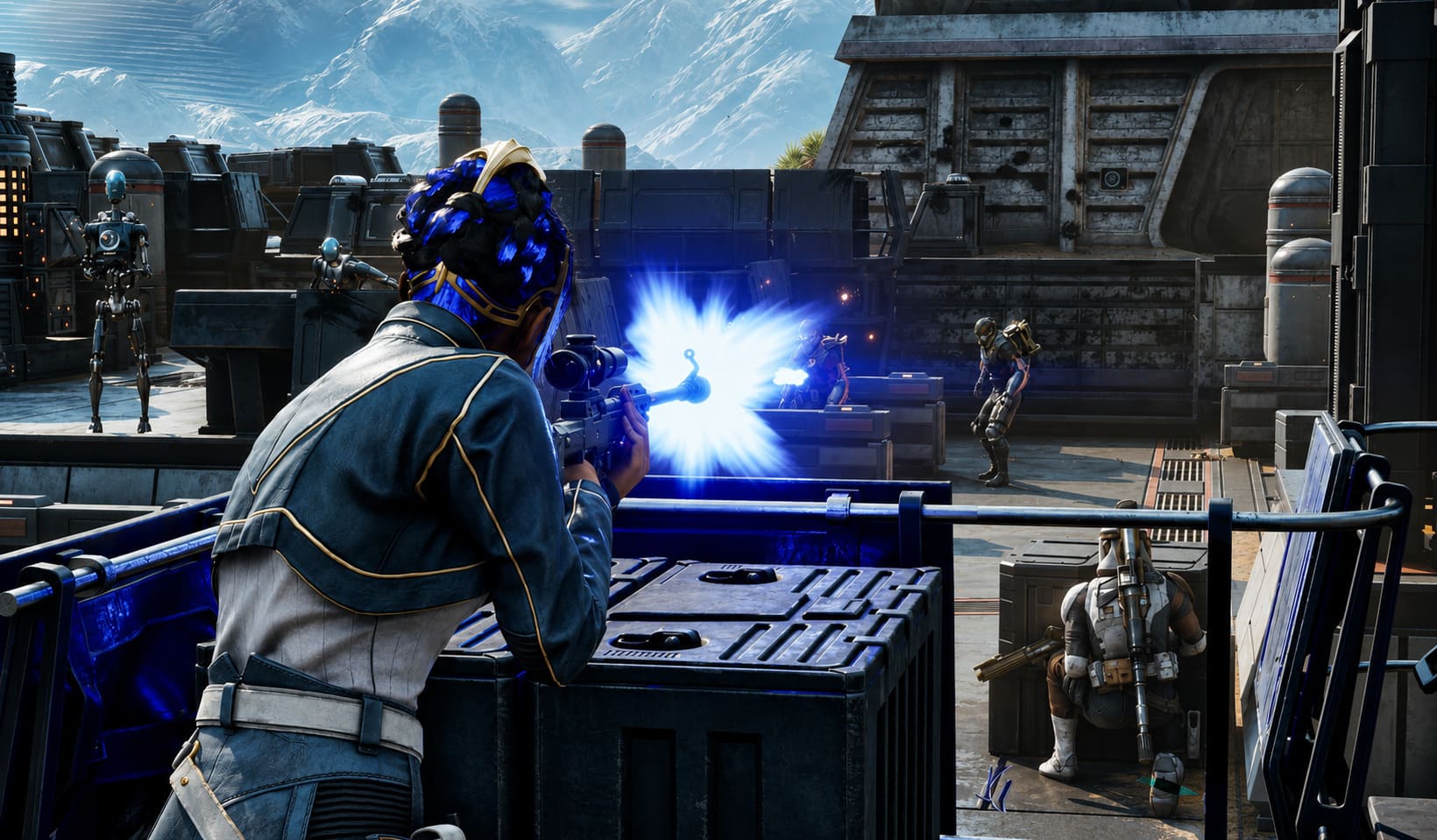
The combat systems that stood out to me:
- Destructible environments make cover feel less permanent and force you to adapt.
- The Advantage system rewards successful tactical play and lets your squad unleash powerful abilities.
- Eight distinct classes and specializations give you plenty of room to experiment with squad compositions.
- Character bonds add another layer of strategy by rewarding specific squad combinations.
That last feature could end up being one of the things that separates Zero Company from its obvious inspirations.
I love it when a tactical game makes me think not just about who is strongest, but about which characters work best together.
Your Squad Isn’t Just a Collection of Statistics
One concern I usually have with strategy games is that the characters eventually become numbers.
You start caring about them, then the optimization kicks in. Suddenly you’re looking at health, damage, abilities, equipment, and percentages instead of personalities.
Zero Company appears to be trying to avoid that.
The game features unique companions with their own histories, personalities, and relationships. At the same time, customizable Operators allow you to create characters that fit the way you personally want to play.
There are also multiple Star Wars species available for recruitment, which should make building a squad feel considerably more personal.
And then there is The Den, your mobile headquarters.
This is where you manage your squad, improve facilities, purchase equipment, handle recruitment, and prepare for upcoming missions. In other words, the game isn’t just about what happens during combat.
It wants you to care about what happens between missions, too.
For me, that is essential.
The best tactical games aren’t just a series of battles connected by menus. The downtime should create anticipation for the next mission, and Zero Company seems built around that philosophy.
The Advantage Mechanic Could Be a Game-Changer
One of the mechanics I’m particularly curious about is Advantage.
Successful actions contribute toward a shared squad resource that can then be spent on powerful abilities and tactical maneuvers.
I like this idea because it potentially rewards players for playing aggressively and intelligently rather than simply hiding behind cover and waiting for enemies to make mistakes.
It also creates an interesting risk-versus-reward situation.
Do you spend your Advantage now to save a struggling squad member, or hold it for a devastating attack later?
Those decisions are exactly what I want from a tactical Star Wars game.
But There Is One Big Problem: Launch Performance
Here’s where my enthusiasm becomes more cautious.
The gameplay itself seems to be the strongest argument for buying Zero Company immediately. Technical performance is the biggest reason I would consider waiting.
Early reports have pointed toward frame-rate drops, visual glitches, asset pop-in, shadow issues, and inconsistent texture streaming in some areas.
That is particularly disappointing for a game that should theoretically benefit from a controlled tactical presentation.
This isn’t a competitive shooter where every frame determines whether you win or lose. Still, when you’re moving the camera around a beautifully designed Star Wars battlefield, technical problems can absolutely ruin the atmosphere.
| Area | Day-One Impression | My Take |
|---|---|---|
| Combat | Deep and flexible | Excellent |
| Squad Building | Highly customizable | Very Strong |
| Story | Original Clone Wars setting | Promising |
| Progression | Bonds, gear, base upgrades | Very Strong |
| Performance | Some reported instability | Needs Attention |
| Value | Strong single-player package | Good |
If you’re the type of player who can tolerate a few rough edges while developers polish things after launch, this probably won’t be a dealbreaker.
If you expect a rock-solid 60 FPS experience from the moment you install the game, I’d seriously consider waiting.
The RNG Problem Is Still Here
And then we have the eternal tactical-game argument:
Why did my 95% shot miss?
Yes. Zero Company appears to embrace the same probability-driven combat philosophy that has made XCOM famous—and occasionally made players question their relationship with mathematics.
I actually think this is a good thing.
A tactical game without uncertainty can become predictable very quickly. The possibility of failure forces you to create backup plans.
The mistake is assuming that a 90% chance means something is guaranteed.
It doesn’t.
If you have a 90% chance to hit and miss, that’s frustrating. But if your entire strategy collapses because you only planned for the successful outcome, that’s partly on you.
That said, I can completely understand why this could annoy casual Star Wars fans.
Someone coming into Zero Company after playing Jedi: Survivor may not immediately appreciate losing a crucial attack despite seeing a high percentage on screen.
This isn’t a game about always being the hero.
Sometimes your carefully planned assault falls apart, and you have to improvise.
For me, that’s part of the appeal.
What About the Star Wars Story?
This might actually be the biggest reason to play Zero Company.
The Clone Wars period gives Bit Reactor an enormous sandbox to work with, and the concept of a squad made up of different personalities fits the era beautifully.
You aren’t simply playing as another Jedi.
You’re leading a group of people who may have completely different motivations, backgrounds, and abilities.
That creates opportunities for the story to explore parts of the Star Wars universe that action games rarely have time to touch.
The presence of branching decisions and consequential choices is especially interesting.
If those choices genuinely affect relationships, missions, or the campaign rather than simply changing a few lines of dialogue, Zero Company could have surprisingly strong replay value.
So, Should You Buy Star Wars Zero Company on Day One?
After looking at the whole package, I’m leaning toward yes.
But I wouldn’t recommend it blindly to everyone.
If you’re already a fan of XCOM-style strategy games, squad management, turn-based combat, and Star Wars lore, this is almost exactly the kind of project you’ve probably been waiting for.
The $49.99 standard price also makes the proposition more attractive than many full-priced releases, especially considering that Zero Company is focused on a traditional single-player experience rather than building itself around a live-service model.
For me, the combination of tactical combat, character relationships, squad customization, base management, and the Clone Wars setting is simply too appealing to ignore.
How to Fix Star Wars Zero Company Stuttering on AMD Radeon GPU
I’d buy it immediately if:
- You love XCOM-style tactical strategy.
- You enjoy building and customizing squads.
- You’re deeply invested in the Clone Wars era.
- You prefer substantial single-player campaigns.
- You don’t mind dealing with occasional launch problems.
I’d wait if:
- Stable performance is your absolute priority.
- Visual glitches immediately ruin your immersion.
- You dislike percentage-based combat and RNG.
- Turn-based strategy normally feels too slow for you.
- You’re only interested because it has the Star Wars name.
Darkest Dungeon The Fire’s Edge Guide: How to Unlock and Use the 3 New Districts
My Final Verdict
Star Wars Zero Company looks like the kind of game that could become one of my favorite strategy titles of 2026—but I’m not convinced the launch version will be the best version of it.
That’s an important distinction.
The foundation appears extremely promising. The tactical systems have enough depth to keep experienced players interested, while the Star Wars setting gives the formula a personality that many tactical games simply don’t have.
The squad relationships could add meaningful long-term strategy, The Den gives the campaign a useful layer outside combat, and the Clone Wars setting is almost perfect for this genre.
The biggest question mark is technical polish.
If Bit Reactor can iron out the performance problems and visual inconsistencies relatively quickly, I can easily see Zero Company becoming a must-play tactical RPG for Star Wars and strategy fans.
Personally, I’d be willing to jump in on launch day.
I know what I’m signing up for: missed shots, complicated squad builds, missions that go horribly wrong, and probably at least one moment where I stare at the screen wondering how a supposedly 95% shot missed.
And honestly?
That sounds like exactly the kind of Star Wars adventure I want.
Final Score: 8.5/10
Worth Buying Day One: Yes, especially for strategy fans.
Best Reason to Buy: Deep tactical gameplay combined with the Clone Wars setting.
Biggest Concern: Launch performance and technical polish.
Best Alternative: Wait a few months if you’re sensitive to bugs and frame-rate problems.