Go-Go Town! Co-Op Multiplayer Walkthrough: Town Building Guide (1.0 Release)
When I first jumped into Go-Go Town!, I expected another relaxing town-building game where I’d spend hours planting trees, decorating streets, and casually chatting with NPCs. What I didn’t expect was how quickly it would turn into a surprisingly satisfying management simulator once automation, logistics, and multiplayer entered the picture.
After spending plenty of time with friends in co-op, I honestly think Go-Go Town! is at its best when everyone has a job to do. Sure, you can play solo, but once your town starts growing, trying to manage everything yourself becomes exhausting. Multiplayer changes that completely—it transforms the game from a cozy sandbox into a well-organized (or hilariously disorganized) teamwork experience.
If you’re planning to build the ultimate tourist destination, here’s my take on how to get the most out of Go-Go Town! after its full 1.0 release.
Why Multiplayer Makes Go-Go Town So Much Better
One of the smartest decisions the developers made was allowing up to four players to work together in the same town. Unlike many co-op games where extra players simply collect resources faster, here everyone naturally develops their own responsibilities.
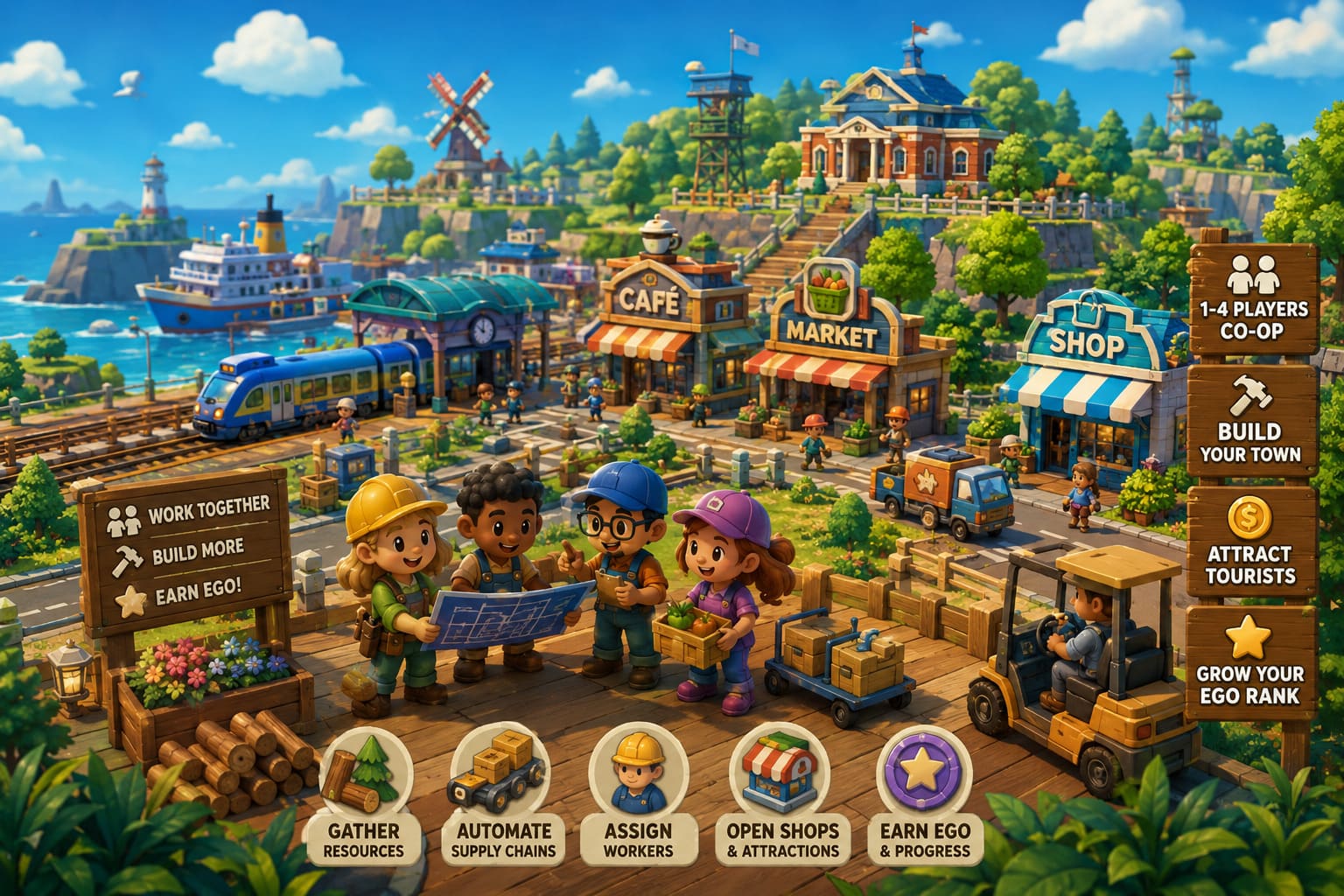
Instead of four people chopping trees together, our group eventually settled into something much more efficient.
| Player Role | Main Responsibility | Why It Works |
|---|---|---|
| Mayor | Building roads, placing structures, planning expansion | Keeps the town organized |
| Resource Manager | Mining, logging, farming | Maintains a constant supply of materials |
| Logistics Expert | Couriers and transportation | Eliminates unnecessary manual hauling |
| Commerce Manager | Shops, workers, tourists | Maximizes income and EGO progression |
The best sessions happen when nobody is stepping on each other’s toes. Everyone stays busy, and the town grows much faster than it ever could in solo play.
Starting Strong Matters More Than You Think
The early hours are fairly straightforward, but they quietly teach nearly every mechanic you’ll rely on later.
After arriving in town, repairing the central monument isn’t just a tutorial objective—it’s your introduction to resource collection, construction, and progression.
From there, your priorities become clear:
- Gather wood
- Mine stone
- Produce building materials
- Construct your first home
- Recruit your first resident
It sounds simple, but this foundation determines how smoothly the next several hours will go.
One mistake I made during my first playthrough was delaying housing. I kept collecting materials without assigning residents to homes, only to realize that workers can’t really contribute until they actually have somewhere to live.
That small lesson saved me a lot of wasted time in later towns.
Your Town Doesn’t Make Money—Tourists Do
This is something that took me longer than I’d like to admit.
Building beautiful streets is fun, but tourists don’t care how pretty your roads are if there isn’t anything interesting to spend money on.
Once your first shops open, the whole game changes.
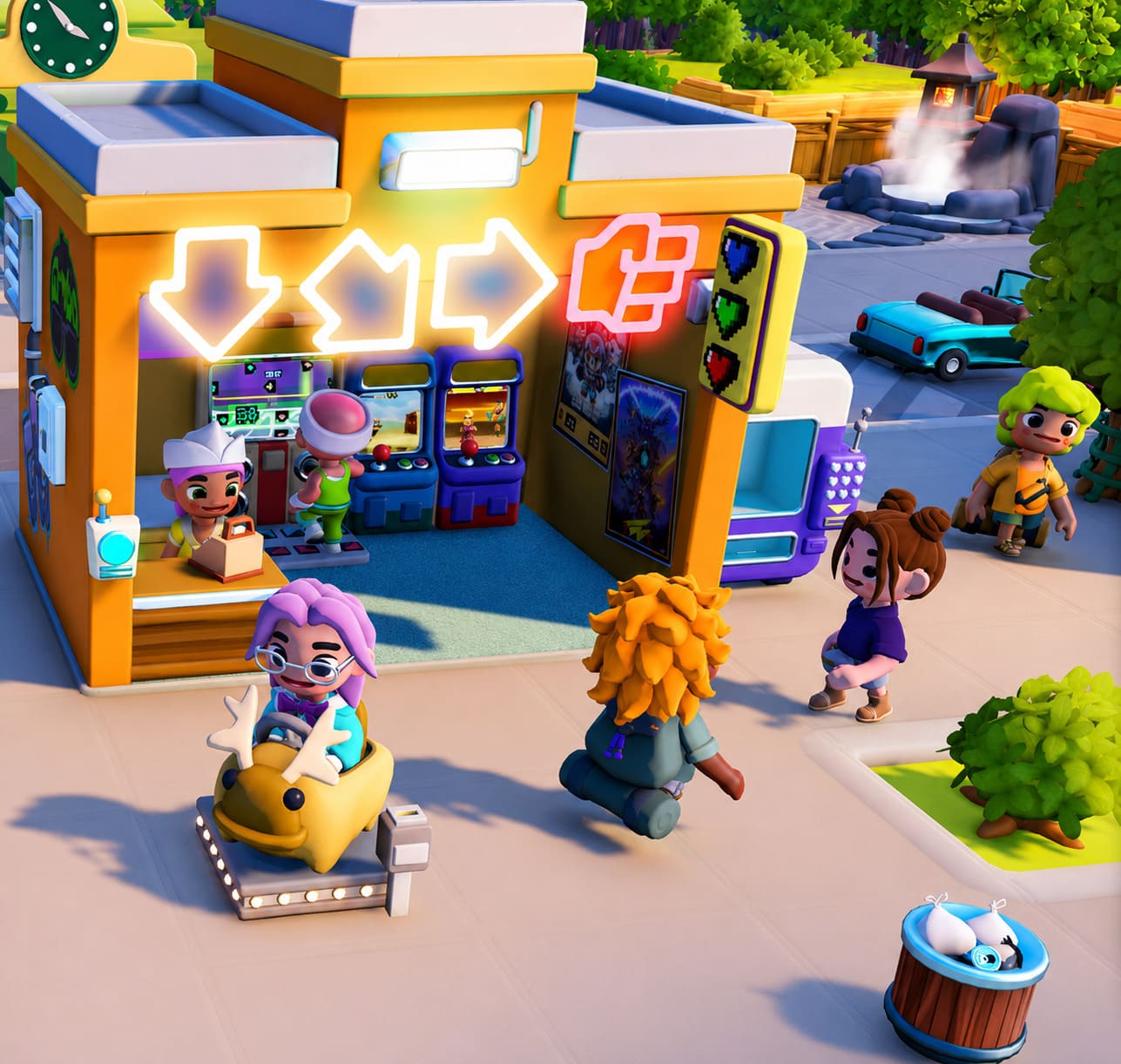
Visitors arriving by train begin wandering through town looking for:
- Food
- Entertainment
- Shopping
- Attractions
Every purchase contributes not only to your income but also to your overall progression through the EGO ranking system.
Because of this, I eventually stopped treating shops as decoration.
They’re really the engine that powers everything else.
Automation Is Where Go-Go Town Really Shines
At first, carrying stacks of planks across town feels relaxing.
Twenty hours later?
Not so much.
This is where Go-Go Town surprised me the most.
The automation systems aren’t as intimidating as something like Factorio, but they scratch the same itch.
Once courier routes become available, you can create supply chains that constantly move resources around your settlement.
For example:
| Resource | Produced At | Delivered To |
|---|---|---|
| Logs | Forestry | Processing stations |
| Planks | Sawmill | Construction sites |
| Stone | Mine | Brick production |
| Bricks | Mason workshop | Building projects |
| Fish | Docks | Restaurants |
| Crops | Farms | Markets |
Watching workers quietly keep everything stocked without constant supervision is incredibly satisfying.
It feels like your town finally becomes alive rather than relying on you for every tiny task.
Don’t Ignore Worker Management
One thing I appreciate is that townspeople actually feel useful.
Assigning residents isn’t just checking boxes on a menu.
Each worker has a purpose.
Some operate stores.
Others deliver supplies.
Others help maintain different industries.
Eventually you’ll spend almost as much time managing your workforce as placing buildings.
In multiplayer this becomes even more interesting because one player can focus almost entirely on assigning workers while everyone else expands the town.
That division of labor makes the game feel surprisingly strategic.
Permissions Save Friendships
Every multiplayer game eventually has that one friend.
You know the one.
The person who accidentally bulldozes half the town while trying to rotate a bench.
Thankfully, Go-Go Town includes an excellent permission system.
Instead of giving everyone unlimited access, hosts can decide exactly what each player is allowed to do.
Some friends receive full building privileges.
Others can simply gather resources or help stock shops.
It’s a small feature, but one that prevents countless disasters.
Especially in long-term shared towns.
Small Quality-of-Life Features I Ended Up Loving
Some mechanics don’t sound exciting on paper but become favorites after a few sessions.
One example is the ability to throw items.
Initially I ignored it.
Later, it became one of the fastest ways to transfer resources.
Instead of walking across a workshop, you can simply toss materials toward another player—or directly into nearby storage.
Another pleasant surprise is off-road driving.
Many building games force you onto roads.
Here, vehicles handle rough terrain surprisingly well, making deliveries much faster than I expected.
These little improvements make the game feel smoother without changing its cozy atmosphere.
Communication Is More Important Than Efficiency
This might sound obvious, but the biggest improvements in our town didn’t come from unlocking new technology.
They came from talking.
Simple conversations like:
- “Who’s collecting stone?”
- “We need another courier.”
- “Don’t build there yet.”
- “Tourists need another restaurant.”
Saved far more time than any automation upgrade.
The built-in chat, pings, and emotes help keep everyone coordinated even when players are scattered across different corners of the map.
Creative Mode Is Worth Visiting
Normally I’m someone who enjoys earning every upgrade naturally.
Still, Creative Mode deserves some attention.
Unlimited money lets you experiment with layouts that would take dozens of hours to build normally.
I found myself testing road designs, industrial districts, and transportation networks before recreating successful ideas in my actual save.
It’s also a great way to learn how different production chains interact without worrying about resource shortages.
My Favorite Multiplayer Strategy
After experimenting with several approaches, this setup consistently produced the smoothest towns.
| Priority | Focus |
|---|---|
| 1 | Secure housing immediately |
| 2 | Unlock mining and forestry |
| 3 | Open at least one profitable shop |
| 4 | Recruit workers as early as possible |
| 5 | Build courier routes before expanding too much |
| 6 | Scale tourism rather than endlessly collecting resources |
The biggest trap is expanding too quickly before automation catches up.
Once deliveries become automated, building additional districts becomes dramatically easier.
Bodycam vs Unrecord Co-Op Multiplayer: 2026 Hyper-Realistic Shooter Guide
Is Go-Go Town Worth Playing in Co-Op?
Absolutely.
What impressed me most isn’t that Go-Go Town combines cozy gameplay with management mechanics.
It’s how naturally those two styles fit together.
Relaxed players can spend hours decorating neighborhoods or chatting with visitors, while optimization fans can dive deep into production chains, worker assignments, and efficient logistics.
Very few games successfully appeal to both audiences.
Go-Go Town somehow manages it.
Yes, your first multiplayer session will probably include traffic jams, misplaced buildings, and someone accidentally spending the town budget on unnecessary decorations.
But that’s honestly part of the charm.
By the time your couriers are moving supplies automatically, tourists are filling every street, and your once-forgotten settlement has transformed into a thriving destination, you’ll realize that the game’s greatest achievement isn’t its automation system or progression.
It’s making teamwork genuinely enjoyable.
If you’re looking for a cozy multiplayer town-building game that offers much more depth than it first appears, Go-Go Town! is an easy recommendation. Whether you’re playing casually with friends after work or optimizing every production route like a city-planning enthusiast, the game constantly rewards cooperation, smart planning, and a little bit of creativity. It’s one of those rare management games where the journey of building your town is just as memorable as the finished result.