EthrA Game 2026: The Ultimate 2.5D RPG Merging 3D Environments and 2D Sprites
After spending years playing everything from classic JRPGs and old-school pixel adventures to modern open-world action games, I have become pretty hard to impress when a new indie RPG promises to “combine the old and the new.” Many projects chase nostalgia, but few actually understand why retro games worked in the first place. EthrA by StoneLab Games immediately caught my attention because it is not simply copying the past — it is trying to build something that feels familiar while introducing mechanics that genuinely feel fresh.
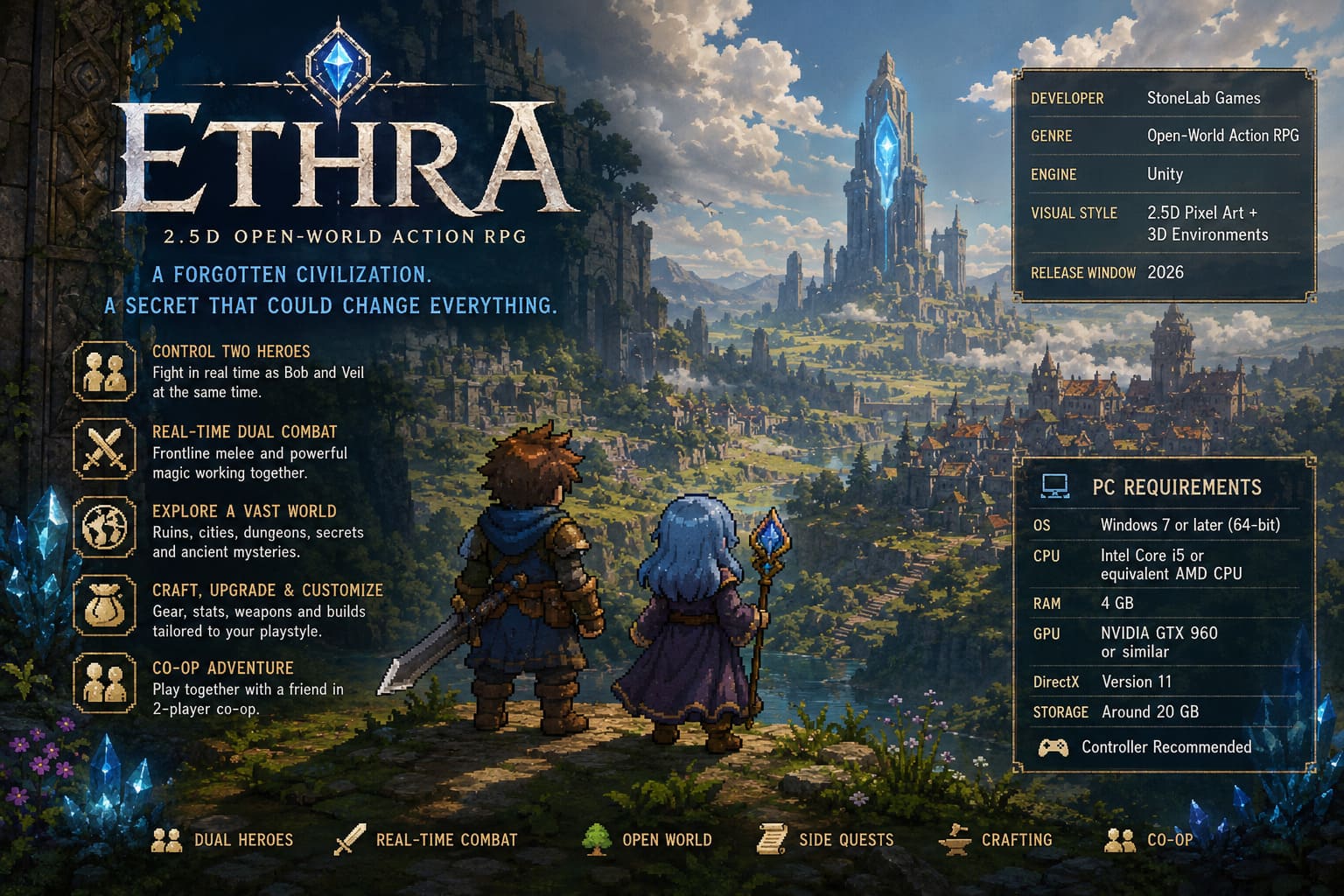
Set to become one of the most interesting indie RPG releases of 2026, EthrA combines 3D exploration, 2D pixel-art characters, real-time combat, and a massive fantasy world built around mystery and discovery. The game’s visual style alone makes it stand apart, but after looking deeper into its gameplay systems, world design, and ambitious development approach, it becomes clear that StoneLab Games is aiming for much more than a simple nostalgic experience.
EthrA Game 2026: The Ultimate Unity RPG Guide to StoneLab Games’ New Open World
| Feature | Details |
|---|---|
| Developer | StoneLab Games |
| Genre | Open-World Action RPG |
| Engine | Unity |
| Visual Style | 2.5D Pixel Art + 3D Environments |
| Release Window | 2026 |
EthrA’s World: A Fantasy Mystery Built Around a Forgotten Civilization
The biggest strength of EthrA is the foundation of its world. The game takes place on a continent that carries the scars of an ancient civilization that disappeared thousands of years ago. Long before the current kingdoms existed, this world was a place where advanced technology and powerful magic existed together, creating a civilization far beyond anything modern people understand.
The remains of that lost era are scattered everywhere. Massive monoliths tower over landscapes, hiding secrets and producing a mysterious energy source known as EthrA crystals. These crystals have become the foundation of modern society, powering cities, economies, and entire kingdoms. However, the deeper players explore this world, the more obvious it becomes that something about this forgotten history does not add up.
The main adventure follows two completely different characters who must uncover the truth behind a thousand-year-old secret. I always appreciate RPGs that make exploration feel meaningful instead of filling maps with random collectibles, and EthrA appears to focus heavily on rewarding curiosity.
The two protagonists create an interesting contrast:
- Bob is a simple farm boy who leaves his peaceful life behind to search for adventure. He represents the physical side of the team, focusing on melee combat, powerful attacks, defense, and direct confrontation.
- Veil is a mysterious child from an extremely rare species connected to the ancient civilization. Unlike Bob, Veil can naturally control EthrA energy, making her the magical specialist capable of powerful spells, support abilities, and battlefield control.
This character pairing immediately reminds me of classic RPG duos where personalities and abilities balance each other. The difference is that EthrA does not simply make them party members — it builds the entire gameplay system around controlling both.
Dual Character Combat: The Feature That Makes EthrA Different
The most exciting part of EthrA is its approach to combat. Instead of switching characters through menus or letting companions operate through basic AI, players directly control both Bob and Veil at the same time.
This mechanic completely changes the traditional action RPG formula. During battles, Bob works as the frontline fighter who absorbs enemy pressure, breaks defenses, and creates openings. At the same moment, Veil must be positioned carefully to unleash magical attacks, provide healing support, and control groups of enemies.
This creates a combat loop based on timing, positioning, and awareness. You are not simply attacking enemies until their health bars disappear. You are constantly thinking about where each character should stand, when to push forward, and when to retreat.
For players who enjoy games with strategic combat systems, this could become one of EthrA’s strongest selling points.
Key Gameplay Features
- Flexible character customization allows players to adjust equipment, stats, and builds depending on their preferred playstyle.
- Dual weapon sets let players quickly swap between different weapons during combat to handle different enemy types.
- Side quests, rumors, and bounty missions encourage exploration beyond the main storyline.
- Crafting and economy systems create additional reasons to gather resources and interact with towns.
- Two-player co-op support allows friends to control Bob and Veil separately during the adventure.
The co-op option is especially interesting because it solves one of the biggest challenges of dual-character gameplay. Instead of one player managing everything, two friends can experience the journey together and specialize in their own role.
The 2.5D Art Style Is EthrA’s Biggest Advantage
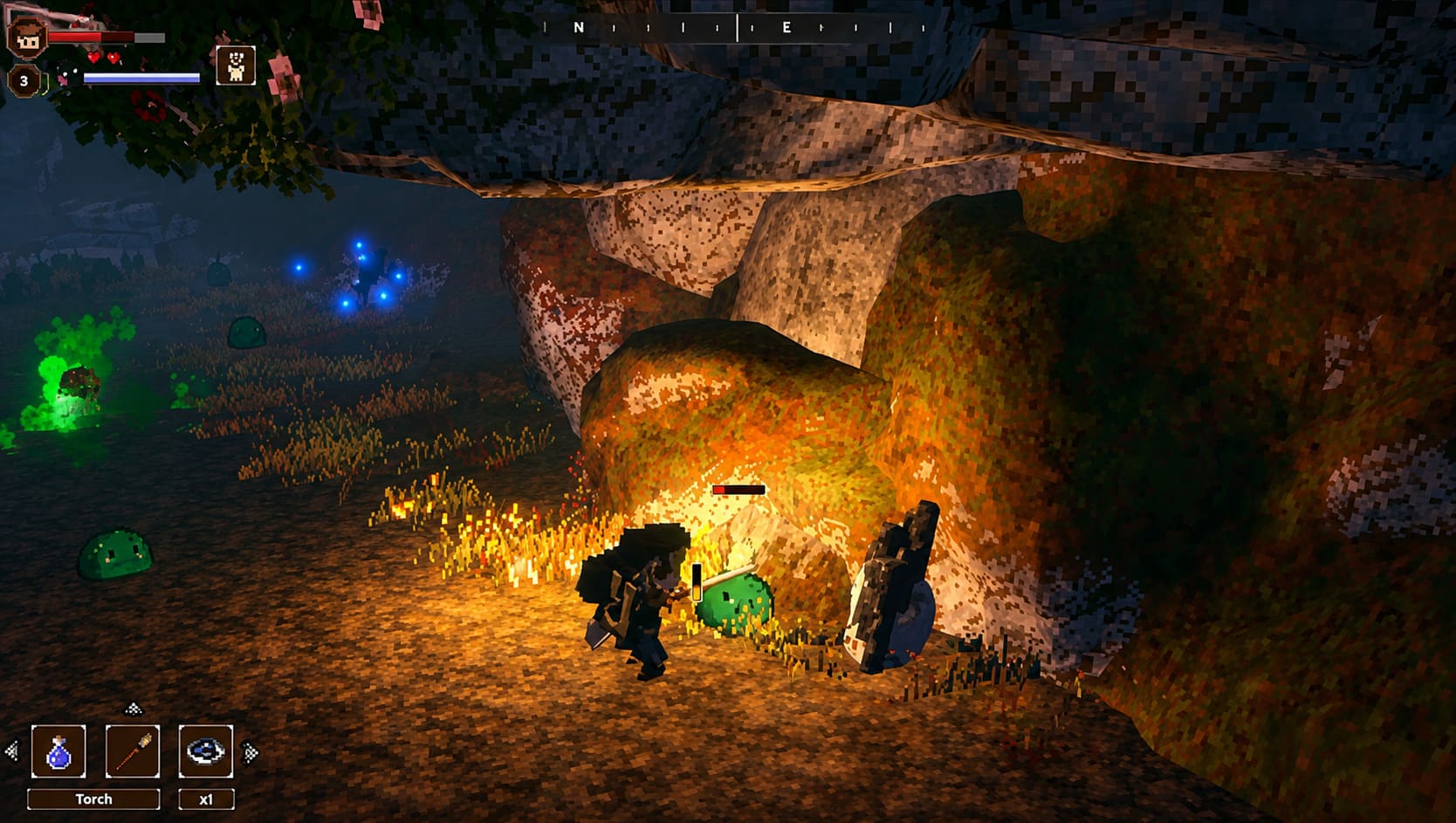
The first thing most players notice about EthrA is its visual presentation. The game uses a combination of detailed 3D environments and classic 2D pixel-art character sprites, creating a style that feels like a modern evolution of retro RPGs.
I have played many pixel-art games that rely heavily on nostalgia, but EthrA’s approach feels different. The world itself has real depth because forests, ruins, buildings, and landscapes are built in 3D. Meanwhile, the characters maintain that expressive pixel-art style that many fans associate with classic role-playing games.
The result is a beautiful 2.5D presentation that sits somewhere between traditional JRPGs and modern indie adventures.
Technically, this style is not easy to create. Making flat sprites work inside a fully 3D environment requires careful camera systems, lighting adjustments, and collision solutions. StoneLab Games uses techniques such as billboard rendering, allowing characters to always face the camera naturally while still existing inside a three-dimensional world.
| Traditional 2D Games | Full 3D Games | EthrA’s Approach |
|---|---|---|
| Strong artistic identity | Greater world depth | Both combined |
| Limited environments | More complex exploration | Vertical 3D landscapes |
| Retro charm | Modern lighting effects | Pixel characters with dynamic worlds |
This design choice gives EthrA a personality that many indie RPGs struggle to achieve.
Why the Gaming Community Is Watching EthrA
EthrA has gained attention because of something many indie games cannot manufacture: genuine community excitement. Development updates, short gameplay clips, and technical demonstrations have attracted attention from players interested in unique visual styles and ambitious indie projects.
Small details shown in development videos, such as environmental interactions, dynamic lighting on sprites, and satisfying gameplay animations, helped the project build momentum long before release.
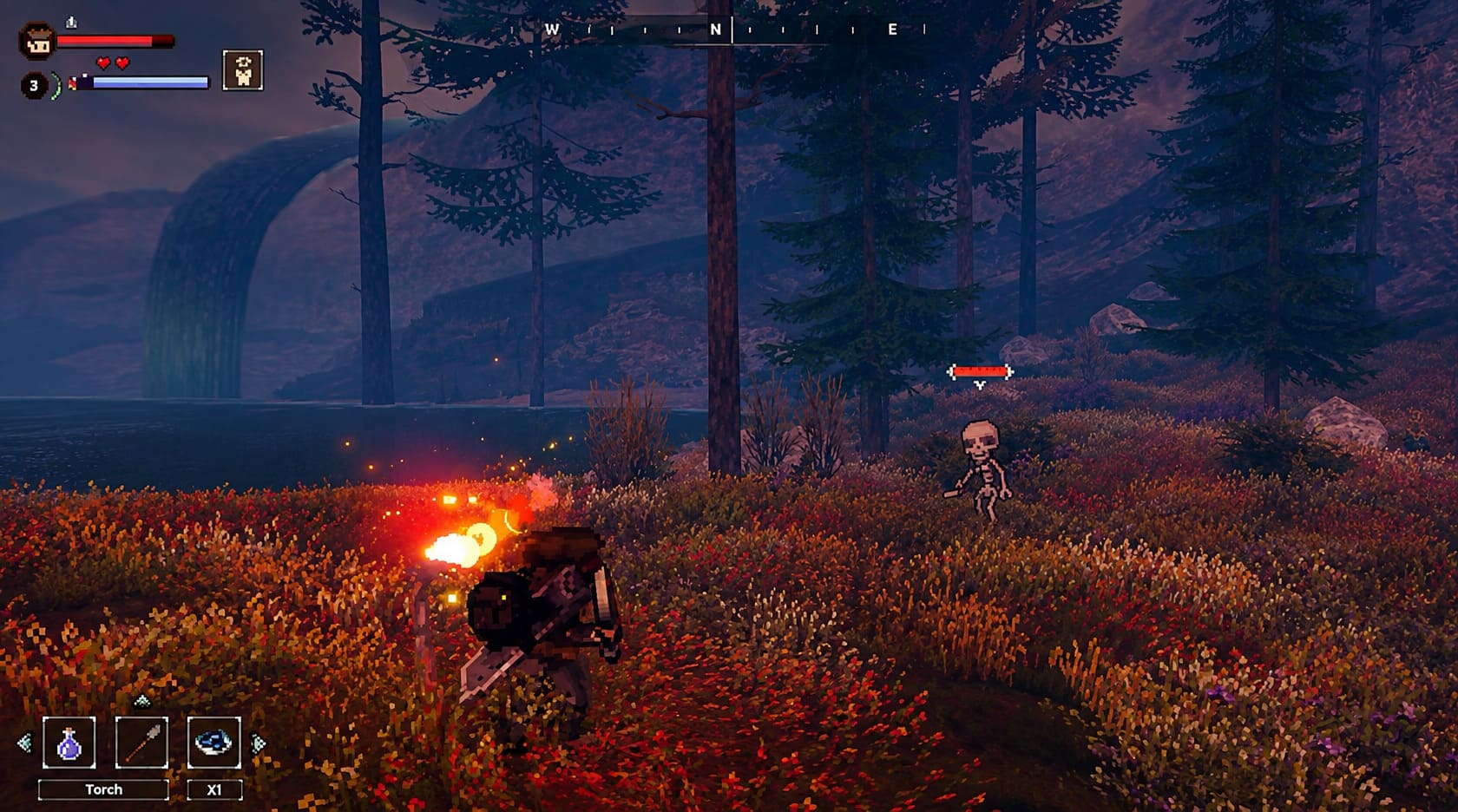
The game has received comparisons to titles like Grandia and Octopath Traveler, mainly because of its combination of colorful worlds, character-focused storytelling, and unusual visual presentation.
What makes the project especially impressive is the fact that it comes from a very small development team. Creating a large-scale RPG with open-world exploration, co-op functionality, and custom technology is a huge challenge even for experienced studios.
EthrA PC Requirements and Performance Expectations
Despite its ambitious visuals, EthrA is designed to remain accessible. The developers appear focused on optimization rather than requiring expensive gaming hardware.
| Requirement | Specification |
|---|---|
| Operating System | Windows 7 or later (64-bit) |
| Processor | Intel Core i5 or equivalent AMD CPU |
| Memory | 4 GB RAM |
| Graphics | NVIDIA GTX 960 or similar |
| DirectX | Version 11 |
| Storage | Around 20 GB |
A controller is also recommended because managing two characters simultaneously should feel much smoother with gamepad controls.
Final Thoughts: Is EthrA Worth Watching in 2026?
After following countless indie RPG announcements over the years, I think EthrA stands out because it has a clear identity. It is not trying to be another pixel-art nostalgia project, and it is not pretending to compete with massive AAA open worlds.
Instead, StoneLab Games is building something that feels personal. The combination of dual-character combat, mysterious fantasy storytelling, and the unique 2.5D art direction gives EthrA a chance to become one of the most memorable indie RPGs of 2026.
The biggest question will be whether the final release can match the ambition shown during development. If the gameplay systems, exploration, and story all come together, EthrA could become one of those indie games players remember for years.
For fans of RPGs, pixel art, and creative game design, EthrA is definitely a title worth adding to your 2026 watchlist.