Control Resonant Ending Explained: Meaning, Dylan’s Fate, and Remedy Connected Universe Future
Control Resonant is the kind of game that refuses to give you a simple answer when the credits start rolling. Instead, Remedy Entertainment takes everything established in the original Control, twists it into something much stranger, and then leaves players staring at a much bigger question: what exactly is happening to reality itself?
After spending most of the first game inside the unsettling halls of the Oldest House, Control Resonant takes a much more ambitious approach. Manhattan becomes the new playground for Remedy’s paranormal storytelling, with distorted buildings, unstable thresholds, cosmic entities, and entire sections of reality seemingly collapsing into one another.
But the biggest change is the protagonist. This time, players aren’t following Jesse Faden. Instead, the story puts Dylan Faden in the spotlight. After seven years in an FBC-induced coma, Dylan wakes up to discover that his sister is missing, the Bureau is barely holding itself together, and something far more dangerous than the Hiss is spreading through New York.
Personally, I think this shift works surprisingly well. Dylan has always been one of the most interesting loose ends in Control, and finally putting him in the center of the story gives Remedy room to explore a completely different side of the Faden family. His connection to resonance also makes the story feel less like another Bureau investigation and more like a direct confrontation with the rules of the Remedy universe itself.
What Happened to Dylan Faden?
Dylan’s situation is complicated from the moment he wakes up. He isn’t simply a former prisoner who has been released after years of containment. His body and mind have been affected by everything that happened during the original game’s events, including his exposure to the Hiss.
The important difference is that the Hiss is no longer the only force influencing him. A much deeper resonance has entered the picture, and Dylan gradually becomes a conduit for powers that even the Federal Bureau of Control doesn’t fully understand.

At the same time, Dylan discovers that Jesse Faden has disappeared. That immediately becomes his personal motivation. The collapsing Manhattan anomaly may be the game’s central threat, but Dylan’s search for Jesse is what gives the entire journey its emotional core.
As he moves through the altered city, Dylan encounters several familiar forces and factions, including the Board, Polaris, and remnants of the Hiss. None of them can be trusted completely. That’s one of the things I enjoy most about Control’s storytelling: even when the game appears to explain something, there’s usually another layer hiding underneath it.
The Manhattan Anomaly and the Real Threat
The strange events in Manhattan aren’t simply another containment breach. The city has effectively become a collision point between different layers of reality.
Buildings shift. Streets change shape. Physical spaces overlap with other dimensions. The normal rules of distance and architecture stop making sense. Dylan is essentially fighting his way through a city that is being rewritten while he is still standing inside it.
The deeper Dylan travels into the anomaly, the clearer it becomes that the crisis isn’t being caused by one simple villain. Instead, multiple paranormal forces are interacting with each other, creating a chain reaction that threatens to push the physical world beyond its ability to recover.
That eventually leads Dylan to the game’s final confrontation.
Dylan vs. the Hedron Resonance
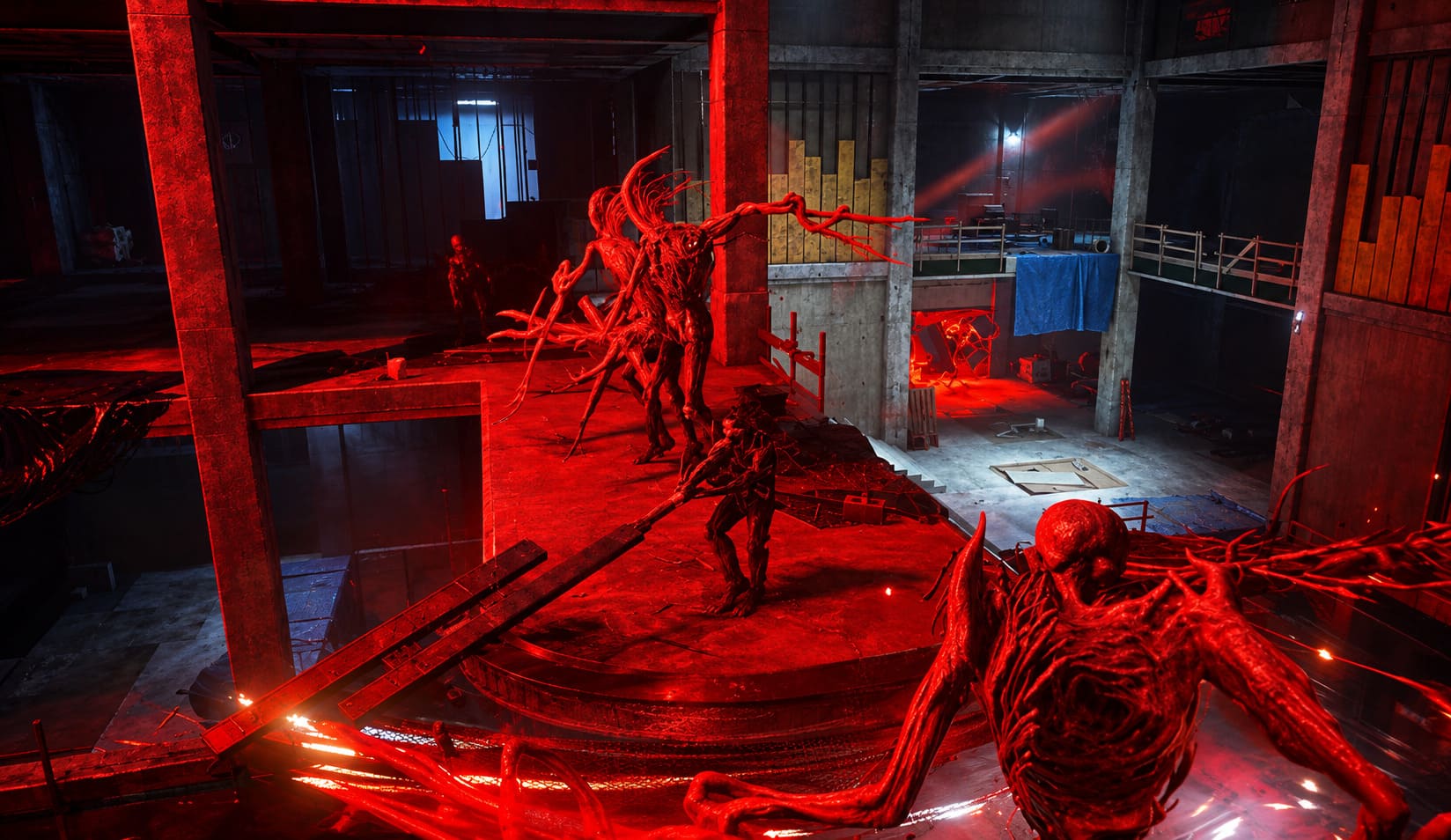
The final boss is one of the biggest lore twists in Control Resonant. Dylan eventually faces a corrupted manifestation of the Hedron resonance, transforming something that was previously associated with protection and Polaris into a terrifying force of overwhelming power.
In the original Control, Hedron was strongly connected with the resistance against the Hiss. It represented a source of resonance capable of protecting human consciousness from the invading force. Control Resonant takes that concept and asks an uncomfortable question: what happens when that power exists without a stable human anchor?
The answer isn’t particularly comforting.
The corrupted Hedron manifestation doesn’t behave like a benevolent cosmic guardian. Instead, it attempts to impose its resonance on everything around it, effectively turning human consciousness into something that can be overwritten.
The boss fight reflects that idea mechanically. Rather than simply shooting a giant enemy until its health bar disappears, Dylan has to deal with shifting arenas, warped geometry, spatial distortions, and environmental hazards that constantly change the rules of the encounter.
It’s also a nice contrast with Jesse’s combat style. Jesse’s abilities in Control were heavily focused on telekinesis, firearms, movement, and direct manipulation of objects. Dylan’s abilities feel much more connected to reality distortion and resonance manipulation.
And then comes the most important moment.
When Dylan finally defeats the Hedron manifestation, he doesn’t simply destroy it. He absorbs and cleanses the remaining resonance.
That decision closes the enormous interdimensional tear above Manhattan, but it also permanently changes Dylan. He isn’t the same person who entered the anomaly.
What Happens to Jesse Faden?
For me, Jesse’s fate is probably the most interesting part of the entire ending.
After spending so much of the story searching for her, players finally get an answer during the post-credits sequence. Jesse is alive, but she has clearly been changed by whatever happened to her during her disappearance.
She eventually appears inside a highly restricted FBC command facility where Emily Pope is attempting to rebuild what remains of the Bureau.
The scene immediately feels different from a conventional reunion. Jesse doesn’t return as the exact same Director we knew from the first game. Her experiences in deeper layers of the Astral Plane and other thresholds have fundamentally altered her understanding of reality.
According to Jesse’s explanation, her disappearance was deliberate. She didn’t simply get kidnapped or trapped by an enemy. She essentially removed herself from normal reality because remaining in the physical world could have accelerated the collapse between several competing paranormal forces.
| Character / Force | Role in the Ending | What It Could Mean |
|---|---|---|
| Dylan Faden | Absorbs the purified resonance | Becomes a living bridge between humanity and paranormal forces |
| Jesse Faden | Returns after disappearing into deeper thresholds | May operate beyond the traditional limits of the FBC |
| Emily Pope | Helps rebuild the Bureau | Represents the FBC’s scientific and investigative future |
| The Board | Continues manipulating events | Its relationship with the FBC becomes increasingly unstable |
| Hedron Resonance | Transformed into the final threat | Shows that even protective cosmic forces can become dangerous |
| Alan & Alice Wake | Connected to the deeper reality shifts | Strengthens the connection between Control and Alan Wake |
The final conversation between Jesse and Emily also confirms something much larger. Manhattan wasn’t the root of the problem. It was a symptom.
That distinction is incredibly important for the future of the series.
How Alan Wake Connects to the Ending
Remedy has spent years building the Remedy Connected Universe, and Control Resonant pushes that connection further than ever.
The strongest link comes through Alan Wake, the Dark Place, Cauldron Lake, and the events explored in Alan Wake 2 and its expansions.

The Lake House expansion already established how dangerous the relationship between the FBC and the supernatural events surrounding Cauldron Lake could become. Control Resonant appears to take that concept and expand it on a global scale.
Alan’s attempts to manipulate reality through writing have consequences far beyond Bright Falls. The boundaries between fiction, imagination, alternate realities, and the physical world are becoming increasingly unstable.
The recurring idea of the ocean is especially important. The Dark Place has never behaved like an ordinary location. It feels more like an endless underlying reality, and Control Resonant suggests that its influence is beginning to spill into other parts of existence.
What About Alice Wake?
Alice’s role is another fascinating part of the ending.
Her connection to the Dark Place is no longer simply about being Alan’s wife or someone caught in his story. Her photography and artistic work become a form of counter-resonance, giving Dylan guidance during the final stages of his confrontation with the corrupted Hedron.
I like this direction because it reinforces one of Remedy’s recurring ideas: art can change reality.
The FBC approaches supernatural phenomena through research, containment, technology, and controlled experimentation. Alan approaches reality through writing. Alice uses photography and visual expression. Dylan and Jesse interact with paranormal forces through their own abilities.
Those approaches are beginning to overlap.
That could ultimately be much more important than any individual villain.
What the Ending Could Mean for the Future
Control Resonant clearly doesn’t close the door on this universe. If anything, it opens several more.
Three possibilities stand out after the ending:
- Dylan could become a permanent paranormal anchor. By absorbing the purified resonance, he may no longer be simply a parautilitarian. He could become a living connection between ordinary human consciousness and forces that exist beyond conventional reality.
- The Board’s relationship with the FBC could deteriorate. The Board has never been particularly trustworthy, and Dylan’s independence combined with Jesse’s new status could dramatically reduce the Bureau’s dependence on it.
- Control and Alan Wake could become even more closely connected. The appearance of Alan and Alice suggests that future stories may no longer treat the two franchises as separate paranormal mysteries.
The possibility of a future Alan Wake 3 naturally comes up here, although the ending itself doesn’t provide a simple confirmation. What it does provide is a narrative framework where Alan’s story, Alice’s story, and the FBC’s investigations can continue moving toward the same larger conflict.
Is Control Resonant Coming to Xbox and PS5? Release Date, Platforms, and Performance Analysis
My Take on the Control Resonant Ending
What I appreciate most about the ending is that Remedy doesn’t try to make everything comfortable or completely understandable. Control has always been at its best when it gives players just enough information to form a theory and then quietly introduces another detail that makes that theory questionable.
Dylan’s transformation is particularly effective because it isn’t presented as a clean superhero origin. He defeats the immediate threat, but the victory comes with a permanent cost. Jesse returns, but she isn’t exactly the Jesse we remember. Manhattan is stabilized, but the larger problem is still there.
In other words, the ending is a victory without being a conclusion.
And honestly, that feels very appropriate for Control.
The Oldest House may no longer be the center of the story, but the ideas that made the original game special are still here: impossible architecture, unreliable explanations, mysterious entities, altered realities, and characters who are never completely sure whether they are controlling the supernatural or simply being allowed to believe they are.
Is Control Resonant Worth Buying? Deep Dive Review & Player Consensus
Final Thoughts
Control Resonant’s ending changes the scale of Remedy’s universe. What began as a strange story about an impossible building and a paranormal invasion has grown into something involving multiple realities, competing cosmic forces, the Dark Place, the Wakes, the Fadens, and the mysterious entities that exist beyond human understanding.
Dylan survives, but his future is anything but ordinary. Jesse returns, but she now seems connected to realities far beyond the traditional role of an FBC Director. Emily is left helping rebuild the Bureau, while the Board’s influence becomes increasingly questionable.
And somewhere beyond all of this, Alan and Alice remain connected to the deeper mystery.
If there’s one thing the ending makes clear, it’s that Manhattan was never the final problem. It was simply the place where the cracks became impossible to ignore.
For fans of Control and Alan Wake, that’s probably the most exciting takeaway. The Remedy Connected Universe isn’t getting smaller. It’s becoming stranger, more interconnected, and much harder to predict — exactly the way I want this universe to be.