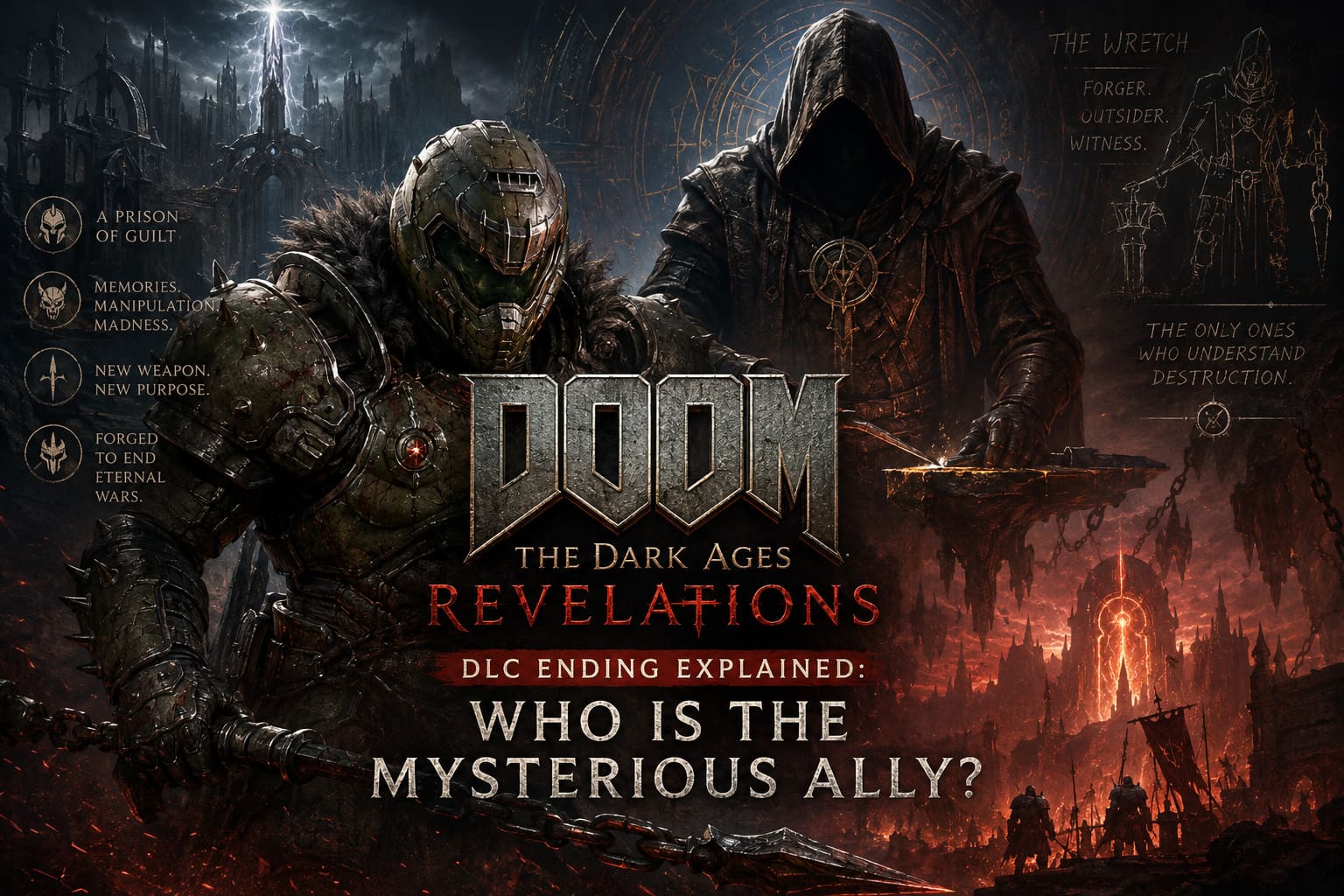
DOOM The Dark Ages Revelations DLC Ending Explained: Who is the Mysterious Ally?
When I finished DOOM: The Dark Ages – Revelations, my first reaction wasn’t about the new weapons or the boss fights—it was about the ending. For years, DOOM lore has hidden some of its biggest mysteries behind Codex pages, environmental storytelling, and cryptic dialogue. This expansion finally decides to answer several of those questions while creating even more interesting ones.
Unlike the base campaign, Revelations feels much more focused on storytelling. The action is still incredibly brutal, but almost every mission exists to push the Doom Slayer toward a massive revelation about his past, his future, and the endless war against Hell.
After replaying several chapters and comparing the ending with the events of DOOM (2016) and DOOM Eternal, I honestly think this DLC is one of the most important pieces of modern DOOM lore. Here’s my interpretation of what really happened—and why the mysterious ally completely changes how we should view the series.
A Different Kind of DOOM Story
One thing immediately stood out during my playthrough.
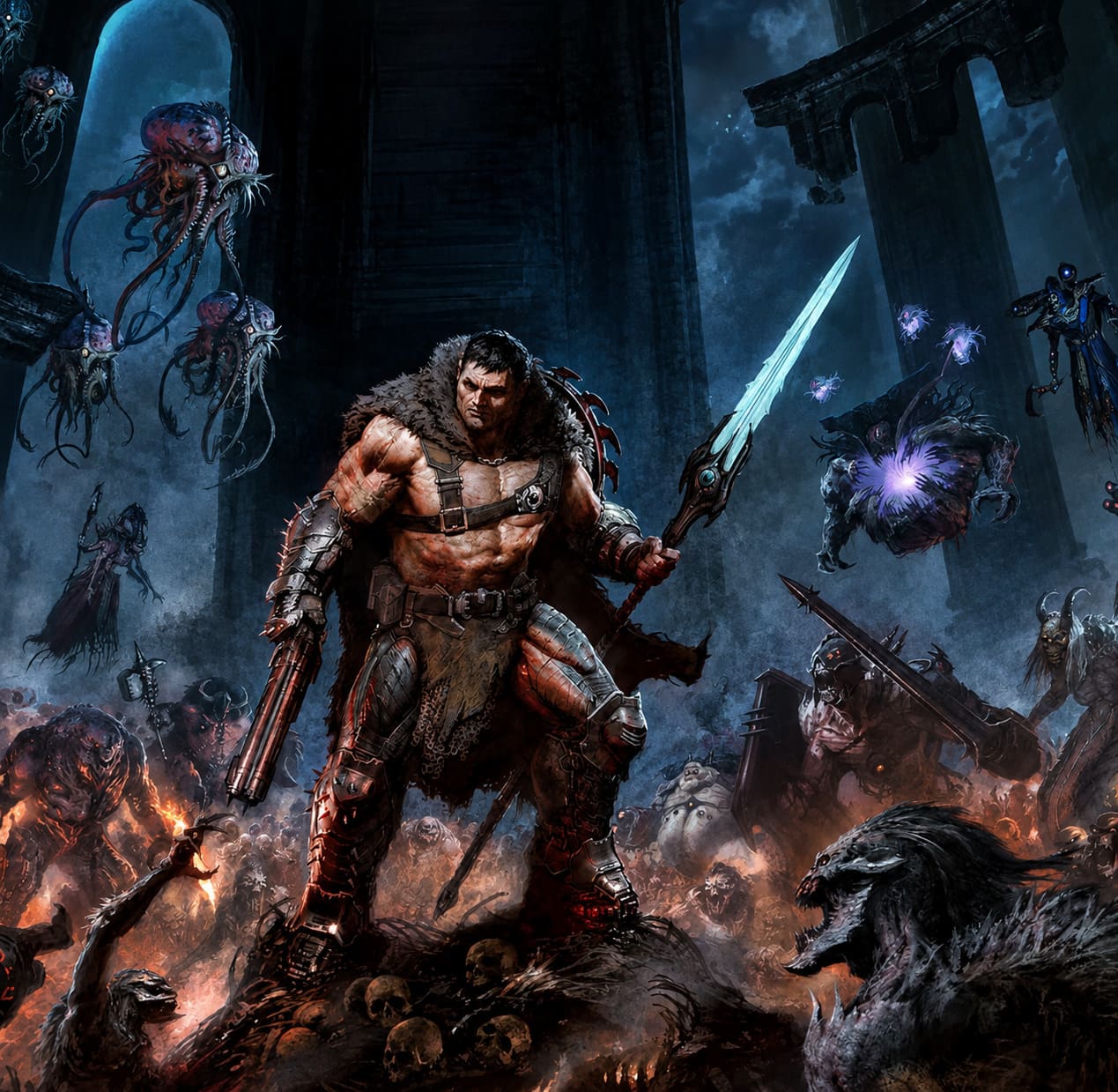
Instead of throwing players into nonstop demon slaying from beginning to end, Revelations slows things down just enough to let its world breathe. The expansion places the Slayer inside a strange prison that feels less like a physical location and more like a manifestation of trauma, anger, and memories.
The environments constantly blur reality with nightmare.
Ancient Sentinel architecture suddenly twists into demonic landscapes. Familiar halls become impossible labyrinths. Voices question everything the Slayer believes.
For a franchise known for simplicity—”rip and tear until it is done”—this psychological direction feels surprisingly effective.
Why the Slayer Ends Up in Purgatory
The expansion suggests that brute force alone isn’t enough to stop the Doom Slayer anymore.
His enemies finally understand that defeating him in combat simply isn’t possible.
Instead, they attack his mind.
Following the events of the main campaign, powerful political figures decide the Slayer has become too dangerous—even for those who once supported him. Rather than executing him, they imprison him inside a supernatural construct designed to slowly destroy his identity.
This prison isn’t built from chains.
It’s built from guilt.
Throughout the campaign the player repeatedly experiences:
- Memories of previous wars.
- Visions of fallen allies.
- Distorted versions of important locations.
- Constant manipulation from unseen voices.
The message is clear: if Hell cannot kill the Slayer, maybe it can make him give up.
The Mysterious Ally Isn’t Just Another NPC
The biggest mystery surrounding the DLC before release was obvious: Who keeps guiding the Slayer?
Early trailers deliberately avoided revealing this character, leading to countless fan theories.
I saw people suggesting almost everyone imaginable:
- King Novik.
- Samuel Hayden.
- A rogue Maykr.
- The Father.
- An entirely new cosmic entity.
The actual answer is far more satisfying.
The Wretch Finally Steps Into the Spotlight
Long-time fans immediately recognize the name.
The Wretch has existed in DOOM lore for years but mostly as background mythology. Older Codex entries mention a mysterious figure responsible for forging the legendary Praetor Suit, yet players never actually met him.
Revelations changes that.
Rather than presenting him as some all-powerful god, the DLC portrays him as an outsider.
Someone rejected by both Hell and higher powers.
Someone who understands destruction better than anyone else.
That makes him a perfect companion for the Slayer.
Instead of giving speeches about destiny, The Wretch provides exactly what the Slayer needs:
- Stronger weapons.
- New equipment.
- Practical guidance.
- A path forward.
Personally, I like this interpretation much more than introducing another mysterious deity. DOOM has always worked best when its important characters feel like survivors instead of prophets.
The Chain Spear Is More Than Gameplay
One detail I appreciated is how the DLC connects gameplay upgrades with the story itself.
Normally players unlock new abilities simply because it’s a video game.
Here, every major improvement comes through The Wretch’s craftsmanship.
The Chain Spear isn’t just another weapon.
It’s symbolic.
It represents rebuilding the Slayer piece by piece after everything he’s lost.
Mechanically it’s one of the expansion’s highlights, allowing faster movement, aerial combat, and brutal executions.
Narratively it shows that even the strongest warrior sometimes needs someone capable of forging the right tools.
Breaking Down the Final Boss
The final confrontation isn’t simply another oversized demon.
The Abomination feels like the physical embodiment of everything the expansion has been building toward.
Rather than representing Hell alone, it combines multiple ancient powers into something unnatural.
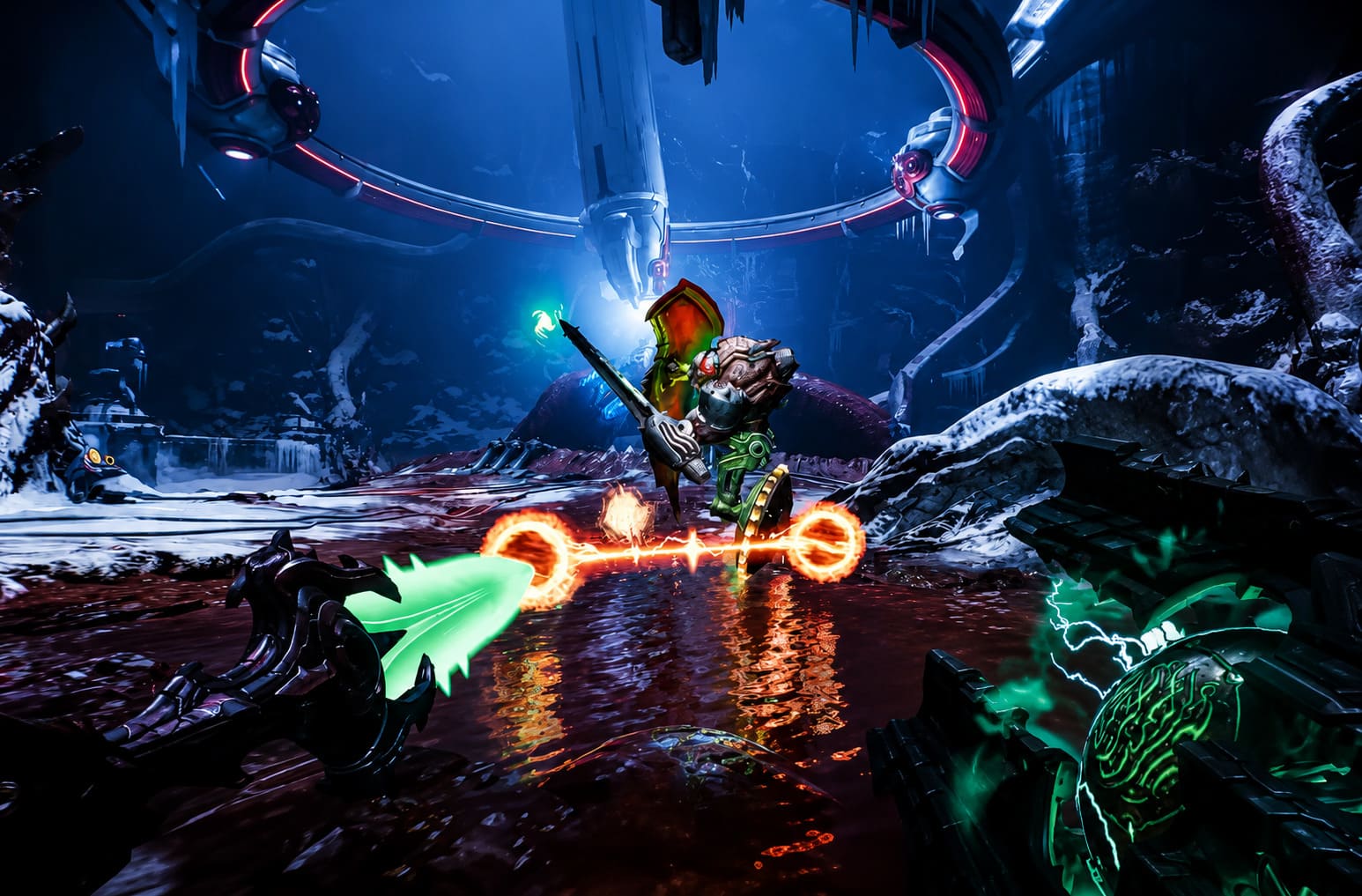
Its appearance reflects this perfectly.
Fragments of celestial architecture merge with monstrous flesh, suggesting that corruption has spread far beyond Hell itself.
The fight becomes more than survival.
It’s the Slayer rejecting every attempt to control him.
What the Ending Really Means
After defeating the Abomination, the Slayer finally escapes his psychological prison.
At first glance this feels like a straightforward victory.
I don’t think it is.
The ending actually shows that almost everything has become worse.
Instead of restoring peace, the Slayer discovers that the political situation across the realms has completely collapsed.
Former allies now see him as a threat.
Entire factions begin choosing sides.
Civil war becomes inevitable.
The Slayer isn’t returning home.
He’s walking into another endless conflict.
That tragic outcome fits the character perfectly.
He saves everyone.
Yet he never gets rewarded for it.
The Origin of the Praetor Suit Finally Makes Sense
One of my favorite moments comes near the end.
For years fans debated exactly how the Praetor Suit came into existence.
The games hinted at its creation without ever fully explaining it.
Revelations finally fills in those missing pieces.
Instead of appearing as magical armor, the suit becomes the product of determination, craftsmanship, and shared purpose between the Slayer and The Wretch.
That explanation feels much more satisfying than simply saying, “Ancient magic created it.”
The armor now has genuine history.
How Revelations Connects to DOOM (2016)
The expansion also works extremely well as a bridge between timelines.
Here’s how I think it connects everything together.
| Story Element | Why It Matters |
|---|---|
| The Wretch | Explains who truly forged the Praetor Suit. |
| Psychological imprisonment | Foreshadows later attempts to seal away the Slayer. |
| Political betrayal | Shows why the Slayer eventually stands completely alone. |
| Ancient conflicts | Gives greater context to later wars involving Argent energy. |
| Final escape | Naturally leads toward the beginning of the modern DOOM timeline. |
Instead of feeling like disconnected games, the newer entries now resemble chapters of one enormous story.
That’s something DOOM has quietly been building for years.
Why Fans Are Talking About This Ending
Browsing community discussions after finishing the DLC was almost as entertaining as playing it.
Most conversations revolve around three major questions:
- Is The Wretch completely trustworthy?
- Did the council ever have good intentions?
- Is this truly the final step before DOOM (2016)?
Interestingly, there isn’t universal agreement.
Some players believe The Wretch still has hidden motives.
Others think the expansion intentionally leaves certain details vague for future games.
Personally, I hope id Software keeps a little mystery alive.
Not every unanswered question needs an immediate explanation.
The Emotional Side of the Story
One thing I didn’t expect was how emotional certain scenes became.
DOOM usually communicates through action rather than dialogue.
Revelations changes that without slowing the pacing.
Small memories scattered throughout the campaign—including subtle callbacks to Daisy and earlier tragedies—remind players that beneath all the armor exists someone who has lost almost everything.
Those moments never become overly sentimental.
Instead, they reinforce why the Slayer keeps fighting.
Not because he enjoys violence.
Because somebody has to stop Hell.
Is This the Best DOOM Expansion So Far?
For me, yes.
Not because it has the biggest bosses.
Not because it introduces another weapon.
But because it finally gives emotional weight to events that fans have been discussing for nearly a decade.
The expansion successfully balances:
- Excellent combat.
- Strong environmental storytelling.
- Meaningful character development.
- Important lore revelations.
- Clear connections to future games.
That’s an impressive achievement for a DLC.
Final Verdict
After spending dozens of hours exploring every hidden area, rereading Codex entries, and replaying the ending several times, I came away with one major conclusion.
Revelations isn’t trying to rewrite DOOM lore—it completes it.
The reveal of The Wretch feels earned rather than forced. His partnership with the Doom Slayer explains one of the franchise’s oldest mysteries while adding genuine emotional depth to a character who has traditionally spoken through violence instead of words.
I also appreciate that the expansion doesn’t end with a clean victory. The Slayer escapes his prison, but the world around him has changed forever. Former allies have become enemies, ancient conflicts are spiraling out of control, and the road toward DOOM (2016) suddenly feels inevitable.
Whether every theory proves correct in future games remains to be seen, but one thing is certain: DOOM: The Dark Ages – Revelations delivers far more than another campaign of demon-slaying. It provides the missing narrative link that ties together the modern DOOM saga, making the Slayer’s journey feel larger, darker, and more tragic than ever before.
If you’ve been following DOOM lore for years, this expansion rewards your patience. And if you’re just here for the action, don’t be surprised if you finish the final mission thinking about the story long after the credits roll.