Don’t Starve Elsewhere Ending Theories: 3 Lore Ideas That Could Change Everything
The announcement of Don’t Starve Elsewhere at Triple-i Initiative 2026 has sent waves through the survival gaming community. After over a decade of enduring the Constant, facing shadow monsters, and piecing together the cryptic saga of Charlie and Maxwell, players are finally stepping into something new.
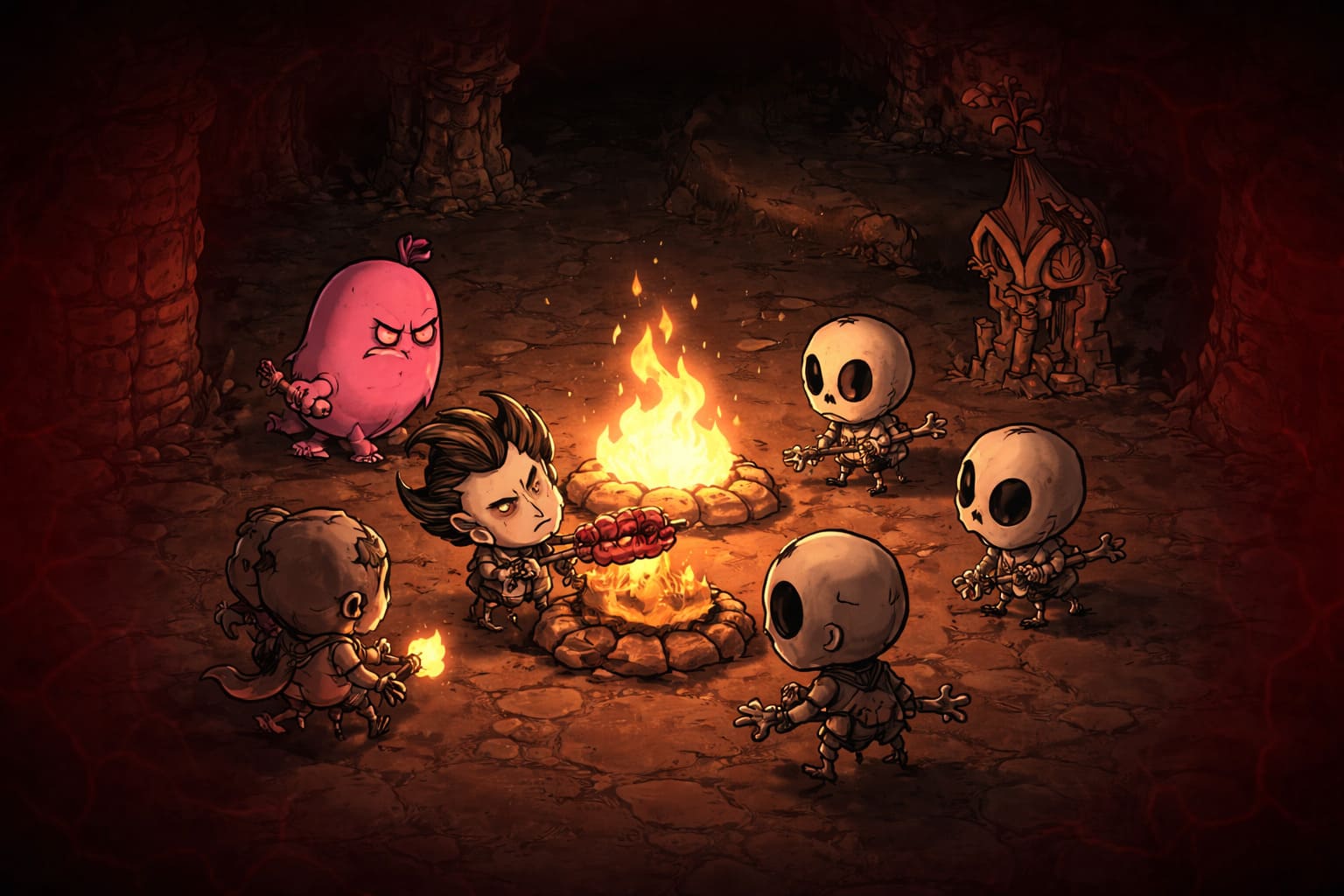
Emerging from a barnacle-encrusted, shadow-flame portal, the survivors now find themselves in a strange vertical world, thick with a menacing phenomenon called “The Fog.”
The burning question: is this Elsewhere a true escape, or just another layer of the Constant’s endless torment?
Having combed through developer interviews, recent lore drops, and heated discussions across Reddit and the Klei Forums, I’ve gathered the most intriguing theories about how this next chapter might end. Spoiler: things get wonderfully weird.
SoulQuest Movement Tips: Mastering Vertical Freedom & Early-Game Mobility
1. The “Third Them” Theory – A Cosmic Power Emerges
The idea gaining the most traction among lore enthusiasts is that Elsewhere isn’t part of the Constant we know—it’s ruled by an entirely new, primordial entity.
The Clues:
- In Don’t Starve Together, lore hints at a war between The Shadows (Charlie/Them) and The Moon (Alter).
- Elsewhere’s “dangerous fog,” as noted in the Steam description, seems almost sentient, corrupting all it touches.
The Theory: The Fog might be the manifestation of a so-called “Third Them”—a force separate from both the Moon and the Shadows.
Potential Ending: Players may be able to manipulate this power triangle. By destabilizing the balance between the three entities, survivors like Wilson could trigger a “Cosmic Collapse,” effectively shattering the Constant’s reality and offering a potential return to the real world. It’s high-risk, high-reward chaos, exactly the kind of finale that Don’t Starve thrives on.
2. Wagstaff’s Failed Ascension – Science vs. Survival
Robert Wagstaff has always been the wildcard of the franchise. Obsessed with the Moon’s power, his experiments led to the rifts and chaos in the Constant.
The Clues:
- In the Elsewhere trailer, Wagstaff’s shadow looms large, a persistent threat.
- Previous lore suggested he was erased from existence—yet he may have survived, transposed into Elsewhere.
The Theory: Wagstaff could be attempting to build a permanent bridge between the Constant and Earth. But his scientific meddling may corrupt Elsewhere beyond repair.
Potential Ending: Survivors might face a moral dilemma: assist Wagstaff and escape, or stop him to protect Earth from the Fog’s insidious spread. Personally, I think this scenario offers the most “Don’t Starve” flavor: survival, strategy, and a moral choice all in one tense package.
3. The Cyclical Nature Theory – One Throne After Another
Some fans are taking a darker perspective. They suggest Elsewhere is less a new world and more a continuation of the Shadow Throne cycle.
The Clues:
- The world features gothic architecture, towering castles, and gargoyles—a stark departure from the wild Constant biomes.
- This hints at a structured, perhaps tyrannical civilization waiting to be conquered or taken over.
The Theory: Just as Maxwell fell to the Shadows and Charlie claimed power, survivors may be faced with taking the “Fog Throne” to stabilize this new reality.
Potential Ending: One of the survivors might sacrifice themselves to maintain order, allowing the others to move forward through the next portal. It’s eerily reminiscent of Wilson’s role in Adventure Mode, which is a neat nod to series veterans.
4. Post-War Reality – Home, But Not as We Know It
For those hoping for a glimmer of optimism, some theorists argue Elsewhere might actually be Earth—albeit transformed.
The Clues:
- The Fog could represent the Constant’s essence, spreading like a curse over our world.
- Vertical landscapes may symbolize survivors climbing away from the Shadow’s influence while still trapped in a corrupted Earth.
The Theory: Humanity might have survived the initial rifts, but civilization now contends with lunar curses and shadow magic as part of everyday life.
Potential Ending: Rather than a traditional “victory,” this ending is a shift: survival continues, but in a drastically changed reality. Personally, I find this theory both chilling and compelling—it captures the essence of Don’t Starve’s brand of bleak storytelling.
Lore Breakdown – Clues That Hint at the Endgame
| Feature | Possible Meaning |
|---|---|
| Barnacle Portal | Links to the Constant’s oceanic depths and hidden rifts. |
| Vertical Mountains | Symbolic of escape and progress above Shadow influence. |
| Gothic Architecture | Suggests a move from whimsical horror to organized, civilized evil. |
| The Fog | Could be the new primary antagonist or cosmic entity. |
Community Consensus: Is a Definitive Ending Possible?
Many players have argued that Don’t Starve is, by nature, endless. Survival itself is the point—the journey outweighs the destination. But Elsewhere is being marketed as a separate title, introducing new mechanics like the Fog Curse. This opens the door for a structured narrative with a climactic “final boss” scenario.
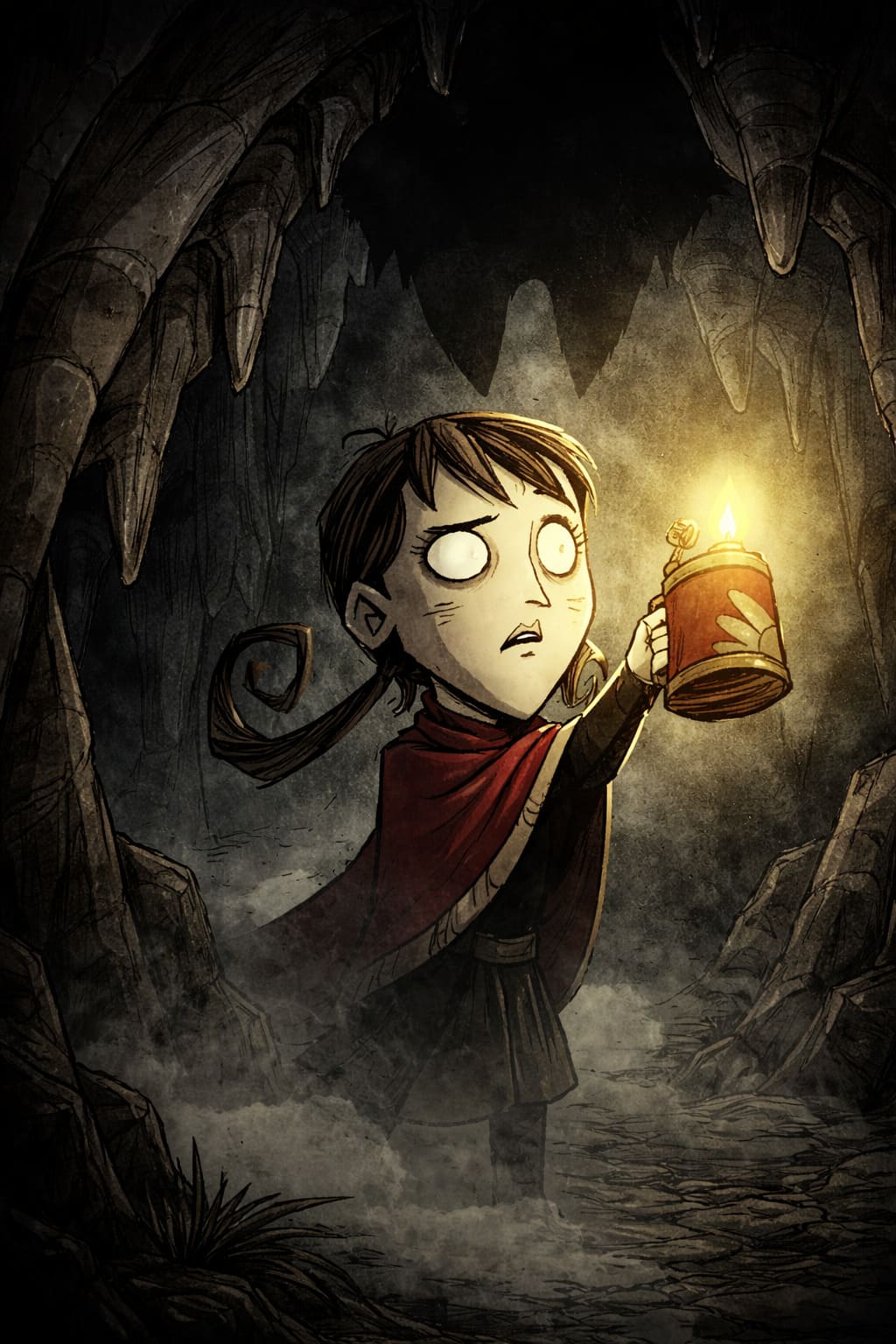
So what’s my take? I hope the story gives us a choice-driven ending. Whether it’s taking the Fog Throne, outsmarting a cosmic entity, or facing Wagstaff’s manipulations, there’s a real chance for a finale that honors over a decade of survival storytelling.
In the end, Don’t Starve Elsewhere promises to be both familiar and radically new. The Fog is oppressive, the world is vertical, and the Gothic overtones hint at a darker, more structured type of horror. I can’t wait to see if Wilson finally gets his revenge, if Charlie still pulls the strings, or if we’re simply stepping into a new cycle of survival and despair. Either way, Elsewhere is set to challenge every player’s wits, morality, and sanity.
Unraveling the Deep Lore of Don’t Starve: Elsewhere – 3 Theories That Could Change Everything
For fans of Don’t Starve, Elsewhere isn’t just another expansion—it’s a narrative labyrinth filled with shadows, mysteries, and secrets that could redefine everything we know about the Constant. As someone who’s obsessed with indie games and loves diving into the lore, I’ve been following the community’s theories closely.
While the Klei team is famously tight-lipped, the fanbase has been connecting dots like a hive mind of lore detectives. Here’s my take on three original “Deep Lore” theories that could shape the ultimate ending of Don’t Starve: Elsewhere.
1. The “Observer” Theory: We Are the Fog
There’s always been a creeping sensation in Klei trailers that someone—or something—is watching. The foggy, shifting boundaries of the world aren’t just atmospheric; they feel alive.
The Theory: The Fog may not just be an environmental hazard—it could represent the player’s own perspective, the unseen eyes of the game itself. Survivors aren’t simply battling monsters or harsh weather; they’re grappling with a meta-curse, the “Curse of the Camera.” In this reading, every shadow and looming threat is amplified by the fact that we are literally watching them, shaping their fate from outside the Constant.
Potential Ending: Imagine Wilson realizing he’s trapped in a simulation—a story controlled by a higher being, perhaps even a stand-in for the developers or players themselves. To truly “win” isn’t about survival or defeating monsters—it’s choosing to stop playing, releasing the survivors from an eternal cycle of death and resurrection. It’s existential, mind-bending, and quintessentially Klei.
2. Charlie’s Redemption Arc
Charlie, long seen as the “Queen of Shadows,” is evolving. Elsewhere shifts from her usual dark, shadowy palace to ancient, almost gothic architecture, hinting at a deeper narrative transformation.
The Theory: Charlie may be losing control over the Shadows. The white, human side of her face suggests remnants of morality and empathy. Elsewhere could actually be her attempt to protect survivors from a greater darkness she can no longer fully contain. This isn’t a simple “good versus evil” story—it’s nuanced, showing a character who is both fearsome and tragically human.
The Ending: The survivors could have a cooperative showdown with the Ancient Shadows, helping Charlie reclaim some semblance of order. Success might cast them back into the 1920s—but not without lingering effects, a permanent wariness of the dark embedded deep in their psyche. Failure, naturally, could spell chaos for both Charlie and the Constant.
3. Wagstaff’s New World Order
Wagstaff has always been a character whose curiosity and ambition bordered on obsession. Unlike others who struggle for survival, he wants to manipulate the Constant itself.
The Theory: Elsewhere may not be random—it could be Wagstaff’s ultimate experiment, combining Lunar and Shadow energy into a “perfect world.” But perfection has a price: the survivors themselves. They might be the unwitting “fuel” for his utopian vision.
The Ending: Instead of a traditional boss fight, the climax could involve sabotaging Wagstaff’s machinery. If the survivors succeed, Elsewhere collapses, returning to the familiar Constant. Failure? They become permanent energy sources for his new world—a chilling twist on the classic survival narrative.
How to Keep Up With the Evolving Lore
If you’re as addicted to Don’t Starve theories as I am, staying updated is essential. Here are some reliable ways to catch the newest twists before anyone else:
- Official Forums: Klei’s forums post weekly “Rhymes with Play” dev-stream summaries every Thursday.
- Discord: The Don’t Starve Official Discord is alive with theorists, particularly the “Lore-Hunters” group. Real-time discussion is a must for spotting subtle hints.
- Steam News: Following the Elsewhere Steam page ensures you get alerts for any new cinematics, shorts, or gameplay reveals.
Why These Theories Matter
What’s exciting about these three perspectives is how they expand the narrative possibilities of Don’t Starve: Elsewhere. The game has always teased deeper meaning beneath its survival mechanics, but these theories give us a lens to examine the philosophical, psychological, and meta-narrative layers.
| Theory | Core Idea | Ending Possibility | Emotional Impact |
|---|---|---|---|
| Observer | Fog = Player Perspective | Break the cycle of death | Existential, thought-provoking |
| Charlie’s Redemption | Charlie struggles with humanity vs. Shadows | Help her defeat Ancient Shadows | Emotional, heroic |
| Wagstaff | Elsewhere = Wagstaff’s experiment | Sabotage machinery or fuel utopia | Tense, morally complex |
The layers of Elsewhere invite us not just to survive, but to think critically about agency, morality, and the unseen forces shaping our actions. That’s why I love dissecting this game—no matter how many times you die, there’s always a deeper story waiting.
Final Thoughts
Don’t Starve: Elsewhere isn’t just a survival game; it’s a storytelling sandbox, a puzzle box for the mind. Whether you buy into the Observer Theory, Charlie’s Redemption, or Wagstaff’s sinister ambitions, one thing is clear: Klei has created a universe where every shadow has a story, every fog conceals intent, and every choice carries weight.
For players, theorists, and lore hunters alike, the joy isn’t just surviving—it’s uncovering the hidden narrative threads that make Elsewhere so hauntingly memorable.